

Crisis Management Tools: 15 Practical Solutions For Protecting Your Brand And Reputation
A crisis rarely starts with a clear warning that everyone recognizes.
It may begin with a customer complaint gaining traction, a sudden increase in negative mentions, a journalist asking difficult questions, an outage affecting users, or a security issue that has not yet reached the public. At first, the problem may look manageable. Within a few hours, it can become something much larger.
That is why speed matters. But speed alone is not enough. A company also needs context. Teams need to understand what is happening, how serious it is, who needs to know, and what actions should happen next.
This is where crisis management tools can help.
Some platforms focus on social listening and reputation monitoring. Others track media coverage across news, broadcast, podcasts, and online sources. Critical communication platforms help organizations alert employees and executives, while incident response tools coordinate technical teams during outages and security events.
Crisis management tools are software platforms that help organizations detect emerging threats, monitor media and public sentiment, coordinate response teams, communicate with stakeholders, and manage incidents that could affect operations, customers, or brand reputation.
The right solution depends on the crisis you are preparing for. A PR team dealing with viral backlash has very different needs from an IT team responding to a major software outage.
This guide looks at 15 crisis management tools across those different use cases and explains what capabilities matter when building a practical crisis response technology stack.
Key Takeaways
- Crisis management software covers several different categories, so one platform may not handle every type of crisis.
- Social listening and media monitoring tools are particularly useful for reputation issues, misinformation, negative coverage, and public backlash.
- Real-time alerts and anomaly detection are more valuable during an emerging crisis than basic mention notifications.
- Critical communication platforms help organizations coordinate employees, executives, and other stakeholders during operational events.
- Technical incidents can become reputation crises quickly, making incident response tools important for technology businesses.
- Software should support an existing crisis plan. It cannot replace clear roles, decision-making, or human judgment.
In This Guide, You Will Find…
- What Are Crisis Management Tools?
- The 5 Types of Crisis Management Tools
- What to Look for in Crisis Management Software
- 15 Crisis Management Tools to Consider
- How the 15 Crisis Management Tools Compare
- Which Crisis Management Tool Do You Actually Need?
- How to Build a Crisis Management Tech Stack
- What Crisis Management Software Cannot Do for You
- How to Measure Crisis Management Performance
- Common Crisis Management Tool Mistakes
What Are Crisis Management Tools?
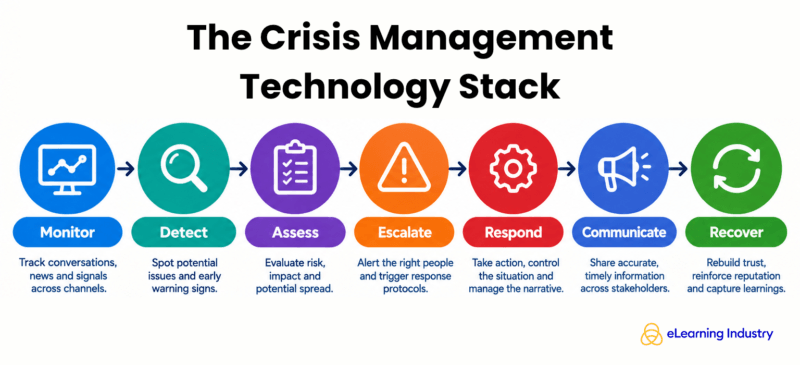
Crisis management tools help organizations move from the first warning signal to a coordinated response.
The process usually begins with detection. A platform may identify negative mentions, sudden changes in sentiment, unusual conversation spikes, breaking news, operational problems, outages, or security threats.
The next step is assessment. Teams need to know whether they are looking at an isolated complaint or something that could affect a wider audience. Useful tools help provide context around reach, sentiment, source authority, affected stakeholders, and potential operational impact.
Then comes escalation. Depending on the issue, the alert may need to reach PR, marketing, legal, customer success, leadership, operations, IT, or security. The faster the right people receive accurate information, the sooner they can make a decision.
During the response itself, organizations may need workflows, approval processes, internal communications, incident logs, assigned tasks, and stakeholder updates. Once the immediate problem has passed, reporting helps teams understand what happened, how the response performed, and what should change before the next incident.
This distinction matters because not every monitoring platform is a complete crisis system. A tool that tells you people are talking about your company can be useful, but detection is only the beginning. Crisis management requires a path from signal to action.
The 5 Types Of Crisis Management Tools
The term “crisis management software” covers several different types of technology. Understanding those categories makes it easier to decide which capabilities your organization actually needs.
Social Listening and Reputation Monitoring
These tools monitor conversations about brands, executives, products, competitors, and industry topics across social media and other online sources.
They are particularly useful for detecting:
- Viral customer complaints
- Social backlash
- Sudden negative sentiment
- Misinformation
- Executive controversies
- Emerging reputation issues
For consumer-facing companies and highly visible B2B brands, this layer can provide an early warning before a negative conversation spreads more widely.
Media Monitoring And PR Intelligence
Media intelligence platforms focus more heavily on news, journalists, broadcast, podcasts, online publications, and broader media narratives.
They can help communications teams understand not only whether the company is being mentioned, but also how the story is developing and which outlets or voices are shaping it.
These platforms are especially relevant when a crisis moves beyond social media and starts becoming an editorial story.
Threat And Risk Intelligence
Not every crisis begins with a brand conversation. Natural disasters, security events, geopolitical developments, protests, infrastructure problems, and other external events can disrupt employees and operations before they generate media coverage.
Threat intelligence platforms focus on detecting those real-world developments quickly so companies can understand whether their people, offices, supply chains, or operations may be affected.
Critical Communications And Crisis Coordination
Once a serious incident has been confirmed, organizations need a way to communicate quickly.
Critical communication platforms can alert employees, executives, crisis teams, and other stakeholders while helping teams coordinate their response. They are particularly useful during physical events, safety incidents, business disruptions, and situations where large groups of people need accurate information quickly.
Technical Incident Response
Technical failures deserve their own category because they can become public reputation problems very quickly.
For SaaS and digital companies, an outage may initially look like an engineering issue. If customers cannot access the platform for several hours, however, frustration can spread across social media, support channels, review sites, and industry communities.
Incident response software helps technical teams detect problems, escalate them, coordinate fixes, and reduce downtime before the operational issue creates a larger trust problem.
What To Look For In Crisis Management Software
The longest feature list does not automatically make a platform the strongest choice. The important question is whether the technology helps your organization recognize the right issue and act on it quickly.
Real-Time Monitoring
Speed matters during an emerging crisis. A platform should surface developing issues quickly enough for your team to investigate before the story moves significantly further.
This is particularly important for social backlash, breaking media stories, outages, and security incidents.
Anomaly Detection
A crisis does not always begin with one obviously dangerous mention. More often, the signal is a sudden change in normal activity.
Anomaly detection can identify unusual increases in conversation volume, negative sentiment, or other patterns. That is generally more useful than receiving an alert every time somebody mentions the brand.
Source Coverage
Think about where your reputation risks are most likely to appear.
Depending on your business, relevant sources may include social networks, online news, forums, blogs, customer reviews, broadcast media, podcasts, and video platforms.
A B2B technology company may care heavily about industry publications and LinkedIn discussions, while another organization may need stronger traditional media or broadcast coverage.
Sentiment And Context
Knowing that your brand is being mentioned is not enough. Teams need to understand whether those mentions are positive, neutral, critical, or potentially damaging.
Automated sentiment can help with prioritization, but it should not replace human review. Sarcasm, context, technical language, and complex opinions can make sentiment difficult to classify accurately.
Alert Routing
The right alert is useless if it reaches the wrong person.
Look at whether alerts can be routed through email, Slack, Microsoft Teams, SMS, mobile applications, or other channels your teams already use. Larger organizations may also need different routing rules based on crisis severity.
Collaboration And Crisis Workflows
During a serious event, PR, legal, leadership, customer support, security, and operations may all need to work together.
Features such as assigned tasks, escalation rules, approval workflows, crisis plans, incident logs, and audit trails can help teams avoid working from separate versions of the same situation.
Reporting
The work does not stop when the immediate crisis ends.
Good reporting should help you assess what happened, how quickly the issue was detected, how sentiment or coverage changed, what actions were taken, and whether the response reduced the impact.
15 Crisis Management Tools To Consider
There is no single platform that fits every organization or crisis type. The following tools address different parts of the crisis management process, from brand monitoring to critical communications and technical incident response.
1. Brandwatch - Best for Social Listening and Reputation Crisis Detection
Best for: Large brands and communications teams that need detailed social and reputation intelligence.
Brandwatch is particularly relevant when the first sign of a crisis is likely to appear through digital conversation. Its monitoring capabilities can help teams identify unusual activity, track sentiment, analyze audience reactions, and follow conversations as they develop.
During a reputation issue, that broader context can help communications teams determine whether they are dealing with an isolated complaint or an emerging narrative that requires escalation.
The platform can be especially useful for organizations with significant social visibility or multiple brands to monitor.
Consideration: Brandwatch is primarily an intelligence and monitoring platform. Companies may still need additional tools or internal workflows for broader crisis coordination, employee communication, or technical incident response.
2. Meltwater - Best for Global Media Monitoring
Best for: PR and communications teams that need broad media and reputation monitoring.
Meltwater is useful when a crisis may move across several channels at once. It can help teams follow online media, social conversations, forums, reviews, traditional coverage, and other sources while tracking sentiment, trends, reach, and Share of Voice.
That makes it relevant for situations where a reputation problem is no longer limited to social media. If customer criticism begins appearing in industry publications, online news, or wider public discussion, communications teams need a combined view of the narrative.
Consideration: Meltwater provides strong intelligence and media monitoring, but organizations managing physical incidents or internal emergency coordination may require a dedicated critical communications platform alongside it.
3. CisionOne - Best for PR and News Crisis Intelligence
Best for: Communications teams that rely heavily on journalist, news, and media monitoring.
CisionOne is particularly useful for organizations concerned about how a developing issue is being reported by the media. Its monitoring capabilities cover areas such as online news, print, broadcast, podcasts, social sources, and real-time mention streams.
Alerts and collaboration integrations can help teams identify potentially damaging coverage and share important developments internally.
For a PR crisis involving journalist interest, executive controversy, or a negative media narrative, this kind of visibility can help communications leaders understand who is covering the issue and how the story is changing.
Consideration: CisionOne is strongest around PR and media intelligence. Companies also dealing with operational or technical incidents may need separate tools for internal incident coordination.
4. Talkwalker - Best for Broad Global Media Coverage
Best for: International organizations that need wide geographic and channel coverage.
Talkwalker can monitor conversations across social media, broadcast, print, websites, forums, and other media sources. That breadth makes it useful for companies operating in several countries or dealing with reputation issues that may develop differently across markets.
A problem that starts in one region may not remain there. Global monitoring can help communications teams determine where a story is spreading, which audiences are reacting, and whether the response needs to be adapted by market.
Consideration: Broad coverage creates a large amount of information. Teams need clear alert rules and escalation thresholds so that important signals do not get lost among everyday mentions.
5. Sprinklr - Best for Enterprise Crisis Monitoring and Cross-Team Response
Best for: Large organizations that want to connect reputation monitoring with wider customer experience and response workflows.
Sprinklr combines monitoring, sentiment analysis, anomaly detection, alerts, crisis dashboards, and routing capabilities. This can make it useful for enterprises where PR, marketing, customer care, and other teams all need visibility into the same emerging issue.
For example, a public complaint may begin as a customer service matter before becoming a wider reputation problem. A centralized platform can help teams see how the issue is developing and coordinate their response more effectively.
Consideration: Sprinklr is designed for broad enterprise use. Smaller teams should consider whether they need that level of complexity or whether a more focused monitoring platform would be easier to manage.
6. Hootsuite - Best for Social-Media-Led Crisis Management
Best for: Organizations where social media is a major source of reputation risk.
Hootsuite is widely associated with social media management, making it particularly relevant when a crisis develops through public conversation. Its listening and monitoring capabilities can help teams identify trends, follow brand mentions, watch emerging conversations, and coordinate responses across social channels.
This can be useful during fast-moving backlash, customer complaints, misinformation, or executive controversies where public reaction develops quickly.
Consideration: Social monitoring may not be enough for every crisis. Organizations with significant broadcast, security, physical, or technical risks may need additional platforms covering those areas.
7. Brand24 - Best for Accessible Real-Time Brand Crisis Monitoring
Best for: Mid-sized teams looking for focused brand and reputation monitoring.
Brand24 provides real-time monitoring, sentiment analysis, anomaly detection, alerts, and notifications designed to help teams identify changes in online conversation.
For organizations that do not need a large enterprise intelligence platform, this can provide a more focused way to watch brand mentions and identify sudden increases in negative discussion.
The ability to spot unusual activity is particularly useful because communications teams can investigate whether a spike represents normal conversation or an issue that requires escalation.
Consideration: Brand24 is primarily focused on monitoring and reputation intelligence. Organizations still need a clear internal response process once an alert becomes a genuine crisis.
8. Mention - Best for Monitoring Emerging Online Conversations
Best for: PR teams, agencies, and smaller or mid-sized brands monitoring developing online conversations.
Mention helps teams follow web and social references, identify spikes in activity, assess sentiment, and understand which voices may be influencing a conversation.
That can be particularly useful during the early stages of a reputation issue. If an influential account criticizes a company and the conversation begins to spread, teams can investigate the source and decide whether the situation needs a response.
Consideration: Like other monitoring-focused platforms, Mention supports detection more than complete crisis command. Clear escalation rules remain necessary outside the tool.
9. Critical Mention - Best for Broadcast and Earned Media Monitoring
Best for: Organizations where television, radio, print, online news, and podcasts play an important role in reputation.
Not every brand crisis develops on social media. Traditional and broadcast media can still shape public perception quickly, especially when a company becomes part of a wider news story.
Critical Mention is particularly useful for communications teams that need to monitor those sources alongside online coverage. Alerts, sentiment analysis, and Share of Voice tracking can help teams understand how a story is developing across mainstream media.
Consideration: Companies focused mostly on social-media-led crises may find other platforms better aligned with their day-to-day monitoring needs.
10. Dataminr - Best for Real-Time Threat Intelligence
Best for: Large organizations that need early awareness of external events and potential threats.
Dataminr focuses less on brand sentiment and more on detecting critical developments in the outside world. These may include emergencies, security events, disruptions, attacks, and other situations that could affect people or operations.
For companies with international offices, large workforces, complex supply chains, or significant physical risk, this information can provide valuable context before the event becomes a wider operational problem.
Consideration: Dataminr is not primarily a reputation monitoring platform. Companies concerned about public sentiment and media narratives may need it alongside social listening or media intelligence tools.
11. AlertMedia - Best for Incident Communication and Employee Coordination
Best for: Organizations that need to communicate quickly with employees during high-impact events.
AlertMedia focuses on critical communications, incident response, business continuity, security intelligence, and employee notifications.
During an emergency or operational disruption, organizations often need to tell different groups what is happening, what actions they should take, and where they can find updates. A dedicated communication platform can help make that process more structured.
It is particularly useful when a crisis directly affects people, facilities, travel, safety, or business operations.
Consideration: AlertMedia is stronger on communication and coordination than public reputation monitoring. PR teams may need separate media or social intelligence tools to understand how an incident is being discussed externally.
12. Everbridge - Best for Enterprise Critical Event Management
Best for: Large organizations managing physical, operational, digital, or safety-related crises.
Everbridge brings together risk intelligence, crisis management, emergency communications, business continuity, workflows, and stakeholder coordination.
That makes it useful for complex incidents involving several business functions at once. Crisis teams can work from a common view of the event, coordinate tasks, and distribute information as circumstances change.
For large organizations, that shared operating picture can be particularly valuable when leadership, security, operations, HR, communications, and other departments all need to respond together.
Consideration: Companies primarily concerned with online reputation issues may not need the full breadth of a critical event management platform.
13. PagerDuty - Best for Digital and Technical Crises
Best for: SaaS companies, software businesses, and organizations heavily dependent on digital services.
PagerDuty helps technical teams detect incidents, route alerts, escalate problems, automate workflows, and coordinate response activities.
Its role in brand protection becomes clearer when a technical failure affects customers. A prolonged outage can lead to support spikes, customer frustration, negative social posts, and questions about reliability.
Reducing the time between detection and resolution can therefore protect more than system uptime. It can also reduce the period during which customer trust is under pressure.
Consideration: PagerDuty focuses on technical response rather than public communication. A serious outage may require coordination between engineering, customer support, leadership, and PR through additional processes.
14. Splunk - Best for Security and Data-Driven Incident Response
Best for: Organizations where crises may begin with cybersecurity problems, infrastructure failures, or other technical events.
Splunk helps teams collect and analyze data related to digital systems and security incidents. This can support investigation, detection, and response when organizations need to understand what happened across complex technology environments.
The reputation connection is important. Security breaches and poorly handled digital incidents can damage customer trust even when the original problem begins inside the IT environment.
Consideration: Splunk addresses the technical side of crisis response more than the public reputation side. Companies should still plan how security findings move into executive, legal, customer, and communications workflows.
15. Noggin - Best for Integrated Crisis and Business Resilience
Best for: Organizations looking for a broader platform covering crisis management, incident response, and business continuity.
Noggin combines areas such as crisis management, communications, incident management, threat intelligence, response planning, collaboration, and post-crisis review.
This makes it useful for businesses that want a more integrated resilience approach rather than separate tools for every stage of an incident.
The ability to connect threat detection, team activation, stakeholder communication, and recovery can be particularly helpful for organizations dealing with complex operational risks.
Consideration: As with other broad crisis platforms, businesses should evaluate whether they need an integrated enterprise solution or a smaller set of more specialized tools.
How The 15 Crisis Management Tools Compare
Because these platforms solve different problems, comparing them purely by feature count can be misleading.
- For social listening and reputation crises, Brandwatch, Sprinklr, Hootsuite, Brand24, and Mention are among the more relevant options because their strengths center on monitoring public conversation, sentiment, and emerging online issues.
- For PR and media intelligence, Meltwater, CisionOne, Talkwalker, and Critical Mention are better aligned with organizations that need to understand news coverage, journalist activity, broadcast discussion, podcasts, and broader reputation narratives.
- For threat intelligence and critical event management, Dataminr, AlertMedia, Everbridge, and Noggin focus more heavily on external threats, employee communication, business continuity, and coordinated incident response.
- For technical and cybersecurity crises, PagerDuty and Splunk address the operational systems behind outages, security events, and digital-service failures.
Sprinklr, Everbridge, and Noggin cover parts of several categories, but that does not automatically make them the right choice for every organization. Broad platforms can simplify coordination for large enterprises, while smaller companies may get better results from focused tools built around their highest-risk scenarios.
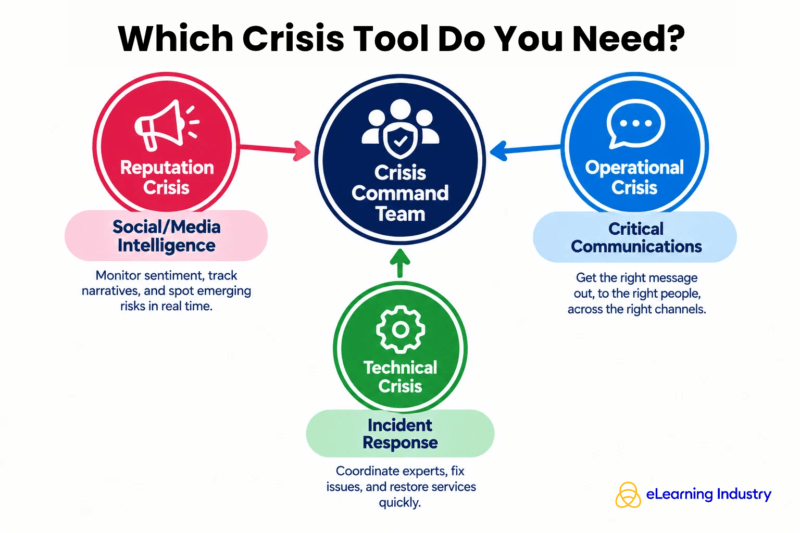
Which Crisis Management Tool Do You Actually Need?
Start with the type of crisis your organization is most likely to face rather than asking which software has the most features.
Online Reputation or Viral Crisis
If your main concern is negative social conversation, misinformation, customer backlash, or executive controversy, consider tools such as:
- Brandwatch
- Brand24
- Mention
- Hootsuite
- Sprinklr
The priority here is detecting changing conversation patterns early and understanding whether an issue is beginning to spread.
News or PR Crisis
If the bigger risk is negative editorial coverage or a story developing across news and broadcast media, look at:
- Meltwater
- CisionOne
- Talkwalker
- Critical Mention
These platforms can help communications teams follow how the story is being covered and which outlets or voices are driving the narrative.
Operational or Physical Crisis
Organizations dealing with workplace safety, business continuity, security incidents, or major external disruptions may need:
- Everbridge
- AlertMedia
- Dataminr
- Noggin
The emphasis shifts from public sentiment to threat awareness, internal coordination, and critical communication.
SaaS Outage, Cybersecurity, or Technical Crisis
For technology companies, operational reliability is closely connected to reputation. Relevant platforms include:
- PagerDuty
- Splunk
- Everbridge
In practice, many organizations will need two layers. One helps them understand what customers, journalists, or the market are seeing externally. Another coordinates what employees and response teams need to do internally.
That separation is important. Monitoring tells you a problem exists. Response technology helps you manage it.
How To Build A Crisis Management Tech Stack
A practical crisis management stack does not require buying five enterprise platforms. It requires covering the stages that matter for your organization.
Layer 1: Detect
Use social listening, media monitoring, technical monitoring, or threat intelligence to identify early warning signs.
The right detection layer depends on your biggest risks. A consumer brand may prioritize social listening, while a SaaS provider may place more weight on service monitoring.
Layer 2: Alert
Once something unusual happens, the system needs to tell the right people.
Set severity thresholds so teams are not overwhelmed by routine activity. A sudden increase in negative mentions may require a PR alert, while a major system failure may need immediate escalation to engineering and leadership.
Layer 3: Coordinate
Determine where the crisis team will work.
For smaller organizations, existing collaboration tools may be enough. Larger companies may require dedicated crisis workflows, response plans, task ownership, and incident logs.
Layer 4: Communicate
Different audiences need different information.
Employees may need safety instructions. Executives may need concise situation updates. Customers may need service information. Journalists may need an approved statement.
The technology should support that communication without creating several conflicting versions of the same message.
Layer 5: Recover
After the immediate issue is resolved, continue brand monitoring.
Track sentiment, coverage, customer complaints, support volume, operational stability, and other relevant indicators. Then conduct a post-incident review to understand what worked and what should change.
The correct technology stack depends on company size, industry, geographic footprint, regulatory exposure, dependence on uptime, public visibility, and overall risk profile.
What Crisis Management Software Cannot Do For You
Software can show you that negative sentiment is increasing. However, it cannot decide whether your CEO should apologize.
It can alert legal, PR, and leadership. It cannot decide which team should have the final say unless your organization has already defined that responsibility.
And it can distribute a statement quickly, but it cannot decide whether that statement is honest, useful, or appropriate.
Companies still need clear crisis-response plans, defined responsibilities, escalation criteria, approved spokespersons, legal processes, communication guidelines, and regular simulations.
Your team should know who makes decisions before the crisis begins. Otherwise, better alerts may simply tell more people that nobody knows who is responsible.
This becomes especially important when legal, communications, customer service, and operational priorities conflict. Technology can place everyone in the same workflow, but people still need to make the judgment calls.
Technology can accelerate a crisis response. It cannot substitute for judgment.
How To Measure Crisis Management Performance
The effectiveness of crisis technology should be judged by what happens before, during, and after an incident.
Detection
Measure how quickly the organization identifies a genuine issue. Useful indicators include time to detect, the delay between the original signal and an alert, and the number of false positives.
If the system sends hundreds of alerts that teams routinely ignore, its speed has limited practical value.
Response
Track how quickly the issue moves through the organization.
This can include time to escalation, time to the first internal or public response, and time to resolution. These measures can reveal where decision-making slows down during an incident.
Reputation
For public-facing crises, monitor changes in negative mention volume, sentiment, media tone, Share of Voice, and branded search behavior.
These metrics should be interpreted together. A spike in brand searches, for example, may reflect curiosity about a controversy rather than growing brand interest.
Operational Performance
When the crisis affects systems, products, or operations, review downtime, customers affected, incidents resolved, and business continuity.
Operational recovery and reputation recovery are often connected but may happen at different speeds.
Recovery
Once the immediate event has ended, look at longer-term signals such as customer churn, review trends, support volume, sentiment recovery, and broader post-crisis perception.
The goal is not only to ask whether the crisis ended. It is to understand whether trust and normal operations actually recovered.
Common Crisis Management Tool Mistakes
Buying software is often easier than fixing the response process around it. That creates several recurring problems.
Common mistakes include:
- Buying monitoring software without creating a crisis plan.
- Alerting teams about every mention instead of setting meaningful thresholds.
- Monitoring only social media while ignoring news, podcasts, or other relevant channels.
- Leaving PR disconnected from IT, security, customer service, and operations.
- Having no clear executive escalation process or crisis owner.
- Running several disconnected dashboards with no shared source of truth.
- Treating automated sentiment as completely accurate.
- Failing to test workflows before a real crisis happens.
- Skipping the post-crisis review.
- Choosing a platform because it offers the most features rather than because it matches the organization’s risks.
One of the most important tests is simple: if a serious issue appeared right now, would the software help your organization decide what happens next?
If the answer is no, you may have monitoring technology rather than a complete crisis management capability.
Conclusion
A crisis management tool cannot stop every problem from happening. What it can provide is something extremely valuable once events start moving quickly: better visibility, faster alerts, clearer context, and stronger coordination.
For a reputation crisis, that might mean detecting a sudden shift in public sentiment before the conversation spreads. During an operational event, it could mean making sure employees and executives receive accurate information. For a SaaS company, it might mean resolving an outage before customer frustration develops into a wider trust issue.
That is why the best platform is not necessarily the one with the most dashboards or the longest list of features.
It is the one that fits the risks your organization actually faces and helps the right people move from detection to action.
The goal is not to build the biggest crisis management stack possible. It is to make sure your organization can see the problem early, understand what matters, communicate clearly, and respond before the damage compounds.
FAQCrisis management tools are software platforms that help organizations detect emerging problems, assess their severity, alert the right teams, coordinate a response, and communicate with employees, customers, executives, or the public. Depending on the type of crisis, these tools may include social listening, media monitoring, critical communications, threat intelligence, or technical incident response software.
There is no single best crisis management platform for every business. The right choice depends on the type of risk you need to manage. Brandwatch, Brand24, Hootsuite, Mention, and Sprinklr are more relevant for reputation and social-media crises, while Meltwater, CisionOne, Talkwalker, and Critical Mention are stronger for media monitoring. Everbridge, AlertMedia, Dataminr, and Noggin focus more on operational or physical crises, while PagerDuty and Splunk are better suited to technical and security incidents.
PR teams typically use a combination of social listening and media monitoring tools. Platforms such as Brandwatch, Meltwater, CisionOne, Talkwalker, Sprinklr, Hootsuite, Brand24, Mention, and Critical Mention can help teams monitor brand mentions, negative sentiment, media coverage, emerging narratives, and sudden increases in conversation. The best setup depends on whether the main risk comes from social media, online news, broadcast coverage, or a combination of channels.
Crisis management software should help teams move from detection to action. Important capabilities include real-time monitoring, anomaly detection, sentiment and context analysis, source coverage, alert routing, collaboration tools, escalation workflows, incident logs, and reporting. Larger organizations may also need employee notifications, business continuity features, approval processes, and integrations with communication tools such as Slack or Microsoft Teams.
Social listening tools help teams detect changes in public conversation before they become harder to manage. They can identify sudden spikes in mentions, rising negative sentiment, influential posts, misinformation, customer complaints, and emerging topics linked to the brand. During a crisis, this gives communications teams a clearer view of how the issue is spreading and which audiences are reacting. However, social listening should support human judgment rather than replace it, especially when sentiment or context is difficult to interpret.
Crisis management software is broader and focuses on coordinating the organization during events that may affect reputation, people, operations, customers, or business continuity. It often includes communication, escalation, monitoring, stakeholder updates, and response planning.
Incident management software is usually more focused on resolving a specific operational or technical problem, such as a software outage, cybersecurity issue, or infrastructure failure. The two often overlap. For example, a technical outage may begin as an incident but become a wider crisis if customers are affected and public trust starts to decline.