

A Strong Podcast Does Much More Than Attract Listeners
Launching a podcast is relatively easy. Building one that people discover, remember, return to, and associate with your brand is much harder. This is especially true in B2B, where a successful podcast marketing strategy has to do more than increase downloads. In 2026, podcast consumption continues to reach record levels, with 58% of Americans aged 12+ consuming a podcast in the last month and 57% having both listened to and watched one.
A company can record a conversation with an industry expert, upload it to Spotify and YouTube, share it once on LinkedIn, and technically say it has a podcast. But that doesn't mean it has built a marketing engine.
For B2B brands, the opportunity is much larger. A well-planned show can strengthen executive visibility, create valuable industry relationships, support thought leadership, and provide original material for your wider content strategy. Your podcast distribution strategy can also extend far beyond podcast platforms when you turn strong conversations into articles, newsletters, social posts, video clips, and other forms of branded content.
The key is to stop treating every episode as a finished asset. Instead, think of the conversation as source material that can support multiple marketing goals. This approach also changes how podcasts generate leads, because the value may appear through a sales conversation months after someone first encounters your content.
That matters because podcast listeners are not simply another traffic source. They can become familiar with your executives, ideas, customers, partners, and point of view long before they enter a buying conversation. The podcast itself is only the starting point.
Key Takeaways
- A B2B podcast marketing strategy should connect audience growth with broader brand and business objectives.
- Distribution should extend beyond Spotify and Apple Podcasts to YouTube, search, social media, email, websites, guests, and other relevant channels.
- Each episode should be treated as a source asset that can generate multiple pieces of content.
- Guests are not simply interview subjects; they can introduce the brand to new audiences and create valuable industry relationships.
- Executives can use podcasts to demonstrate expertise and become recognizable voices within their category.
- Podcast success should be measured using reach, consumption, retention, audience growth, content performance, relationships, and business influence, and not downloads alone.
- Search and AI discovery create additional opportunities when podcast insights are transformed into crawlable, useful web content.
- Consistency matters more than publishing large numbers of episodes without a clear positioning or distribution strategy.
In This Guide, You Will Find...
- What Is A Podcast Marketing Strategy?
- Why B2B Podcast Marketing Is Different
- Start With the Business Objective, Not the Microphone
- Define Exactly Who the Podcast Is For
- Position The Podcast Around A Clear Editorial Territory
- Build Your B2B Podcast Marketing Strategy: A 7-Step Framework
- Create A Guest Strategy That Expands More Than Reach
- Treat Every Episode As A Content Engine
- Build A Multi-Channel Podcast Distribution Strategy
- How To Promote A Podcast Episode Before, During, And After Launch
- Turn Executives Into Recognizable Industry Voices
- Podcast Marketing, SEO, And Search Discovery
- Podcast Marketing And GEO: Can Podcasts Support AI Visibility?
- Connect Podcast Marketing To Demand Generation
- How To Measure B2B Podcast Marketing Performance
- Common B2B Podcast Marketing Mistakes
- The B2B Podcast Marketing Playbook
What Is A Podcast Marketing Strategy?
Podcast marketing is broader than podcast promotion. Promotion focuses primarily on getting people to discover and consume an individual episode. A strategic approach looks at the bigger picture, including why the show exists, who it should reach, what the brand wants to be known for, and how every conversation can contribute to wider marketing goals.
For companies, B2B podcast marketing should connect the podcast with B2B thought leadership, relationships, content, and demand generation rather than treating it as a standalone channel. A strong strategy defines:
- Who the show is for: Identify the people you want to attract, including buyers, decision-makers, industry professionals, partners, and influencers.
- What it should be known for: Establish a clear subject, perspective, and editorial identity that gives your podcast audience a reason to return.
- Why people should listen: Define the practical or strategic value listeners gain from each conversation.
- Where it should appear: Choose podcast platforms, YouTube, social channels, newsletters, and other relevant distribution points.
- How episodes should be promoted: Build a repeatable promotion process rather than relying on one social post.
- How content should be reused: Turn strong insights into articles, clips, newsletters, sales enablement assets, and other formats.
- How guests should be activated: Give guests useful assets and clear opportunities to share the conversation.
- How the show supports the brand: Connect episodes with executive visibility, authority, partnerships, and demand generation.
- How success should be measured: Look beyond subscriber growth to engagement, relationships, traffic, brand impact, and influenced opportunities.
Why B2B Podcast Marketing Is Different
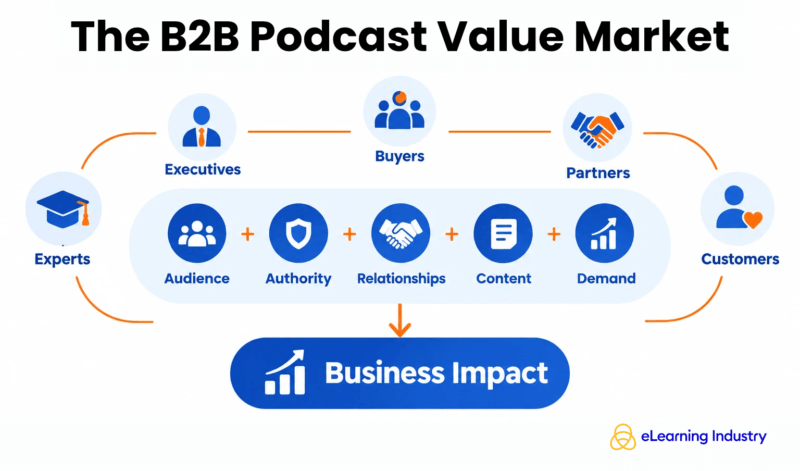
B2B podcast marketing works differently from consumer podcasting because audience quality often matters more than audience size. A show with 500 highly relevant listeners from target accounts, prospective customers, industry partners, executives, analysts, influencers, or future guests can create more business value than thousands of unrelated listeners. That is why a podcast advertising strategy built around reach alone can miss the point. The strongest podcast marketing strategies for businesses connect the show to several strategic objectives:
- Brand Authority: Build repeated associations between your company and the topics that matter to your market.
- Executive Visibility: Give CEOs, CMOs, founders, and subject-matter experts enough space to demonstrate how they think and communicate.
- Relationship Building: Bring customers, prospects, partners, experts, and industry leaders into meaningful conversations.
- Content Creation: Extract original insights from conversations and feed them into your wider content engine.
- Audience Development: Give people a reason to return because they consistently find useful ideas and perspectives.
- Demand Generation: Build familiarity and trust before buyers enter an active purchasing cycle.
- Business Development: Strong conversations can create partnerships, referrals, speaking invitations, collaborations, and sales opportunities.
Start With the Business Objective, Not the Microphone
Before choosing equipment, intro music, or a podcast platform, decide what the podcast is supposed to accomplish. A strong podcast marketing strategy starts with a business goal, not a production checklist. You may want to build category authority, increase executive visibility, reach a new audience, strengthen customer relationships, develop prospect relationships, generate original thought leadership, support demand generation, or create a repeatable video and content engine.
You may also use the show to expand brand visibility, build a community, or create opportunities for partnerships. However, trying to pursue every objective at once can make the show unfocused. Instead, select one primary objective and two or three supporting objectives.
For example, your primary objective could be to build authority among HR and L&D leaders. Your supporting objectives might include increasing executive visibility, developing industry relationships, and generating reusable content. This gives the show a clear role within your brand strategy for growth and helps shape everything from topics and guests to podcast branding and distribution.
Define Exactly Who the Podcast Is For
Avoid defining your audience as “business leaders” or “marketing professionals.” These descriptions are too broad to guide your topics, guests, messaging, or distribution. Instead, define the roles, seniority levels, industries, company types, problems, interests, and decisions that shape your ideal podcast listeners.
For example, replace “marketing professionals” with “CMOs and growth leaders at B2B SaaS and learning tech companies trying to build category authority and scalable demand.” The more specific you are, the easier it becomes to make decisions that support podcast audience growth.
Next, ask what your audience actually wants from the show. What do they want to understand? Who do they want to hear from? Which conversations can't they easily find elsewhere? Which problems repeatedly affect their work? Finally, which perspectives would make them return for another episode?
These questions help you create stronger topics and more relevant guest conversations. They also give you a clearer basis for measuring podcast audience engagement, because you can assess whether the right people are paying attention rather than simply counting total downloads.
Position The Podcast Around A Clear Editorial Territory
Your podcast should have a clear editorial territory that gives people a reason to remember and follow it. You might focus on leadership, growth, AI, transformation, learning, HR, marketing, customer experience, product, or the future of work. However, avoid making the territory so broad that almost any conversation fits.
A useful positioning framework combines audience with problem or interest and perspective. For example, “Conversations with founders and business leaders about the decisions, challenges, and lessons behind scaling successful businesses.” This gives your podcast marketing plan a clear editorial foundation while leaving enough room for different guests and topics.
Consistency does not mean every episode needs to cover the same subject. Instead, every conversation should reinforce a recognizable reason to follow the show. This also makes it easier to decide how to repurpose podcast content, because recurring themes naturally create connected content opportunities across your wider channels and earned media strategy. When listeners understand what your show stands for, each new episode has context.
Build Your B2B Podcast Marketing Strategy: A 7-Step Framework
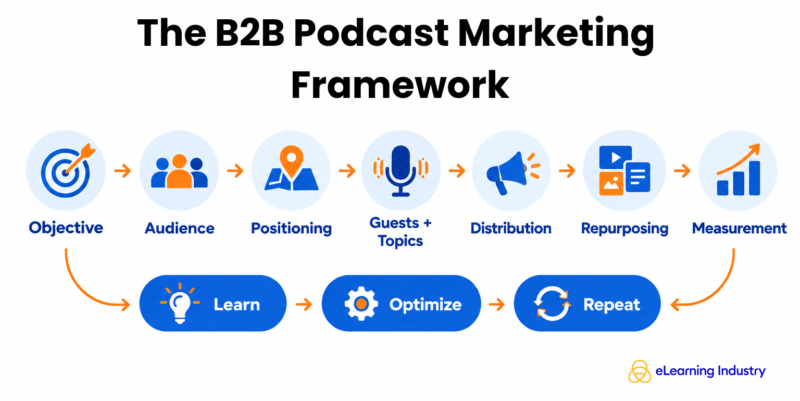
Step 1: Define The Business Objective
Decide what the podcast should contribute to your wider marketing and business goals, such as authority, relationships, visibility, or demand.
Step 2: Define The Audience
Identify exactly who should listen, what they care about, and why your show deserves their attention.
Step 3: Establish The Editorial Territory
Choose the themes, perspective, and point of view that will make the show recognizable and memorable.
Step 4: Build The Guest And Topic Strategy
Select guests and conversations that attract the right people while creating opportunities for relationships, podcast guesting, and thought leadership.
Step 5: Design The Distribution System
Decide where episodes, video, clips, and supporting content will appear, including relevant content syndication platforms.
Step 6: Build The Repurposing And Promotion Engine
Create a repeatable system for content repurposing, promotion, and discovery across channels.
Step 7: Measure Audience And Business Impact
Track audience quality, engagement, relationships, visibility, influenced opportunities, and other signals that show whether your podcast marketing strategy is creating meaningful business value.
Create A Guest Strategy That Expands More Than Reach
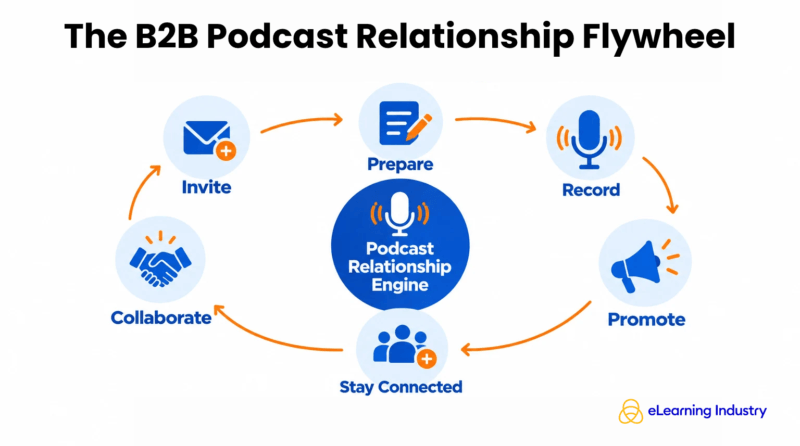
A strong guest strategy can help you learn how to grow a B2B podcast while building relationships that matter beyond the episode. Don't choose a podcast guest based only on follower count. Look for people who can teach your audience something useful, bring relevant experience, and offer a credible perspective.
Evaluate each guest for expertise, relevance, credibility, conversation potential, and audience alignment. A customer can share practical lessons, while a CEO, CMO, founder, analyst, author, researcher, or practitioner can bring a different point of view. Partners and prospects can also create valuable conversations.
Finally, consider relationship value. Could the interview strengthen an industry connection, open a future partnership, or support media outreach? The best guests expand your network, not just your reach.
If you'd like to be a guest on eLearning Talks or Scaling Leadership, let us know and let's explore this further.
Treat Every Episode As A Content Engine
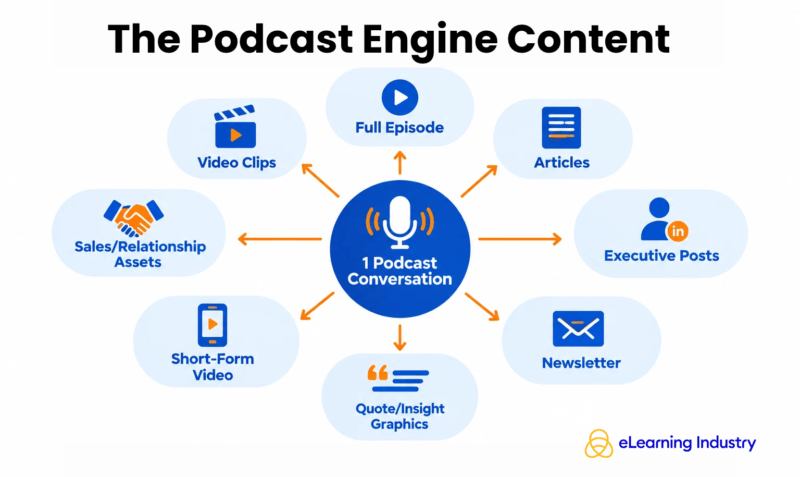
- Full Episode: Publish the conversation on your website, Spotify, Apple Podcasts, and YouTube. Treat the episode as the central source for everything that follows.
- Video Clips: Turn the strongest moments into social media clips for LinkedIn, YouTube Shorts, Instagram Reels, and TikTok when appropriate.
- Written Content: Create an article, newsletter, key takeaways, quote-led posts, and executive thought leadership based on the conversation.
- Visual Content: Use memorable quotes, frameworks, data points, and ideas to create graphics and carousels.
- Sales And Relationship Content: Give sales teams relevant follow-up assets, account-specific content, and customer communications that can support pipeline influence.
- The Warning: Don't create many mediocre assets simply because AI makes it possible. Extract the strongest ideas, stories, disagreements, examples, frameworks, and memorable moments.
Build A Multi-Channel Podcast Distribution Strategy
- Podcast Platforms: Publish on Spotify, Apple Podcasts, and relevant directories. A strong podcast distribution strategy makes discovery easier across multiple listening environments.
- YouTube: For video podcasts, use full episodes, clips, and shorts. Optimize searchable titles, thumbnails, and chapters to support video marketing.
- Website: Create episode pages with summaries, guest details, key insights, embedded media, related resources, CTAs, and internal links.
- Email: Promote episodes through newsletters, selective dedicated sends, and topic- or guest-focused highlights.
- Social Media: Lead with the idea, not “New episode is live!” Strong insights build brand awareness and create curiosity.
- Guest Channels: Provide guests with ready-to-share clips, images, copy, and links.
- Internal Distribution: Equip executives, employees, sales, customer success, and partners to share relevant episodes as part of your full-funnel marketing strategy.
How To Promote A Podcast Episode Before, During, And After Launch
-
Before Publication
Identify the strongest angles, prepare clips and assets, coordinate with the guest, refine the episode title, build the website page, prepare YouTube metadata, and identify internal linking opportunities.
-
Launch
Publish across primary platforms and lead with the strongest insight rather than a generic announcement. Activate the guest and distribute the episode through relevant owned channels.
-
After Launch
Don't stop after 48 hours. Resurface valuable clips, quotes, follow-up posts, newsletter placements, related articles, internal links, and guest mentions. Evergreen conversations can continue generating discovery long after publication when they remain connected to your content ecosystem.
-
Strategic Promotion
Treat promotion as part of your broader podcast marketing strategy, not a one-time campaign. Strong episodes can continue supporting thought leadership marketing when new discussions, trends, or customer questions make their insights relevant again.
Turn Executives Into Recognizable Industry Voices
A B2B podcast becomes more valuable when listeners start associating specific executives with useful expertise. The goal isn't simply to put the CEO on camera. It is to build recognizable voices that people trust and remember.
Each leader can own a different territory. A CEO can discuss leadership, market direction, and business strategy. A CMO can explore brand, growth, and buyer behavior. A CTO can address AI, technology, and security, while product and L&D leaders can focus on innovation, customer problems, workforce trends, skills, and learning.
Build authority through clear perspectives, stories, frameworks, consistent themes, and conversational confidence. Then compound that expertise through podcast hosting, guest appearances, LinkedIn, articles, webinars, events, and interviews.
This is also why how to market a company podcast matters. Consistent visibility can strengthen brand authority over time, which proves why being a podcast guest matters.
Podcast Marketing, SEO, And Search Discovery
- Episode Titles: Make the topic clear and searchable. Avoid relying only on clever names. Strong podcast SEO starts with descriptive topics.
- Episode Pages: Give search engines useful, crawlable context through summaries, guest information, transcripts, and related resources.
- Show Notes: Provide genuine information rather than two promotional sentences. Answer key questions discussed in the conversation.
- Internal Linking: Connect episodes with relevant articles, guides, research, products, and topic hubs.
- YouTube Search: Optimize titles, descriptions, chapters, thumbnails, and topic relevance to improve discovery.
- Topic Clusters: Connect conversations with existing articles, research, webinars, and eBooks. Your podcast marketing strategy should strengthen the wider content ecosystem and support SEO vs. GEO visibility.
Podcast Marketing And GEO: Can Podcasts Support AI Visibility?
Podcasts do not automatically make your brand visible in AI answers. Generative Engine Optimization (GEO) becomes more relevant when conversations produce accessible, useful, and corroborated information across multiple formats.
An expert conversation can become a podcast episode, video, episode page, article, clips, and executive commentary. Together, these assets create more discoverable information around a topic, person, or area of expertise. This can support SEO while giving AI systems more useful material to understand.
Also, strong podcast conversations can produce original frameworks, expert definitions, predictions, data, industry analysis, first-hand experiences, and case examples.
Don't publish a transcript simply because you assume more text means better GEO. Instead, focus on extracting and structuring the strongest insights. This approach also makes how to promote a business podcast more strategic because every conversation can become a useful knowledge asset.
Connect Podcast Marketing To Demand Generation
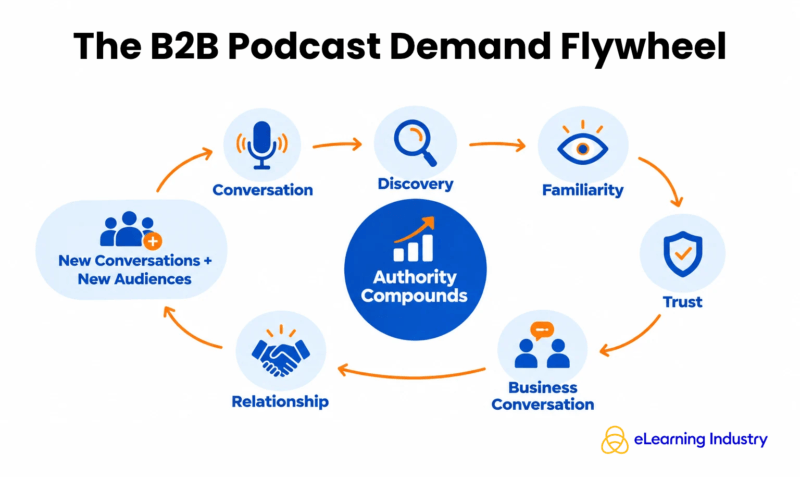
An interesting conversation can lead to audience discovery, repeated exposure, expert and brand familiarity, trust, and eventually future business consideration. However, a podcast promotion strategy should not assume that every listener becomes a prospect.
Podcast influence is often indirect. Track signals such as prospects mentioning episodes, target accounts engaging with clips, guests becoming partners or customers, new qualified conversations, newsletter subscriptions, relevant inbound inquiries, sales teams using episodes in conversations, event invitations, and partnership opportunities.
These signals can reveal business value that standard lead generation metrics miss. A prospect may listen for months before starting a conversation, while a guest may introduce your company to an entirely new network.
Some of the most valuable podcast outcomes may happen outside the podcast analytics dashboard. This is why the best demand generation practices for B2B podcasts connect audience behavior with relationships and broader commercial activity.
How To Measure B2B Podcast Marketing Performance
- Reach: Track downloads, video views, impressions, and unique listeners or viewers. These show how far your content travels.
- Consumption: Measure watch time, listening time, completion rates, and audience retention to understand whether people stay engaged.
- Audience Growth: Monitor subscribers, followers, repeat listeners, returning viewers, and newsletter subscriptions to see whether the audience compounds.
- Content Impact: Evaluate clip performance, social engagement, website traffic, search visibility, episode-page engagement, and repurposed content performance.
- Business And Relationship Impact: Track qualified conversations, target-account engagement, guest relationships, partnerships, speaking invitations, customer conversations, influenced opportunities, and measurable pipeline influence.
Common B2B Podcast Marketing Mistakes
- Launching without a clear audience or purpose.
- Choosing topics purely around what the company wants to promote.
- Inviting guests only because they have large audiences.
- Treating interviews as disguised sales pitches.
- Publishing without a clear distribution plan.
- Promoting each episode only once.
- Using “new episode is live” as the entire social strategy.
- Creating too many low-quality repurposed assets.
- Ignoring video and YouTube.
- Creating weak episode pages with little useful information.
- Using clever but unsearchable episode titles.
- Measuring only downloads instead of broader podcast marketing metrics.
- Expecting immediate lead attribution.
- Failing to activate guests after publication.
- Failing to nurture guest relationships after recording.
- Treating the podcast as separate from the broader content strategy and podcast branding.
- Publishing inconsistently without an intentional, sustainable cadence.
- Building a podcast marketing strategy around volume instead of audience value.
The B2B Podcast Marketing Playbook
For every episode:
1. Choose a topic your audience genuinely cares about.
2. Choose the right guest, or internal expert.
3. Identify the strongest conversation angles before recording.
4. Record for insight, not scripted promotion.
5. Publish across the right platforms.
6. Extract the strongest ideas into multiple formats.
7. Activate the guest and internal network.
8. Continue distributing insights after launch.
9. Measure audience, authority, relationships, and business signals.
10. Feed what you learn into the next episode.
Conclusion
A successful B2B podcast is built around more than publishing consistently. It starts with a clear audience, a defined editorial territory, and a business objective that gives every conversation a purpose. From there, your job is to create useful discussions, build relationships, distribute insights across channels, and keep learning from what resonates.
Understanding how to create a podcast marketing strategy helps you move beyond downloads and short-term promotion. It also helps you separate strategy from production. Knowing how to start a podcast may get your first episode published, but a thoughtful strategy determines whether people discover it, remember it, and connect it with your brand.
Your approach should also account for distribution, content repurposing, executive visibility, search discovery, relationships, and demand generation. A podcast advertising strategy can extend reach, but paid visibility cannot replace relevant topics, credible guests, or valuable conversations.
eLearning Industry's podcast network connects Learning Tech, HR Tech, EdTech, AI, and workplace-learning companies with audiences interested in the ideas shaping learning, leadership, growth, technology, and the future of work. Explore opportunities across:
- Scaling Leadership: Conversations with founders, CEOs, and business leaders about building and scaling successful businesses.
- eLearning Unscripted: Conversations with L&D leaders about engagement, progress, performance, and what works in practice.
- eLearning Talks: Practical conversations across culture, AI, engagement, retention, and workplace learning.
A podcast marketing strategy is a plan for using podcast content to build brand awareness, establish expertise, engage a target audience, and support business goals such as lead generation and sales.
B2B podcasts can help companies demonstrate expertise, build relationships with industry audiences, and create more personal connections with potential buyers. They can also provide a foundation for content repurposing across multiple channels.
Define your target audience and business goals, choose relevant topics and formats, establish a publishing schedule, and plan how each episode will be promoted and repurposed. Set measurable KPIs such as downloads, engagement, qualified leads, and influenced revenue.
Create consistently useful, niche-focused episodes and promote them through email, social media, your website, and relevant industry communities. Inviting knowledgeable guests can also expand reach by giving you access to their networks.
A weekly or biweekly schedule is common, but consistency matters more than frequency. Choose a cadence your team can maintain while producing episodes that provide meaningful value.
Share the episode through email newsletters, social media, your website, and guest channels. Turn key insights, quotes, clips, and statistics into additional posts and content that link back to the full episode.
Yes. Podcasts can generate leads by building trust with potential buyers and directing listeners toward relevant resources, events, demos, or other calls to action. They tend to work best as part of a broader B2B content and demand-generation strategy.
Track metrics such as audience growth, engagement, website traffic, qualified leads, conversions, and revenue influenced by podcast activity. Compare these outcomes with production and promotion costs to assess ROI.
Yes. Podcast episodes can be supported with searchable transcripts, detailed show notes, articles, FAQs, and other text-based content. This gives search engines and AI systems more relevant material to understand and potentially surface when users search for related topics.
There is no fixed number, but one episode can often produce 10–20 or more content assets, including social posts, short videos, quotes, articles, newsletters, audiograms, and FAQs. A planned repurposing workflow can significantly extend the value of each recording.