

Data-Driven Growth: Leverage Analytics, SEO, And GEO To Spot Market Opportunities
For decades, business growth has often been driven by intuition. Leaders relied on experience, industry knowledge, customer conversations, and gut instinct to identify opportunities and make strategic decisions. While intuition still has value, it is no longer enough in a market where buyer behavior changes rapidly and digital signals reveal shifts in demand long before they become obvious.
The organizations growing fastest today share a common advantage: they make decisions based on evidence. They use analytics, search intelligence, and increasingly AI visibility data to understand where markets are moving and where opportunities are emerging.
Every day, buyers leave behind digital clues. They search for solutions to problems, compare products, consume content, ask questions in AI-powered search engines, and engage with brands across multiple channels. Collectively, these actions create an enormous pool of market intelligence that businesses can use to uncover opportunities before competitors recognize them.
What makes this particularly important today is the rise of AI-driven discovery. Search is no longer limited to traditional search engines. Buyers increasingly use platforms such as ChatGPT, Perplexity, Gemini, and Claude to research vendors, evaluate products, and discover solutions. This shift is creating a new layer of visibility data that forward-thinking organizations can leverage as part of their growth strategy.
The companies that learn to interpret these signals effectively gain a significant competitive advantage. They identify rising trends earlier, discover underserved customer needs faster, and position themselves ahead of category shifts.
In this article, we'll explore how leaders can combine analytics, SEO, and Generative Engine Optimization (GEO) to create a powerful market intelligence system that reveals emerging opportunities, improves strategic decision-making, and accelerates business growth.
Data-driven growth combines analytics, SEO, and GEO insights to identify emerging demand, uncover market gaps, and reveal opportunities before competitors recognize them.
Key Takeaways
- Analytics reveals customer behavior and market trends.
- SEO data uncovers search demand and content gaps.
- GEO data shows how AI engines surface brands and solutions.
- Combining all three creates a powerful market intelligence system.
- Companies that use search intelligence often identify opportunities earlier and adapt faster than competitors.
In This Article…
- Why Growth Opportunities Leave Digital Footprints
- How Analytics Reveals Hidden Growth Opportunities
- Using SEO Data As A Market Intelligence Tool
- How GEO Is Creating A New Layer Of Market Intelligence
- How To Analyze AI Visibility Data
- Combining Analytics, SEO, And GEO Into One Growth Engine
- Real Examples Of Market Opportunities Discovered Through Data
- Common Mistakes Companies Make
- What CEOs And CMOs Should Measure Going Forward
- The Future Of Data-Driven Growth
Why Growth Opportunities Leave Digital Footprints
Every market opportunity begins as a signal.
Before a new category becomes mainstream, before a product trend gains momentum, and before buyers actively seek vendors, people start searching for answers. They ask questions, consume content, compare alternatives, and discuss emerging challenges. These activities create digital footprints that organizations can analyze to anticipate demand.
One of the biggest misconceptions in business growth is the belief that opportunities suddenly appear. In reality, most opportunities develop gradually. Buyer behavior shifts first. Market demand follows later.
Consider how software categories evolve. Before a new technology becomes widely adopted, professionals begin researching it. Search volumes increase. Industry publications start covering related topics. Communities discuss use cases. Analysts publish reports. AI search engines begin surfacing specific brands and solutions more frequently.
These are all measurable signals.
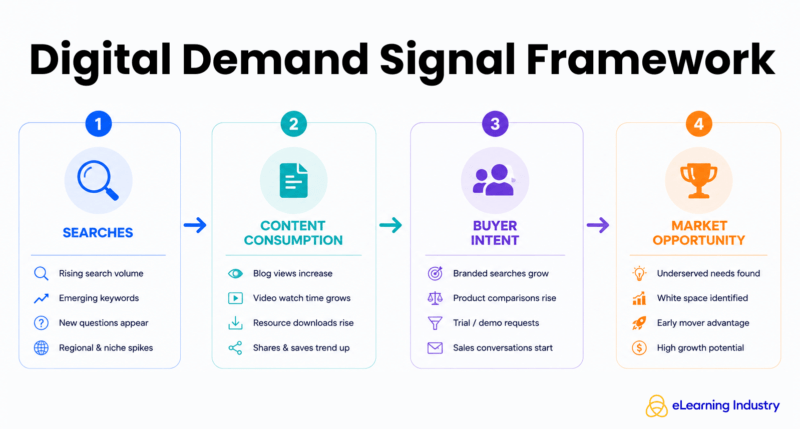
Search behavior is often one of the earliest indicators of market movement. When large groups of buyers start searching for solutions to similar problems, they create patterns that can be observed through keyword trends, content engagement metrics, and AI recommendation behavior.
At the same time, content consumption reveals what audiences care about most. The articles they read, webinars they attend, and resources they download often indicate where future demand is heading.
Buyer intent signals are equally important. Product comparisons, solution evaluations, and high-intent searches frequently reveal that organizations are actively entering a purchasing cycle.
Today, AI platforms add another layer of intelligence. When buyers ask ChatGPT or Perplexity for recommendations, those interactions help reveal which topics are gaining momentum and which brands are becoming associated with emerging categories.
Organizations that monitor these signals consistently gain an advantage because they can respond before competitors recognize the opportunity.
How Analytics Reveals Hidden Growth Opportunities
Many organizations view analytics primarily as a reporting tool. They monitor traffic, conversions, and campaign performance to measure success. While those metrics are important, analytics can provide far more strategic value when used as a market intelligence resource.
The most valuable opportunities often already exist within your current audience.
Customer behavior analytics can reveal what prospects and customers genuinely care about. By examining content engagement patterns, organizations can identify topics generating unusually high interest. Certain pages may attract significantly more traffic, longer engagement times, or higher conversion rates than expected. These patterns often indicate unmet needs or emerging demand areas.
Conversion path analysis offers another valuable perspective. Understanding how buyers move from awareness to purchase helps identify which content, channels, and experiences influence decision-making. Sometimes, unexpected pages or resources contribute disproportionately to conversions, revealing opportunities for product expansion or content investment.
Product analytics can uncover growth opportunities hidden within existing customer behavior. Feature adoption data may reveal that customers are using a product in ways the company never anticipated. These insights often lead to new positioning strategies, additional use cases, or entirely new market segments.
Audience analytics can also identify high-value customer groups. Organizations frequently discover that their most profitable customers share characteristics that differ from their original target audience. Understanding these patterns can help refine messaging, improve segmentation, and uncover untapped growth potential.
Revenue analytics provides another critical layer. By analyzing which channels, campaigns, industries, or customer segments generate the highest lifetime value, companies can focus resources where growth potential is greatest.
The key lesson is simple: analytics is not just about measuring performance. It is about identifying patterns that reveal future opportunities. Companies that learn to interpret behavioral data effectively often discover growth opportunities long before they become visible at the market level.
Using SEO Data As A Market Intelligence Tool
Many businesses still view SEO primarily as a traffic acquisition channel. They focus on rankings, clicks, and organic visibility. While those outcomes matter, the true strategic value of SEO lies elsewhere.
SEO is one of the most powerful market intelligence systems available to modern organizations.
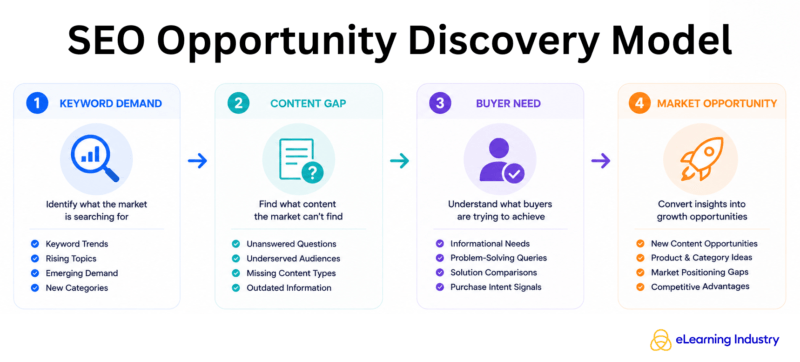
Every search query represents demand. It reflects a problem, a need, a question, or a buying signal. When analyzed correctly, search data reveals what markets care about, how demand is changing, and where opportunities exist.
Keyword trend analysis is often the starting point. Rising search volumes can indicate growing interest in specific technologies, business challenges, or solution categories. These trends frequently emerge months before broader market awareness develops. Organizations that monitor keyword growth effectively can identify opportunities early and establish authority before competition intensifies.
SEO data is also invaluable for discovering emerging categories. Sometimes, entirely new keyword clusters begin appearing as buyer language evolves. Monitoring these changes can reveal shifts in customer priorities and uncover previously overlooked opportunities.
Content gap analysis adds another layer of insight. By examining what buyers are searching for versus what content currently exists, organizations can identify underserved areas of demand. These gaps often represent opportunities for thought leadership, product innovation, or market expansion.
Competitive SEO analysis provides further intelligence. By understanding which topics competitors are investing in, where they are gaining visibility, and where they remain weak, businesses can identify strategic openings within the market.
Perhaps most importantly, SEO helps organizations understand buyer intent. Different search queries reveal different stages of the buying journey. Informational searches indicate awareness, while comparison and solution-oriented searches often signal purchase intent.
Companies that use SEO solely for rankings miss much of its value. The most sophisticated organizations use search intelligence to understand market behavior, forecast demand, and guide strategic growth decisions.
How GEO Is Creating A New Layer Of Market Intelligence
For years, businesses have relied on search engines to understand demand and connect with buyers. However, the way people discover information is changing rapidly. Increasingly, buyers are turning to AI-powered platforms such as ChatGPT, Perplexity, Google Gemini, and Claude to research vendors, compare products, and evaluate solutions.
This shift has created an entirely new discipline: Generative Engine Optimization (GEO).
While SEO focuses on helping brands appear in search results, GEO focuses on helping brands appear in AI-generated answers and recommendations. More importantly, GEO provides businesses with a new source of market intelligence.
Traditional search data tells you what people are searching for. GEO data helps reveal what AI systems consider authoritative, trustworthy, and worthy of recommendation.
This distinction matters because AI engines increasingly act as decision-making intermediaries. When a prospect asks an AI platform for the best learning management systems, employee onboarding solutions, or skills development tools, the AI determines which brands receive visibility.
By studying these recommendations, organizations can gain valuable insight into category dynamics.
GEO can reveal:
- Which brands AI systems consistently recommend
- Which publications and sources influence AI responses
- Which companies dominate emerging conversations
- Which topics are gaining authority within a category
- Which competitors are strengthening their digital footprint
This visibility often serves as an early indicator of future market leadership.
Historically, strong search rankings reflected market authority. Increasingly, strong AI visibility may serve the same function. Companies that frequently appear in AI-generated responses are likely building the authority signals that both buyers and AI systems value.
For CEOs and CMOs, this creates a significant opportunity. GEO is not simply another marketing channel. It is becoming a lens through which organizations can observe shifts in trust, influence, and market perception before those shifts become obvious elsewhere.
The organizations that monitor AI visibility today may gain a clearer understanding of tomorrow's market leaders.
How To Analyze AI Visibility Data
Understanding that AI visibility matters is only the first step. The next challenge is determining how to measure it and translate it into actionable business intelligence.
As with SEO, visibility in AI platforms leaves patterns that can be tracked and analyzed.
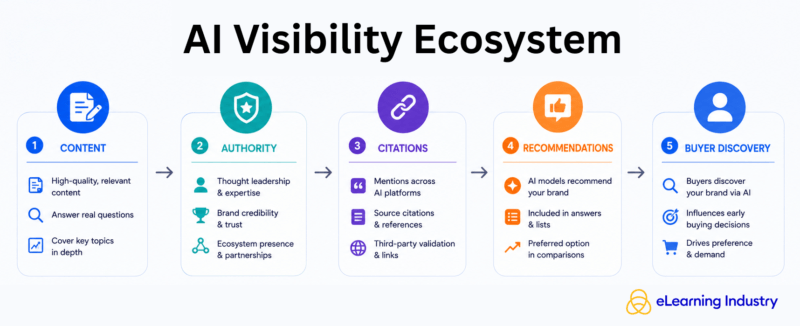
One of the most important areas is AI citation analysis. Every time an AI platform references a company, article, report, or website, it provides clues about which sources are influencing recommendations.
Organizations should monitor:
- Brand mentions in AI-generated responses
- Citation frequency across AI platforms
- Sources commonly referenced by AI engines
- Competitor appearances in recommendations
- Category-specific visibility patterns
Over time, these observations help reveal which organizations are gaining authority and which are losing visibility.
AI share of voice is another increasingly valuable metric. Similar to traditional share of voice in search or media, AI share of voice measures how frequently a brand appears relative to competitors when buyers ask category-related questions.
For example, if prospective LMS buyers ask AI engines for recommendations and a particular vendor consistently appears in responses, that vendor likely possesses stronger authority signals than competitors.
Organizations should also evaluate authority indicators that influence AI recommendations.
These include:
- Original research and data
- Expert-led content
- Industry recognition
- High-quality backlinks and citations
- Third-party mentions
- Ecosystem participation
- Strong brand authority
Because AI systems aggregate information from multiple sources, authority is no longer determined by a single ranking factor. Instead, visibility often reflects the combined strength of a company's digital reputation.
The organizations that excel in AI visibility typically demonstrate expertise across multiple channels. They publish valuable content, contribute to industry conversations, earn citations from trusted publications, and build strong topical authority.
For growth leaders, AI visibility analysis offers something unique: a direct view into how machines interpret market authority. As AI increasingly influences buying decisions, this perspective becomes an increasingly valuable source of competitive intelligence.
Combining Analytics, SEO, And GEO Into One Growth Engine
Individually, analytics, SEO, and GEO provide valuable insights. Together, they create a comprehensive market intelligence system capable of uncovering opportunities that would otherwise remain hidden.
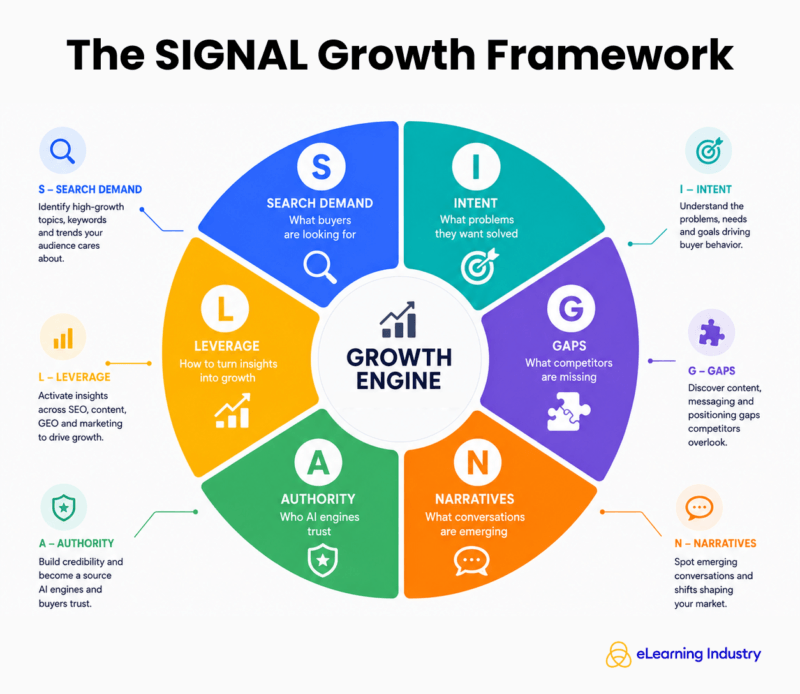
To operationalize this approach, organizations can adopt what we call the SIGNAL Framework.
The framework combines behavioral data, search intelligence, and AI visibility into a structured growth methodology.
S - Search Demand
Everything begins with demand.
Search behavior reveals what buyers care about, which problems are increasing in importance, and which topics are gaining momentum.
Organizations should continuously monitor:
- Keyword trends
- Emerging search topics
- Category growth patterns
- Demand velocity
Search demand often serves as the earliest signal of opportunity.
I - Intent
Not all demand is equal.
Understanding buyer intent helps organizations distinguish curiosity from genuine purchase interest.
Intent analysis reveals:
- Pain points
- Buying readiness
- Solution requirements
- Decision criteria
Companies that understand intent can prioritize opportunities with the greatest commercial potential.
G - Gaps
Opportunities frequently exist where competitors are absent.
Gap analysis helps uncover:
- Content gaps
- Product gaps
- Messaging gaps
- Audience gaps
Many of the highest-growth opportunities emerge where customer needs remain underserved.
N - Narratives
Market conversations shape future demand.
Organizations should monitor:
- Emerging industry discussions
- New category language
- Community trends
- Influencer narratives
Narratives often become tomorrow's market opportunities.
A - Authority
In the AI era, authority is becoming a growth multiplier.
Organizations must evaluate:
- AI citations
- Brand mentions
- Expert recognition
- Industry trust signals
Authority increasingly determines visibility across both search engines and AI platforms.
L - Leverage
Insights create value only when translated into action.
Organizations should use SIGNAL insights to:
- Develop new products
- Enter emerging markets
- Create category-defining content
- Improve positioning
- Accelerate revenue growth
The companies that systematically apply these insights transform data into competitive advantage.
Real Examples Of Market Opportunities Discovered Through Data
The practical value of analytics, SEO, and GEO becomes clear when examining how organizations uncover opportunities in real-world scenarios.
Example 1: Keyword Growth Reveals Rising Demand
Imagine a learning technology company monitoring search trends.
Over several months, the team notices rapid growth in searches related to AI skills development, AI literacy training, and workforce AI readiness.
Initially, these keywords generate relatively modest volumes. However, growth rates consistently exceed broader learning and development topics.
The company acts early.
It develops AI-focused training programs, publishes educational content, launches webinars, and establishes thought leadership around workforce AI adoption.
By the time competitors recognize the trend, the company already owns significant market visibility.
The opportunity was visible in search data long before it became a mainstream priority.
Example 2: AI Citations Reveal a New Category Leader
An HR technology vendor begins monitoring AI-generated recommendations within its category.
The team discovers that a relatively small competitor consistently appears in AI responses despite having lower traditional brand awareness.
Further investigation reveals that the competitor has invested heavily in original research, expert content, and authoritative industry partnerships.
AI platforms view the company as highly trustworthy.
Recognizing this shift early allows the organization to strengthen its own authority strategy before market perception changes permanently.
Example 3: Content Gaps Reveal an Underserved Audience
A SaaS company conducts a content gap analysis and identifies hundreds of unanswered questions from a niche audience segment.
Search demand exists, but competitors provide limited coverage.
The company creates dedicated resources, tailored messaging, and audience-specific solutions.
Within months, it becomes the dominant voice for that segment and captures significant market share.
In each case, opportunity existed before revenue appeared. The key was recognizing the signal early enough to act.
Common Mistakes Companies Make
Despite access to unprecedented amounts of data, many organizations still struggle to identify opportunities effectively.
One common mistake is focusing exclusively on traffic.
Traffic alone rarely reveals business value. High-volume keywords may generate visits while producing little commercial impact. Growth leaders focus on demand quality and buyer intent rather than raw volume.
Another mistake is treating SEO solely as a rankings exercise.
Organizations that view SEO only through the lens of rankings often miss its strategic value as a market intelligence tool. Search data provides insight into customer needs, category evolution, and emerging demand patterns.
Ignoring intent is equally problematic.
Many companies measure what people search for without understanding why they search. Intent often determines whether an opportunity is informational, transactional, or strategic.
A growing number of organizations are also overlooking AI visibility.
While SEO remains critical, buyer discovery increasingly occurs through AI-powered experiences. Brands that fail to monitor AI recommendations risk losing visibility in future buying journeys.
Another common issue is making strategic decisions based on assumptions rather than evidence.
Leadership teams sometimes rely on internal opinions, anecdotal feedback, or historical experience instead of objective data. While experience remains valuable, combining expertise with measurable signals typically produces stronger outcomes.
The companies that outperform competitors are often those that replace assumptions with intelligence and intuition with evidence-backed decision-making.
What CEOs And CMOs Should Measure Going Forward
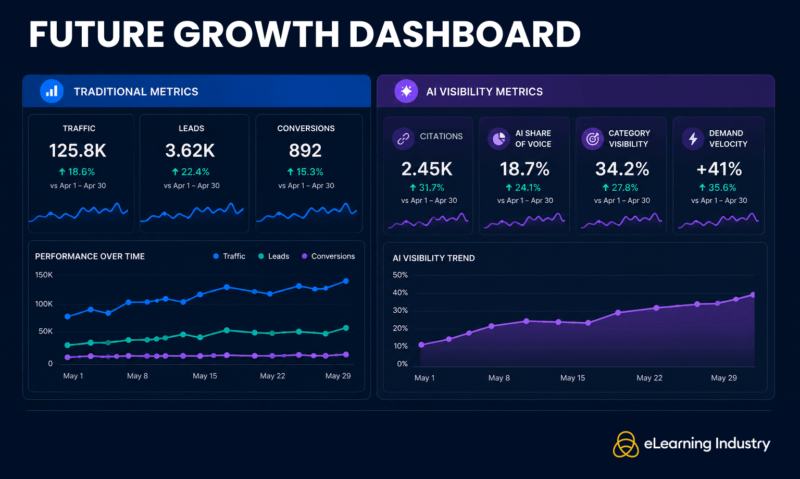
Despite the new trends in marketing, traditional growth metrics remain important. They still work and bring growth.
On this note, organizations should continue tracking:
- Website traffic
- Lead volume
- Pipeline contribution
- Conversion rates
- Customer acquisition cost
- Revenue growth
However, these metrics primarily describe what has already happened.
The next generation of growth metrics focuses on future opportunity. So, forward-thinking organizations are beginning to monitor:
AI Citations
How often is your company cited or referenced by AI platforms?
AI Share Of Voice
How frequently does your brand appear relative to competitors in AI-generated recommendations?
Category Visibility
How visible is your organization across both search engines and AI platforms within strategic categories?
Demand Velocity
How quickly is interest in a topic, category, or solution increasing?
Brand Authority Signals
How often are your insights, research, and expertise referenced by others?
Content Gap Coverage
How effectively are you addressing emerging buyer questions before competitors?
Together, these metrics provide a more complete view of future growth potential.
The Future Of Data-Driven Growth
The next era of growth will belong to organizations that identify demand before it becomes obvious.
Historically, competitive advantage often came from distribution, advertising budgets, or brand recognition. While those factors remain important, access to market intelligence is becoming an increasingly powerful differentiator.
The organizations that win tomorrow will not simply rank higher in search results.
They will:
- Appear consistently in AI recommendations
- Shape category conversations
- Build trusted authority signals
- Detect emerging demand earlier
- Create solutions before competitors react
As AI reshapes how information is discovered and consumed, visibility itself is evolving. Success will depend not only on being found in search engines but also on becoming a trusted source within AI-generated experiences.
Companies that understand GEO vs. SEO and integrate analytics into a unified intelligence system will be better equipped to anticipate change rather than react to it.
In many ways, the future of growth belongs to organizations that become experts at interpreting signals.
Conclusion
Data-driven growth is no longer just about dashboards, reports, or performance metrics.
Today's most successful organizations combine behavioral analytics, search intelligence, and AI visibility insights to gain a deeper understanding of market dynamics. They use data not simply to measure what has happened, but to anticipate what will happen next.
Analytics reveals how customers behave. SEO uncovers what buyers are actively searching for. GEO exposes how AI systems interpret authority, trust, and relevance. Together, these disciplines provide an unprecedented view of demand, market shifts, and competitive positioning.
As AI-powered discovery becomes increasingly influential, the ability to analyze both human and machine-driven signals will become a critical competitive advantage.
Organizations that embrace this approach will be better positioned to identify emerging opportunities, shape market conversations, strengthen authority, and accelerate growth.
The future belongs to companies that can transform digital signals into strategic action. By combining analytics, SEO, and GEO into a unified growth framework, business leaders can move beyond reactive decision-making and build more proactive, opportunity-driven business growth strategies.
FAQData-driven growth is a business strategy that uses analytics, customer insights, search intelligence, and market data to identify opportunities, optimize decision-making, and accelerate growth. Instead of relying on assumptions, organizations use measurable signals to guide product, marketing, and business investments.
SEO helps businesses identify market opportunities by analyzing search demand, keyword trends, buyer intent, and content gaps. Rising search volumes and emerging keyword clusters often reveal new customer needs, underserved markets, and growing solution categories before competitors recognize them.
Market opportunity analysis is the process of evaluating customer demand, market trends, competitive gaps, and growth potential to identify areas where a business can expand. It combines data from multiple sources, including analytics, SEO, customer research, and AI visibility insights.
Analytics supports business growth by uncovering customer behavior patterns, conversion trends, product adoption insights, and revenue opportunities. Businesses can use this data to improve customer experiences, optimize marketing investments, and prioritize high-growth initiatives.
Generative Engine Optimization (GEO) is the practice of improving a brand's visibility within AI-powered platforms such as ChatGPT, Perplexity, Gemini, and Claude. GEO focuses on increasing authority, credibility, and discoverability so AI systems are more likely to reference and recommend a company.
GEO helps businesses get discovered by AI by strengthening authority signals such as expert content, original research, industry mentions, and trusted citations. These signals increase the likelihood that AI platforms will surface a brand when users ask for recommendations or information.
AI visibility refers to how often a company, product, or brand appears in AI-generated answers and recommendations. As more buyers use AI tools for research and decision-making, strong AI visibility can influence brand awareness, lead generation, and market leadership.
AI Share of Voice measures how frequently a brand appears in AI-generated responses compared to competitors. It provides insight into a company's authority within a category and helps organizations understand how visible they are in emerging AI-driven discovery channels.
AI visibility data can reveal market opportunities by showing which brands, topics, and categories AI systems prioritize. Businesses can identify emerging leaders, detect authority gaps, uncover content opportunities, and better understand how buyers are discovering solutions through AI platforms.
In addition to traditional metrics such as traffic, leads, conversions, and revenue, CEOs and CMOs should monitor AI citations, AI Share of Voice, category visibility, demand velocity, brand authority signals, and content gap coverage. These metrics provide a more forward-looking view of market opportunities and competitive positioning.