

How To Build A Brand Awareness Campaign
Most brand awareness campaigns are judged by how many people saw them. Reach matters, but it is only the starting point because an impression does not tell you whether someone noticed the company, understood what it stands for, or remembered it later.
This distinction is especially important in B2B marketing. Buyers often encounter a company months before they need its product. Therefore, a useful brand awareness campaign should help a clearly defined audience recognize the brand, associate it with a relevant problem or category, trust its expertise, and remember it when a buying need emerges.
The purpose is not simply to make the company more visible. It is to build enough familiarity and credibility for the brand to enter the buyer's consideration set.
This guide explains how to create a brand awareness campaign around that goal. It covers audience selection, positioning, campaign ideas, channels, trust, measurement, and the connection between awareness and future demand.
A brand awareness campaign is a coordinated marketing initiative designed to make a target audience recognize, remember, and associate a brand with a specific need, category, value, or solution.
Key Takeaways
- Brand awareness is more than reach; it requires recognition, relevant association, and recall.
- Effective campaigns focus on a defined audience and one memorable market position.
- Consistency and frequency matter because buyers may encounter a brand long before they are ready to purchase.
- Trust-building assets such as research, expert content, reviews, webinars, and third-party coverage strengthen awareness.
- Branded search, direct traffic, Share of Voice, consideration, and pipeline influence should be measured alongside impressions.
- The objective is not only to be seen—it is to become memorable and credible enough to enter the buyer's consideration set.
In This Article, We Explore…
- What Is a Brand Awareness Campaign?
- Why Brand Awareness Matters In B2B Marketing
- Brand Awareness Vs. Brand Visibility
- When Should A Company Run A Brand Awareness Campaign?
- Define What You Want The Brand To Be Known For
- The REACH Brand Awareness Framework
- How To Set Brand Awareness Campaign Objectives
- Build The Campaign Around One Memorable Idea
- Choose The Right Brand Awareness Channels
- How To Build Trust Into An Awareness Campaign
- How To Turn Brand Awareness Into Demand
- How Much Reach And Frequency Does A Campaign Need?
- Brand Awareness Campaign Metrics
- A Practical B2B Brand Awareness Campaign Example
- Common Brand Awareness Campaign Mistakes
- Brand Awareness In Search And AI Discovery
- Brand Awareness Campaign Checklist
What Is A Brand Awareness Campaign?
A brand awareness campaign is more than a collection of advertisements. It is a planned effort to shape how a specific audience recognizes, understands, and remembers a company.
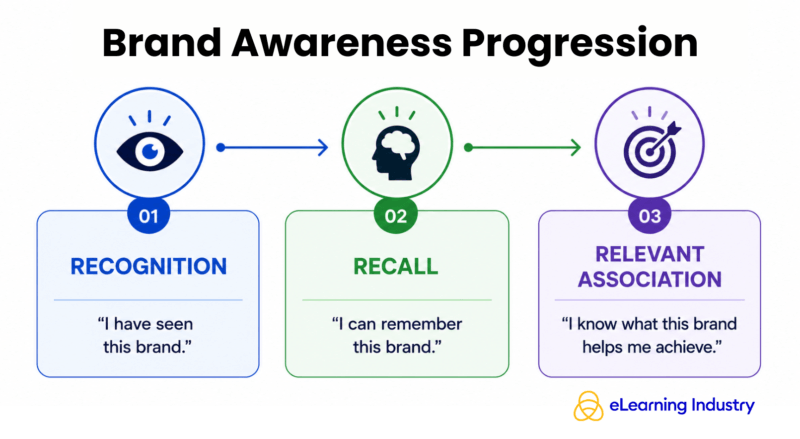
Although awareness is often treated as one broad outcome, it includes several connected stages. The most important are brand recognition, brand recall, and brand association.
Brand Recognition
Brand recognition measures whether someone can identify a company when they see its name, logo, content, advertising, or visual style.
Recognition is usually the first stage of awareness. The person may not know much about the company, but the brand no longer feels completely unfamiliar. As a result, future messages may be easier to notice and process.
Recognition alone, however, has limited commercial value. Someone may have seen the company's name several times without understanding what it offers or why it is relevant.
Brand Recall
Brand recall goes further by asking whether someone can remember the company without being shown its name.
This matters when a buyer starts researching a problem, asking colleagues for recommendations, or creating a list of possible vendors. A company that comes to mind without prompting has a stronger position than one the buyer only recognizes after seeing a list.
In other words, recognition means “I know this company when I see it,” while recall means “I can remember this company when I need it.”
Brand Association
Brand association measures whether the audience connects the company with the right problem, category, need, or outcome.
For example, recognizing the name of a learning management system provider is useful. Remembering that provider when searching for an enterprise learning platform is more valuable. However, the strongest position is created when the buyer also associates that company with a specific outcome, such as faster employee onboarding or better workforce skills visibility.
A campaign can generate recognition without creating a useful association. People may remember an advertisement but forget which company produced it. They may also recognize the brand name while misunderstanding what the company does.
For that reason, a brand awareness marketing campaign needs a clear position rather than broad distribution alone.
Why Brand Awareness Matters In B2B Marketing
B2B brand awareness is not about becoming famous among the general public. Instead, it is about becoming known among the people who influence a buying decision.
Most B2B buyers are not actively shopping at any given moment. Even so, they continue to gather information about their market.
These experiences shape their opinions before they ever contact a sales team.
Once a need becomes active, familiar brands often have an advantage. Buyers may already know what those companies do because they have seen their research, heard an executive speak, read a customer story, or noticed the company in a trusted publication.
That familiarity can help a business enter more vendor shortlists and generate more branded searches. It may also improve responses to outbound activity because prospects already have some context before receiving a sales message.
In addition, awareness can support the performance of paid campaigns. When an advertisement comes from a familiar company, the audience may be more willing to pay attention, visit the website, or engage with the offer. The campaign does not have to introduce the company from the beginning every time.
In brand awareness, the main buyer may need to explain and defend the decision internally, so a recognized company with visible customer evidence can feel easier to support than an unfamiliar vendor with similar features.
This is where brand awareness and demand generation work together. Demand generation captures and develops buyers who have an active need, while brand awareness helps make sure the company is remembered when more buyers become ready later.
Therefore, the two activities should not compete for attention. They support different stages of the same commercial process.
Brand Awareness Vs. Brand Visibility
Brand visibility describes how often a company appears in front of an audience.
Brand awareness describes what happens in the audience's mind after those appearances.
A visible company may appear in search results, social feeds, newsletters, advertisements, podcasts, events, industry publications, directories, and review sites. However, frequent exposure does not automatically create useful awareness.
A company can have strong visibility and weak awareness when its advertising looks similar to every competitor or its message changes from one channel to another. The same problem occurs when people remember the content but cannot identify the company behind it.
Poor targeting can also create misleading visibility numbers. A campaign may generate millions of impressions, but those impressions have limited value when they come from people who are unlikely to buy, influence a purchase, or recommend the product.
The distinction can be summarized simply: visibility creates the opportunity to be noticed, while awareness determines whether the brand is remembered.
When Should A Company Run A Brand Awareness Campaign?
A company may need a brand awareness campaign when it enters a new market or begins selling to a new type of buyer. Even when the product is strong, the business may struggle because the intended audience has little knowledge of the company.
A campaign can also support the launch of a new product or category. In this situation, the company may need to explain both the offer and the problem it solves. Buyers cannot search for or evaluate a category they do not yet understand, so the campaign must help create the right association.
Stronger competition may also justify an awareness campaign. A lesser-known company may offer similar or better capabilities than established competitors, but buyers are unlikely to consider it when they do not recognize the name. In that case, the campaign should build familiarity while making the company's difference easy to understand.
Low branded search demand can point to the same issue. When few people search for the company by name, the market may not know enough about it to investigate further. Awareness work can help increase the number of buyers who actively look for the brand rather than discovering it only through general category searches.
However, awareness should not become a vague response to every marketing problem. A company should not invest heavily in distribution until it knows what it wants to be known for.
Define What You Want The Brand To Be Known For
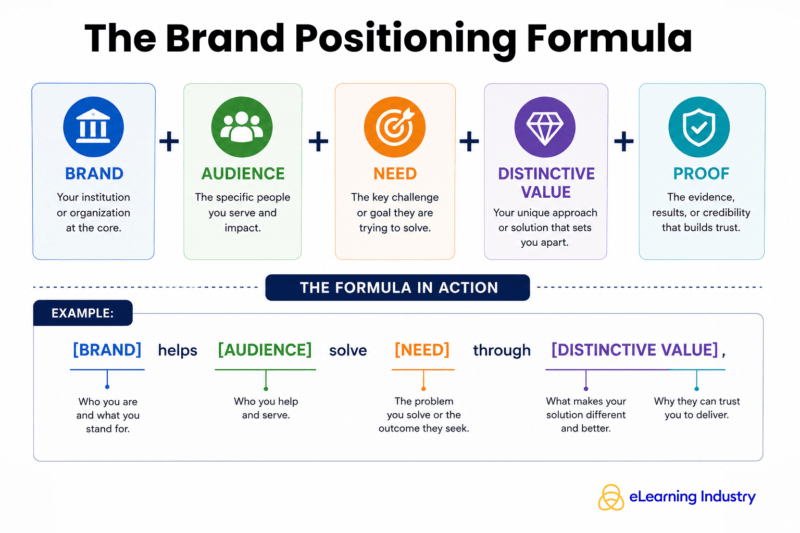
Every effective brand recognition campaign starts with a clear association between the company and an important customer need.
A weak campaign objective might be:
Make more HR leaders aware of our platform.
Although this statement identifies a broad audience, it does not explain what the platform should be known for. As a result, content, advertising, PR, and sales teams may each communicate a different message.
A stronger objective would be:
Make enterprise Learning and Development leaders associate our brand with measurable skills development across distributed workforces.
This version identifies the audience, the need, and the intended market position. It also gives the team a practical way to judge campaign ideas. If an asset strengthens that association, it belongs in the campaign. If it introduces an unrelated message, it may create confusion.
The team should also examine how the intended position differs from the companies buyers already know. If the message could be used by every competitor, it will be difficult to remember.
The final idea should be simple enough to repeat across advertisements, articles, interviews, webinars, events, and sales conversations. At the same time, it needs enough depth to support several stories without becoming vague.
The REACH Brand Awareness Framework
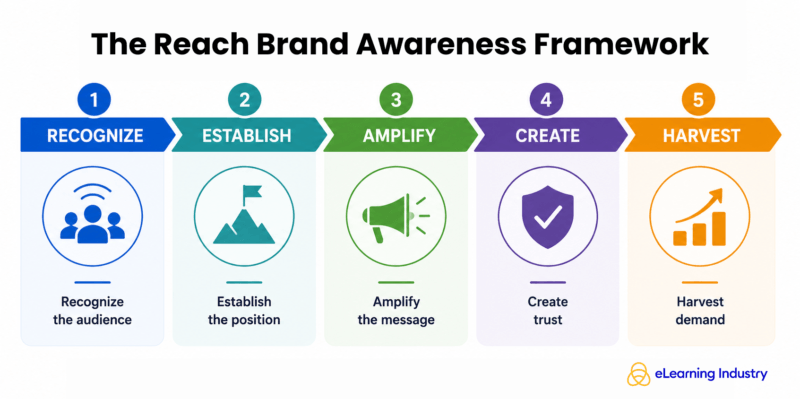
The REACH framework organizes a brand awareness strategy into five connected stages: Recognize, Establish, Amplify, Create, and Harvest. Together, these stages clarify who the campaign is for, what it should communicate, where the message should appear, why the audience should believe it, and how progress should be measured.
R - Recognize The Priority Audience
The first stage is to identify the people whose awareness has real business value.
The audience should be defined through factors such as industry, company size, role, level of buying influence, business challenge, buying stage, and information habits. It is also useful to understand which publications, experts, events, platforms, and communities the audience already trusts.
However, the campaign should not focus only on the person who signs the contract. Most B2B purchases involve a buying group that may include technical reviewers, finance leaders, procurement teams, end users, and senior sponsors.
These people may care about different details, but they should still encounter the same central brand position. Otherwise, the company risks creating one message for decision-makers, another for users, and a third for technical teams, with no clear connection between them.
E - Establish A Memorable Position
Once the audience is clear, the company must decide which category, problem, or outcome it wants to own in that audience's mind.
The position should be relevant to an important need, different enough to notice, simple enough to remember, and credible enough to believe. It should also be flexible enough to work across different channels without losing its meaning.
Trying to communicate every feature will weaken the message. Broad claims that any competitor could make will have the same effect.
A memorable position does not need to explain everything the company does. Its purpose is to create a clear entry point that buyers can understand and recall.
A - Amplify Through Trusted Touchpoints
The next stage is to choose channels based on where the audience already looks for information.
Potential touchpoints include search content, industry publications, social platforms, paid advertising, podcasts, webinars, email, research reports, events, directories, communities, and media coverage. However, the goal is not to appear everywhere. It is to appear consistently in the places that shape the buyer's understanding of the market.
The strongest campaigns connect these touchpoints rather than treating each one as a separate activity.
A buyer might first see a research finding on LinkedIn, later read the full report, hear the company's executive on a podcast, and then notice customer reviews during vendor research. Each interaction adds context while reinforcing the same central idea.
C - Create Credibility And Consistency
Recognition alone is not enough because a company can become familiar without becoming trusted. It can also become known for a claim that buyers do not believe.
Credibility comes from evidence. Customer reviews, measurable case studies, original research, expert contributors, executive commentary, media coverage, awards, and consistent customer outcomes can all strengthen the campaign.
Consistency matters as well. The language can change to suit an article, webinar, podcast, or advertisement, but the underlying message should remain stable.
The visual identity should also feel connected across channels. Repeated use of familiar design elements helps people link separate campaign interactions with the same company.
H - Harvest And Measure Demand Signals
The final stage is to examine what happens as awareness grows.
Delivery metrics such as impressions, reach, and frequency are useful, but they only describe exposure. The company should also monitor branded search, direct traffic, returning visitors, content engagement, Share of Voice, consideration, demo activity, sales conversations, pipeline, and revenue.
Together, these changes can show whether visibility is becoming meaningful awareness and whether that awareness is beginning to influence demand.
How To Set Brand Awareness Campaign Objectives
“Increase awareness” is too broad to guide a campaign because it does not explain what kind of awareness should improve or how that improvement will be measured.
A better approach is to create connected objectives that cover visibility, recognition, association, trust, and demand.
Visibility Objectives
A visibility objective focuses on reaching the intended audience with enough frequency to create familiarity.
For example, a company might aim to increase relevant campaign reach among enterprise HR leaders over a six-month period. The emphasis should remain on relevant reach rather than the largest possible number of impressions.
Visibility is the foundation of the campaign, but it should not be treated as the final result.
Recognition Objectives
A recognition objective measures whether more people can identify the company after seeing its name, content, advertising, or visual identity.
This may involve measuring aided awareness, advertising recall, or visual recognition among a defined audience. The purpose is to determine whether campaign exposure is creating a lasting memory rather than a temporary interaction.
Association Objectives
An association objective focuses on what the audience connects with the company.
The goal may be to strengthen the link between the brand and a specific category, customer problem, or business outcome. This is often more useful than recognition alone because it gives buyers a reason to remember the company in a relevant situation.
Trust Objectives
A trust objective measures whether the campaign improves perceptions of credibility, expertise, reliability, or relevance.
Trust can be influenced by customer evidence, expert contributions, transparent claims, reviews, and third-party coverage. It may be assessed through surveys, sales feedback, customer research, or changes in consideration.
Demand Objectives
A demand objective examines whether awareness is leading to deeper interest.
Possible indicators include branded searches, direct website visits, returning visitors, target-account activity, vendor consideration, demo requests, and influenced pipeline.
A complete campaign objective might therefore read:
Increase recognition of the brand among HR technology buyers and strengthen its association with AI-supported employee onboarding over six months.
This version gives the team a target audience, an intended association, and a clear time frame. It also allows different campaign activities to support different outcomes.
Build The Campaign Around One Memorable Idea
Many brand awareness campaigns struggle because they try to communicate every product feature, every company value, every use case, every audience, and every claimed advantage at once.
The information may be accurate, but it is unlikely to be remembered.
A campaign needs one organizing idea that connects its stories, evidence, and creative work. This is not always the same as a slogan. Instead, it is the central thought the company wants the audience to remember.
Most importantly, it must reflect something the company can genuinely deliver. A campaign may attract attention through a bold claim, but that attention will not build trust when the product or customer experience fails to support it.
For a learning platform, a campaign might focus on ideas such as “training that becomes performance,” “the hidden cost of disconnected learning,” or “skills visibility for every workforce.” A company focused on onboarding might build its message around faster employee readiness without sacrificing quality.
Each idea gives the campaign a clear direction. From there, the team can develop research, customer stories, executive articles, interviews, webinars, paid advertisements, and sales materials without making every asset look or sound identical.
The company should also give the idea enough time to work. Changing direction every few weeks prevents the audience from forming a stable association with the brand.
Choose The Right Brand Awareness Channels
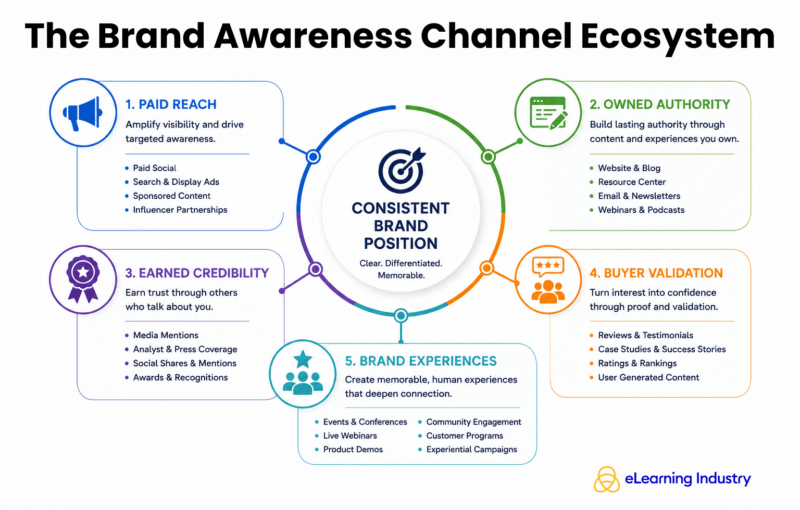
A long list of channels is not a strategy. Each channel should have a clear role in helping the audience notice, understand, trust, or evaluate the brand.
Paid Reach
Paid social, display advertising, sponsored newsletters, video advertising, native advertising, and podcast sponsorships can help the campaign reach a defined audience and build frequency.
In general, paid media works best when the message is already clear. Spending more money on a vague or generic campaign will usually create more exposure without stronger recognition.
Paid activity should therefore reinforce the same central idea used across the rest of the campaign.
Owned Authority
Articles, research reports, videos, webinars, newsletters, podcasts, and executive content allow the company to explain its position in greater depth.
Unlike a short advertisement, owned content gives the audience time to understand the problem, consider the evidence, and learn how the company approaches it. It can also create durable assets that continue to attract attention after the initial campaign period.
Earned Credibility
Media coverage, guest articles, podcast appearances, analyst mentions, awards, and expert citations can give the campaign independent support.
This matters because buyers expect companies to speak positively about themselves. When a credible third party discusses the company, cites its research, or includes it in an industry conversation, the message can feel more trustworthy.
Buyer Validation
Software review platforms, industry directories, comparison pages, vendor lists, customer communities, and peer recommendations support the audience during evaluation.
A buyer may first discover the brand through an article or advertisement, but that person will often look for independent evidence before contacting sales. If customer proof is difficult to find, the awareness created earlier may not lead to serious consideration.
Therefore, review and directory visibility should not be treated as separate from brand building. These sources help confirm whether the company's public message matches real customer experiences.
Brand Experiences
Events, workshops, roundtables, communities, interactive tools, and product experiences can turn passive awareness into active participation.
A small roundtable with the right audience may create more meaningful awareness than a large event filled with people outside the target market.
The strongest channel mix usually combines several of these roles. For example, original research may become the campaign's main owned asset, while paid social distributes its findings and PR earns independent coverage. A webinar can help the audience explore the issue, and reviews can provide proof when buyers begin comparing vendors.
This creates one connected campaign rather than several unrelated marketing activities.
How To Build Trust Into An Awareness Campaign
People do not trust a company simply because they see its name often. Repetition can create familiarity, but trust requires evidence.
Useful trust signals include original research, measurable case studies, verified customer reviews, expert interviews, executive commentary, recognized contributors, media coverage, awards, and clear product explanations.
However, these assets should not sit beside the campaign as a general collection of logos and claims. They should directly support the position the company wants to build.
For example, a company that wants to be known for reducing employee onboarding time should provide onboarding benchmarks, customer outcomes, implementation details, and practical guidance related to that issue. Generic customer praise will not create the same level of confidence.
Transparency matters as well. Claims should be specific enough to examine, and limitations should be explained where necessary. Buyers are more likely to trust a realistic statement supported by evidence than a broad promise with no context.
The principle is straightforward: repetition makes the brand familiar, while proof makes the brand credible.
How To Turn Brand Awareness Into Demand
Awareness does not automatically create pipeline because people encounter a company at different levels of readiness.
One person may recognize the brand but have no current need. Another may understand the problem but not be ready to compare products. A third may already be building a shortlist and looking for customer evidence.
The campaign should provide a suitable next step for each of these situations.
Supporting A Low-Intent Audience
People with low buying intent are usually not ready for a demonstration or sales conversation. However, they may be willing to read an article, review original research, watch a short video, listen to a podcast, or follow the company on social media.
Supporting A Problem-Aware Audience
A problem-aware buyer understands the challenge but may still be exploring its causes, effects, and possible responses.
Guides, assessments, webinars, benchmark reports, and case studies can help these buyers develop a clearer view of the issue. These formats also give the company a chance to show its expertise without turning every interaction into a product pitch.
Supporting A Solution-Aware Audience
A solution-aware buyer is more likely to compare vendors and look for proof.
At this stage, the company should make buyer guides, comparison pages, customer reviews, product demonstrations, implementation information, and consultation options easy to find.
The full progression can be understood as awareness, education, trust, consideration, and action. Buyers do not always move through these stages in a straight line, but the campaign should support each one.
Forcing every visitor into an immediate demo request can create friction. A person reading an early-stage article may not want to speak with sales, but they may be willing to download a report, join a webinar, or subscribe to a useful newsletter.
How Much Reach And Frequency Does A Campaign Need?
There is no universal frequency number that works for every brand awareness campaign.
The right level depends on how familiar the audience already is with the company, how complex the message is, how long the campaign will run, and which channels are involved. Purchase frequency, sales-cycle length, creative quality, and competitive intensity also affect how much exposure may be needed.
A short burst of impressions may create a temporary increase in traffic or visibility, but durable B2B awareness usually requires repeated exposure over a longer period. Buyers should encounter the same core idea often enough to recognize it, understand it, and remember it when their needs change.
The team should also watch for fatigue. Repetition helps build memory, but showing the same advertisement too often can cause the audience to ignore it.
A better approach is to keep the central position stable while changing the stories, examples, evidence, and formats used to express it. This allows the campaign to remain familiar without becoming repetitive.
Brand Awareness Campaign Metrics
Brand awareness campaign metrics should follow the path from exposure to commercial results rather than stopping at impressions. Useful measurement includes reach, recognition, association, authority, demand signals, and business outcomes.
Reach And Exposure
Reach and exposure metrics show whether the campaign appeared in front of the intended audience.
Relevant impressions, unique reach, frequency, video completion, publication readership, and webinar or podcast attendance can all help assess campaign delivery.
These measures are useful, but they should not be treated as proof that awareness improved. They confirm that people had the opportunity to see the message, not that they noticed or remembered it.
Recognition And Recall
Recognition and recall measures provide a stronger indication of whether awareness is forming.
Aided awareness asks whether someone recognizes the company after being shown its name. Unaided awareness asks which brands come to mind without presenting a list.
Unaided awareness is harder to achieve, but it can show whether the company has become mentally available within its category.
Association And Perception
Association and perception measures examine what people believe about the company.
This stage matters because recognition without the right association can be misleading. A buyer may know the company but connect it with an outdated product, the wrong audience, or a vague category.
Therefore, brand studies should examine both whether people recognize the company and what they believe it represents.
Visibility And Authority
Visibility and authority metrics place the company's performance within the wider market.
Share of Voice, search Share of Voice, media mentions, executive visibility, backlinks, review presence, appearances in vendor lists, and third-party citations can show whether the company is gaining attention relative to competitors.
This comparison is important because a company's reach may increase while competitors grow even faster. Looking only at internal performance can hide a weakening market position.
Demand Signals
Demand signals reveal whether awareness is leading to stronger interest.
No single measure is conclusive. However, several related changes can provide a stronger picture.
For example, branded search may rise while direct traffic and returning visits increase. At the same time, sales teams may report that more prospects already recognize the company before the first conversation.
Together, these signals suggest that awareness is beginning to influence buyer behavior.
Business Outcomes
Over time, stronger brand awareness may also affect shortlist inclusion, conversion efficiency, sales-cycle length, customer acquisition cost, pipeline, and revenue.
Direct attribution will remain imperfect because brand interactions often happen before a person fills out a form or enters a trackable sales process. A buyer may have seen several articles, advertisements, podcast appearances, reviews, and recommendations over many months.
For that reason, the better approach is to examine the combined movement of brand, demand, and commercial signals rather than forcing every outcome into a single-touch attribution model.
A Practical B2B Brand Awareness Campaign Example
Consider an employee onboarding software company entering the enterprise market.
The company has strong customer results, but few enterprise HR and learning leaders recognize its name. Its competitors are more familiar and appear regularly in search results, review platforms, events, and industry conversations.
The company does not need awareness among every employer. It needs recognition among the people responsible for onboarding distributed employees.
Campaign Objective
The campaign objective would be to make HR and learning decision-makers associate the brand with reducing time-to-productivity for distributed employees.
This position is specific enough to remember and relevant enough to support a buying conversation. It also gives the campaign a clear standard for selecting content and evidence.
Central Campaign Idea
The central idea could be:
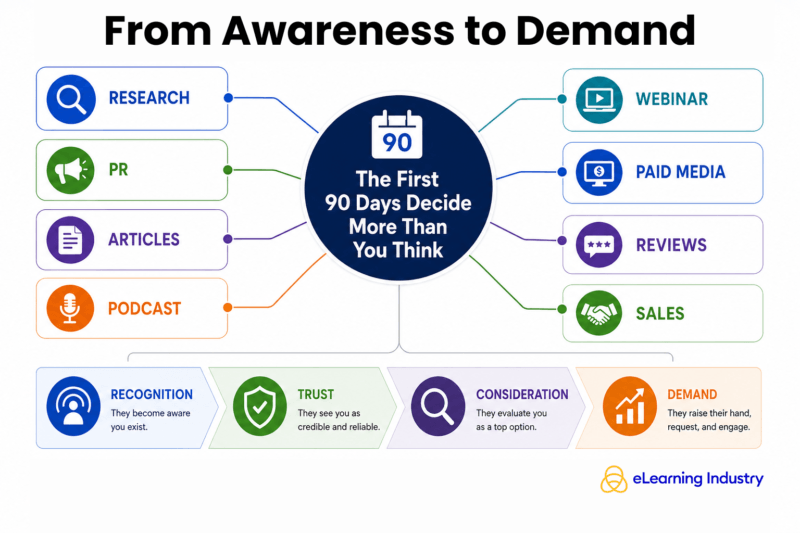
The First 90 Days Decide More Than You Think.
This message connects the product with a clear business issue. It is also broad enough to support several stories without turning into a general product slogan.
Original Research
The company could begin by publishing a report about onboarding friction and time-to-productivity.
The research might examine common delays, their effects on the business, and the practices associated with faster employee readiness. This gives the campaign useful evidence instead of relying on product claims alone.
Thought Leadership
Company leaders could publish articles about the financial and operational effects of weak onboarding.
These articles might explore manager time, delayed employee performance, early turnover, employee confidence, and the problems caused by disconnected systems.
Webinars And Podcasts
A webinar could bring HR leaders together to discuss how organizations improve the first 90 days of employment.
This format would give buyers a practical way to explore the issue while introducing customer and expert voices. The company could use questions from the session to create follow-up content and identify common concerns.
These conversations would help the campaign reach people who may not follow the company's own channels.
PR And Media Coverage
The strongest findings from the research could be pitched to HR, learning, technology, and business publications.
Independent coverage would extend the campaign's reach and add credibility because the message would no longer appear only through company-owned content.
Rather than sending a general company announcement, the PR effort should focus on findings that are useful to the publication's audience.
Social And Paid Promotion
Research findings could be turned into short posts, charts, executive commentary, customer examples, and brief videos.
Paid promotion could then target HR and learning leaders at suitable enterprise companies. Each advertisement should reinforce the same central idea rather than promoting an unrelated product feature.
Reviews And Directory Visibility
The company should also strengthen its presence on review platforms, directories, comparison pages, and relevant vendor lists.
When buyers move from general research to evaluation, customer evidence should be easy to find. Reviews and case studies can help confirm whether the campaign message matches real customer experiences.
Sales Enablement
Sales teams could use the research findings, benchmark data, customer stories, and expert commentary in outreach and discovery calls.
This would connect the public campaign with direct buyer conversations. It would also give representatives a more useful reason to contact target accounts than a standard product introduction.
Likely Outcome
Over time, the company could begin to own one useful market association.
Instead of being viewed as another general onboarding platform, it would become connected with the first 90 days and the challenge of reducing time-to-productivity.
That position could then support recognition, trust, consideration, and demand.
Common Brand Awareness Campaign Mistakes
One of the most common mistakes is trying to reach everyone. A broad audience may produce high impression numbers, but those impressions have little value when they come from people who are unlikely to buy, influence a purchase, or recommend the company. A campaign should therefore focus on a clearly defined audience and a relevant buying need.
Another mistake is optimizing only for impressions. Impressions show that an advertisement or piece of content appeared on a screen, but they do not show whether anyone noticed the brand, understood the message, or remembered it later.
Generic messaging also weakens awareness. Claims such as “work smarter,” “improve performance,” or “transform your business” could belong to almost any company. A brand needs a more specific position that buyers can understand and remember.
Once that position is established, the team should give it enough time to work. Changing the campaign idea too quickly prevents the audience from forming a clear association with the company. Brand building usually requires more patience than a short lead-generation campaign.
Timing and consistency matter as well. A short campaign burst may create a temporary rise in traffic, but it rarely builds lasting B2B awareness. Buyers need to encounter a connected idea across several touchpoints, while conflicting messages and disconnected creative make those interactions harder to recognize.
Another common mistake is focusing too heavily on the company. Buyers care about their own problems, risks, and goals, so the campaign should explain how the brand relates to those concerns rather than filling every message with company claims and product features.
Finally, a brand awareness campaign should not be expected to generate an immediate lead from every interaction. Buyers may remember the company for months before they have an active need.
Brand Awareness In Search And AI Discovery
Buyers now discover brands through more than advertising, events, social media, and traditional search results. They also use AI-generated answers, review platforms, industry directories, comparison pages, and vendor lists.
These sources can shape which companies buyers notice before they visit a brand's website. Therefore, a modern awareness strategy should make the company easy to understand across the wider information environment.
Consistent category language helps buyers and automated systems connect the brand with the right market. Authoritative editorial coverage, customer reviews, original research, executive expertise, trusted backlinks, directory profiles, and third-party recommendations can strengthen the same association.
This does not mean producing repetitive content for machines. The priority should remain useful, well-structured information written for people. However, the company's category, audience, expertise, and proof should be clear enough to identify across several sources.
These measures are still developing, so they should sit alongside established indicators such as branded search, Share of Voice, review presence, direct traffic, recognition, and consideration.
The main principle remains the same: a brand needs enough consistent and credible evidence for buyers and discovery systems to understand what it should be known for.
Brand Awareness Campaign Checklist
Before launching a campaign, make sure the priority audience is clearly defined. The team should understand who needs to recognize the company, which buying situations matter, and what problem or outcome the audience should associate with the brand.
The creative work should remain recognizable across touchpoints. An article, advertisement, webinar, report, event, and social post do not need to look identical, but they should feel connected. The audience should be able to tell that they come from the same company and support the same message.
Buyers also need a clear next step. That may involve reading a report, joining a webinar, completing an assessment, reviewing customer evidence, comparing solutions, or requesting a demonstration. The action should match the buyer’s level of readiness rather than pushing every visitor directly into a sales conversation.
Finally, the measurement plan should be established in advance. The company needs to decide how it will track relevant reach, recognition, association, trust, branded demand generation, consideration, and commercial influence. The campaign should run long enough to build memory, and results should be reviewed by audience segment and channel so that the lessons can shape the next campaign cycle.
Conclusion
A successful brand awareness campaign does more than place a company in front of more people. It helps the right audience recognize the brand, connect it with a relevant need, trust its expertise, and remember it when a buying opportunity appears.
Achieving that outcome requires a clear market position, one memorable campaign idea, coordinated distribution, credible proof, and sustained measurement. Reach creates the initial opportunity, while consistency builds memory and evidence builds trust.
For a B2B company, the final goal is not widespread fame. It is to become one of the brands buyers already know, understand, and trust before the formal buying process begins.
FAQA brand awareness campaign is a coordinated marketing effort designed to help a specific audience recognize, remember, and associate a brand with a relevant problem, category, or solution. Rather than focusing only on impressions or reach, an effective campaign aims to build familiarity, trust, and recall so the brand is more likely to be considered when a buying need arises.
Creating a successful brand awareness campaign starts with identifying the audience you want to reach and defining what you want them to associate with your brand. From there, develop one clear campaign idea, support it with credible proof such as customer stories or original research, and distribute it consistently across the channels your audience already uses. Finally, measure whether awareness is leading to stronger recognition, trust, and demand rather than focusing only on impressions.
The primary goal is to make the right audience recognize the brand, understand what it represents, trust its expertise, and remember it when they are ready to buy. In B2B marketing, awareness is valuable because it helps a company become part of the buyer's consideration set before a formal purchasing process begins.
The best channels depend on where your audience looks for information. A balanced campaign often combines paid advertising to increase reach, owned content such as articles and research to build authority, earned media to strengthen credibility, review platforms and directories to support buyer validation, and events or webinars to create deeper engagement. These channels work best when they all reinforce the same core message.
B2B companies increase brand awareness by consistently reaching the right decision-makers with a clear market position supported by credible evidence. Original research, executive thought leadership, customer success stories, webinars, podcasts, PR, industry events, review platforms, and educational content can all help build recognition and trust over time. Consistency is just as important as channel selection because buyers often encounter a brand many times before they are ready to purchase.
There is no fixed campaign length because the right duration depends on factors such as audience familiarity, message complexity, competitive intensity, channel mix, and sales-cycle length. However, short bursts of activity rarely create lasting B2B awareness. Most campaigns need sustained visibility over time so buyers have enough opportunities to recognize, understand, and remember the brand.
Brand awareness should be measured using a combination of metrics rather than a single number. Useful indicators include relevant reach, aided and unaided brand awareness, brand recall, category association, Share of Voice, branded search growth, direct traffic, media mentions, customer consideration, and influenced pipeline. Looking at these measures together provides a better picture of whether awareness is contributing to commercial outcomes.
Brand visibility measures how often a company appears in front of an audience, while brand awareness measures whether people actually notice, recognize, remember, and understand the brand. A business can have high visibility but weak awareness if its message is generic, inconsistent, or fails to create a meaningful association with a customer need. Put simply, visibility creates the opportunity to be noticed, while awareness determines whether the brand is remembered.
Brand awareness creates future demand by making a company familiar before buyers enter an active purchasing process. As buyers repeatedly encounter the brand through useful content, research, reviews, events, and other trusted sources, they become more likely to recognize and consider it when a need develops. Awareness does not replace demand generation, but it strengthens it by increasing familiarity, reducing perceived risk, and improving the chances that buyers include the company on their shortlist.
Yes. Strong brand awareness can improve how easily a company is discovered through search engines and AI-powered tools. Consistent category language, authoritative content, original research, customer reviews, executive expertise, and third-party mentions all help search engines and AI systems understand what a brand should be associated with. As a result, a well-known and well-documented brand may appear more often in search results, AI-generated answers, comparison pages, and industry recommendations.
Some of the most common mistakes include targeting everyone instead of a specific audience, measuring only impressions, using generic messaging, changing the campaign idea too quickly, ignoring customer proof, treating awareness and trust as the same thing, running campaigns for too short a period, and expecting immediate lead generation from every interaction. Many campaigns also fail because they focus more on the company than on the buyer's needs.
It depends on the target audience, campaign duration, message complexity, channel mix, competitive environment, and sales cycle. A new company entering a crowded market may need a larger and longer-term investment than an established brand with strong market recognition. Rather than focusing on a fixed budget, companies should invest enough to maintain consistent visibility and build lasting memory over time.