
A Practical Framework For Media Outreach
Most media outreach begins with the wrong question: "How can we get journalists to cover us?" It is an understandable question, but it puts the company's need for attention ahead of the journalist's need for a useful story. That often leads to promotional emails, weak announcements, and pitches that have little connection to what the journalist actually covers.
A better approach starts by asking what your company can contribute. Journalists need timely information, credible sources, original data, useful examples, and experts who can explain what is happening in a clear way. When a business can provide those things, media outreach becomes more than a request for publicity. It becomes a professional exchange that can help both sides.
This is why successful media outreach usually begins well before the pitch is written. It involves researching the right journalists, understanding their audience, developing newsworthy ideas, preparing credible experts, and building familiarity over time. The email still matters, but it is only one part of the process.
Media outreach is the strategic process of identifying relevant journalists, editors, creators, and publications, building relationships with them, and offering timely stories, expertise, research, or commentary that can earn editorial coverage.
The goal is not to convince journalists to promote your business. It is to become a useful and reliable source they can turn to when they are working on a relevant story.
TL;DR
- Build your media list around relevance, not database size.
- Research what each journalist covers before contacting them.
- Offer stories, evidence, experts, and insight rather than promotional copy.
- Maintain relationships between pitches instead of appearing only when you need coverage.
- Measure the quality and influence of coverage, not just the number of mentions.
In This Guide, We Cover…
- What Is Media Outreach?
- Why Media Outreach Still Matters In B2B
- What Journalists Actually Want From Brands
- Find The Right Journalists And Build Your Media List
- Build Relationships Before You Need Coverage
- What Makes Something Newsworthy?
- The Best Media Outreach Assets
- How To Write A Strong Media Pitch
- How To Time and Follow Up On Media Outreach
- Media Outreach For B2B Technology Companies
- Turn One Media Placement Into A Content Flywheel
- How Media Outreach Supports SEO And GEO
- How To Measure Media Outreach Success
- Common Media Outreach Mistakes
- The RELATE Media Outreach Framework
What Is Media Outreach?
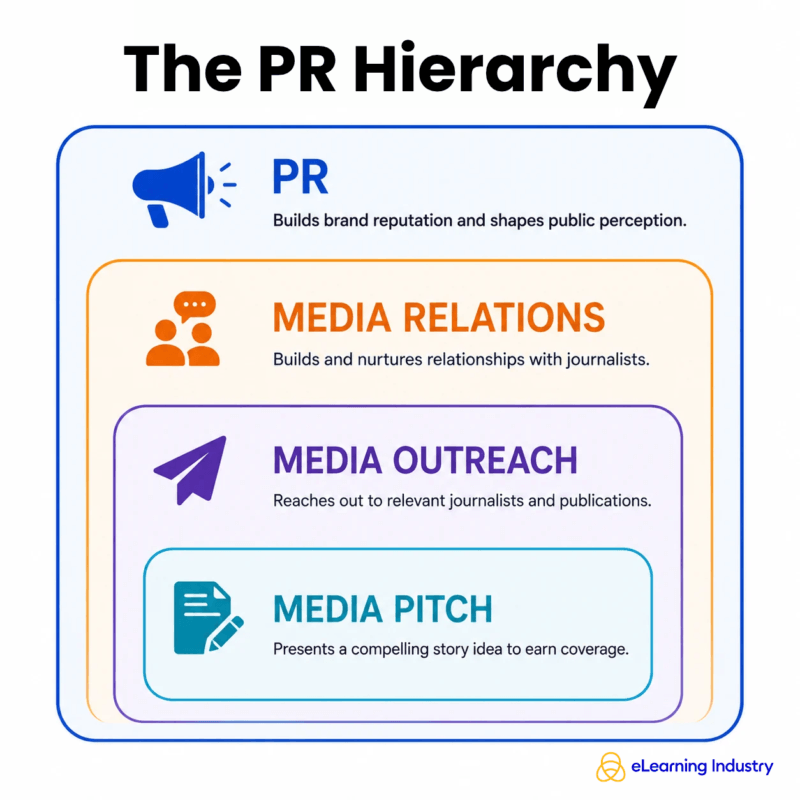
Media outreach sits within the wider field of public relations, but it is not the same as PR as a whole. Public relations covers a broad range of work, including reputation management, crisis communication, executive positioning, thought leadership, internal communication, and earned media.
Media relations is more focused. It refers to the long-term work of developing and maintaining professional relationships with journalists, editors, producers, podcast hosts, and other media contacts.
Media outreach is the proactive part of that relationship. It is what happens when a company contacts a journalist with a relevant story, source, research finding, expert, or piece of commentary. A media pitch is the individual message used to present that opportunity.
The relationship between these areas can be understood as a simple sequence: PR provides the broader communication strategy, media relations develops the relationships, media outreach identifies and presents opportunities, and the media pitch communicates one specific idea.
Media outreach can support several goals. A company may use it to build awareness, position an executive as an expert, promote original research, introduce a product, enter a new market, improve Share of Voice, strengthen its reputation, or earn relevant backlinks. However, each goal requires a different approach.
A product launch may call for journalists who cover company news or industry technology. An executive thought leadership campaign may require reporters, editors, podcast hosts, and conference organizers who follow a specific business issue. Research promotion may involve journalists who regularly use data in features and analysis.
Trying to serve every objective with the same list and the same story usually leads to poor results. The audience, contact, message, and timing should all reflect the purpose of the outreach.
For practical guidance on writing individual emails, see Media Pitch Examples: 12 Outreach Emails That Earn Media Coverage.
Why Media Outreach Still Matters In B2B
Earned media provides a form of third-party credibility that a company cannot create on its own. Advertising tells people what a business says about itself. Editorial coverage shows that an independent journalist or publication considered the company's knowledge, evidence, or perspective useful enough to include.
That difference matters in markets where trust plays a major role in the buying decision. A well-placed interview, expert quote, or research feature can help establish executive authority, increase category awareness, support search visibility, and make the company easier to recognize during later stages of the buying process.
Still, not every media mention carries the same value. A brief mention in a large publication may create a short burst of attention but have little commercial effect if the audience has no connection to the company's market. A detailed article in a trusted industry publication may be more useful because it reaches the right buyers and presents the company in a relevant context.
This is why reach should not be the only measure of success. A stronger question is whether the coverage reached the people who matter and improved their understanding of the company, its experts, or the issue it is known for.
What Journalists Actually Want From Brands
Journalists receive many messages from companies that want attention. Most of those messages focus on the business rather than the reader. They describe product features, company milestones, awards, or executive appointments without explaining why the publication's audience should care.
Journalists are more likely to respond when a company offers something they can use. This may include original information, timely data, a credible expert, a relevant customer example, a clear opinion, or access to a source who can explain a difficult subject.
Speed also matters. News cycles move quickly, and a journalist working to a deadline may choose the source who responds clearly within an hour rather than the source who responds perfectly three days later. Companies that want regular media opportunities need a process for approving comments, preparing spokespeople, and answering requests without unnecessary delay.
The company itself is rarely the full story. What the company knows, sees, measures, or can explain may be much more valuable. An HR technology provider, for example, may want coverage for a new analytics feature. The feature alone may not be newsworthy, but the data behind it could reveal a wider change in employee retention, skills demand, or workforce planning.
Before contacting a journalist, consider whether the story offers something new, useful, and relevant. Ask what can be proved, why the subject matters now, and what the journalist's audience will learn from it. When those answers are unclear, the story probably needs more work.
Find The Right Journalists And Build Your Media List
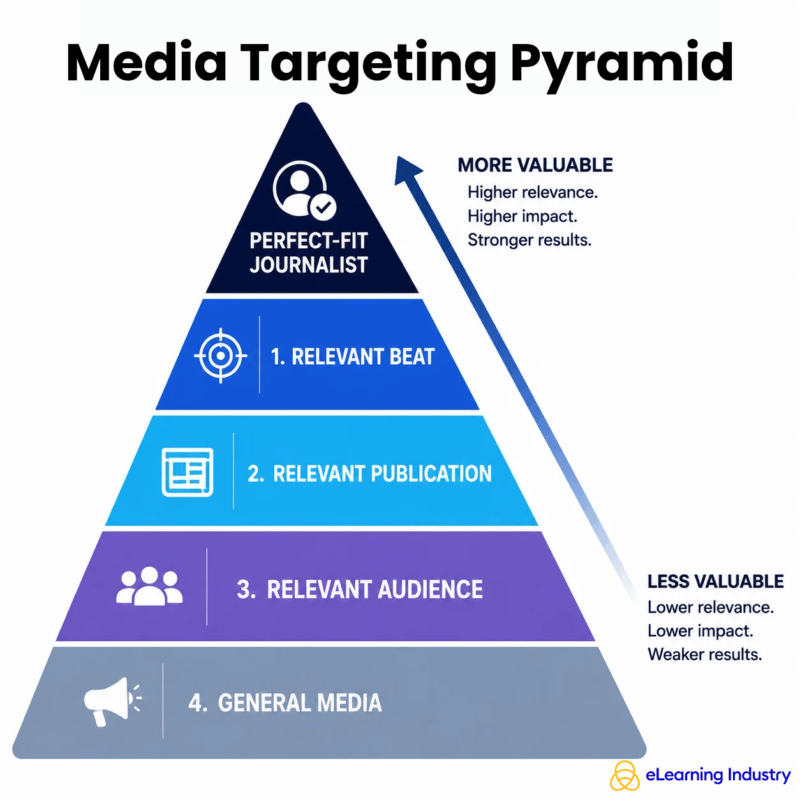
A large media database can look impressive, but volume does not make an outreach campaign effective. Sending the same email to hundreds of contacts may produce a few responses, yet it can also damage the company's reputation and reduce the chance of building useful long-term relationships.
A smaller, well-researched list is usually more valuable. Start by identifying the subjects connected to the story, then look for journalists who cover those subjects regularly. Consider the industry, beat, publication, audience, location, seniority, and format of their work.
An LMS company, for example, should not search only for "technology journalists." That description is too broad. Depending on the story, the right contacts may cover workplace learning, HR technology, artificial intelligence, enterprise software, employee development, business transformation, or the future of work.
How To Research Journalists
Read several recent articles before adding someone to your list. One article may not reflect their current beat or usual interests. Look for the subjects they return to, the types of companies they mention, the experts they quote, and the evidence they use.
It also helps to review newsletters, social posts, podcast appearances, and event participation. These channels often show what a journalist is researching before a full article appears. They may also reveal changes in role or focus that have not yet been reflected in a media database.
Pay attention to format. A reporter who writes daily news has different needs from an editor producing long-form features. A podcast host may want a guest who can sustain a thoughtful conversation, while a newsletter writer may prefer a concise data point or practical observation.
How To Build And Segment Your Media List
A useful media list should contain enough information to support informed outreach, not just a name and email address. Record the journalist's publication, beat, relevant topics, recent articles, contact details, previous interactions, response history, and any follow-up dates. Notes about preferred formats or recurring interests can also help.
It is often useful to divide the list into three groups. Tier 1 contacts are journalists with strong authority in your market and a close connection to your main topics. These relationships deserve careful research and steady attention. Tier 2 contacts regularly cover your category and may be a good fit for research, expert commentary, case studies, and company developments. Tier 3 contacts become relevant when a specific event, location, trend, or news development connects with their work.
Most importantly, avoid sending every announcement to every person on the list. Choose the contacts whose work and audience genuinely match the story.
Build Relationships Before You Need Coverage
Companies often contact journalists only when they have an announcement to promote. Once the campaign ends, the relationship goes quiet until the next launch. This means every new pitch begins from the same cold starting point.
Building a relationship does not require constant contact, and it should not involve pretending to be a journalist's friend. It means showing that you understand their work and can contribute something useful when the right opportunity appears.
Over time, the aim is to become a credible, low-friction source. Journalists should know that your company can respond quickly, provide clear information, and respect the limits of the story. That familiarity makes future outreach easier because the relationship no longer begins with a request from a complete stranger.
What Makes Something Newsworthy?
A company announcement is not automatically a news story. It may be important to employees, customers, or investors without being relevant to the wider audience of a publication.
Product launches can also earn coverage, but the strongest angle is often the problem the product addresses or the market change it reflects. Funding and acquisitions may be relevant when they show growth in a category, a shift in buyer demand, or a change in the competitive landscape.
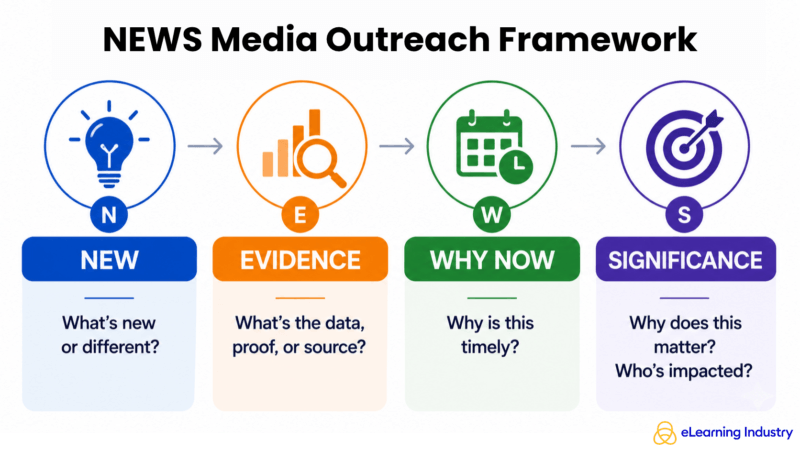
The NEWS test offers a simple way to assess an idea before it is pitched.
N - New
The story should contain information that was not already widely available. A rewritten company message or a minor product update is unlikely to be enough. New research, fresh data, a major development, or a clear change in the market gives the journalist something to report.
E - Evidence
The main claim should be supported. Evidence may come from original research, platform data, customer outcomes, independent sources, or experts with direct experience. The company should also be ready to explain how the information was collected and where its limits lie.
W - Why Now
A good story has a reason to matter at this moment. It may connect with a new law, an emerging business risk, an industry event, a seasonal planning cycle, or a subject already receiving attention. Without a clear reason for the timing, the journalist may decide that the idea can wait indefinitely.
S - Significance
The story must affect the publication's audience in some way. It may influence their costs, decisions, employees, customers, plans, or understanding of the market. A development can be new and well supported but still fail this test if it has no practical relevance to the reader.
Not every story needs to be dramatic. It does, however, need to offer something timely, supported, and useful.
The Best Media Outreach Assets
Companies often wait for launches, funding news, or major announcements before speaking to the media. This creates long gaps between outreach opportunities and places too much pressure on a few company milestones.
A stronger approach is to develop assets that can produce useful stories throughout the year. These assets give journalists something more substantial than promotional copy and allow the company to contribute to wider industry discussions.
Original Research
Original research can give journalists information they cannot find elsewhere. A company might survey customers, employees, buyers, or industry leaders to understand how attitudes, budgets, priorities, and behavior are changing.
The value comes from the findings, not the existence of the report. A broad title such as "The State of Workplace Learning" will not earn attention on its own. The research needs to reveal a clear pattern, gap, or change that matters to the audience.
Useful findings might show a difference between executives and employees, a shift in spending plans, an unexpected barrier to adoption, or a change in the skills businesses are prioritizing. The methodology should be clear, and the company should avoid drawing conclusions that the sample cannot support.
eLearning Industry's Research and Insights solutions can help brands develop and distribute original market findings.
Proprietary Data
Technology platforms, marketplaces, and service providers often hold data that can reveal wider trends. An LMS provider may be able to analyze course completion, learner engagement, skills demand, or training priorities. An HR platform may see changes in hiring, retention, employee sentiment, or workforce planning.
The most useful proprietary data does more than report activity on the platform. It helps explain what the pattern may mean for the wider industry.
Executive Commentary And Thought Leadership
Expert commentary works best when it comes from someone with direct experience and a clear point of view. Journalists do not need executives to comment on every popular topic. They need informed sources who can explain a specific issue without turning every answer into a product message.
The path is straightforward: expertise leads to published insight, published insight improves discoverability, discoverability helps build trust, and trust creates more media opportunities.
Case Studies
Customer stories make broad claims easier to understand because they show what happened in a real situation. A strong case study explains the original problem, the decision process, what changed, the measurable result, and what others can learn from the experience.
Journalists may be interested when a case study reflects a wider market problem, provides clear evidence, or offers an unusual lesson. eLearning Industry's original case study solutions help companies document and share customer outcomes.
Predictions
Predictions are common near the end and beginning of the year, but many of them are too broad to be useful. Statements such as "AI will continue to grow" do not add much to the discussion.
A stronger prediction explains what is likely to change, what evidence supports that view, who will be affected, and what leaders should consider doing next. The reasoning matters more than a dramatic headline.
Predictions also become more credible when the expert has a clear connection to the issue. A person who works closely with customers, product data, policy changes, or market research may offer a more useful view than an executive commenting from a distance.
Expert Interviews
Different stories require different experts. The CEO may be the right person to discuss company direction or industry strategy, but a product leader, researcher, customer success specialist, or technical expert may provide more useful detail on a specific topic.
eLearning Industry's Thought Leader Q&As provide one format for sharing expert perspectives in a clear and accessible way.
Industry Reports
An industry report can combine research, analysis, examples, and practical guidance in one asset. It gives the outreach team several possible angles rather than one launch-day announcement.
A single report may support stories about a major finding, a difference between sectors, a new risk, or a change in business priorities. It can also provide material for executive articles, podcast discussions, webinars, and later commentary.
See eLearning Industry's collection of industry reports.
Events And Webinars
Events can create media opportunities before, during, and after they take place. The announcement itself may be useful, but the discussion often produces stronger material.
Review the questions participants asked, the results of live polls, the issues speakers disagreed on, and the practical concerns raised during the session. These details can reveal subjects that people are actively trying to understand.
The event may also introduce journalists to experts who can support future stories. Explore eLearning Industry's webinars.
Podcasts
Podcasts allow experts to explain an issue in more depth than a short quote or written comment. They can also build relationships with hosts, guests, and other industry voices.
A podcast appearance creates long-form executive visibility, searchable content, social media material, and useful quotations. It may also lead to invitations for further interviews, articles, events, or partnerships.
eLearning Industry's podcasts bring expert voices and practical perspectives to the conversations shaping learning, leadership, and business. Scaling Leadership explores how founders and leaders build and scale successful companies. eLearning Unscripted examines the trends, challenges, and ideas changing learning and development, while eLearning Talks offers focused discussions on the subjects L&D professionals need to understand.
How To Write A Strong Media Pitch
A strong pitch helps the journalist understand and assess the story quickly. It should include a relevant subject line, a personalized opening, a clear explanation of the idea, credible evidence or access to an expert, and a simple next step.
Personalization should show that you understand the journalist's work. It does not require a long paragraph of praise. A brief reference to a recent article, beat, or recurring subject is usually enough when the connection is genuine.
Avoid attaching large files unless the journalist has asked for them. A short link to supporting research, images, or background information is easier to review. The first email also does not need to contain every detail. Its purpose is to present a relevant opportunity and make the next step easy.
For subject lines, outreach structures, and complete examples, see Media Pitch Examples: 12 Outreach Emails That Earn Media Coverage.
How To Time And Follow Up On Media Outreach
Timing can decide whether a good story receives attention or disappears in a busy inbox. Planned outreach should take account of research releases, product launches, funding announcements, industry events, new regulations, trend reports, and seasonal planning cycles.
Journalists working on longer features may need several weeks of notice. News reporters may work within hours. Understanding the publication and format helps the outreach team judge how early to contact them.
Reactive Outreach And Newsjacking
Planned campaigns are only one part of media outreach. When a relevant industry development occurs, a company may be able to provide timely expert commentary.
A useful response explains what changed, who will be affected, what the practical implications may be, and what businesses should consider doing next. The comment should add context rather than repeat information already available in the news.
When the connection is real, fast and informed commentary can attract more attention than a planned company announcement.
How To Follow Up
One useful follow-up is usually reasonable when the first pitch has not received a response. It should be brief and should remind the journalist of the main idea without repeating the entire email.
A follow-up becomes more useful when it adds something new, such as an updated data point, another expert, a customer example, a clearer angle, or a change in timing. Repeatedly sending "just bumping this up" gives the journalist no additional reason to respond.
Record the outcome and use it to improve future outreach. Over time, patterns in responses can show which stories, publications, experts, and subject lines are working.
Media Outreach For B2B Technology Companies
B2B technology companies often focus their pitches on product features. Journalists are usually more interested in the market change, customer problem, or business effect behind those features.
The product can support the story, but it does not always need to be the center of it. A stronger pitch explains what the company's technology, customers, or data can reveal about a wider issue.
LMS And Learning Technology Vendors
Learning technology companies can contribute to discussions about workforce skills, learning ROI, artificial intelligence in L&D, employee onboarding, reskilling, compliance, learning analytics, and customer education.
Instead of announcing a new reporting dashboard, an LMS vendor might use aggregated data to show that managers are changing how they measure training effectiveness. The product provides the evidence, while the market shift provides the story.
HR Technology Vendors
HR technology companies may have useful insight into hiring, retention, employee experience, skills intelligence, workforce analytics, AI recruitment, and the future of work.
A company launching a new retention tool could pitch the broader issue of why businesses struggle to identify flight risk early. Customer data, expert analysis, and examples would help turn the product announcement into a relevant industry story.
AI Companies
AI companies can contribute informed perspectives on enterprise adoption, governance, pricing, productivity, implementation, risk, and industry-specific use cases.
A pitch about a new AI assistant may have limited appeal on its own. A stronger angle might examine why many businesses struggle to move AI projects beyond small trials. The company could offer adoption data, customer examples, and an expert who understands the operational barriers.
The central principle is simple: do not pitch only the software. Pitch the market insight the software allows your company to see.
Turn One Media Placement Into A Content Flywheel
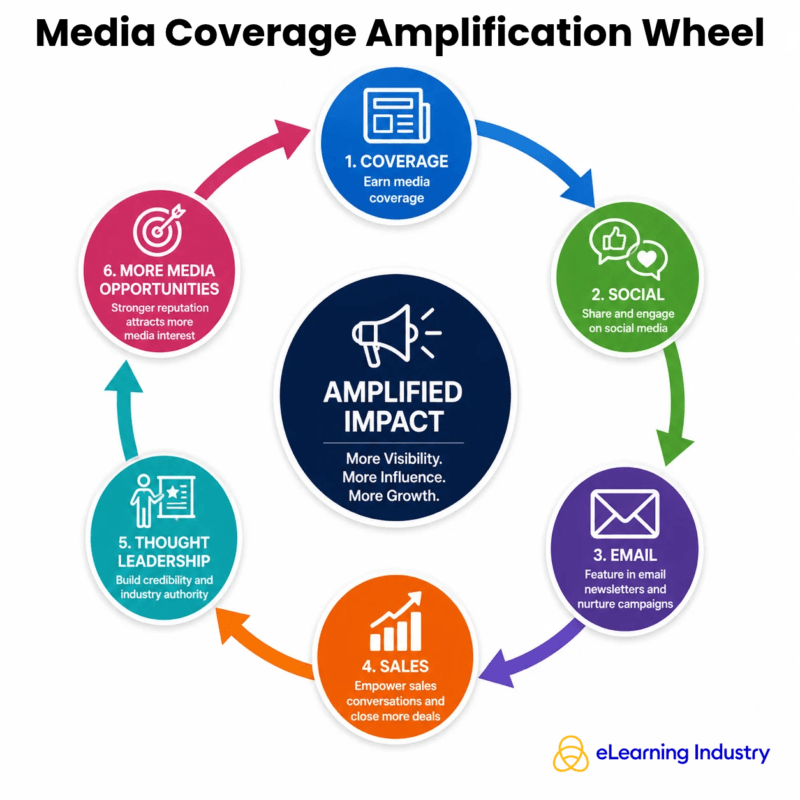
A media placement should not disappear after one social post. Once an article, interview, or expert quote is published, it can support several parts of the company's communication and sales activity.
Share the coverage through relevant company and executive channels, include it in newsletters, add it to executive profiles, and reference it in sales conversations when it supports the buyer's concern. A strong article can also serve as third-party proof on relevant website pages, in speaker applications, and in future media pitches.
The subject itself can often be developed further. An interview may lead to a longer executive article, a webinar discussion, a podcast conversation, or new research. Those follow-up assets can then create more opportunities for media coverage.
This creates a practical cycle: coverage supports social content and email communication, those channels support sales and B2B thought leadership, and stronger thought leadership creates further media opportunities.
Accuracy matters when amplifying coverage. Do not say the company was "featured in" a publication when it purchased an advertisement or sponsored article. Paid visibility can still have value, but it should not be presented as earned editorial coverage.
How Media Outreach Supports SEO And GEO
Media outreach can support search visibility, although no placement guarantees higher rankings. Relevant coverage may earn authoritative backlinks, generate referral traffic, increase branded searches, and strengthen the association between a company and the subjects it wants to be known for.
Media coverage can also strengthen expert visibility. When executives are quoted consistently on a specific issue, search engines and readers have more evidence of their connection to that subject. This works best when the coverage is supported by clear author profiles, useful owned content, research, and a consistent point of view.
However, media coverage does not guarantee that a company will appear in an AI-generated answer. It simply adds credible material that may help systems and users understand what the company does and where its expertise lies.
The strongest approach combines earned media with useful website content, clear company information, credible expert profiles, and consistent references across trusted sources. For related guidance, see share of voice SEO.
How To Measure Media Outreach Success
Counting published articles is easy, but it does not show the full value of an outreach program. Measurement should consider the quality of the activity, the authority of the coverage, the relevance of the audience, and the influence on wider business goals.
Activity Metrics
Activity metrics show whether the team is carrying out focused outreach. Useful measures include the number of relevant pitches sent, journalist conversations, response rates, expert requests, and follow-up opportunities.
These numbers should not reward volume for its own sake. A high number of poorly targeted emails is not evidence of a successful campaign. The activity should reflect thoughtful targeting and useful conversations.
Coverage Metrics
Coverage metrics assess what was published and how valuable it was. Consider the authority of the publication, the relevance of its audience, the prominence of the mention, the inclusion of key messages, and whether the company's expert was quoted directly.
A passing mention is not the same as a full interview or an article built around the company's research. The depth and context of the coverage should be part of the evaluation.
Visibility Metrics
Media outreach may also influence Share of Voice, branded search, media mentions, backlinks, and visibility for relevant topics. These measures help show whether the company is becoming more present in industry conversations.
Engagement Metrics
Referral traffic, social engagement, newsletter sign-ups, and visits to related content can show how people respond after seeing the coverage.
Traffic should be reviewed in context. A specialist article may send fewer visitors than a mainstream publication but produce more qualified engagement because the audience has a stronger connection to the subject.
Commercial Indicators
Direct revenue attribution can be difficult in a long B2B buying cycle, but media outreach may still influence commercial outcomes. Sales teams may hear prospects mention an article, a partner may contact the company after an interview, or an executive may receive new invitations to speak, write, or appear on podcasts.
These signals should be recorded even when they cannot be tied neatly to one campaign. They help show how media visibility supports trust, recognition, and opportunity over time.
In many cases, ten relevant industry placements will create more value than 100 mentions that never reach the company's buyers.
Common Media Outreach Mistakes
Many outreach problems begin before the email is written. Poor targeting, weak stories, and unprepared experts cannot be fixed by a clever subject line.
Mass-emailing journalists is one of the most common mistakes. It usually leads to generic messages, irrelevant pitches, and low response rates. It can also make journalists less likely to open future emails from the same company.
Another mistake is making the company the entire story. A launch, award, or executive appointment may matter internally, but the outreach needs to explain why the development matters to the publication's audience.
The spokesperson also needs preparation. An executive who gives vague answers, repeats promotional messages, or avoids reasonable questions may reduce the chance of future coverage. Before an interview, the expert should understand the journalist's audience, the subject, the available evidence, the examples they can share, and the information that must remain private.
Finally, companies should keep earned, sponsored, and paid visibility clearly separated. All three can play a role in a communication strategy, but presenting paid content as independent editorial coverage damages trust.
The RELATE Media Outreach Framework
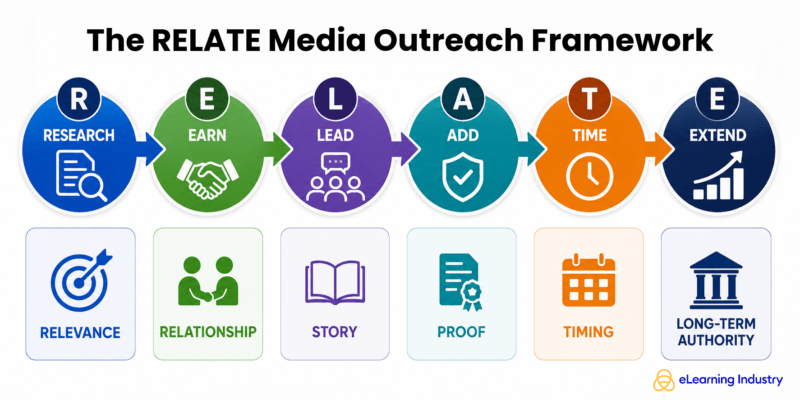
The RELATE framework brings the media outreach process into six practical stages. It can be used to plan a campaign, review an opportunity, or identify where an existing approach is going wrong.
R - Research The Journalist And Audience
Begin with the person and publication you plan to contact. Read their recent work, understand their beat, and consider the needs of their audience. Do not rely only on job titles, old database entries, or the size of the publication.
E - Earn Familiarity Before Pitching
Build awareness through useful and relevant interactions. Share information, respond to requests, provide context, and follow the journalist's work. The goal is not to create a fake friendship but to show that you can be a helpful professional source.
L - Lead With A Real Story
Make the wider story clear from the beginning. Avoid long company introductions and product descriptions. Explain what is new, why it matters now, and how it affects the audience.
A - Add Evidence And Expertise
Support the idea with credible data, customer examples, original research, or qualified experts. Every important claim should be verifiable, and the company should be ready to answer questions about the source and limits of the evidence.
T - Time The Outreach Intelligently
Consider publication schedules, live news, industry events, seasonal planning periods, and regulatory developments. A relevant idea can still fail if it arrives too late or at a time when the journalist cannot use it.
E - Extend Successful Relationships
Stay useful after the article is published. Thank the journalist, share the coverage accurately, respond quickly to later requests, and keep notes on their interests. A successful placement should become part of a longer professional relationship rather than the end of the interaction.
Media Outreach Checklist
Before sending a pitch, confirm that:
- The journalist and publication are genuinely relevant.
- You have read the journalist's recent work.
- The idea contains a real story rather than only a company message.
- The timing is clear and appropriate.
- The publication's audience has a reason to care.
- Every important claim can be supported.
- The necessary data, customers, visuals, or experts are available.
- The main angle is easy to understand.
- The spokesperson can respond within the required timeframe.
- The outreach and follow-up plan have been recorded.
When several of these points are missing, it is usually better to strengthen the idea before contacting the journalist.
Conclusion
Media outreach is not about persuading journalists to promote a business. It is about understanding what they need and contributing something that helps them produce useful work for their audience.
That contribution may be original data, a clear explanation, a strong customer example, a qualified expert, or a timely point of view. Whatever form it takes, it should be relevant, credible, and easy to use.
The companies that earn coverage consistently are not always the ones with the biggest announcements. They are often the ones that do the research, prepare their experts, respond quickly, and remain useful between campaigns.
Over time, those habits build trust. Journalists begin to recognize the company as a reliable source, and each new outreach effort no longer has to begin from zero. The long-term goal is not simply to secure one article. It is to build the relationships and authority that make relevant media coverage easier to earn again.
FAQMedia outreach is the process of identifying relevant journalists, editors, creators, and publications, then contacting them with useful stories, research, expert commentary, or other information that may earn editorial coverage. It also involves building relationships over time so the company becomes a reliable source rather than a business that appears only when it wants publicity.
Media outreach is the proactive act of approaching journalists with a specific story, source, or opportunity. Media relations is the broader, long-term work of developing and maintaining professional relationships with journalists and publications. Outreach may lead to one conversation, while media relations helps create trust across many conversations.
Start by defining what the outreach should achieve, such as promoting research, positioning an executive, supporting a launch, or building awareness in a new market. Then identify the right audience, research relevant journalists, develop a credible story, prepare supporting evidence and experts, plan the timing, and decide how you will follow up and measure results.
The strategy should be built around relevance rather than the number of people contacted. Different objectives require different stories, journalists, and approaches.
Search for journalists based on the subjects they cover, not just broad labels such as "business" or "technology." Consider their industry, beat, publication, audience, location, seniority, and preferred content format.
Before adding someone to your media list, read several recent articles and review their newsletters, social posts, podcast appearances, and recurring topics. Recent work is often a better guide than an old media database entry.
Follow their work and look for natural ways to be useful between pitches. You might share relevant information, introduce a credible source, respond quickly to a request, or offer data without asking for immediate coverage.
The aim is not to create a false friendship. It is to become a professional source who understands the journalist's work, respects their time, and can provide useful information when a relevant story develops.
A useful story normally contains something new, has evidence behind it, matters at the present moment, and has clear significance for the publication's audience. This can include original data, an unexpected finding, an industry change, a customer transformation, a new regulation, or a well-supported expert view.
The NEWS test is a practical way to assess an idea: New, Evidence, Why Now, and Significance. If the story does not meet most of those conditions, it may need more work before it is pitched.
There is no single length that works for every pitch, but it should be concise enough for the journalist to understand the idea quickly. The main angle should be clear within the first few sentences.
A strong pitch usually includes a relevant subject line, a personalized opening, a clear story, supporting evidence or an available expert, and a simple next step. Avoid long company introductions and unnecessary background information.
One useful follow-up is usually enough. Keep it brief and, where possible, add something new, such as a fresh data point, another expert, a customer example, or an updated angle.
Repeated reminders rarely improve the chance of a response. Respect clear rejections and stop after a reasonable number of attempts.
The best time depends on the type of story and the journalist's working schedule. For planned reports, launches, events, or research, provide enough advance notice for the journalist to review the material and ask questions.
Reactive commentary needs a faster response because the value of the insight may fall as the news cycle moves on. Timing should also reflect industry events, regulatory changes, seasonal planning periods, publication schedules, and current developments rather than a fixed day or hour.
B2B companies earn coverage by contributing useful knowledge to wider industry discussions. Original research, proprietary data, customer examples, expert commentary, evidence-based predictions, and timely reactions can all create credible opportunities.
The company or product should not always be the centre of the story. In many cases, the stronger angle is the market trend, customer problem, or business change that the company's experience allows it to explain.
Thought leadership gives journalists a public record of an expert's knowledge and point of view. Articles, research, interviews, conference appearances, social content, and podcast discussions can all help a journalist assess whether the person is a credible source.
This creates a useful progression: expertise leads to published insight, published insight improves discoverability, and discoverability helps build journalist trust. That trust can make future media opportunities easier to earn.
Yes. Podcasts can give executives and specialists more time to explain an issue than a short written quote allows. They can also build relationships with hosts, guests, and other people who influence industry conversations.
A podcast appearance may create searchable content, useful quotations, social assets, long-form visibility, and follow-up opportunities for interviews, events, or articles. It should be treated as part of the wider relationship and authority-building strategy, not simply as a promotional appearance.
Earned media can support SEO by generating relevant backlinks, referral traffic, branded searches, expert visibility, and stronger associations with important topics. The value depends on the relevance, authority, and context of the coverage.
However, a media placement does not guarantee higher search rankings. It works best when combined with useful website content, clear expert profiles, and consistent communication across trusted sources.
Media coverage may improve the external evidence surrounding a brand or expert. Independent mentions, credible citations, and consistent associations with a subject can make it easier for people and AI systems to understand what the company is known for.
Still, coverage does not guarantee inclusion in AI-generated answers. It is one part of a broader approach that should also include clear owned content, reliable company information, expert profiles, and credible third-party references.
Companies should measure more than the number of published articles. Useful indicators include response rates, journalist conversations, publication authority, audience relevance, executive quotations, backlinks, referral traffic, Share of Voice, social engagement, and branded search activity.
Commercial signals also matter. These may include sales conversations influenced by coverage, partnership inquiries, speaking invitations, podcast requests, and new opportunities for company experts. A small number of relevant placements can be more valuable than many mentions that never reach the right audience.