

Podcasts Have Become A Credibility Machine
In B2B markets, influence does not come from visibility alone, but also from credibility. That is exactly why more leaders now invest in becoming a podcast guest as part of their growth strategy. Decision-makers ignore ads, scroll past generic content, and tune out anything that feels like a pitch. But they pay attention when they hear real conversations with people who understand their problems and have solved them in the real world.
Edison Research data, as reported in B2B podcast industry analysis, shows that over 80% of senior executives listen to podcasts weekly. Also, a large share use them to learn and stay informed during the workday. Demand Gen Report also found that 64% of B2B buyers use podcasts in the early stages of the buying process. Why? Simply to explore ideas and understand solutions.
You do not win attention by shouting louder. You win it by showing up in the right conversations. That is where thought leadership marketing plays a direct role. It gives leaders a space to explain how they think, not just what they sell. And podcasts create that space in a way most channels cannot match. This is where a strong podcast marketing strategy B2B teams rely on starts to show real value. You do not need a massive ad budget for that. What you need is access to the right audiences and a message that feels grounded in experience.
When you look at why to be a podcast guest, the answer becomes simple. You build trust faster, you reach niche decision-makers directly, and you position yourself as someone worth listening to. All that before any sales conversation begins. Being a podcast guest helps B2B leaders build authority, expand reach, and influence decision-makers by sharing insights in a trusted, conversational format.
In This Guide, You Will Find...
- Why Podcasts Influence Decision-Makers
- The Real Shift: From Content To Conversation
- What Actually Happens When You Become A Podcast Guest
- The Real Business Benefits Of Podcast Guesting
- Why Podcast Guesting Is Still Underrated
- What Makes A High-Impact Podcast Guest
- How Podcast Guesting Fits Into Your Marketing Strategy
- Hosting Vs. Being A Guest
- Why Industry Podcasts Deliver The Highest ROI
- From Conversation To Pipeline (How It Actually Converts)
- Why Now Is The Best Time To Start
Key Takeaways
- Podcast guesting builds trust faster than traditional content.
- It positions you as an expert, not a vendor.
- It reaches high-intent, niche audiences.
- It supports demand generation and pipeline growth.
- It remains one of the most underutilized B2B growth channels.
Why Podcasts Influence Decision-Makers
B2B buyers deal with information overload every day, and most of what they see starts to blur together. They scroll past ads, delete emails, and skim through generic content that rarely adds anything new or meaningful. Because of that constant repetition, most messages fail to deliver the right message.
However, podcasts change that dynamic by creating space for deeper, more focused conversations where ideas unfold naturally. That is why more leaders choose to become a podcast guest when they want to build real credibility in their space, since the format allows them to move beyond surface-level messaging and share how they actually think about problems, decisions, and outcomes.
Unlike short-form content that pushes quick takeaways, podcasts give you room to explain context and reasoning in a way that feels closer to a real discussion than a campaign. As a result, you do not just talk about what your business does, but also show how you approach challenges and why you make certain choices.
This is where B2B podcast marketing becomes especially effective, as it places you inside an environment built on attention and trust rather than interruption. Instead of competing for clicks, you earn engagement through relevance and clarity, which feels more natural to the listener. At the same time, podcast marketing supports long B2B buying cycles by keeping your thinking present in the minds of decision-makers long after they first discover you, and that sustained recall often shapes how they evaluate you when the timing finally aligns.
The Real Shift: From Content To Conversation
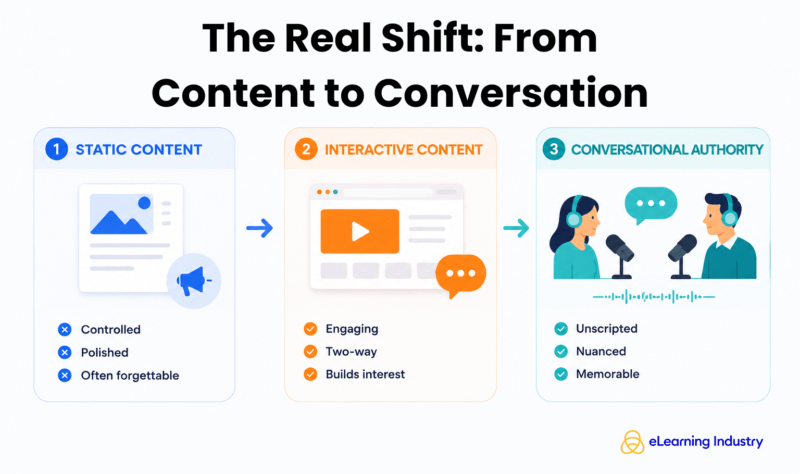
Traditional B2B Marketing
- Traditional B2B marketing relies heavily on controlled messaging, where every word gets refined, approved, and shaped to fit brand guidelines before it ever reaches the audience. While that process ensures consistency, it often removes personality and makes the message feel distant.
- Most of this content comes across as overly polished, which sounds professional on the surface but rarely feels human in practice. As a result, decision-makers consume it quickly, then move on without forming any real connection to the idea or the people behind it.
- In many cases, traditional formats focus on broadcasting information at scale, rather than creating space for real dialogue. That approach can increase reach, but it often reduces depth, which limits how much trust you actually build with your audience over time.
Podcasts In B2B
- Podcasts change how you show up in front of your audience because they replace scripted messaging with real conversations that feel natural and unforced. When you appear as a podcast guest, you give people access to how you think, not just what you want to promote.
- This format helps you build trust faster because listeners hear nuance, context, and reasoning in real time. That depth creates stronger recall, especially in long B2B buying cycles where multiple stakeholders evaluate your credibility before any decision happens.
- At the same time, business podcast guesting supports stronger positioning because it places you in environments where attention is intentional, not accidental. People choose to listen, which makes your message more valuable from the start.
- Over time, B2B thought leadership becomes easier to establish through podcasts because you consistently show perspective instead of promotion. That shift helps you stay relevant in conversations that actually shape buying decisions.
What Actually Happens When You Become A Podcast Guest
-
Role Shift
When you become a podcast guest, you position yourself as a voice with real experience, not just another vendor in a crowded market. You enter conversations where decision-makers already pay attention, so your credibility builds from the first minute.
-
Real Insight
When you share real-world insights in a practical, grounded way, you help your audience connect your thinking to their own challenges instead of treating it as abstract messaging or surface-level advice.
-
Brand Reach
You also support a podcast for brand awareness by placing your name and perspective in front of relevant audiences who already trust the host and actively choose to listen.
-
Market Influence
At the same time, you influence how your market thinks by explaining decisions, trade-offs, and lessons in a conversational format rather than a promotional one, which makes your perspective easier to accept.
-
Perception Shift
As a podcast guest, you move from a vendor trying to sell into an expert worth listening to, and that shift changes how buyers judge your credibility, intent, and relevance.
The Real Business Benefits Of Podcast Guesting
Authority In Action
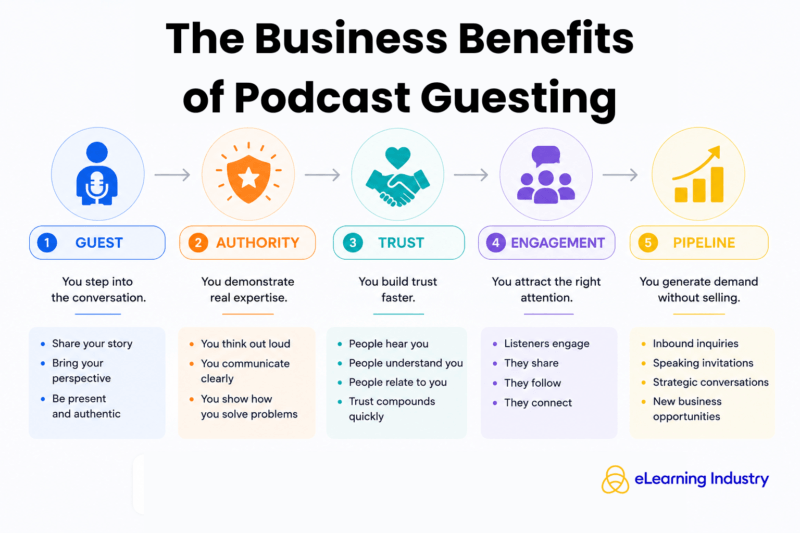
When you become a podcast guest, you build authority in a way that feels immediate and real. You do not rely on polished decks or scripted messaging. Instead, you demonstrate expertise live, you communicate under pressure, and you show how you actually think through problems. That combination matters because decision-makers judge clarity, not presentation style. Over time, podcast guest benefits become clear in how others start to reference your ideas, your frameworks, and your way of breaking down complex topics. Authority grows from voice, not visuals, and that difference sets you apart in crowded B2B markets.
Precision Visibility
Podcasts do not chase scale for the sake of scale. They focus on relevance. You reach decision-makers who already invest time in learning, exploring, and evaluating solutions. That makes this channel highly targeted compared to traditional distribution methods. Instead of speaking to everyone, you speak directly to the people who actually influence buying decisions inside companies. This is where podcast lead generation becomes more efficient, because every listener already fits a high-intent profile. You simply earn attention from the right audience.
Trust That Compounds
Trust does not build through repetition alone. It builds when people hear how you think. A single 30-minute conversation often creates more trust than weeks of branded content because it removes distance between you and the listener. They hear your tone, your reasoning, and your perspective without filters. This is one of the strongest benefits of thought leadership marketing, because it shifts perception from "company messaging" to "individual expertise." As a result, your credibility grows faster and lasts longer.
Network Expansion
Podcast conversations do not end when the recording stops. They extend into new relationships with hosts, other guests, and audiences who already value the format. Each appearance creates new entry points into relevant networks, and those connections often lead to partnerships, collaborations, or inbound opportunities over time. You build visibility through relationships, not just reach.
Demand Without Pressure
You do not need to pitch aggressively when you show up on a podcast. You explain ideas, break down problems, and help the audience reframe how they think. That approach naturally drives curiosity and inbound interest because people move toward clarity, not sales pressure. Over time, branded content that supports these conversations reinforces your position, but the trust starts in the dialogue, not the promotion.
Why Podcast Guesting Is Still Underrated
-
Channel Imbalance
Most B2B teams still focus on paid ads, SEO, and email as their core growth levers. These channels matter, but they also feel crowded, competitive, and increasingly expensive to scale. In contrast, very few brands invest seriously in becoming a podcast guest, even though it gives them direct access to decision-makers in a focused environment.
-
Voice Advantage
That gap creates an opening for voice-driven authority, where people hear how you think instead of only reading what you publish. This format builds stronger recall because it adds tone, context, and personality to your expertise in a way text-based content rarely achieves.
-
Blue Ocean Opportunity
Podcasting still sits in a less saturated space, which makes it a strong channel for differentiation. When you use a podcast for brand awareness, you step into conversations that already have attention built in, instead of fighting for it through ads or search rankings.
-
Signal Over Noise
As a podcast guest, you operate in a high-signal environment where audiences choose to listen. That reduces noise, increases relevance, and helps your message stand out without forcing visibility through constant promotion.
If you want to keep up with all the latest eLearning news and developments, subscribe to our newsletter for more content like this.
What Makes A High-Impact Podcast Guest
-
Clear Thinking
A strong podcast guest shares clear opinions that help listeners understand where they stand on industry topics. They avoid vague statements and focus on ideas that reflect real experience and practical understanding.
-
Real Experience
The most effective voices bring real stories from their work, not theoretical points. This makes conversations more grounded and easier for decision-makers to trust and remember.
-
Strategic Perspective
Good guests show strategic thinking by connecting ideas to bigger business outcomes. This is where podcast marketing strategy B2B becomes powerful, because it positions insight inside real market context.
-
Natural Communication
You build impact when you speak like a real person, not a script. As a podcast guest, you avoid corporate language and focus on clarity, which supports strategic marketing for CEOs and makes your message more credible.
How Podcast Guesting Fits Into Your Marketing Strategy
-
System Role
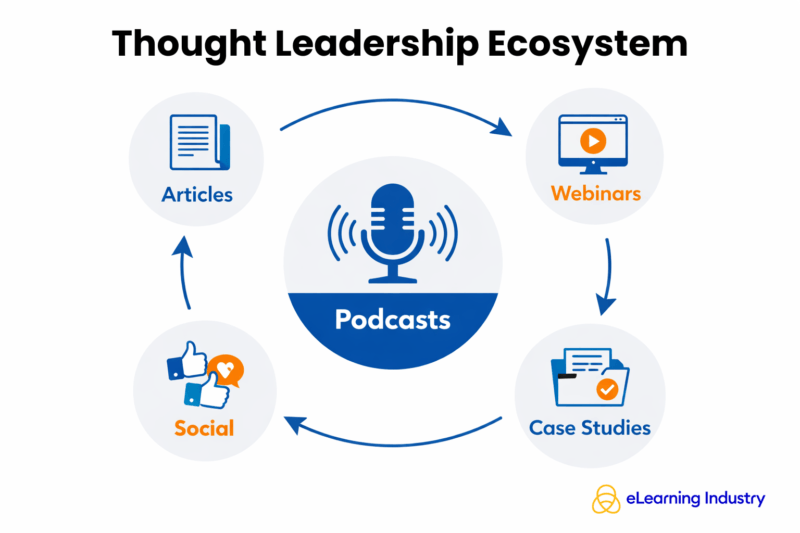
Podcasting works best when you treat it as part of a wider growth system rather than a standalone tactic. When you become a podcast guest, you do not replace your existing channels; you strengthen them by adding depth and credibility to everything you already publish.
-
Content Amplifier
Your podcast appearances feed directly into your B2B content marketing strategy by giving you long-form material you can repurpose across blogs, social posts, and newsletters. Instead of creating content from scratch every time, you turn one conversation into multiple assets that carry your voice and perspective.
-
Webinar Support
You also improve webinar performance because audiences already recognize your thinking style before they attend. That familiarity increases engagement and makes it easier to move people from passive viewers to active participants.
-
Case Study Reinforcement
At the same time, podcast discussions strengthen your case studies by adding narrative context. You do not just show results, you explain the reasoning behind them, which makes your outcomes more credible and easier to understand.
-
Social Visibility
Your social presence also benefits because clips, quotes, and key insights from each episode travel further than standard posts. As a podcast guest, you create content that feels more human and more shareable.
-
Authority Multiplier
Overall, podcasting acts as an authority multiplier. It connects your channels, reinforces your message, and increases trust across every touchpoint without replacing your existing marketing system.
Hosting Vs. Being A Guest
Hosting
Having your own podcast helps you build long-term authority because you control the platform, the guests, and the direction of the conversation. Over time, this positions your brand as a consistent voice in your industry rather than a one-off participant. It also strengthens relationships because you regularly connect with experts, customers, and peers through structured conversations. However, it requires ongoing effort, content planning, and distribution work before you see meaningful reach.
Guesting
Being a guest gives you faster visibility because you tap into existing audiences that already trust the host. This is where business podcast guesting becomes a practical growth move, especially when you want to reach niche decision-makers without building a distribution channel from scratch. It also requires less production effort, so you can focus entirely on sharing insights, not managing logistics. When you think about why be a podcast guest, the answer often comes down to speed, access, and efficiency.
Best Combo
The strongest companies combine both approaches inside a full-funnel marketing strategy. Hosting builds long-term brand equity, while guesting accelerates short-term reach and credibility. Together, they create a system where your voice shows up across multiple trusted environments, reinforcing your authority at different stages of the buyer journey.
Why Industry Podcasts Deliver The Highest ROI
Generic Podcasts
Generic shows often give you broad reach, but that reach rarely connects with your ideal customer profile. You may appear as a podcast guest, but the audience includes mixed industries, low-intent listeners, and people who may never need your solution. This makes them useful for podcast for brand awareness, but weak for driving meaningful business outcomes.
Industry Podcasts
Industry-focused shows attract a niche audience that already cares about your space. These listeners usually match your ICP, so every conversation carries more weight and relevance. That alignment makes your message land faster and stick longer.
ROI Impact
A focused approach fits better into a go-to-market strategy because it prioritizes precision over scale. Reaching 1,000 relevant decision-makers delivers far more value than reaching 100,000 disconnected listeners.
From Conversation To Pipeline (How It Actually Converts)
-
Exposure Moment
A decision-maker hears your perspective during a podcast appearance, and that moment creates immediate context for your expertise. Through B2B podcast marketing, you place your thinking directly inside conversations they already trust and choose to listen to.
-
Credibility Build
They start to associate your name with clarity and relevance, which builds credibility without any sales pressure or forced messaging.
-
Active Search
After the episode, they search your brand, review your presence, and check how consistently your ideas show up across channels.
-
Engagement Step
They then engage with your content, not because you pushed them, but because they already trust the way you think.
-
Pipeline Entry
Finally, they enter your pipeline as warm leads, moving from influence to interest and then to action in a natural, low-friction flow.
Why Now Is The Best Time To Start
Podcast consumption continues to grow, and more executives now use it as a regular source of insight during their decision-making process. As a result, becoming a podcast guest gives you direct access to attention that already exists and keeps expanding across industries.
At the same time, traditional channels feel more saturated than ever, which makes it harder to stand out through ads, email, or SEO alone. That is why more leaders now invest in a B2B thought leadership podcast approach, where they focus on building credibility through conversation instead of interruption.
This shift creates a timing advantage. Early adopters gain disproportionate visibility because they show up where competition is still relatively low, while attention levels remain high. When you look at it through a CEO playbook lens, the opportunity becomes clear. Podcasting is still high-impact, underutilized, and accessible, which means you can build authority faster if you act now rather than later.
Key Takeaway
In B2B markets, attention does not automatically translate into trust. Decision-makers engage when they clearly understand who they are learning from and why that perspective matters. That is where conversational formats create a real advantage, because they allow ideas to come through in a direct, human way rather than a polished message.
When leaders participate in long-form discussions, they give their audience something more valuable than content. They offer context, reasoning, and real experience that shape how people evaluate solutions long before any sales interaction happens. As a result, credibility builds earlier in the buying process and carries more weight when decisions are made.
At the same time, buyers increasingly rely on trusted environments to filter information. They want to hear how experts think, not just what companies claim. This shift rewards those who show up consistently in spaces where attention is intentional and engagement is voluntary. For companies in fast-growing learning tech companies, this becomes even more important, since differentiation depends on clarity of thinking rather than volume of messaging. In this environment, visibility alone is not enough. The ability to communicate perspective clearly becomes a core growth driver.
FAQYes, podcasts are highly effective in B2B because they build trust, reach niche professional audiences, and influence decision-makers through long-form content.
Because they feel more personal and conversational, allowing audiences to hear tone, reasoning, and expertise directly from the speaker.
They position individuals as subject-matter experts, increasing visibility, credibility, and recognition within their industry.
Yes, they often generate high-quality leads indirectly by increasing authority and driving listeners to search for or engage with the guest afterward.
Strong guests share practical insights, clear opinions, real experiences, and avoid overly promotional messaging.
ROI is typically measured through referral traffic, branded search growth, inbound inquiries, and long-term influence on deal pipelines.
