
AI Is Embedded In Everything We Do
AI is no longer limited to strategy decks or experimentation labs. It now sits inside day-to-day execution and actively shapes how companies run. Many organizations already rely on it to automate tasks, improve decisions, and streamline how work moves across teams. The shift shows up most clearly in operations, where speed, accuracy, and consistency matter most. AI in operation has become a practical layer inside businesses, not just a future-facing concept.
Companies now use AI workflow automation to remove repetitive steps from core processes like approvals, ticket routing, and data handling. As a result, they reduce delays and focus on higher-value work. At the same time, AI business processes support more structured execution across departments such as HR, finance, and customer operations. These systems do not replace teams, but instead guide actions, reduce manual effort, and keep work moving with fewer errors.
A recent McKinsey survey found that 55% of organizations now use AI in at least one business function, and most report measurable efficiency gains from it. This reflects a clear shift from testing AI to embedding it into real operational flows. Companies also continue to increase AI investments as they look for ways to scale output without scaling headcount at the same rate.
In this article, we break down how AI changes operations in practice. You will see how companies apply it across workflows, decision-making, and process execution, with a focus on real use cases that drive measurable operational impact.
Key Takeaways
- AI in operations focuses on automating workflows and processes.
- Companies use AI to improve speed, accuracy, and efficiency.
- Operational AI reduces costs and enhances productivity.
- Real value comes from embedding AI into daily workflows.
What AI In Operations Actually Means
AI in operations refers to the use of artificial intelligence to improve how day-to-day business work runs inside an organization. It focuses on execution rather than planning and shows up directly in the systems and workflows teams use every day. Companies apply it to reduce manual effort, improve accuracy, and speed up how work moves across departments.
At its core, it supports three main areas: automating repetitive tasks, improving decision-making with data-driven insights, and optimizing processes so teams can operate with fewer delays and less friction. This includes everything from handling approvals and routing requests to analyzing operational data in real time and flagging issues before they escalate. Unlike broader discussions around AI strategy, this approach focuses on practical application inside business functions where work actually happens.
The value comes from how it changes execution at scale. So, instead of relying on manual coordination, teams use AI systems to guide actions, surface recommendations, and standardize outcomes. As a result, you create faster cycles, fewer errors, and more consistent performance across teams. That's why many organizations now build AI process automation directly into core workflows to remove repetitive steps that slow down operations. Additionally, leaders use it to improve operational efficiency AI across departments without increasing headcount or complexity.
- Automates repetitive operational tasks like approvals, data entry, and routing.
- Supports intelligent decision-making through real-time data analysis and recommendations.
- Optimizes business workflows by reducing delays and improving process flow.
- Enhances consistency across teams by standardizing execution patterns.
- Improves visibility into operations by detecting issues early and flagging anomalies.
Where AI Fits In Operational Workflows
-
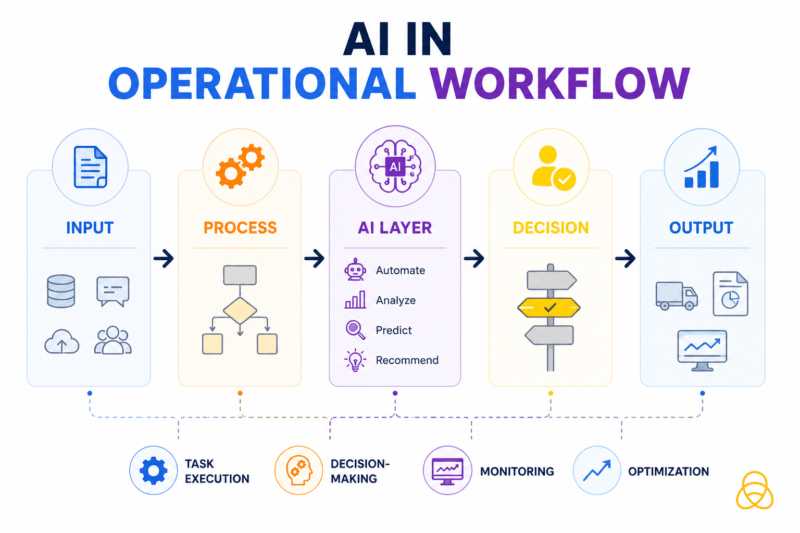
Task Execution
AI in operations plays a direct role in task execution by handling repetitive and rule-based work across teams. It helps businesses reduce manual effort and keeps processes moving without constant human input. Many companies now use systems that automate workflows with AI to speed up approvals, data entry, and internal routing while reducing errors and delays.
-
Decision-Making
In decision-making, AI supports teams by analyzing large volumes of operational data and suggesting the next best action. It helps managers respond faster by turning raw data into clear, usable insights. This reduces guesswork and keeps decisions aligned with real-time conditions across the business.
-
Monitoring
For monitoring, AI tracks operational activity as it happens. It flags anomalies, highlights bottlenecks, and identifies performance gaps before they escalate. This gives teams better visibility into daily execution without relying on manual reporting cycles or delayed updates.
-
Optimization
In optimization, AI continuously improves how processes run by learning from past performance. It identifies inefficiencies and recommends adjustments that improve speed, accuracy, and consistency across workflows. This allows organizations to refine operations over time without rebuilding systems from scratch.
-
Operational Context
Unlike an AI strategy framework that focuses on planning and direction, these integration points show how AI works inside live business environments where execution matters most and outcomes depend on real-time performance.
AI Use Cases In Operations
Workflow Automation
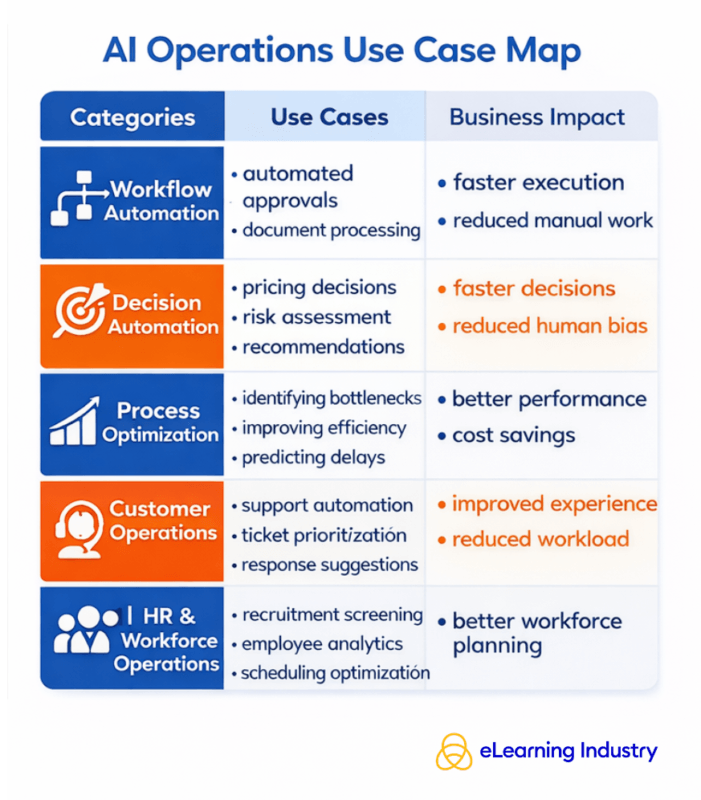
AI workflows handle routine tasks that usually slow teams down. Companies use them to process approvals, manage documents, and route tasks between departments without manual follow-ups. Therefore, they improve speed and reduce dependency on repetitive human input while keeping operations consistent across teams.
- Automated approvals across finance and procurement.
- Document processing for contracts, invoices, and onboarding.
- Task routing across internal systems and departments.
- Standardized execution of repetitive business actions.
Impact: faster execution, reduced manual work, stronger operational efficiency AI across daily processes, improved consistency at scale.
Decision Automation
AI decision automation supports real-time business choices by analyzing data and recommending actions. It helps teams respond faster in areas where timing and accuracy matter, especially in fast-moving operational environments.
- Pricing decisions based on demand, competition, and inventory.
- Risk assessment in finance, compliance, and operations.
- Recommendation systems for approvals and prioritization.
- Scenario-based operational decision support.
Impact: faster decisions, reduced human bias, improved accuracy, stronger alignment with business outcomes.
Process Optimization
AI improves how processes run by identifying inefficiencies and suggesting improvements. It learns from operational patterns and highlights where delays or waste occur, helping teams refine execution over time.
- Identifying workflow bottlenecks across systems.
- Improving end-to-end process efficiency across departments.
- Predicting delays before they impact delivery timelines.
- Highlighting cost-saving opportunities in operations.
Impact: better performance, cost savings, smoother execution, improved resource utilization.
Customer Operations
AI supports customer-facing teams by reducing response time and improving accuracy in support workflows. It helps scale service without increasing workload or requiring additional headcount.
- Support automation for common customer queries
- Ticket prioritization based on urgency and complexity
- Response suggestions for support agents
- Automated routing of customer requests
Impact: improved customer experience, reduced support workload, faster resolution times, higher service consistency
HR And Workforce Operations
HR teams use AI to streamline hiring, planning, and workforce management. It helps match people to roles more effectively and improves scheduling decisions across teams and locations.
- Recruitment screening and candidate ranking
- Employee performance analytics and reporting
- Scheduling optimization for shifts and resource allocation
- Workforce demand forecasting and planning
Impact: better workforce planning, improved hiring efficiency, reduced operational friction, stronger alignment with corporate AI strategy.
Benefits Of AI In Operations
1. Efficiency
AI removes friction from routine work and helps teams focus on higher-value tasks. It streamlines coordination across departments and reduces time spent on manual updates or repetitive actions.
- Automates repetitive administrative tasks
- Reduces delays in internal handoffs
- Improves coordination across teams
This is where intelligent automation plays a key role by connecting systems and triggering actions without human input. The result is smoother execution across daily operations.
2. Cost Reduction
AI reduces operational costs by lowering the need for manual labor in repetitive processes. Also, it helps companies avoid costly errors that come from human oversight.
- Cuts down manual processing work
- Reduces operational overhead
- Minimizes costly rework and errors
Many companies achieve savings by embedding AI workflow tools into finance, HR, and customer operations, where repetitive tasks usually consume significant resources.
3. Speed
AI increases the speed of execution across workflows by processing data and triggering actions in real time. Teams no longer wait for manual approvals or reports.
- Faster approvals and decision cycles
- Real-time data processing
- Immediate task execution across systems
Speed becomes a competitive advantage, especially for companies that use AI today in high-volume operational environments.
4. Accuracy
AI improves accuracy by reducing human error in repetitive tasks and data-heavy processes. It follows defined rules consistently and flags anomalies early.
- Fewer manual errors in data handling
- Follows the same rules every time
- Early detection of problems
This improves trust in operational outputs and strengthens decision reliability across teams.
If you want to receive timely updates and valuable tips, join our newsletter so you're never left behind.
5. Scalability
AI allows companies to scale operations without scaling headcount at the same rate. It supports higher workloads without reducing quality or increasing complexity.
- Handles growing volumes of tasks
- Maintains consistent performance under pressure
- Supports expansion across teams and regions
This makes scaling operations more predictable and less resource-heavy over time.
Challenges Of Implementing AI In Operations
1. Integration Issues
Many organizations struggle to connect AI with existing systems. Legacy software, disconnected platforms, and inconsistent infrastructure slow down deployment and limit impact.
- Difficulty linking AI with older enterprise systems
- Fragmented tools across departments
- Poor interoperability between platforms
These gaps often delay efforts to automate workflows with AI, especially when operations depend on multiple disconnected systems.
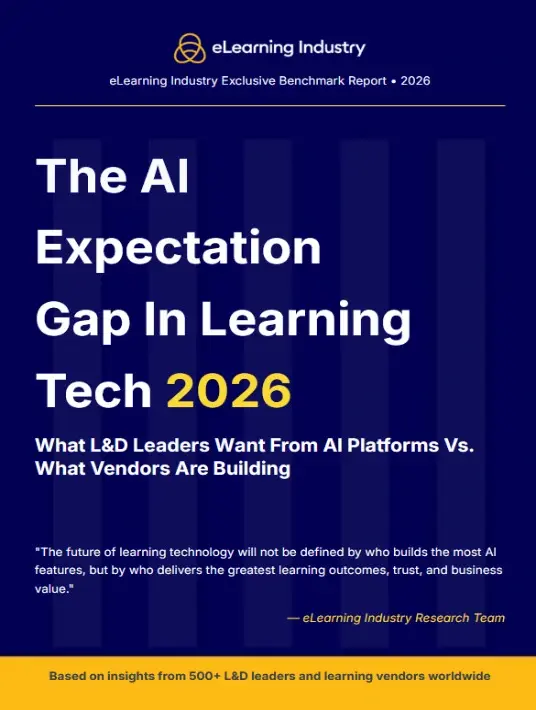
Integration challenges aren't just theoretical. According to eLearning Industry's AI Expectation Gap in Learning Tech report, 45% of learning technology vendors cite integration complexity as a major barrier to AI development, while 41% point to constraints involving budget, staffing, or development time.
2. Data Quality
AI performance depends on clean, structured, and reliable data. When data breaks across systems, outputs become inconsistent and less useful.
- Incomplete or inaccurate data inputs
- Lack of standard data formats across teams
- Limited real-time data availability
Weak data foundations reduce the effectiveness of AI in business operations and limit how much value teams can extract from automation.
3. Resistance To Change
People often slow adoption because AI changes how daily work happens. This resistance shows up in behavior, not just policy.
- Concerns about job impact and role changes
- Low trust in automated decisions
- Slow adoption across operational teams
Even strong systems struggle when teams do not fully buy into new ways of working.
4. Lack Of Skills
Many organizations do not have enough internal expertise to manage and scale AI systems effectively.
- Limited operational knowledge of AI-driven systems
- Difficulty maintaining and adjusting automated workflows
- Gaps between technical and business teams
The growing demand highlighted in AI skill gaps trends shows how hard it is for companies to build capable internal teams fast enough.
5. Misalignment in Execution Planning
Also, some companies struggle when they move faster than their planning structure. Without a clear AI strategy roadmap, teams deploy tools in isolated areas without connecting them to broader operational goals. This leads to fragmented adoption and inconsistent results across departments.
What Makes AI Operationalization Successful
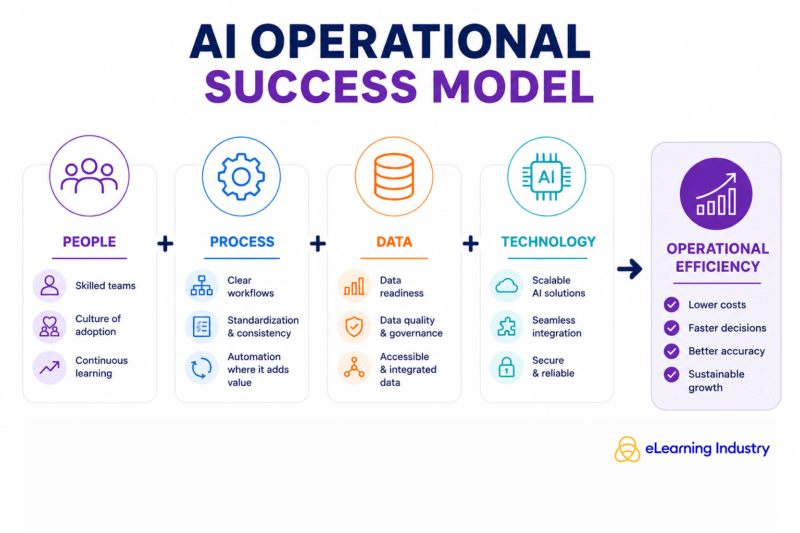
Successful AI operationalization depends on how well companies connect systems, people, and processes in real day-to-day execution. In AI in operations, success does not come from isolated tools. Instead, it comes from how well AI fits into structured workflows and supports consistent execution across teams. Therefore, companies need to build strong foundations before they scale any solution.
When these foundations are in place, AI moves from isolated experiments to embedded execution. As a result, teams work faster, make better decisions, and reduce operational friction across departments.
There's also a significant gap between AI availability and operational adoption. eLearning Industry's research found that while 42% of learning technology vendors report fully integrated AI capabilities, only 7.5% of L&D buyers say AI is fully integrated into their learning environments. Another 45% are still planning future adoption.
-
Clear Processes
First, clear processes give AI a stable structure to work within. Without them, automation becomes inconsistent and unreliable. Companies need to define how work flows across teams so AI can support execution in a predictable way. Standardized steps for core operational tasks remove confusion and reduce variation in outcomes. In addition, clear ownership across departments ensures that responsibilities do not overlap or get lost between teams.
Also, predictable workflows reduce ambiguity and make it easier for AI systems to operate consistently. For example, many AI use cases in operations succeed only when companies define workflows clearly because structure allows AI to execute tasks in the same way every time, which improves reliability and performance across departments.
-
Data Readiness
In addition, data readiness plays a major role in performance. AI depends on clean, connected, and well-structured data to function properly. When data is scattered across systems or lacks consistency, outputs quickly lose accuracy and reliability. Consistent and accurate data sources allow AI systems to generate dependable insights. Real-time access across platforms improves responsiveness, while proper integration between systems ensures smooth information flow. When data quality improves, operational decisions become faster and more reliable, and teams can act with greater confidence.
-
Workforce Adoption
At the same time, people determine whether AI actually works in practice. Even strong systems fail without trust and adoption from the teams using them daily. Successful adoption requires training that connects directly to real workflows so employees understand how AI supports their work. Clear role definitions help reduce confusion around responsibilities, especially in AI-supported tasks. Hands-on use in daily operations builds confidence over time. This is where AI skills become important, since teams need the ability to work alongside automated systems instead of resisting them.
-
Continuous Improvement
Moreover, AI systems need regular refinement to stay effective over time. Continuous performance tracking helps identify gaps in execution, while feedback loops from operational teams ensure that real-world issues are captured quickly. Process updates based on actual results keep systems aligned with changing business needs. Over time, this creates systems that improve continuously instead of stagnating, which strengthens long-term operational performance.
-
Strategic Alignment
Finally, alignment matters. A clear AI business strategy ensures operational efforts support broader company goals instead of developing in isolation.
How Learning And HR Tech Companies Enable AI In Operations
AI in operations depends heavily on people, not just systems. Even when companies invest in advanced tools, results stay limited if employees do not understand how to use them in real work. This is where learning and HR tech companies play a critical role. They help organizations connect AI to everyday execution by focusing on training, adoption, and long-term workforce enablement. As a result, AI becomes part of how work actually gets done, not just a layer sitting on top of it.
-
Training Employees To Use AI
Learning platforms help employees build practical skills that connect directly to their roles. Instead of focusing on theory, they guide teams through real workflows where AI supports daily tasks. This approach builds confidence and reduces resistance during rollout. In addition, it ensures different teams learn at the right pace based on how they actually use AI.
-
Enabling Adoption Across Teams
HR tech platforms also improve AI adoption in L&D by embedding learning directly into daily workflows. Instead of forcing employees to switch between systems, they learn while working. Therefore, adoption becomes part of natural behavior rather than a separate training phase. This reduces friction and helps organizations scale AI usage more effectively across departments.
-
Providing Tools For Workforce Transformation
In addition, these companies support long-term workforce transformation by helping organizations track skills and identify capability gaps. They connect learning systems with operational needs so companies can plan development more effectively. This ensures teams stay aligned with changing business demands and continue using AI effectively as processes evolve.
From Automation To Competitive Advantage
-
Faster Execution
AI in operations helps companies move work faster by removing delays in everyday workflows. Tasks that used to require multiple approvals or manual coordination now run automatically through connected systems. This improves speed across departments and keeps execution consistent even when workload increases. AI workflow automation plays a key role here because it triggers actions instantly and reduces dependency on manual steps.
-
Better Decisions
AI improves decision-making by processing large amounts of operational data in real time. Instead of waiting for reports, teams get immediate insights that guide their actions. This leads to quicker and more reliable decisions across business functions. As a result, companies reduce uncertainty and improve consistency in how decisions get made at scale.
-
Improved Customer Experience
AI helps companies respond to customers faster and with more accuracy. Support teams can prioritize issues, automate responses, and resolve common requests without delay. This creates smoother customer journeys and reduces friction in service delivery. In addition, it allows teams to focus on more complex cases that need human attention.
-
Scalability
AI allows companies to handle growing operational demands without increasing headcount at the same rate. Systems can process more tasks while maintaining quality and consistency. This makes scaling more predictable and less resource-heavy. A strong enterprise AI strategy ensures this scaling aligns with long-term business goals instead of creating fragmented growth.
Key Takeaway
AI in operations has moved from experimentation to everyday execution. Companies now use it to streamline workflows, improve decisions, and scale output without adding complexity. As adoption grows, the focus shifts from what AI can do to how effectively it fits into real business processes. One thing is crystal clear: AI use cases in operations deliver the most value when organizations connect them to structured workflows, reliable data, and trained teams. Without this alignment, even advanced systems stay fragmented and underused.
In many cases, organizations also rely on systems that automate workflows with AI to reduce manual effort and remove delays in execution. This allows teams to focus on higher-value work and respond faster to operational demands. In addition, it creates more predictable outcomes across departments like HR, finance, and customer support.
Still, technology alone is not enough. People determine success, and adoption depends on training, trust, and practical usage in daily work. That is why companies that invest in enablement consistently outperform those that focus only on tools. Ultimately, a strong full-funnel marketing strategy ensures that AI capabilities connect with the right audiences and support long-term operational growth.
Adopting AI is only the first step. Embedding it into workflows and processes is where real value is created. eLearning Industry helps learning and HR tech vendors showcase their solutions and support organizations in adopting AI-driven workflows, connecting them with decision-makers focused on operational transformation.
FAQAI in operations refers to using artificial intelligence to automate, optimize, and improve business processes such as workflows, decision-making, and resource management.
AI is used for automating repetitive tasks, analyzing data, improving forecasting, enhancing customer support, and optimizing supply chain and HR processes.
Key benefits include increased efficiency, reduced operational costs, faster decision-making, improved accuracy, and higher overall productivity.
Common use cases include workflow automation, predictive maintenance, demand forecasting, intelligent customer service, and workforce management.
Challenges include data quality issues, integration with legacy systems, lack of skilled talent, resistance to change, and governance concerns.
Success requires embedding AI into daily workflows, aligning it with business goals, ensuring employee adoption, and continuously optimizing systems for real-world impact.