



Learn How To Make PR And SEO Work Together
Imagine your B2B company publishes an original report on employee training trends. Several industry publications pick up the findings, journalists reference your data, and relevant websites link back to your research. Your PR campaign has built brand awareness and credibility. It may also create opportunities to strengthen your organic search visibility. That's where SEO public relations comes in.
Research-backed stories have a real opportunity to attract media interest. However, media coverage doesn't automatically translate into backlinks, and not every link contributes to rankings. The real opportunity lies in earning editorial references from relevant, credible websites and connecting PR activity to your broader SEO objectives.
Still, PR can create valuable opportunities. According to Muck Rack's State of Journalism report, 86% of journalists say at least some of their stories originate from PR pitches. This highlights the opportunity for brands to earn editorial attention by providing relevant stories, original research, and expert insights.
So, how can you make PR and SEO work together more intentionally? From creating link-worthy content and building media relationships to measuring organic performance, this guide explores how SEO PR can support B2B thought leadership, generate valuable editorial backlinks, and strengthen earned media SEO.
You'll learn how to turn public relations into a measurable part of your organic growth strategy without relying on manipulative link-building tactics.
Key Takeaways
- SEO public relations combines PR activities with organic search objectives.
- Earned media can create opportunities for relevant editorial backlinks, referral traffic, and brand exposure.
- Not every media mention includes a link, and not every link provides the same SEO value.
- Original research, expert commentary, and genuinely newsworthy stories can give publishers reasons to reference a brand.
- PR and SEO teams should collaborate on topics, target publications, landing pages, outreach, and measurement.
- Link relevance, editorial independence, and audience fit matter more than backlink volume alone.
- Paid placements and sponsored links must be handled appropriately; purchased links should not be presented as earned editorial endorsements.
- SEO PR performance should be evaluated through coverage quality, relevant referring domains, organic visibility, referral traffic, and commercial outcomes.

In This Guide, You Will Find...
- What Is SEO Public Relations?
- How Does Public Relations Help SEO?
- 7 SEO Public Relations Strategies That Can Earn Relevant Backlinks
- How To Build An SEO PR Strategy: A 6-Step Framework
- What Makes A PR Backlink Valuable For SEO?
- How To Measure The SEO Impact Of Public Relations
- SEO Public Relations vs. Traditional Link Building
- Common SEO PR Mistakes To Avoid
What Is SEO Public Relations?
SEO public relations is the practice of aligning public relations activities with search engine optimization goals to earn credible media coverage, quality backlinks, brand exposure, and opportunities to improve organic search visibility.
But what does this mean in practice? The relationship between SEO and public relations goes beyond securing press mentions or asking journalists to include links in their articles. Instead, it focuses on creating stories, research, and expert insights that publishers genuinely want to reference and share.
For example, an LMS vendor might publish original research on employee learning preferences. By sharing these findings with relevant industry publications, the company can attract media attention and potentially earn editorial backlinks to its research. These links may help search engines discover the content and contribute to its broader ranking signals. Additionally, the coverage can generate referral traffic, introduce the brand to new audiences, and strengthen its industry reputation.
If you'd like to create a research and publish its findings, get in touch with our experts to help you navigate this opportunity.
SEO PR vs. Traditional PR vs. Digital PR
| Discipline | Primary Focus | Typical Outcomes |
| Traditional PR | Reputation, media relationships, public awareness | Media coverage, reputation, brand recognition |
| Digital PR | Online coverage and digital audience reach | Online mentions, referral traffic, editorial links |
| SEO PR | PR activities aligned with organic search objectives | Relevant backlinks, search visibility, earned coverage |
How Does Public Relations Help SEO?
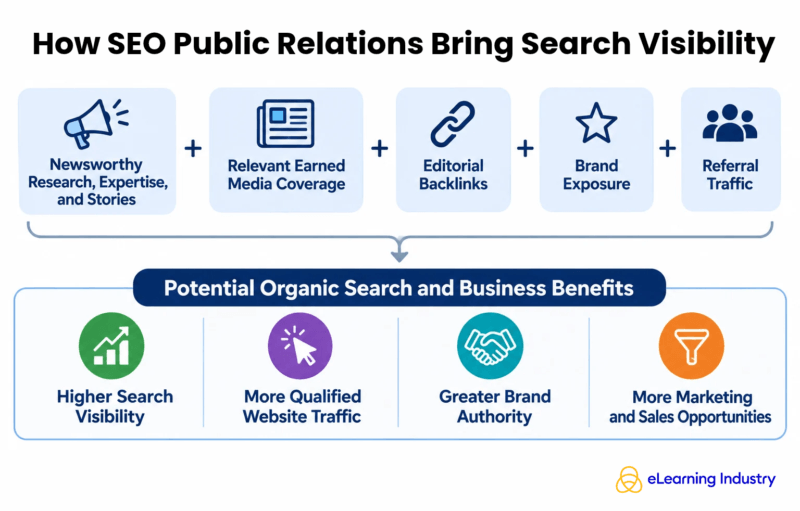
1. Earns Relevant Editorial Backlinks
One of the most tangible SEO benefits of public relations is the opportunity to earn editorial backlinks. When journalists, researchers, and industry publications reference your original research, expert commentary, or useful resources, they may link to your website as a source.
For example, an HR technology publication covering employee development trends might reference an LMS vendor's original research and link to the full report.
These links can help search engines discover your content and provide signals about its relevance and usefulness. However, Google evaluates links in context. Their value depends on factors such as relevance, quality, and how naturally they fit into the referring content. Acquiring a specific number of backlinks doesn't guarantee better rankings.
2. Expands Brand Visibility Across Relevant Publications
Getting featured in respected industry publications introduces your company to audiences beyond your existing customer base.
Imagine an LMS vendor receiving coverage in a leading HR publication about the growing adoption of employee development technology. Even readers who don't click through immediately may become familiar with the brand.
This exposure can contribute to:
- Increased brand awareness among relevant decision-makers.
- More branded searches from people researching your company.
- Improved brand sentiment through credible industry coverage.
These are valuable outcomes, but measure them separately rather than assuming every media mention improves search rankings.
3. Helps Original Content Reach Relevant Audiences
Publishing valuable content doesn't mean your target audience will automatically find it. Research reports, benchmark studies, industry surveys, and expert analysis need distribution.
This is where SEO PR creates an advantage. By connecting useful resources with relevant publishers, you increase their chances of reaching journalists, researchers, potential customers, and industry professionals.
For example, a corporate training provider could distribute a report on workforce upskilling trends to HR publications. If the findings are genuinely useful, other industry professionals may reference the research in their own content.
4. Supports Credibility And Industry Recognition
Independent media coverage can reinforce your company's reputation as a knowledgeable participant in its industry.
For B2B software vendors, this is particularly valuable. Buyers often evaluate multiple providers before making a purchasing decision. Seeing your experts quoted in respected publications or your research referenced by industry analysts can strengthen their perception of your expertise.
Moreover, consistent coverage can help establish your brand's presence within a particular subject area.
However, third-party mentions don't directly improve rankings, but they are among Google EEAT best practices. Think of industry recognition as a reputation-building opportunity that complements your broader SEO efforts.
5. Creates Opportunities For Referral Traffic And Organic Growth
Editorial backlinks can deliver value beyond their potential search benefits. When readers click a link in a relevant publication, they arrive directly at your website.
For instance, an HR director reading an article about employee onboarding software might follow a link to your original research or product resource. That's a potentially qualified visitor who has already encountered your brand in a relevant context.
Over time, consistent coverage and relevant backlinks may also support organic discoverability. However, measuring these effects isn't always straightforward. Changes in organic performance can also result from content improvements, technical SEO, competitor activity, and search algorithm updates.
So, how to combine PR and SEO effectively? Treat them as complementary disciplines within one earned media strategy. Your PR team can focus on meaningful coverage and relationships, while your SEO team evaluates link relevance, referring domains, organic performance, and search opportunities.
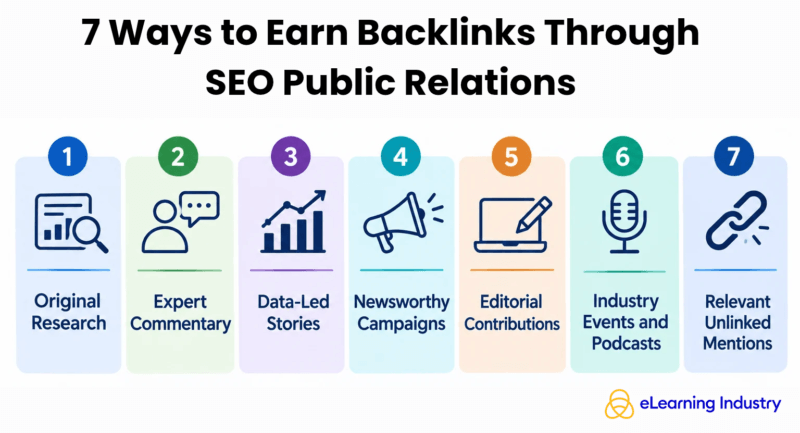
7 SEO Public Relations Strategies That Can Earn Relevant Backlinks
1. Publish Original Industry Research
Original research gives journalists information they cannot easily find elsewhere. Surveys, benchmark studies, and industry reports can provide valuable evidence for stories about emerging trends and market challenges.
For example, an LMS vendor could publish a study exploring how organizations measure employee training effectiveness. Include transparent methodology, sample characteristics, and research limitations to make the findings credible.
Relevant publications may reference the findings and link to the original report. This creates opportunities for SEO public relations to generate relevant backlinks while expanding the reach of your research.
2. Offer Expert Commentary On Industry Developments
Journalists regularly need knowledgeable sources who can explain industry developments and provide expert perspectives. Position your executives and subject-matter experts as reliable contributors rather than focusing on product promotion.
Imagine a learning tech CEO commenting on the challenges organizations face when implementing AI-powered learning tools. Their insights could help journalists explain implementation barriers, data privacy concerns, and practical considerations.
Relevant coverage may introduce your experts to new audiences and generate backlinks to their profiles or supporting resources. Prepare timely commentary and personalized responses to improve your chances of being featured.
3. Create Data-Led Stories And Useful Visual Assets
Turn original information into stories that publishers can communicate easily. Charts, infographics, and visual explainers can make complex industry findings more accessible and shareable.
For example, an HR Tech company could analyze anonymized customer data to illustrate changes in employee onboarding practices. It could present the findings through an infographic comparing onboarding trends across industries.
Journalists may reference the original findings and link to the source material. However, protect customer privacy, obtain the necessary data permissions, and explain your methodology.
Well-designed assets can also support a broader digital PR strategy for SEO, particularly when the information offers something genuinely useful to industry audiences.
4. Develop Newsworthy Industry Campaigns
Not every company announcement deserves media attention. Focus on developments that offer genuine value to your target audience.
Consider these campaign opportunities:
- Research announcements: Share findings about emerging industry trends.
- Product developments: Explain how significant innovations address market challenges.
- Industry initiatives: Highlight projects supporting accessibility or workforce development.
- Strategic partnerships: Announce collaborations with demonstrable industry importance.
For example, an LMS vendor could release research about accessibility challenges in corporate training. Relevant HR and learning tech publications may find the findings useful for their audiences.
The SEO opportunity comes from meaningful coverage and potential editorial references, not simply publishing promotional announcements.
5. Contribute Expert Articles To Relevant Publications
Contributing articles to established industry publications helps demonstrate expertise and reach audiences interested in your solutions.
For instance, a learning tech executive could write an evidence-based article for an L&D publication explaining how organizations should select learning analytics metrics.
If you're exploring backlink building strategies, prioritize reader value rather than link acquisition. An appropriate author biography or contextual resource reference may provide a legitimate link opportunity, depending on editorial policies.
You can also review email pitch examples when preparing contributions, but personalize every proposal to the publication's audience. Avoid large-scale guest posting designed primarily to manipulate rankings. Focus on genuine expertise and editorial quality.
6. Use Relevant Industry Events, Webinars, And Podcasts
Industry events, webinars, and podcasts create opportunities to share expertise, present original findings, and connect with relevant professionals.
For example, an LMS vendor could present original research at a learning tech conference, exploring how organizations measure digital training effectiveness.
After the event, make the findings publicly available and share them with relevant publications, podcast hosts, and industry professionals. However, participation alone doesn't guarantee backlinks. The SEO opportunity arises when publishers find your research, presentation, or expert insights valuable enough to reference.
Additionally, repurpose event discussions into articles and visual resources to extend their reach through content distribution.
7. Turn Existing Brand Mentions Into Appropriate Link Opportunities
Your company may already receive media coverage without receiving backlinks. These unlinked mentions can create opportunities for follow-up.
For example, an industry publication references an LMS vendor's original research but doesn't link to the report. The company can contact the editor, provide the original URL, and explain how the reference could help readers verify the findings.
Use personalized journalist outreach and respect editorial discretion. Not every mention needs a link, and publishers should never feel pressured to add one. Also, distinguish editorial coverage from sponsored content, which should be disclosed and use appropriate link attributes. Track relevant referring domains, link quality, and referral visits. Review case study examples to understand campaign outcomes.
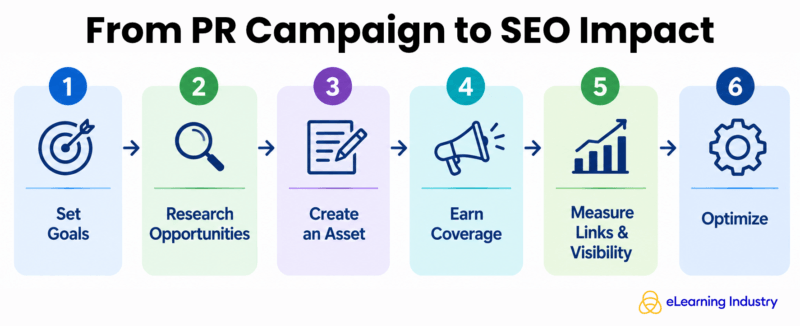
How To Build An SEO PR Strategy: A 6-Step Framework
A successful SEO public relations strategy requires more than creating newsworthy stories and contacting journalists. You need to connect PR activities with specific search objectives, audience needs, and measurable business outcomes. Follow these six steps to build a structured approach.
Step 1: Define Your SEO And Business Objectives
Start by identifying what you want your campaigns to achieve. Are you trying to earn relevant editorial backlinks, increase visibility around a specific topic, or attract qualified B2B prospects?
Your priorities might include:
- Earning relevant editorial backlinks.
- Strengthening industry awareness.
- Increasing referral traffic.
- Supporting organic growth.
- Generating qualified B2B demand.
Step 2: Identify Your Target Audience And Relevant Publications
Determine which publications your ideal buyers actually read. For example, an LMS vendor should prioritize learning tech, HR, and corporate training publications rather than websites with high traffic but little audience relevance.
Consider publication credibility, topical relevance, readership, and editorial standards when building your media list. This also helps you understand how to build brand authority through PR.
Step 3: Audit Competitor Coverage And Backlinks
Analyze your competitors' media presence to identify opportunities. Look for publications mentioning competing brands, topics attracting editorial links, and resources receiving frequent references.
Use SEO tools and media monitoring platforms to identify coverage gaps and discover relevant journalists. Reviewing public relation examples from competing B2B companies can also reveal successful campaign approaches.
Step 4: Develop a Newsworthy, Link-Worthy Asset
Create something publishers genuinely want to reference. Examples include original research, industry benchmarks, expert analysis, and credible educational resources.
For instance, an LMS vendor could publish a report exploring how organizations measure employee training effectiveness. Make sure your findings are accurate, useful, and supported by transparent methodology.
Step 5: Coordinate PR Outreach And SEO
Your PR and SEO teams should collaborate before launching a campaign. Align on the story angle, target publications, supporting website resources, outreach timing, and measurement criteria.
Additionally, agree on link attribution and compliance requirements. Remember that publishers retain editorial control over whether and how they link to your website. An integrated B2B digital PR strategy makes it easier to connect media coverage with organic search objectives.
Step 6: Measure Results And Improve
Evaluate campaign performance using both PR and SEO metrics. Track:
- Earned media coverage and publication relevance.
- New referring domains and backlink quality.
- Referral traffic and visitor engagement.
- Organic impressions, clicks, and rankings.
- Qualified leads and assisted conversions.
What Makes A PR Backlink Valuable For SEO?
| Factor | What to Evaluate |
| Topical relevance | Is the publication relevant to your industry or subject? |
| Audience fit | Does it reach people who may care about your business? |
| Editorial independence | Was the link included because it genuinely helps readers? |
| Context | Does the surrounding article make the link useful? |
| Link destination | Does it point to the relevant original resource? |
| Link attributes | Is the link appropriately marked when sponsored or user-generated? |
| Publication quality | Does the publication demonstrate legitimate editorial standards? |
| Referral potential | Could the link attract relevant visitors? |
Not all backlinks offer the same value. When evaluating PR links, prioritize relevance, editorial context, credibility, and the potential to reach audiences interested in your expertise.
A backlink from a respected HR or learning tech publication may be more relevant to an LMS vendor than a link from a high-authority website covering an unrelated topic. Domain Rating (DR) and Domain Authority (DA) can help you compare websites, but they are third-party metrics, not Google's ranking scores.
If you're exploring how to get editorial backlinks, focus on earning references within genuinely useful articles, research, and industry discussions rather than chasing metrics.
Additionally, paid placements should be qualified appropriately. Google recommends using rel="sponsored" for paid links and allows rel="nofollow" where appropriate. These principles apply to SEO public relations and can support broader visibility goals, including AI visibility for LMS vendors, without treating every backlink as a guaranteed ranking signal.
How To Measure The SEO Impact Of Public Relations
| KPI | What It Measures | Why It Matters |
| Relevant earned coverage | Editorial mentions in appropriate publications | PR reach and credibility |
| New referring domains | Distinct websites linking to your content | Breadth of link acquisition |
| Editorial backlink quality | Relevance, context, and editorial independence | Link usefulness |
| Organic search visibility | Changes in relevant keyword visibility | Search performance |
| Organic traffic | Visits from unpaid search | Search discovery |
| Referral traffic | Visits from earned coverage | Direct audience engagement |
| Branded search demand | Changes in searches for your brand | Directional awareness indicator |
| Qualified leads and pipeline | Relevant commercial outcomes | Business contribution |
Understanding how to measure digital PR SEO impact requires tracking both PR outcomes and organic search performance. Imagine an LMS vendor launches an original research report. The following are hypothetical campaign results:
- 12 relevant publications cover the findings.
- 8 distinct publications link to the original report.
- Referral traffic increases.
- Organic visibility for several related topics improves.
These results indicate that the campaign generated media coverage, editorial backlinks, and coincided with organic improvements. However, the ranking changes cannot automatically be attributed to PR. Content updates, technical SEO improvements, competition, and algorithm changes may also influence performance.
Track earned links, relevant referring domains, organic impressions, clicks, conversions, and referral visits. Avoid relying exclusively on domain authority metrics when evaluating link quality. Additionally, review previous campaigns and media pitch examples to identify which stories generated meaningful coverage. Ultimately, public relations and SEO should be measured together, while distinguishing observed results from proven causation.
SEO Public Relations vs. Traditional Link Building
SEO public relations and traditional link building share the goal of improving organic search performance, but they approach link acquisition differently. PR starts with a newsworthy story, original research, or useful resource. It targets journalists, editors, and industry publications, prioritizing earned coverage, credibility, and audience reach alongside potential backlinks. Coverage may also generate brand mentions without links.
Traditional link building typically starts with the objective of acquiring relevant backlinks. It may involve identifying link opportunities, creating resources, or building relationships with website owners. Legitimate link-building activities can support SEO when they prioritize relevance and editorial value.
So, how can you use PR for link building? Create stories publishers genuinely want to cover rather than treating every media interaction as a link request. Both approaches can complement each other. For example, SaaS link building strategies may incorporate PR campaigns, resource outreach, and content promotion.
Neither approach is inherently manipulative. However, practices intended to manipulate rankings through artificial links may constitute link spam. Prioritize link quality over volume when evaluating link building and backlinks.
Common SEO PR Mistakes To Avoid
1. Treating every media mention as a backlink: Not every mention includes a link, and unlinked coverage can still contribute to brand awareness and branded search.
2. Prioritizing authority scores over relevance: Focus on publications that reach your target audience rather than relying exclusively on third-party metrics.
3. Sending generic pitches without news value: Personalize your outreach and provide journalists with relevant stories, evidence, or expert commentary.
4. Buying backlinks that pass ranking credit: Avoid paid link schemes that violate Google's guidelines.
5. Using keyword-stuffed anchor text: Let publishers choose natural, editorially appropriate anchor text.
6. Publishing research without methodology: Explain how you collected data, identify limitations, and support your findings.
7. Measuring success only through coverage volume: Evaluate relevance, links, audience reach, and campaign objectives.
8. Ignoring referral traffic and commercial outcomes: Track website visits, engagement, and qualified leads.
9. Expecting immediate ranking improvements: A digital PR strategy for SEO requires consistent effort and realistic expectations.
10. Failing to coordinate teams: Align PR, SEO, and content teams. Use relevant article pitch examples to improve outreach consistency.
Conclusion
SEO public relations works best when brands focus on producing genuinely useful information and connecting it with relevant industry audiences. Rather than chasing backlinks, prioritize stories, insights, original research, and expert perspectives that journalists and readers have a reason to value.
A well-planned digital PR for SEO approach can strengthen brand credibility, attract relevant visitors, and support long-term organic discoverability. However, these outcomes depend on the quality of your content, the relevance of the coverage, and consistent media outreach.
The strongest SEO PR strategies don't start with the question, “How do we get more backlinks?” They start with, “What do we know, create, or contribute that's worth covering?” The links and visibility become potential outcomes of that value.
FAQsSEO PR combines public relations and SEO to increase a brand’s online visibility through media coverage, editorial backlinks, brand mentions, and exposure on relevant websites.
PR can earn editorial backlinks from reputable websites, increase brand exposure, and help audiences discover a business through articles, interviews, and news coverage. These signals can support organic visibility over time.
No. Digital PR focuses on earning media coverage, brand mentions, and links through newsworthy stories and campaigns. Link building focuses primarily on acquiring backlinks. Digital PR can support link building, but its goals extend beyond links.
PR can contribute to SEO by earning relevant editorial links, increasing brand visibility, and attracting organic traffic. These benefits may support rankings, but PR does not guarantee specific ranking improvements.
A valuable PR backlink comes from a relevant, credible website, appears naturally within meaningful editorial content, and is independently chosen by the publisher. Context and editorial credibility matter more than link quantity alone.
Measure SEO PR through media coverage, quality referring domains, earned backlinks, organic visibility, referral traffic, branded searches, and business outcomes such as leads or conversions. Combining these metrics helps assess both SEO impact and broader PR value.