

Why AI Strategy Consulting Is A Growing Opportunity
AI strategy consulting is in high demand right now, as companies are looking into integrating Artificial Intelligence tools into their daily functions. That's because AI is now considered a growth lever, not just an assistant to workflows. But along with demand, competition rises, too. Many AI advisory services claim to have expertise but lack a reputation as trusted advisors. Anyone can sell you promises and a story where they are the triumphant protagonist. But how many of them can actually provide evidence for their claims?
The AI consulting market is quickly gathering a lot of traffic as demand for these services rises. Companies expect their AI consultants to assess their AI readiness and maturity, develop a vision that aligns with the business's objectives, create a data strategy, and then select the right AI tools. Next, it's time to build the necessary AI workflows, train employees on how to use all the new tools effectively, and monitor the situation for further improvements.
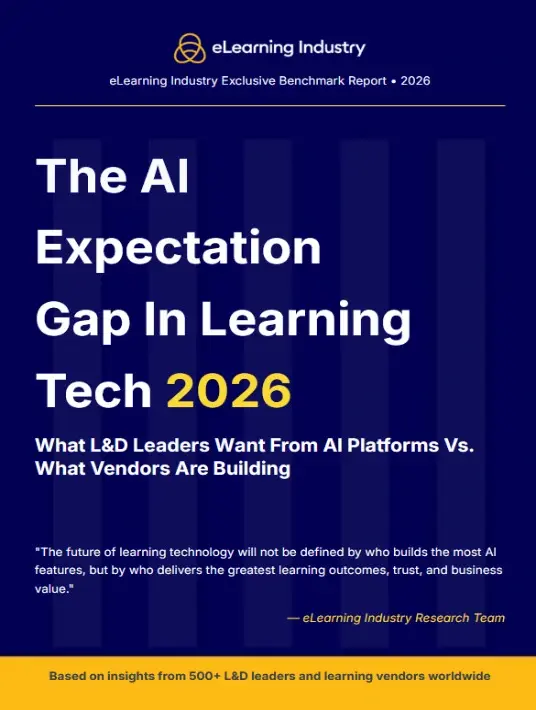
This need for strategic guidance is particularly visible in Learning and Development. Recent research from eLearning Industry found that while 42% of learning technology vendors have fully integrated AI, only 7.5% of L&D buyers say the same. With another 45% of buyers actively planning AI adoption, a large portion of the market is still figuring out where and how AI can deliver meaningful value.
If you are in the enterprise AI advisory business, you should start by positioning your company as an expert in the field, with actionable proof to back up your claims. In fact, you must position yourself as a leader in your field, not just an expert. And although everyone claims to be an expert, how many can say and prove that they are leaders and can help their partners lead their companies better?
Key Takeaways
- AI strategy consulting is a fast-growing, high-margin advisory opportunity.
- Providers win by positioning expertise, not selling time.
- Credibility, thought leadership, and visibility matter as much as capability.
- Companies that scale AI strategy consulting focus on authority, not execution alone.
In This Guide, You Will Find...
- Who Can Offer AI Strategy Consulting?
- What Clients Expect From AI Strategy Consulting Providers
- How To Package Your Consulting As A Scalable Offering
- Why Authority Beats Experience
- How AI Strategy Consulting Drives Long-Term Revenue
- How Leading Providers Promote AI Strategy Consulting
- Common Mistakes AI Strategy Consulting Providers Make
Who Can Offer AI Strategy Consulting?
-
AI Consulting Firms
These firms already have experience in strategy, operations, and technology, making them well-suited to help companies adopt AI successfully. Beyond traditional consulting, they can help clients with practical implementations, training, and monitoring outcomes. Many of these firms are exploring new ways of monetizing AI expertise, creating offerings that combine advisory with hands-on solutions. The key is showing measurable results rather than just presenting theories. When you position yourself as an AI thought leader, you can attract attention in the market and build trust with potential clients.
-
HR Tech And Learning Tech Vendors
They already understand how organizations handle people, skills, and performance data, so advising on AI adoption in these areas is a natural fit. Offering AI strategy consulting helps these vendors expand their value beyond software, positioning them as trusted partners rather than just tool providers. They can also provide AI marketing ideas that speak directly to HR leaders, showing how AI can improve recruiting, learning, and workforce planning.
-
SaaS Companies Expanding Into Advisory
Many SaaS companies are exploring consulting as a way to deepen client relationships. These companies already have data and tools in place, so providing guidance on AI adoption can feel like a natural next step. By showing clients how to get more value from existing platforms, they can help with integrations and ROI. For companies looking to stand out, investing in SEO for AI search engines ensures that their expertise is discoverable by the right audience.
-
Digital Transformation Agencies
Digital transformation agencies are uniquely positioned to guide businesses because they understand how technology changes workflows and operations. Such agencies can help companies assess readiness, define an AI vision, and choose tools that fit the organization. By offering AI strategy consulting, they can expand their services and help clients implement AI responsibly and effectively. If you have such an agency, you can also help businesses leverage AI internally and externally.
-
Data And Analytics Specialists
Data and analytics specialists have the expertise to help organizations make sense of complex datasets. This naturally positions them to advise on AI initiatives, from selecting models to monitoring outcomes. Their deep understanding of data pipelines and quality ensures that AI tools can deliver on their promises. Therefore, by combining technical skill with strategic insight, they can guide companies in AI adoption while minimizing risks.
What Clients Expect From AI Strategy Consulting Providers
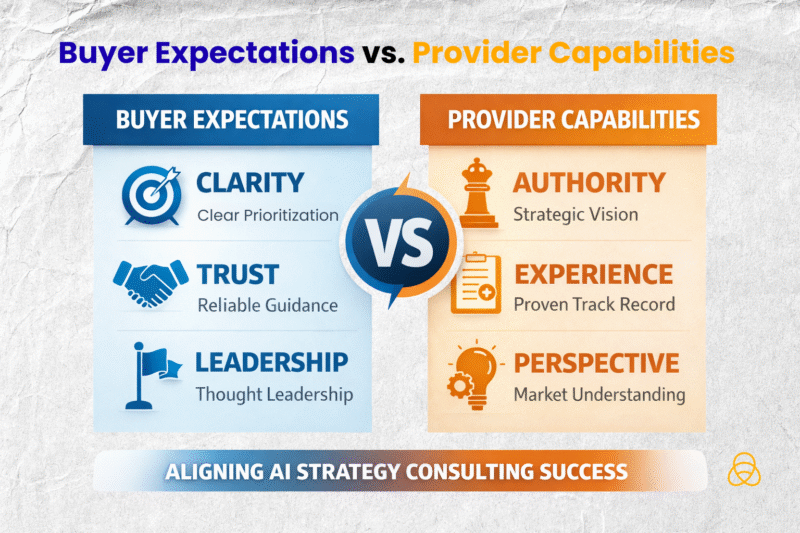
When companies look for external support, they expect more than just technical solutions. AI strategy services should provide a clear roadmap, helping organizations understand how AI can support their goals and drive measurable impact. Clients want partners who can guide them thoughtfully, provide actionable insights, and communicate effectively at every level.
- Strategic clarity: Clear recommendations that map out next steps and align with long-term business objectives.
- Independent thinking: Advisors who question assumptions and offer unbiased perspectives, not just confirm internal ideas.
- Risk and governance awareness: Awareness of potential pitfalls, compliance requirements, and ethical considerations.
- Industry-specific insight: Knowledge of the client's sector to ensure solutions are practical and relevant.
- Executive-level communication: Updates and recommendations that speak directly to leadership, enabling confident decision-making.
The challenge isn't simply gaining access to AI technology; it's turning that technology into something organizations can realistically implement. eLearning Industry's research found that 48% of learning technology vendors struggle to keep pace with AI innovation, while 45% cite integration complexity and 41% point to resource constraints. For AI strategy consultants, this highlights an opportunity to provide value through implementation planning, integration guidance, and education—not just tool recommendations.
How To Package Your Consulting As A Scalable Offering
-
Advisory Frameworks
To make AI strategy consulting scalable, start by developing repeatable advisory frameworks. These frameworks provide a consistent approach for assessing client needs, defining objectives, and recommending solutions. By standardizing your methodology, you reduce the time spent on custom planning while still delivering tailored insights. Advisory frameworks also help your team stay aligned, ensuring that every engagement follows a proven process. Strong frameworks form the backbone of any scalable offering and make it easier to grow without compromising quality.
-
Assessments And Diagnostics
Assessments and diagnostics are essential for shifting from bespoke projects to scalable AI services. These tools help you quickly evaluate a company's AI readiness, data quality, and operational capabilities. With repeatable assessments, your team can identify gaps, risks, and opportunities faster than a fully custom approach.
They also provide clients with tangible, actionable insights, which builds trust and demonstrates your expertise. Using assessments consistently allows your firm to create benchmarks across multiple clients, which informs strategy and helps refine your offerings. Incorporating structured diagnostics is a key step in packaging AI strategy as a reliable service.
-
Roadmap Facilitation
Roadmap sessions guide clients from assessment to implementation, helping them prioritize initiatives and allocate resources effectively. By using a repeatable facilitation process, you can maintain a structured approach across multiple clients without reinventing the wheel. Also, this process reinforces your credibility, showing that your team understands not just technology but how AI fits into a business strategy.
-
Executive Workshops
Using a structured workshop template ensures consistent quality and messaging while still allowing for discussion of client-specific challenges. Additionally, workshops highlight your firm's AI services positioning, showing that you can guide leadership through complex decisions. By running repeatable workshops across different clients, you can scale your offerings, reinforce your expertise, and strengthen relationships with decision-makers, all while providing immediate, tangible value.
-
Ongoing Strategic Advisory
Rather than delivering a one-time report, you provide continuous guidance, monitor progress, and adjust priorities as business needs evolve. A structured advisory cadence allows you to repeat processes, check results, and iterate efficiently. Clients gain confidence knowing they have a reliable partner to navigate the intricate AI world and make the most of their AI investments. By formalizing these touchpoints, your team can manage multiple clients at scale while maintaining high-quality support.
Why Authority Beats Experience
Critical Differentiation
-
Many Providers Have Experience
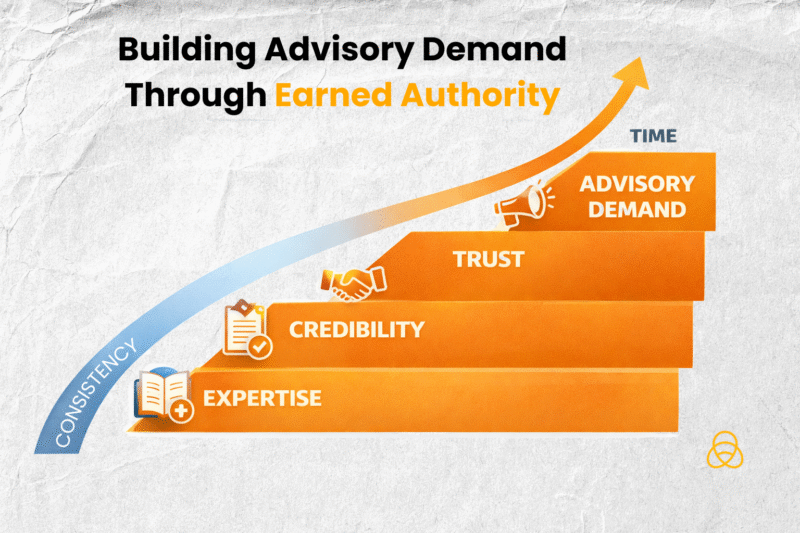
Experience alone isn't enough to stand out. Almost every AI consulting firm can point to projects or implementations, but not all can show meaningful outcomes. Clients want advisors who combine technical know-how with insight into business strategy. Demonstrating the real impact of past work builds credibility and sets you apart from firms that only talk about experience. Sharing lessons learned and measurable results helps clients see that your experience translates into practical value they can trust.
-
Few Are Perceived As Leaders
Leadership is about shaping the conversation. Advisors perceived as leaders offer unique perspectives, challenge assumptions, and guide clients toward decisions they couldn't make on their own. This perception is rare, which makes it a key differentiator. By consistently demonstrating thought leadership, offering bold ideas, and communicating a clear point of view, your firm becomes a trusted authority capable of influencing outcomes and accelerating business growth.
-
Buyers Choose Advisors They Trust, Not Just Those Who Can Deliver
Trust is the cornerstone of any advisory relationship. Even technically skilled providers can lose clients if they don't communicate clearly or understand business priorities. Clients want advisors who are honest, reliable, and transparent about risks and outcomes. Building trust requires consistent follow-up, clear explanations, and a focus on the client's unique challenges. Advisors who earn trust are more likely to secure long-term partnerships and influence strategic decisions, which is far more valuable than short-term project delivery alone.
Positioning Elements
-
Clear Point Of View
A clear point of view distinguishes advisors in a crowded market. It shows that you understand the challenges clients face and know how to address them strategically. Firms with a strong perspective can guide decisions confidently, making their recommendations easier to follow. Clear messaging also ensures that your team presents a unified approach in every engagement. This kind of authority is crucial for scaling AI consulting offerings because it allows clients to see your insights as intentional, repeatable, and reliable rather than ad hoc suggestions.
-
Strategic Narratives
Strategic narratives translate complex AI concepts into stories clients can relate to. Using examples and case studies helps demonstrate practical impact and builds confidence in your advice. These narratives also highlight how your guidance connects to real business outcomes. For firms offering AI transformation consulting, narratives show that you know how to turn technology into actionable strategies. By consistently framing your insights in a compelling, story-driven way, you make your recommendations memorable, help clients see value immediately, and differentiate yourself from advisors who only share technical details.
-
Market Presence
When firms contribute regularly to industry discussions, publish insights, or host events, they demonstrate authority and reliability. Clients are more likely to engage advisors they see actively shaping the conversation and recognized by peers. Market visibility also supports initiatives like global expansion strategies, showing that your expertise is relevant across regions and industries. Maintaining a consistent presence helps attract the right clients, strengthens your reputation, and reinforces your position as a trusted, go-to advisor in the AI space.
-
Thought Leadership Consistency
Regularly sharing insights, frameworks, and analyses keeps your firm top of mind for clients and prospects. This approach demonstrates that your expertise is enduring and not limited to individual projects. Highlighting tools and approaches such as top AI personalization tools shows that you understand current technology trends and can apply them effectively.
How AI Strategy Consulting Drives Long-Term Revenue
-
Higher Deal Values
AI strategy consulting allows firms to offer high-value services that go beyond one-off projects. By delivering actionable insights and measurable impact, advisors can command larger contracts. This way, clients are willing to invest more when they see a clear link between guidance and business outcomes.
-
Longer Client Relationships
Continuous advisory keeps your firm involved in planning, implementation, and performance tracking. Clients appreciate a partner who understands their business and can guide AI adoption in L&D or other operations. Extended relationships strengthen trust and deepen client reliance on your expertise, which naturally leads to long-term retention and recurring revenue streams while increasing your influence within their organization.
-
Cross-Sell Into Products And Platforms
Clients are more receptive when your guidance demonstrates clear value and measurable results. By connecting strategy to practical tools, firms can expand the range of solutions they provide. This approach increases revenue opportunities without additional client acquisition effort.
-
Increased Switching Costs
Ongoing AI strategy consulting strengthens client dependency on your insights and frameworks. As you guide decision-making and implement processes, clients integrate your recommendations into workflows. This creates switching costs, making it harder for them to work with another provider. Therefore, long-term involvement ensures your firm remains central to future AI initiatives, while clients gain confidence that you can maintain continuity and help them avoid missteps.
-
Strategic Partnerships
By guiding clients on broader organizational strategy, you position yourself as a collaborative, long-term partner. Partnerships often lead to co-innovation, joint offerings, or collaborative go-to-market opportunities. For example, helping clients implement generative engine optimization (GEO) solutions can showcase your technical expertise while creating measurable business impact. These alliances amplify your influence, extend market reach, and open new revenue channels.
How Leading Providers Promote AI Strategy Consulting
-
Research And Insights
Leading providers build credibility by publishing research and sharing insights that help businesses understand emerging trends. They translate complex topics into clear takeaways for decision-makers. Original studies, reports, and analyses demonstrate authority in AI strategy consulting and show clients that expertise runs deep. This approach builds trust and positions providers as thought leaders who guide the market conversation.
-
Educational Assets
Educational content helps providers connect with clients who are curious but cautious about AI. Webinars, guides, and workshops make learning accessible and build confidence in your advisory capabilities. Comparing evolving technologies, like ChatGPT vs. Google, can simplify complex ideas and encourage meaningful discussions.
-
Industry Commentary
Industry commentary allows firms to stand out by offering opinions that others find valuable. Rather than repeating what everyone says, leading advisors provide perspective on where the market is heading and what businesses should prepare for. These insights can also open doors to monetizing AI expertise through visibility and credibility.
-
Strategic Partnerships
Collaborating with technology providers, research groups, or even some of the hottest AI startups creates shared visibility and new opportunities for innovation. These partnerships show clients that your firm is connected to the broader ecosystem and stays informed about emerging technologies. High-level collaborations also demonstrate your ability to bridge strategy and execution, making your advisory work more relevant and future-focused.
-
Presence Where Buyers Already Look
Top providers make sure their expertise appears in the same spaces where potential clients search for ideas or validation. This might include industry conferences, executive networks, or established business publications. For example, eLearning Industry's PPC directories are already a place where many buyers are actively seeking to buy solutions. Creating your own listing puts you right in front of their eyes.
Common Mistakes AI Strategy Consulting Providers Make
-
Selling Consulting As Hours
Many firms still treat AI strategy consulting as billable time instead of measurable outcomes. Clients don't buy hours, though. They buy results. Positioning your work around impact builds stronger relationships and higher trust. Clear value stories help clients see your firm as a growth partner, not just a service vendor.
-
Leading With Methodology Instead Of Insight
Overemphasizing frameworks can make consulting sound generic. Clients care more about the thinking behind your advice than the process itself. The strongest advisors share original insights backed by results. Combining expertise with practical examples shows your approach works in the real world and helps clients build lasting AI skills internally.
-
Over-Indexing On Tools
Focusing too much on specific platforms limits your strategic credibility. Tools change fast, but good judgment doesn't. Leading advisors help clients understand when and why to use technology, not just how. By balancing technical knowledge with strategic clarity, you show that your guidance stays relevant even as the tools evolve.
-
Lack Of Industry Focus
Trying to serve everyone usually means serving no one well. Clients prefer advisors who understand their market challenges and language. Specializing by industry helps shape stronger recommendations and deeper trust. Firms that focus on specific sectors can tailor their AI strategy advisory approach and stand out in competitive conversations.
-
Weak Market Visibility
Even skilled advisors struggle when they remain invisible. Without consistent visibility, clients can't recognize your value or expertise. Sharing insights publicly builds credibility and attracts the right audience. A strong market presence reassures clients that your firm is active, informed, and invested in shaping the future of AI consulting.
Key Takeaway
The demand for advisory expertise in Artificial Intelligence keeps expanding, and firms that understand how to connect strategy with measurable results are leading the way. The AI consulting market continues to mature, offering room for both established firms and emerging specialists to stand out through credibility, clarity, and consistent value delivery. Providers who anchor their work in insight rather than volume are the ones earning client loyalty and long-term growth.
Moreover, success in this field depends on focus and presence. Strong AI services positioning ensures that your firm is visible where decision-makers look for guidance, while maintaining authority across every engagement. Thought leadership and research help build trust, and emerging platforms like Google AI Overviews will only make credible, well-structured expertise easier for buyers to find.
Looking ahead, the space will keep evolving as the biggest AI companies push new tools, models, and expectations into the market. Advisors who stay adaptable, continue learning, and maintain an authentic point of view will thrive. To stand out, they should also partner with niche marketing agencies that have the right tools and services to help them reach and appeal to the right audience.
FAQAI strategy consulting helps organizations define where, how, and why to adopt AI in ways that align with business objectives. It typically involves assessing readiness, prioritizing use cases, planning roadmaps, and identifying risks and governance needs.
Without a strategy, companies often invest in tools without clear goals, wasting time and money. Consultants help align AI efforts with measurable business outcomes, prioritize high-value opportunities, and avoid common pitfalls like poor data quality and unclear objectives.
Key benefits include better decision-making, optimized resource allocation, faster deployments with clear ROI expectations, access to specialized expertise, and a competitive edge through scalable AI initiatives.
Common issues include scattered or uncoordinated AI projects, lack of measurable success metrics, employee resistance to change, poor data quality, and elevated operational risk due to weak governance.
Consultants assess data readiness, recommend data governance frameworks, and help ensure ethical, transparent, and compliant AI use, reducing bias, improving data quality, and building stakeholder trust.
Outcomes vary, but structured roadmaps often span multiple phases. Early wins may emerge in months, while full enterprise transformation typically takes longer, depending on scope, data quality, and organizational readiness.
