




Artificial Intelligence In Transportation Training: Individualized Learning Processes
Each learner has their strengths and weaknesses. The training programs that have been in use often follow the one-size-fits-all approach that might not address all their needs. Using Artificial Intelligence (AI), the training platforms will be able to evaluate the performance of every trainee and tailor the content based on their performance. For example:
- Trainees who have problems with traffic can be offered additional lessons and practice modules.
- Individuals who are distinguished in safety procedures will be able to graduate to higher courses.
In such a way, employees will be more ready to face the real-life challenges in airport transportation and the services of a city.
Real-life Simulation And Practice
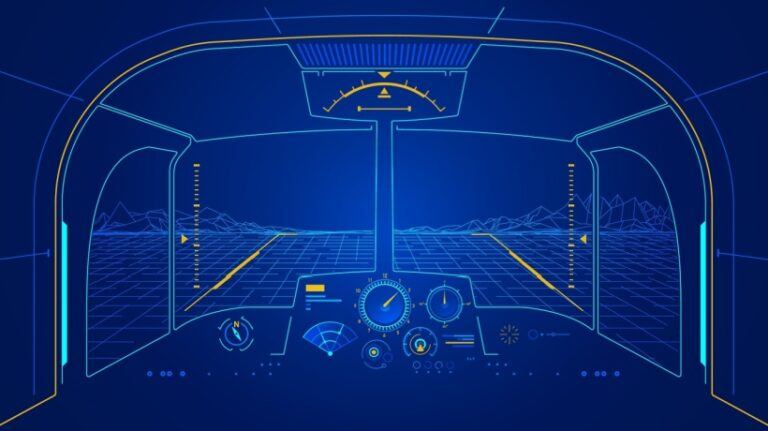
Simulations with Artificial Intelligence offer a risk-free learning environment. The trainees are able to train on real-life scenarios like heavy traffic, changing of routes at the last minute, or emergency situations without putting their lives or those of the passengers at risk.
In the case of transportation to the airport, AI simulations have the ability to be representative of traffic at peak hours, weather variations, and the layouts of airports. The trainees are taught how to make fast judgments and enhance efficiency and service delivery to passengers. Such simulations enable business operators to test the preparedness of the workforce before their deployment to live routes.
Evidence-Based Performance Measurement
Artificial Intelligence can be used to monitor the performance of trainees continuously. All the actions, decisions, or reactions can be examined to see the strengths and areas to work on. For example, AI can track:
- Mean response period during crises.
- Correctness in adherence to standard operating procedures.
- Effectiveness in handling passenger boarding or delivery schedules.
Through this information, training managers are able to create targeted training that contributes to the general workforce performance, resulting in safer and more efficient transportation services and city tours at the airports.
Transportation Training And Education Applications
Artificial Intelligence can be applied in transportation training in various ways, not limited to:
- Training of drivers who drive in airports and cities.
AI-based simulators are similar to the real-world traffic and airport situations. - Training on fleet management.
The workers are trained on the use of AI to handle logistics, schedules, and maintenance of vehicles. - Customer service training.
The chatbots and virtual assistants will teach the staff how to manage passenger queries effectively. - Safety and emergency response.
AI systems will recreate accidents, breakdowns, or traffic interruptions in order to train employees to handle life emergencies.
Through the combination of these AI-based solutions, the transportation companies will be able to develop a workforce of high proficiency and changeability.
Business Operating Environment
Artificial Intelligence training is valuable to both learners and directly to business operations. Professionally trained employees enhance the quality of services offered, minimize operational mistakes, and get more satisfaction.
Within airport transportation, such as that of trains, trained drivers are able to reduce delays, optimize routes, and manage luggage. Likewise, within the framework of the city tour service, the use of AI-trained employees will be able to offer tourists a more joyful and comfortable experience and ensure an increase in customer retention and rating.
In addition, AI training can lower the expense of those repeated training sessions that require in-person training, as well as enable businesses to scale with greater efficiency. A competitive advantage is the result of businesses implementing AI in training, since now they have a labor force that is prepared to handle current transportation problems.
Artificial Intelligence Can Be Used To Improve Safety
The issue of safety is an important matter in transportation. Artificial Intelligence has been applied to advance safety training by recreating complicated situations that may be too dangerous to execute in practice. As an example, AI can train the trainees to:
- Deal with traffic congestion on transportation to the airport.
- Address car failures in transportation at the airports.
- Drive through the traffic streets in the city to offer city tours.
Such learning provides fewer accidents and the observance of industry safety standards.
Artificial Intelligence Future Of Transportation Training
Artificial Intelligence is closely related to the future of transportation training. Virtual Reality (VR) and Augmented Reality (AR) are new technologies that are being integrated with AI to establish even more immersive and realistic training experiences. We can expect:
- Completely AI-controlled training modules that adapt automatically based on the performance of the trainees.
- Predictive analytics to establish possible workforce skills gaps in advance.
- Usage of AI learning platforms in conjunction with fleet management and operation software.
The improvements will make the training faster, more efficient, and more oriented to the real-life needs of transportation.
Conclusion
Transportation training and education are changing with the use of Artificial Intelligence. Transportation to the airport, intra-airport transportation, and city tour services are becoming more personalized, realistic, and data-driven using AI-driven systems. To business owners, AI not only enables employees but also increases the efficiency and safety of operations, as well as customer satisfaction. There is an opportunity to create a highly qualified workforce that is capable of addressing current challenges and providing improved services by implementing AI-based training solutions in the transportation industry. The introduction of Artificial Intelligence in transportation learning is a new dawn for transportation education that is now smarter, safer, and more effective, and trains employees and businesses on how to operate in a world of smart and connected mobility.