



If AI Works, Why Does 53.3% Of L&D Still Struggle?
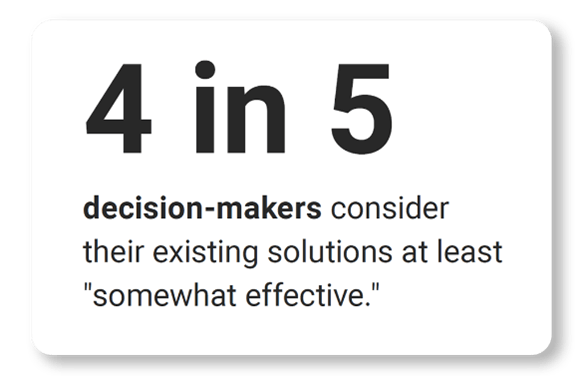
If a car dashboard says everything is fine while the engine light keeps flashing, the problem is not only under the bonnet. The problem is also the dashboard. That is more or less where enterprise L&D finds itself in 2026. In Scheer IMC's State of Learning Technologies 2026 report, 53.3% of decision-makers say integrating AI or new learning technologies effectively is their biggest challenge. At the same time, four in five still describe their current learning technology as at least somewhat effective. Both statements can be true. That is exactly why this matters.
This is not a contradiction born of confusion, but a contradiction born of measurement. Many organisations are still evaluating learning technology by one set of standards while expecting it to deliver against another. The dashboard reports stability, access, and basic usability. The business is asking for capability, productivity, and proof. Those are not the same conversation.
AI Has Moved From Demo Stage To Delivery Pressure
For a while, AI in corporate learning lived like a showroom concept car. It looked impressive under bright lights, attracted confident commentary, and rarely had to survive a wet motorway on a Monday morning. That phase is over.
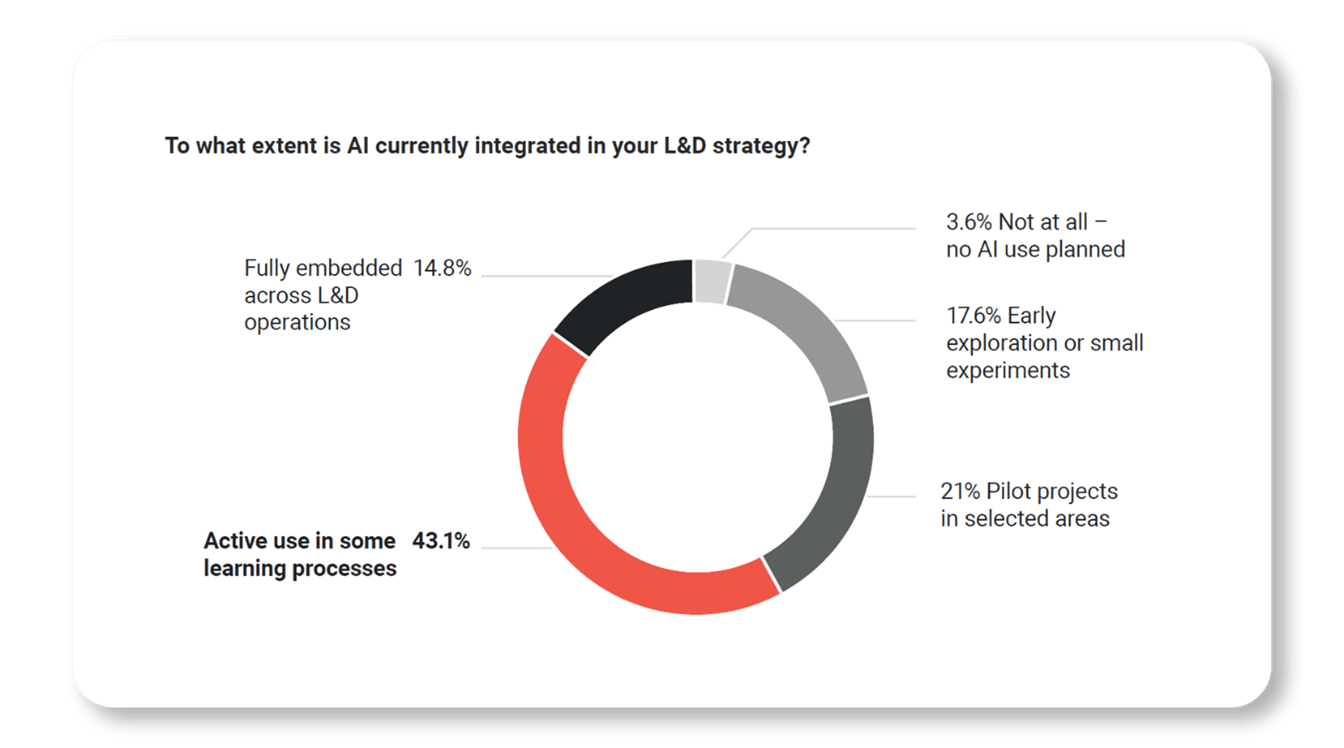
The report makes that plain. AI is now in active use across learning processes for 43.1% of organisations, while another 14.8% say it is fully embedded across L&D operations. Investment is following the same direction. Around 61.4% plan to invest in AI-powered authoring tools, and 60.5% in AI-powered coaching tools over the next 12 months.
The appetite is real. The difficulty is real as well.
Once AI enters an enterprise environment, it stops being a shiny feature and starts behaving like a new railway line dropped into an old city. Suddenly the questions are less about speed and more about signals, safety, routes, and who is responsible when something goes wrong. Integration into existing systems, technical complexity, and data security are now the friction points. It is no coincidence that 92.9% of organisations say they have concerns about the data security and privacy of AI-based solutions.
The hard part is no longer deciding whether AI belongs in L&D. The hard part is making it work in a way the business can trust.
"Effective" Is Carrying Too Much Weight
When four in five organisations say their learning technology is effective, it is tempting to hear that as a verdict of strategic success. That would be a very generous reading.
More likely, many respondents are answering a narrower question.
- Does the system work reliably?
- Can people access learning?
- Does it support delivery without constant friction?
- If that is the standard, then yes, many systems probably are effective.
But AI has raised the bar.
A learning platform can be stable and still strategically underpowered, just as a well-organised kitchen can still produce the wrong meal. Good shelves, sharp knives, and tidy ingredients do not guarantee dinner will help the business reach its goals. In the same way, a platform can have healthy logins, strong learner feedback, and smooth administration while still failing the harder test: does it improve performance, close skill gaps, or support transformation in a measurable way?
That is where the report becomes more revealing. Employee feedback remains the most common way organisations evaluate learning, used by 55.5%. Yet 44% say the biggest barrier to measuring L&D ROI is linking learning outcomes to concrete business impact. The issue is not that organisations have no data. It is that much of the data still behaves like a weather report when leadership wants a business forecast.
The Old Success Story Still Feels Comfortable
For years, learning technology was often judged like infrastructure. If it was secure, compliant, easy enough to use, and broadly adopted, it was doing its job. That logic made sense when the central challenge was digital delivery at scale.
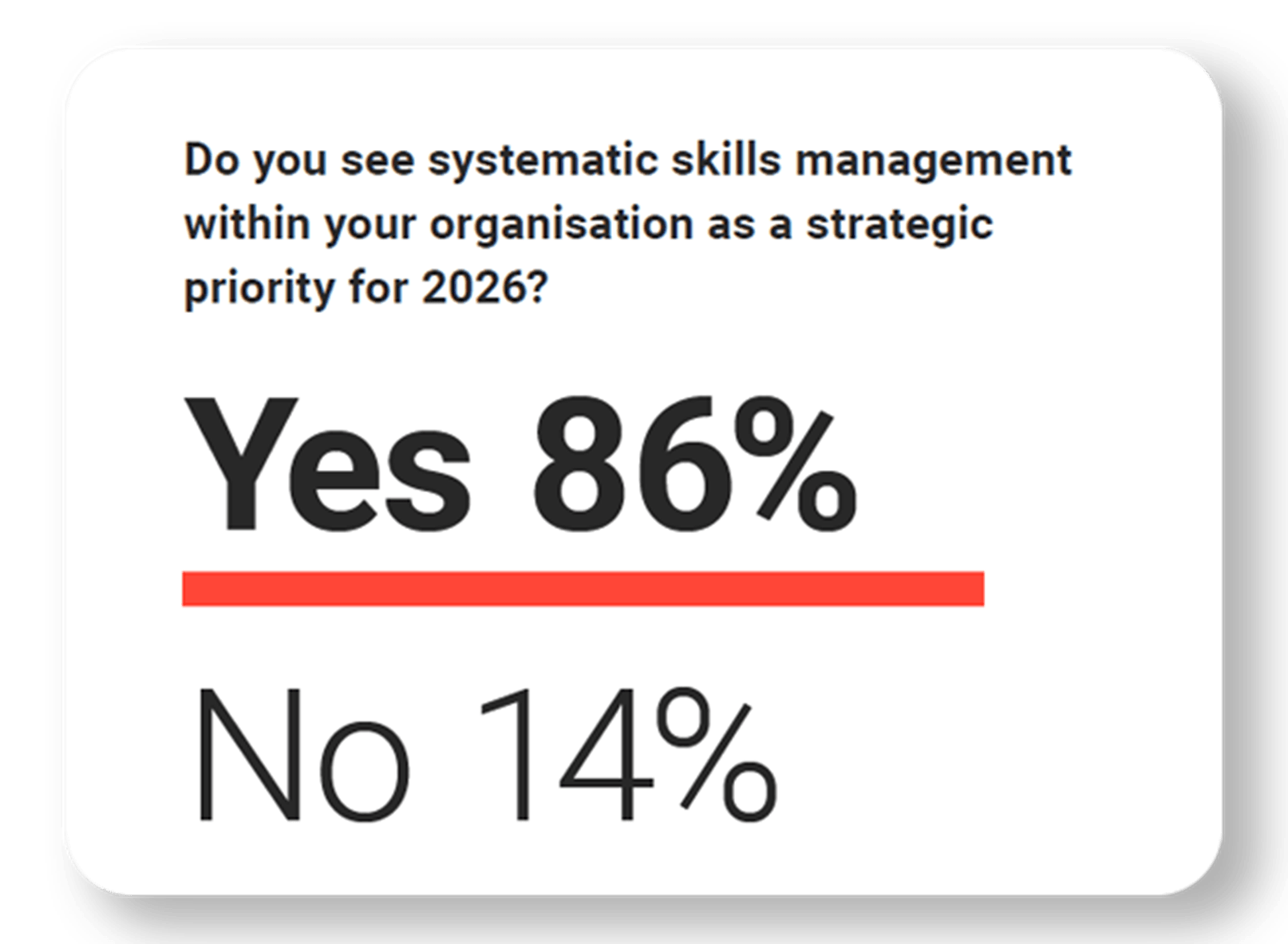
Now the brief is heavier. L&D is being asked to support workforce adaptability, skill visibility, and AI readiness. In the report, 86% of organisations say systematic skills management is a strategic priority for 2026. That is a serious shift. So is the shape of the learning stack itself. Rather than collecting platforms like kitchen gadgets bought during a late-night shopping spree, 73.1% now rely on one central LMS as the backbone of their L&D ecosystem. This is maturity, but it is architectural maturity. Measurement maturity is still catching up.
Completion rates still matter. Compliance still matters. Satisfaction still matters. But if these remain the headline while AI integration struggles and business impact stays vague, then L&D risks presenting a beautifully wrapped parcel with no clear evidence of what is inside. The function does not have an ambition problem. It has a translation problem.
If Learning Lives In Work, Measurement Has To Follow It
One of the clearest findings in the report is that engagement works best when learning is woven into daily work. In fact, 85.5% of decision-makers say integrating learning into daily workflows is the most effective driver of engagement. That should also tell us something about measurement.
If learning increasingly happens in the flow of work, then evidence of impact cannot remain trapped inside the LMS like luggage left circling an airport carousel. It has to show up where work shows up: in faster time to competence, better decisions, stronger internal mobility, or fewer delays in transformation efforts. Not every outcome needs a perfect number. Senior leaders know that. What they do expect is a credible line of sight between learning effort and business movement.
That line is still missing for many teams. The report shows L&D moving away from activity metrics and toward outcomes such as productivity improvement, skill improvement, and skill gap analysis. The direction is right. The execution is harder than the intention.
That is why the question "What is L&D measuring?" matters so much. It is not a provocative headline for the sake of it. It is a strategic test. If AI remains difficult to integrate, if skills remain difficult to prove, and if business impact remains difficult to connect, then the old definition of "effective" is no longer enough.
What Is Enough, Then?
The full State of Learning Technologies 2026 report goes much deeper into where this gap becomes most visible, where investment is moving next, and why trust, governance, and connected data are becoming the real differentiators. It draws on the perspectives of more than 420 enterprise L&D decision-makers worldwide and is further shaped by the experience of Scheer IMC, which has spent over 25 years helping organisations navigate complex learning challenges at scale.
Founded by IT visionary Prof. Scheer out of a pioneering university initiative, the company has supported more than 1,300 organisations and 10 million learners through learning platforms, content, and strategic expertise. That combination of market perspective and practical experience gives the findings added relevance at a time when L&D is under growing pressure to prove not only activity, but impact. If your own learning dashboard looks healthy while the engine still sounds uncertain, the wider findings are worth a closer look.