


 ChatGPT
 Perplexity
 Claude
 Grok
Grok
Human-In-The-Loop And What Past Technology Shifts In L&D Have Taught Us
L&D has never lacked tools. What it has often lacked is restraint: deciding what, when, and how. Those who have lived through multiple cycles of change will recognize the pattern. Flash, rapid authoring tools, mobile learning, microlearning, ever-evolving learning platforms, AR/VR boom. Each wave arrived with promise. Each delivered real progress and created new challenges.
Now AI has entered the room. And once again, L&D is being told that everything is about to change. This time, the risk is not becoming outdated. The risk is creating too much, too fast. So, what is it that we can learn from the past?
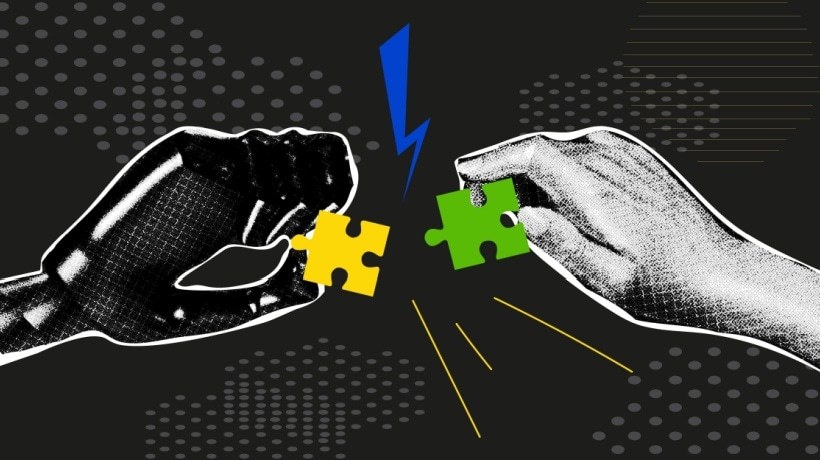
Human-In-The-Loop Is A Design Choice
Human-in-the-loop is often described as a review step. A way to check AI output before it goes live. That description undersells what is really at stake. So let's not forget we are the bosses!
In L&D, human-in-the-loop is about ownership:
- Who decides what matters.
- Who decides what can be removed.
- Who decides how much complexity is helpful and when it becomes a burden.
AI can suggest structures, examples, and assessments; however, it cannot decide what deserves attention in a specific context. Those are design decisions. And they carry consequences—which humans have to deal with!
When Speed Starts To Undermine Learning
AI makes content creation fast and inexpensive. That is undeniably useful. It is also something senior L&D leaders should pause and reflect on. When speed becomes the dominant metric, L&D quietly shifts its focus from designing learning to producing content.
The question moves from "What does the learner need to do differently?" to "How quickly can we create this?" Efficiency on its own does not improve learning. Without judgment, it simply creates more noise.
Instructional Design Beyond Content Production
As automation increases, the role of Instructional Design is quietly changing.
If Instructional Designers are still measured mainly by output, AI will outpace them quickly. But that is not a failure of the role. It is a sign that L&D has framed its value too narrowly.
In more mature L&D functions, Instructional Design is about:
- Learning architecture
- Clear intent
- Thoughtful sequencing
- Restraint in content
Human-in-the-loop belongs here. Not at the end of the process, but at the very center of it.
What AR And VR Taught L&D
This is not the first time L&D has been here. AR and VR once held a lot of promise. Immersive learning. Safe simulations. High engagement. A very compelling future. Years later, AR and VR are still powerful. But many teams struggle to use them meaningfully or at scale.
Not because the technology failed. Because it demanded strong Instructional Design to succeed, high effort to build, high cost to maintain, complex ecosystems. Without clear learning intent, immersion became spectacle. Experience replaced purpose. That lesson is worth remembering.
Why The Parallel With AI Matters
AI feels different because it is easier to access. Faster to adopt. Cheaper to experiment with. But the underlying risk is familiar. When technology leads, and learning intent follows, L&D ends up with content that looks polished, sounds confident, and still struggles to change behavior.
AR and VR taught L&D that engagement does not automatically lead to learning. AI will teach the same lesson if human-in-the-loop is treated as optional.
The Quiet Risk L&D Leaders Should Be Watching
The biggest risk is not poor-quality content. It is content that looks right and adds very little value. AI-generated learning often uses the right language and follows accepted patterns. Without human judgment, L&D risks filling platforms rather than supporting performance.
The questions worth asking are simple:
- Are we designing learning or just adding content?
- Are we respecting learner time?
- Are we clear about what really needs to be learned?
- Are we making the best use of the learning budget and ROI?
Human-In-The-Loop As An L&D Capability
Human-in-the-loop cannot be left to individual designers alone. It needs to show up in how L&D works:
- Clear expectations around learning quality.
- Space to challenge content that feels unnecessary.
- Support for thoughtful pushback.
- Ongoing development of design judgment.
When this is done well, L&D does not produce more learning. It produces better learning.
The Question That Will Shape What Comes Next
AI will continue to evolve. That is inevitable. The more important question for L&D is this: What learning decisions are we willing to hand over, and which must remain human? If this is not answered deliberately, it will be answered by tools, timelines, and convenience. And then there is no looking back!
Human-in-the-loop is not about resisting change. It is about taking responsibility for learning.