

Public Relations Is So Much More Than Press Releases And Mentions
The strongest public relations examples show how a well-timed idea, clear message, and credible action can give people something worth discussing and sharing. That matters even more in a business environment where trust is increasingly difficult to earn. According to the Edelman Trust Barometer, 80% of people trust brands they use, making brand trust a valuable advantage for companies that communicate with relevance and clarity.
For B2B companies, PR can help you turn expertise into visibility and business values into meaningful conversations. A strong campaign can change perceptions, build credibility, increase awareness, establish authority, humanize your company, or position your brand within a wider cultural conversation. However, the best successful PR campaigns don't rely on attention alone. They connect a compelling story with a genuine business objective and give the right audiences a reason to care.
That distinction matters when you evaluate PR as part of your brand strategy. You need more than impressive reach numbers or a long list of media placements. You need to understand what the campaign actually achieved, how the organization executed the idea, and which elements you could adapt to your own market.
In the 15 examples shown below, we examine public relations campaigns that built trust and generated meaningful attention across different industries and situations. You'll see how organizations used storytelling, creative ideas, partnerships, thought leadership, cultural relevance, and media outreach to create conversations around their brands. More importantly, each example highlights a practical PR principle you can apply to your own B2B campaigns.
Key Takeaways
- Strong PR begins with a story, not a company announcement.
- Data and original research create natural media hooks.
- Purpose works when actions support the message.
- Executives can become powerful PR assets.
- Timeliness can turn expertise into earned coverage.
- Customer stories provide stronger credibility than self-promotion.
- PR increasingly influences search, reputation, and AI discovery.
In This Guide, You Will Find...
- What Makes A Public Relations Campaign Successful?
- Brand Purpose Public Relation Examples
- Public Relation Examples That Turned A Product Into A Story
- Data-Led And Research-Led Public Relation Examples
- Experiential And Attention-Grabbing Public Relations Examples
- Reactive And Real-Time Public Relations Examples
- Customer- And Community-Led Public Relations Examples
- Executive And Thought Leadership Public Relations Examples
- What These 15 Public Relations Examples Have In Common
- Ways B2B Brands Can Apply These PR Lessons
- How PR Supports Search Visibility, Reputation, And GEO
- How To Measure Whether A PR Campaign Actually Worked
- Common PR Campaign Mistakes To Avoid
What Makes A Public Relations Campaign Successful?
Before you look at different brand awareness campaign examples, it helps to understand what makes a PR campaign effective in the first place. Attention alone does not guarantee results. A strong campaign connects a relevant story with a clear purpose, credible information, and an audience that has a reason to engage.
-
Relevance
Your story should matter to the people you want to reach. The strongest campaigns address a real need, concern, trend, or interest instead of forcing a message into an unrelated conversation.
-
Newsworthiness
A campaign needs a reason to become news. New information, surprising findings, timely events, useful insights, or cultural relevance can give journalists and audiences something worth discussing. This is also where media pitching becomes more effective because you have a genuine story to offer.
-
Credibility
Trust depends on evidence. Support your claims with reliable data, expert opinions, customer experiences, or transparent information. Credibility can strengthen brand reputation and prevent attention from turning into skepticism.
-
Emotional Or Intellectual Impact
Give people something to feel or think about. A powerful insight, unexpected perspective, or relatable human story can make your campaign more memorable.
-
Amplification Potential
Consider who can extend the conversation. Journalists, creators, executives, customers, industry communities, and partners can all help your message travel further.
-
Business Alignment
The campaign should reinforce what you want your company to represent. Understanding how to create a successful PR campaign means connecting communication with a broader corporate public relations strategy, rather than chasing attention for its own sake.
Brand Purpose Public Relation Examples
Purpose-led PR works best when the idea reflects something the audience already cares about. These public relations examples show how companies turned broader social or cultural ideas into long-running platforms rather than isolated publicity moments. They also demonstrate how PR campaigns can support a company's values while creating conversations beyond the product itself.
-
Dove — Real Beauty
Dove launched the Campaign for Real Beauty in 2004 to challenge narrow beauty standards and feature more authentic representations of women. The campaign became a long-term platform that Dove continues to build on, including its 2024 research involving 33,000 people across 20 countries.
Lesson: A purpose campaign can become a lasting narrative when the company consistently supports the idea.
-
Patagonia — Don't Buy This Jacket
In 2011, Patagonia ran a Black Friday advertisement in The New York Times telling consumers not to buy its jacket. The message challenged overconsumption and connected directly to Patagonia's environmental position. The company later described how strongly the idea resonated with calls for more responsible consumption.
Lesson: A counterintuitive message can generate attention when it reflects a genuine position rather than a publicity trick.
-
LEGO — Rebuild the World
LEGO launched Rebuild the World in 2019 to encourage creativity and imagination. The campaign brought together children, creators, and figures such as Mark Ronson, while connecting LEGO's products with the broader idea of shaping the future through creativity.
Lesson: Strong public relations examples in marketing connect a product with an idea people already value. That connection can strengthen brand awareness while supporting a long-term brand strategy for growth.
Public Relation Examples That Turned A Product Into A Story
A product can become much more interesting when you give people a story they can see themselves in. The following best PR campaigns show how brands used personalization, people, and experiences to make their products easier to talk about and share. They are also useful examples of good public relations because the product remains important without becoming the entire story.
-
Spotify Wrapped
Spotify turned listening data into an annual cultural moment. Since its first iteration in 2015, Wrapped has evolved into a personalized experience that lets users see their top artists, songs, genres, and listening habits. In 2023, Spotify reported that Wrapped engaged a record 227 million monthly active users, while the experience also encouraged people to share their results and compare them with friends.
That approach makes customers part of the distribution. Instead of Spotify simply telling people what its product can do, users receive a personalized story worth discussing, sharing, and revisiting. The campaign also creates annual anticipation because audiences know another Wrapped experience will arrive at the end of the year.
-
Airbnb — Experiences
Airbnb expanded beyond accommodation when it launched Experiences in November 2016. The offering centered on activities designed and hosted by local people, giving travelers access to local knowledge, passions, and communities. Airbnb described the broader Trips launch as bringing together where you stay, what you do, and the people you meet.
That framing gave Airbnb more stories to tell: hosts, destinations, skills, communities, and memorable experiences could all become part of its media relations and communications. For B2B brands, the takeaway is that you shouldn't always make your software the protagonist. Make the people using it, the problem they solve, or the transformation they achieve the story. That also gives your team more material for online reputation monitoring and ongoing communications.
Data-Led And Research-Led Public Relation Examples
-
Spotify — Culture And Listening Data
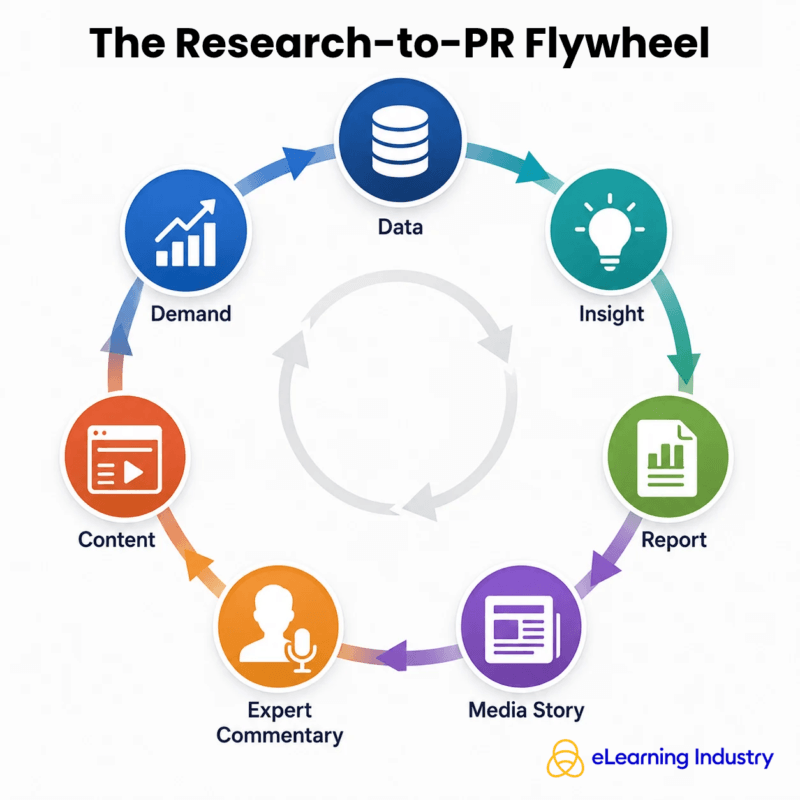
Spotify has turned its proprietary listening data into a recurring source of cultural stories. Its Wrapped experience combines individual listening behavior with global trends, while Spotify's editorial team also publishes broader insights about how audiences listen. In 2025, for example, Spotify used billions of streams to identify shifts across pop, K-pop, country, cross-genre collaborations, and global fandoms. The company also publishes methodology explaining how it calculates and interprets its data, which strengthens the credibility of these stories.
The approach shows how public relations strategies can transform internal data into timely stories that journalists and audiences can discuss. Instead of promoting Spotify's features directly, the company uses its data to explain what is happening in culture.
-
LinkedIn — Workforce And Labor Market Insights
LinkedIn uses data from its platform and Economic Graph to produce reports about hiring, skills, AI, learning, and workforce trends. Its Future of Recruiting report combined billions of LinkedIn data points with responses from more than 1,000 talent professionals and input from talent leaders. LinkedIn then turns those findings into articles, executive commentary, reports, and discussions about the future of work.
This makes LinkedIn one of the stronger examples of good public relations through research-led storytelling. Proprietary data gives the company something newsworthy to contribute to economic and workforce conversations while supporting executive authority and corporate reputation.
What B2B Brands Can Learn
LMS, HR Tech, EdTech, and AI companies often have valuable anonymized data on skills, learning behavior, AI adoption, hiring, engagement, training, and productivity. Through research and insights, companies can gather verified information from L&D, HR, and learning technology professionals and turn it into research reports and actionable findings. With these insights in your hands, you can even be a podcast guest and share the knowledge with your industry.
Download our latest Benchmark Report about the AI Expectation Gap In Learning Tech 2026 to understand what buyers want and what vendors are focusing on.
Experiential And Attention-Grabbing Public Relations Examples
-
Red Bull — Stratos
Red Bull Stratos turned a record-breaking scientific and sporting feat into a global media event. On October 14, 2012, Felix Baumgartner jumped from 38,969.4 meters above Roswell, New Mexico, reaching 1,357.6 km/h and breaking three records later ratified by the Fédération Aéronautique Internationale (FAI). Red Bull also reported that 9.5 million people watched the jump live on YouTube.
The spectacle worked because the event itself created the story. Journalists did not need a conventional media pitch examples approach to explain why the moment mattered. The combination of danger, science, records, and extraordinary visuals gave audiences an obvious reason to watch and discuss it.
Lesson: Some public relations examples succeed because the experience is inherently newsworthy. For B2B public relations, the equivalent could be a major research reveal, industry challenge, live demonstration, or unusual customer experience.
-
IKEA — Big Sleepover
In 2011, IKEA responded to a Facebook community of more than 100,000 people who wanted to sleep in an IKEA store by inviting 100 members to an overnight experience at its Essex location. Participants could test IKEA products and enjoy activities including sleep advice and massages.
The idea transformed a customer request into experiential PR. Instead of describing IKEA's products, the company let people experience them in an unexpected setting, creating a story that customers and media could naturally share.
Lesson: You don't always need to pitch a story. Sometimes, create something people inherently want to talk about.
Do you want to stay updated on the latest eLearning news? Subscribe to our newsletter and never miss a beat!
Reactive And Real-Time Public Relations Examples
-
Oreo — "Dunk In The Dark"
During the 2013 Super Bowl blackout, Oreo quickly published a simple image on Twitter with the message, "You can still dunk in the dark." The post reportedly generated more than 10,000 retweets and thousands of positive replies by the time the lights returned. Later reporting put its total media impressions at 525 million.
The response worked because Oreo moved quickly without sacrificing brand voice. The blackout was already dominating the conversation, and the brand connected the situation to a familiar product behavior in a way that required almost no explanation. It became one of the classic public relations campaign examples of real-time communication.
-
Aviation Gin — Peloton Response
When Peloton's 2019 holiday advertisement sparked widespread criticism, Aviation Gin responded with a short parody featuring the same actress, Monica Ruiz. The ad reframed the situation with humor and quickly entered the conversation surrounding the original controversy. Adweek later named Aviation Gin's response one of its best ads of 2019, noting how it expanded the story created by Peloton's original commercial.
The response shows how public relations examples in marketing can benefit from speed when the brand has a natural connection to the conversation. However, reactive communication still requires judgment: the opportunity must fit your voice, audience, and reputation.
For B2B brands, the same principle applies when a major AI regulation, cybersecurity event, workforce trend, or economic report creates an opening for expert commentary. Combine speed, relevance, brand fit, and good judgment to turn timely expertise into press coverage and thought leadership marketing.
Customer- And Community-Led Public Relations Examples
-
GoPro — User-Generated Storytelling
GoPro built much of its brand storytelling around content created by its customers. The company encouraged users to submit photos and videos, then featured selected content across its website, social channels, and marketing. GoPro has also described user-generated content as an important part of its strategy for driving engagement and strengthening the brand.
The approach works because customers become storytellers rather than passive audiences. Their footage shows what the product can do in real situations, giving GoPro authentic stories that it can amplify across its wider media ecosystem. This makes it one of the strongest successful PR campaigns built around customer participation.
-
Salesforce — Trailblazer Community
Salesforce developed the Trailblazer Community as an ecosystem where customers, partners, developers, and users can connect, learn, share expertise, and build professional skills. Salesforce supports this community through groups, events, learning opportunities, and recognition programs.
The model turns customers into advocates and knowledgeable voices around the brand. Instead of relying entirely on corporate messaging, Salesforce gives members opportunities to share experiences and expertise with their peers. That community engagement can strengthen public relations campaigns that build trust because audiences hear from people who actively use the ecosystem.
For B2B brands, customers can provide case studies examples, testimonials, event appearances, webinar participation, peer validation, and podcast conversations. They can become some of your most credible voices when exploring how to start a podcast.
Executive And Thought Leadership Public Relations Examples
-
Microsoft — Satya Nadella
Satya Nadella's leadership communication has helped Microsoft explain major changes in its culture, innovation strategy, and approach to AI. Since becoming CEO in 2014, Nadella has consistently emphasized a growth mindset, learning, and technological transformation. His communication around AI has also accompanied substantial product and organizational changes. For example, Microsoft described its AI strategy through Copilot as a new way of working, while its Responsible AI reporting connects those ambitions with transparency, accountability, and other stated principles.
The important point is that executive visibility did not create Microsoft's transformation by itself. Nadella's communication reinforced changes that were already happening across the business and culture. That makes this one of the more useful public relations examples for businesses: leadership messaging has greater credibility when it reflects substantive action.
-
HubSpot — Category Education And Executive Thought Leadership
HubSpot helped popularize inbound marketing by consistently educating its audience through blogs, research, reports, educational resources, and executive commentary. Its State of Inbound research, for example, has provided marketers with data and insights they can use to understand changing buyer and marketing behavior.
This approach shows how B2B thought leadership can build authority by teaching rather than constantly selling. Executives can extend that authority through expert commentary, bylines, interviews, podcasts, webinars, conferences, LinkedIn, and media relationships. For eLearning and HR technology companies, these channels can support podcast marketing, create opportunities for participating in industry-specific podcasts, and expand your visibility.
What These 15 Public Relations Examples Have In Common
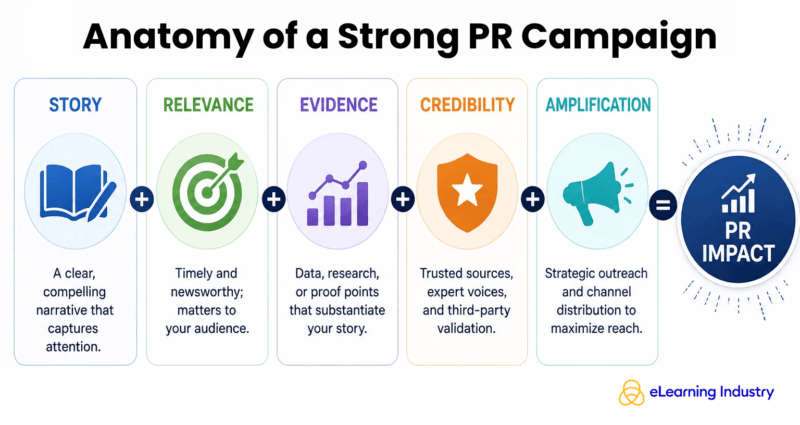
Although these campaigns came from different industries and used very different tactics, the strongest ones followed several common principles. The real value of these B2B PR campaign examples is not that you can copy the execution. It is that you can recognize the strategic choices that made each idea easier to understand, discuss, and amplify.
1. They Had A Clear Story
Every effective campaign gave its audience a simple reason to care. Whether the story involved beauty standards, unusual customer data, a record-breaking event, or a new perspective on work, people could quickly understand the central idea. Clear storytelling also makes media outreach more focused because journalists can see the relevance of the story immediately.
2. They Created Something Worth Sharing
Strong campaigns offered more than a company announcement. They gave people something useful, emotional, surprising, entertaining, or culturally relevant. That could be proprietary research, personalized content, an unforgettable experience, or a customer story. The more naturally people want to share something, the less your PR depends on constant promotion.
3. They Were Consistent With The Brand
The campaigns reinforced what the organizations wanted to represent. Patagonia's environmental position, LEGO's focus on creativity, and Salesforce's community ecosystem all connect communication with a broader identity. This consistency helps corporate public relations feel credible rather than manufactured.
4. Third Parties Carried The Message
Journalists, customers, creators, experts, and communities added credibility and extended the conversation. A strong paid media mix can complement these third-party voices by helping distribute valuable campaign content to relevant audiences. Influencer relations can also help when the people involved have genuine authority within the relevant community.
5. They Created Evidence
The strongest campaigns gave audiences something concrete to examine: research findings, customer experiences, participation, demonstrations, records, or documented results. Evidence gives people a reason to believe the story and gives journalists material they can actually report.
Ways B2B Brands Can Apply These PR Lessons
You don't need a Red Bull-sized budget to create meaningful PR. For an LMS, HR Tech, EdTech, SaaS, or AI company, the strongest opportunities often come from assets you already have: customer knowledge, proprietary data, subject-matter expertise, and access to industry professionals. The public relations examples above show that a useful idea can travel when it gives your audience something worth discussing.
-
Proprietary Data
Turn anonymized platform insights into industry trends. Learning activity, skills development, AI adoption, hiring patterns, or training behavior can become the foundation for a newsworthy story.
-
Original Research
Survey L&D professionals, HR leaders, employees, customers, or executives about emerging challenges. Package the findings into a report that journalists, analysts, and prospects can reference.
-
Customer Transformation Stories
Show measurable outcomes instead of relying on promotional claims. Explain the challenge, solution, implementation, and documented results.
-
Executive Expertise
Give executives a clear point of view on topics journalists and buyers already care about. Strong thought leadership should teach, challenge, or explain something rather than simply promote your company.
-
Industry Predictions
Make specific, defensible forecasts about skills, AI, workplace learning, or technology. Support predictions with evidence and explain what could change if they prove accurate.
-
Podcasts And Interviews
Put your experts into credible industry conversations. Guest appearances can introduce your expertise to relevant audiences without requiring you to build an audience from scratch.
-
Webinars
Bring several experts together around an emerging issue. A webinar can later become clips, articles, social posts, quotes, and sales content.
-
Top Lists And Industry Recognition
Third-party recognition can reinforce credibility when buyers are comparing vendors. Choose programs and directories that your target audience actually uses.
-
Newsjacking
Respond quickly when current developments overlap with your genuine expertise. A timely expert comment can create brand awareness campaign opportunities without requiring a large production budget. The key is to contribute something genuinely useful rather than forcing your company into a trending conversation.
Ultimately, how to create a successful PR campaign comes down to finding the intersection between what your company knows, what your market needs, and what the wider conversation currently lacks. That is why some of the best PR campaigns are simple: they provide useful information at exactly the right moment.
How PR Supports Search Visibility, Reputation, And GEO
PR can support more than awareness. When reputable publications, industry websites, experts, and customers mention your company, they create additional signals that help people discover and evaluate your brand. This is where PR campaign examples become useful beyond the initial publicity: the coverage can continue generating value after the campaign ends.
PR can contribute to:
- Brand mentions across relevant publications and industry sites.
- Quality backlinks that can support organic search visibility.
- Executive mentions that strengthen subject-matter authority.
- Research citations that connect your company with specific industry topics.
- Third-party validation that gives prospects additional reasons to trust you.
- Category associations that help reinforce what your company is known for.
- Branded search demand when people encounter your company and want to learn more.
- Relevant referral traffic from publications and communities that already reach your target audience.
PR, Search, And AI Visibility
PR does not replace SEO, but it can complement your broader search strategy. Consistent mentions from relevant and credible sources can help reinforce associations between your brand, experts, products, and areas of expertise. These relationships are particularly useful when you are building share of voice SEO and trying to become more visible around important industry topics.
The same principle applies to Generative Engine Optimization (GEO). Credible third-party references can contribute to the wider evidence environment surrounding a brand. However, you should avoid treating PR as a guaranteed route to AI citations.
Why Reputation Matters
PR can also support online reputation management strategies by helping you build a stronger body of accurate, authoritative information about your company. When prospects search for your brand, positive and relevant press coverage can sit alongside your owned content and customer evidence.
That makes public relations examples in marketing valuable across the entire buyer journey, from discovery to evaluation. Strong media pitching can help place useful stories where your target buyers already research vendors, creating another layer of credibility.
How To Measure Whether A PR Campaign Actually Worked
Awareness
- Media reach
- Quality and volume of media mentions
- Share of Voice
- Branded search growth
- Direct website traffic
Authority
- Quality and relevance of publications
- Authoritative backlinks
- Executive citations
- Interview requests
- Podcast invitations
- Speaking opportunities
Engagement
- Referral traffic from coverage
- Social conversations and shares
- Engagement with campaign content
- Newsletter subscriptions and growth
- Time spent on relevant pages
Reputation
- Sentiment in coverage and social discussions
- Review trends
- Associations with your target topics
- Changes in buyer perception
- Customer and stakeholder feedback
Commercial Impact
- Qualified leads generated
- Influenced pipeline
- Partner and business inquiries
- Demo requests or product interest
- Sales teams mentioning campaign exposure
- Revenue influenced by PR activity
Measurement Quality
Set benchmarks before launching your campaign and compare results against them afterward. Use tracking links, referral data, CRM records, search trends, media monitoring, and customer feedback to build a clearer picture. Most importantly, don't claim that PR caused revenue growth simply because sales increased after a campaign. Look for evidence that connects the activity to specific commercial outcomes.
Common PR Campaign Mistakes To Avoid
- Starting with "we need press coverage" instead of a story: Start with something timely, useful, surprising, or relevant to your audience.
- Making the company the hero every time: Focus on customers, industry challenges, research, experts, or meaningful change.
- Sending generic press releases: Make your media outreach relevant to each journalist and their audience.
- Confusing advertising with earned media: Paid promotion can amplify your message, but it does not create independent editorial interest.
- Purpose-washing: Don't connect your brand to social or environmental issues unless your actions genuinely support the position.
- Chasing virality: Reaching the right audience matters more than becoming a global trend.
- Copying famous consumer campaigns: Learn from successful ideas, but adapt them to your B2B audience and objectives.
- Using data without methodology: Explain where your data came from, how you collected it, and its limitations.
- Making unsupported claims: Verify statistics, campaign results, and business outcomes before publishing.
- Jumping onto irrelevant trends: A trending topic is not automatically a relevant PR opportunity.
- Responding too slowly: Timely opportunities can disappear quickly as news cycles move on.
- Stopping after one placement: Extend PR campaigns through social content, newsletters, webinars, and sales assets.
- Ignoring distribution: Share credible coverage with prospects, customers, partners, and internal teams.
- Failing to prepare executives: Give spokespeople clear messages, supporting evidence, likely questions, and crisis communications guidance.
- Measuring only impressions: Track awareness, authority, engagement, reputation, and commercial outcomes where reliable attribution is possible.
Key Takeaway
The strongest public relations examples show that PR starts with relevance, credibility, and a story people want to explore. Whether you use research, customer experiences, executive expertise, community voices, or timely commentary, your goal should be to give the market evidence rather than repeat promotional messages.
The strongest public relations campaigns that built trust did not depend on attention alone. They connected communication with real actions, created something worth sharing, and allowed independent voices to carry the conversation further. That approach can strengthen brand credibility while supporting awareness, authority, and relationships throughout the B2B buyer journey.
So, what is a PR team responsible for? Beyond media relationships and press releases, it should help identify stories, prepare credible spokespeople, develop evidence, monitor conversations, and connect PR activity with business goals. Good storytelling makes those efforts clearer for your audience to understand and remember.
eLearning Industry helps Learning Tech, HR Tech, EdTech, AI, and workplace-learning companies turn that expertise into industry visibility through original research, surveys, thought leadership, webinars, podcasts, case studies, directory visibility, Top Lists, and targeted content campaigns. Instead of telling buyers what makes your company different, create credible evidence and conversations that help the market discover it for itself.
FAQExamples include media outreach, press releases, thought leadership articles, executive interviews, event publicity, crisis communications, and influencer or community relations.
A PR campaign is a coordinated effort to shape public perception, build credibility, and earn attention for a company, brand, product, or idea.
Successful PR campaigns have a clear goal, a newsworthy message, relevant audience targeting, strong storytelling, and measurable outcomes.
Common types include media relations, product launches, thought leadership, brand awareness, crisis communications, corporate communications, and event PR.
B2B companies use PR to build authority, increase brand awareness, position executives as experts, earn media coverage, and strengthen trust with potential buyers.
Small companies can focus on niche publications, expert commentary, original research, founder stories, guest articles, and timely industry insights to earn relevant coverage.
Track metrics such as media coverage, audience reach, referral traffic, backlinks, brand mentions, share of voice, engagement, and business outcomes.
Yes. High-quality media coverage and authoritative mentions can strengthen brand credibility, earn backlinks, improve search visibility, and increase the likelihood of being referenced across AI-powered search experiences.
