




Immersive Training For The Manufacturing Workforce
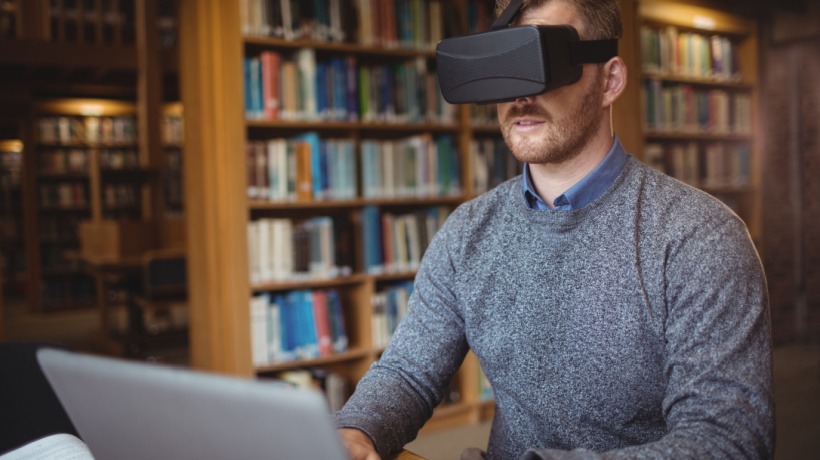
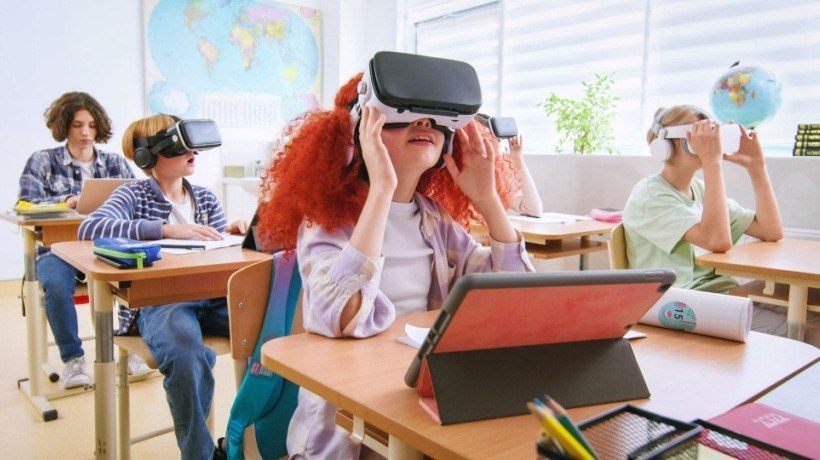
In today's rapidly evolving industrial landscape, workforce training has reached a pivotal crossroads. Traditional classroom methods—long the backbone of organizational learning—are struggling to keep pace with the demands of advanced manufacturing and logistics industries. These sectors require highly practical, nuanced skills that the conventional lecture-and-handout model simply cannot deliver with precision or depth. As digital transformation accelerates, it's time for organizations to rethink how they prepare their workforce. Immersive technologies—such as Virtual Reality (VR), Augmented Reality (AR), and Mixed Reality (MR)—are emerging as powerful training solutions to bridge the gap between knowledge and workforce performance.
The Limitations Of The Traditional Classroom
For decades, classroom-based training has been the default approach to workforce development. While it remains valuable for introducing theoretical concepts and regulatory frameworks, it falls short in contexts that demand practical mastery.
1. Passive Learning Doesn't Build Performance Competency
Traditional training largely relies on passive learning—slideshows, lectures, and printed manuals. These formats are limited in their ability to engage multiple senses or simulate real work environments. Even role-plays and physical equipment labs can't fully recreate the complexity and unpredictability of real operational settings.
In industries like manufacturing and logistics, workers must master precise sequences of actions, respond to dynamic safety risks, and operate complex equipment. Simple recall of theory does not translate to competency in execution. Without hands-on practice in realistic scenarios, learners often struggle to transfer classroom knowledge into actual job performance.
2. Safety And Cost Barriers
Practical training in physical environments can expose trainees to hazards. Forklift operation, heavy machinery assembly, and warehouse logistics involve significant risk if mishandled. Organizations often mitigate this by delaying real-world practice until after classroom learning. Unfortunately, by that point, learners may already have forgotten key details or lack confidence.
Furthermore, practical labs and on-the-job training are expensive. They require physical space, operating equipment, and supervision by experienced trainers. For large workforces, scaling such resources becomes cost-prohibitive, creating bottlenecks that slow skill acquisition and deployment.
3. Inflexibility To Evolving Skill Requirements
Manufacturing and logistics are not static. They are shaped by emerging technologies—robotics, AI-assisted systems, automated guided vehicles (AGVs), and advanced analytics. Traditional training curricula often lag behind these rapid changes, leaving workers underprepared for current and future demands.
Classrooms struggle to update content at the speed that digital technologies enable. This lag creates a skills gap, forcing organizations to hire externally or rely on informal peer training, which can perpetuate inconsistencies and knowledge gaps.
Workforce Training: Why Immersive Technologies Can Help
Immersive technologies—especially VR and AR—are uniquely positioned to address these limitations by offering experiential, scalable, and safe learning environments that mirror the complexities of real work.
1. Experiential Learning At Scale
Immersive learning places the learner inside the experience. VR environments can simulate entire factories, warehouses, and logistics operations with astonishing fidelity. Rather than reading about best practices, learners actively perform them, from operating CNC machinery to executing precise warehouse picking sequences.
This active engagement accelerates skill acquisition. Research shows that experiential learning enhances retention, problem solving, and confidence compared to passive learning methods. Immersive training creates muscle memory and cognitive mapping similar to real-world practice, making the transition from training to on-the-job execution smoother and more reliable.
2. Safe Simulation Of High-Risk Scenarios
One of the most compelling advantages of immersive technology is its ability to simulate danger safely. Trainees can learn how to respond to emergency shutdowns, equipment failures, or safety hazards without being exposed to actual risk. VR allows repeated exposure to high-consequence scenarios that would be too dangerous or expensive to recreate physically.
For example, logistics workers can practice responding to load shifts, pallet collapses, or forklift near-misses in virtual warehouses. Manufacturing trainees can rehearse lockout/tagout procedures or malfunction protocols without shutting down actual production lines. This capability transforms safety training from abstract compliance exercises into visceral, memorable experiences.
3. Personalized, Just-In-Time Learning
Immersive training systems can adapt to the learner's pace and performance. Advanced analytics embedded in VR platforms track how users interact with simulations, measuring accuracy, speed, decision paths, and common errors. Organizations can use this data to tailor learning paths, target areas for improvement, and provide personalized feedback.
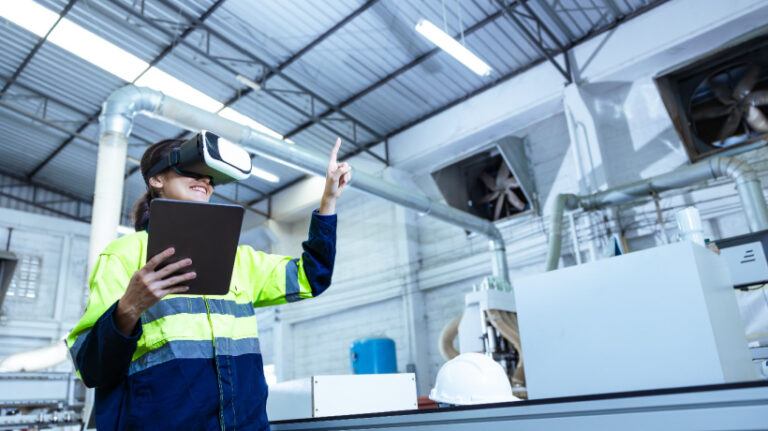
Furthermore, AR overlays can support just-in-time performance support on the job. Technicians wearing AR glasses can receive step-by-step instructions superimposed onto machinery, reducing cognitive load and error rates. This blend of training and real-time guidance ensures learning continues even after formal instruction ends.
4. Cost-Effective Training Over Time
While immersive systems require upfront investment in hardware and content development, they deliver long-term cost advantages:
- Scalability
Once created, simulations can train unlimited learners without wear-and-tear costs. - Reduced downtime
VR learners don't occupy physical equipment or production space. - Faster onboarding
New hires can achieve competency more quickly, reducing ramp-up times. - Lower safety incidents
Practice in safe environments reduces real-world errors that lead to accidents and downtime.
Organizations are finding that the ROI on immersive solutions pays off not just in training metrics but in operational performance and safety outcomes.
Implementation Best Practices
To maximize the value of immersive technologies in workforce training, organizations should follow these strategic steps:
1. Align With Business Objectives
Define what competency gaps the immersive solution is intended to close. Is it safety compliance? Operational efficiency? Error reduction? Clear goals help shape the content and metrics for success.
2. Start With High-Impact Use Cases
Target areas with high risk, high cost, or high turnover. Safety simulations, complex equipment operation, and emergency response scenarios are ideal starting points for immersive training pilots.
3. Integrate With Existing Learning Ecosystems
Immersive modules should complement—not replace—traditional learning. Use blended learning models where theory and foundational knowledge are delivered through eLearning or instructor-led sessions, and immersive training reinforces practice and application.
4. Measure Learning And Performance
Leverage analytics to assess not just completion rates but performance gains. Track how immersive training affects on-the-job error rates, cycle times, safety incidents, and turnover.
5. Scale Thoughtfully
Build infrastructure for deployment, including device management, content updates, and support. Create internal champions who can promote adoption and train facilitators.
Conclusion
The workforce of the future will be more complex, interconnected, and technologically advanced than ever before. Traditional classroom training—while still relevant for foundational knowledge—is ill-equipped to build the practical competencies employers need today. Immersive technologies like VR and AR offer rich, experiential learning environments that accelerate skill mastery, increase safety, and generate measurable performance improvements.
For industries such as manufacturing and logistics, where precision and safety are paramount, immersive learning isn't just "nice to have." It's rapidly becoming a strategic imperative. By embracing immersive technologies with purpose and planning, organizations can future-proof their training practices, empower their workforce, and unlock operational excellence in an era of perpetual change.