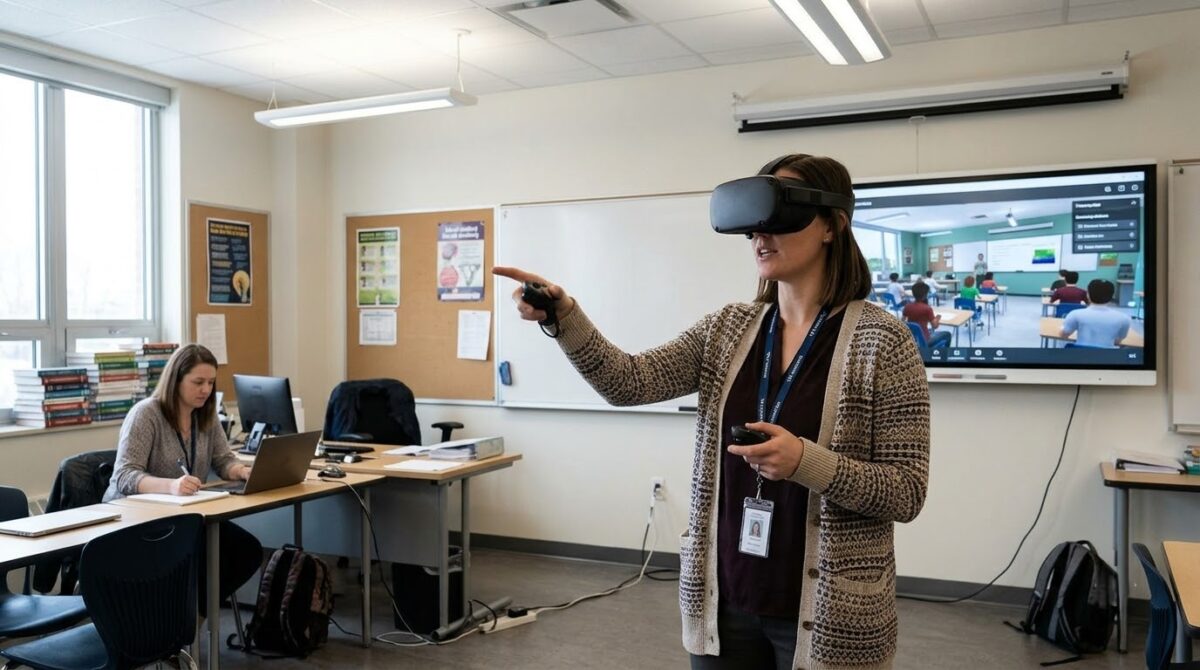
Benefits of Virtual Reality Teacher Training
1. Zero-Risk Experiential Learning: Virtual reality (VR) provides a safe, immersive environment where pre-service and novice teachers can practice teaching strategies, manage simulated classroom challenges, learn from mistakes, and improve their skills without affecting real students.
2. Accelerated Competence and Muscle Memory: VR simulations help teachers strengthen classroom management, voice modulation, communication, and conflict resolution through repeated practice. This hands-on experience builds confidence and prepares educators to respond effectively to unexpected classroom situations.
3. Objective Assessment and Analytics: VR training systems track performance indicators such as lesson pacing, teacher positioning, student engagement, and response times. These insights help trainers identify weaknesses, provide personalized feedback, and measure teaching progress more consistently.
4. Standardized, Scalable Curriculum: VR enables educational institutions to deliver consistent training across large groups of teachers, regardless of location or classroom availability. Standardized simulations provide equal learning opportunities while reducing dependence on physical resources and traditional training environments.
5. Enhanced Retention and Reduced Burnout: VR training helps educators develop confidence before entering real classrooms. By practicing lesson delivery, classroom management, and student interaction, teachers become better prepared for professional challenges. This preparation may reduce early-career anxiety, support well-being, and contribute to improved teacher retention.
Overall, virtual reality transforms teacher education by combining immersive practice, measurable feedback, and accessible learning experiences. It bridges the gap between theoretical knowledge and practical classroom skills, helping educators become more confident, adaptable, and effective professionals.