


What it's about
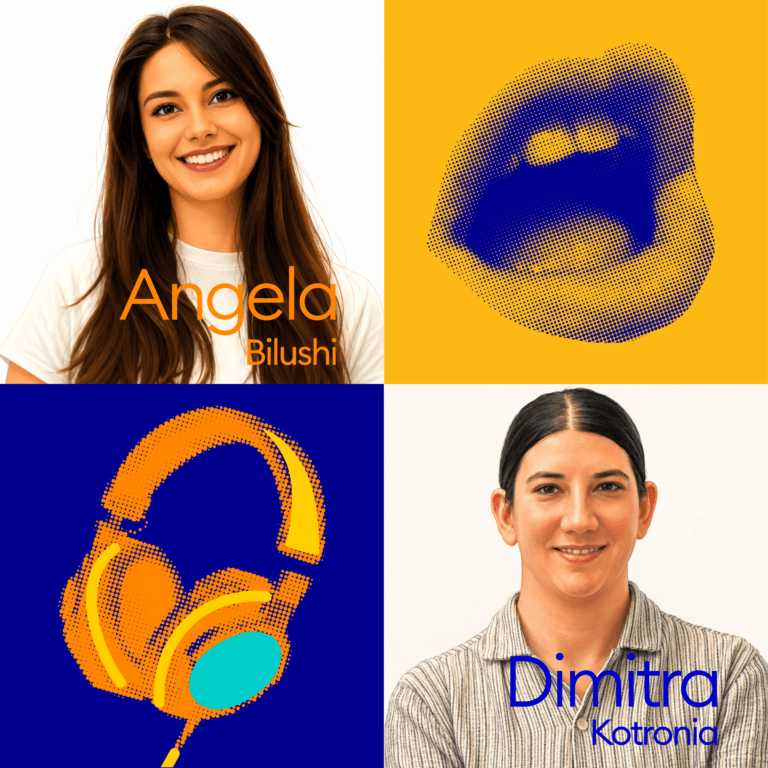
In this episode of eLearning Talks, Angela and Dimitra unpack how workplace learning has moved from deskbound courses to mobile-first, in-the-flow support. Specifically, they explore why traditional training breaks down in modern work environments and how microlearning, personalization, offline access, and social video are changing employee development.
The rundown
- [00:00] The Evolution of Workplace Learning
- [02:57] Mobile Learning: A New Paradigm
- [05:55] Microlearning: Learning in the Flow of Work
- [08:34] AI and Personalized Learning Paths
- [11:32] The Role of Consumer-Grade Experiences
- [14:16] Offline Learning: Bridging the Gap
- [17:16] Social Learning and Knowledge Sharing
- [20:06] The Future of Learning: Seamless Integration
Angela (00:03) Welcome to eLearning Talks, the show where eLearning and HR Tech professionals stay sharp and learn without a screen. I am Angela, content writer and podcast manager at eLearning Industry. Dimitra (00:15) And I'm Dimitra, social media and content specialist at eLearning Industry. In this episode, we explore how AI, personalization, microlearning, and mobile-first strategies are reshaping employee development and workforce performance. Angela (00:32) Think about the last time you had to fix a sudden annoying problem in your daily life. Dimitra (00:37) You mean like a jammed printer or something? Angela (00:39) Yeah, exactly. Or you know that blinking red light on your router. Dimitra (00:43) The absolute worst. Angela (00:44) Right. But did you clear your calendar, sit down at a desk, and sign up for a mandatory three week seminar on home networking? Dimitra (00:53) Obviously not. Angela (00:54) No, of course not. You probably just pulled your phone out of your pocket, found a highly specific 60-second video, fixed the router, and then completely moved on with your day. Dimitra (01:03) Exactly. It's an instant reflex. Angela (01:05) Yet that instinct to grab the exact piece of knowledge you need in the exact moment you need it is entirely natural. So why is it that for decades the corporate world operated in the exact opposite way? Why? Dimitra (01:16) Well, because they were stuck in an old paradigm. Angela (01:18) Right. I mean, you probably know the feeling. You are pulled away from your actual job, shoved into a windowless conference room, or, even worse, forced to stare at a desktop monitor for two hours, just clicking next on a slide deck until your eyes glaze over. Dimitra (01:34) Yeah, the classic compliance module fatigue. Angela (01:36) Exactly. But today, our mission for this deep dive is to explore reality where that archaic model is effectively dead. The fundamental nature of workplace learning had radically transformed. Sitting at a desk for an hour-long training module isn't just outdated anymore. It is an active detriment to business. Mobile learning has shifted from being a quirky, optional alternative to becoming the absolute core driver of workforce agility. Dimitra (02:05) Yeah, it's not a luxury, it's a necessity. Angela (02:07) We are looking at a world where training happens in the palm of your hand, running invisibly in the background of your work. So how did we actually get here? Dimitra (02:14) The mechanism driving that shift is a complete re-evaluation of how humans actually process and apply information . So the old model was built around this concept of learning at the destination. Exactly. Angela (02:24) Meaning you'd have to physically go somewhere to do it? Dimitra (02:27) You stop working to go learn. But when the environment around the company shifts as rapidly as it does today, stopping work is a luxury businesses can no longer afford. Angela (02:35) The pace is just too fast? Dimitra (02:36) Right. The workforce has to adapt in real time. And if you are waiting for an Instructional Design team to spend six months building a desktop based course on a new software update. It's too late. The information is obsolete before the first employee even logs in. It is too rigid and fundamentally disconnected from the reality of how modern work actually gets done. Angela (02:57) Let's ground this in the numbers because the momentum behind this transition wasn't just a sudden whim, right? It was sheer operational necessity. And you can trace the inevitability of that shift back to the massive disruption of how and where we actually work. Look at the 2023 Statista data, which highlighted that 28% of employees were fully remote. Dimitra (03:17) That was a massive jump from just 20% in 2020. Angela (03:20) Right. And then follow that up with the 2024 LinkedIn data that declared hybrid schedules as the permanent new normal. Dimitra (03:26) They're simply not tethered to a single desk anymore. Angela (03:29) No, they aren't in a single building, on a single network it's all decentralized. Add the shrinking shelf life of skills into that mix. And well, what you mastered three years ago is likely already outdated. Right. Dimitra (03:42) Which makes continuous upskilling a mandatory survival tactic. Angela (03:46) But okay, I have to push back on the premise here for a second. Okay, go for it. Because when I hear the phrase mobile learning, my brain immediately goes to a nightmare scenario. Dimitra (03:55) What do you picture? Angela (03:56) I picture an employee crammed onto a subway train, squinting at a tiny phone screen, desperately trying to pinch and zoom on the exact same text heavy corporate compliance module they used to do on a desktop. I mean that sounds miserable. Dimitra (04:11) Yeah, and you are describing the exact reason early attempts at mobile training were completely disastrous. Angela (04:17) Okay, so I'm not crazy. No. Dimitra (04:18) No, not at all. Because what you just painted is not mobile learning. It is desktop learning squeezed onto a smaller screen. And doing that creates massive cognitive friction. Angela (04:28) Cognitive friction, meaning it's just too hard to think about. Dimitra (04:32) Basically, yeah. When you take a dense 60- minute desktop course and force it onto a smartphone, you are forcing the human brain to dedicate an enormous amount of its processing power just to navigating the interface. Angela (04:45) Like, just trying to find a tiny button. Dimitra (04:47) Exactly. The brain has to work incredibly hard just to scroll, squint, and hunt for the next button, and that exhausts your working memory. No, by the time the brain processes the interface, there is no cognitive energy left to actually absorb the lessons. Angela (04:55) Right, so you're not even learning at that point. Mobile-first. So it's built specifically for the phone from day one. Dimitra (05:07) Exactly. This is a fundamental ground-up redesign. It relies on incredibly simple interfaces, intuitive swiping and typography that's native to a phone. Angela (05:16) So no pinching and zooming. Dimitra (05:18) But most importantly, the content itself is completely restructured. It is designed under the assumption that an employee might only have a four minute window while waiting in a lobby or sitting in a break room. Angela (05:29) So you're stripping out all the fluff. Dimitra (05:30) Right. The design philosophy works in harmony with the constraints of a mobile environment. It strips away the friction so all of your cognitive energy goes toward acquiring the new skill. Angela (05:42) So you are essentially redesigning the delivery format to match the biological limits of the human brain. Yes. Instead of fighting the environment, you lean into it. And I guess that leads directly to the explosion of micro learning, right? Dimitra (05:55) Exactly. Because if you only have four minutes you can't cover broad abstract theory. Angela (06:00) No, you definitely can't. So we are talking about single topic, highly targeted bite-sized lessons. Right. So instead of forcing a warehouse employee to sit through a massive 60-minute general warehouse safety course, instead of that you deliver a two-minute lesson specifically on how to safely engage the emergency brake on this exact model of forklift. Dimitra (06:21) Yes, highly specific. Angela (06:23) By breaking the information down into its smallest useful component, you entirely bypass cognitive overload. Dimitra (06:29) Precisely. And because it is delivered on a mobile device that the employee already has in their pocket, it unlocks a massive operational advantage, which is learning in the flow of work. Angela (06:40) Learning in the flow of work, Dimitra (06:42) Yeah, you don't leave the warehouse floor to go get trained. The support is embedded directly into the environment. Angela (06:48) Think about the wild practical applications of it. Dimitra (06:51) Oh, they're endless. Angela (06:52) Like, a frontline worker walks up to a malfunctioning piece of equipment, they scan a QR code stuck to the side of the machine, and their phone instantly plays a 90-second troubleshooting video. Yes. Dimitra (07:03) Or a field technician holding up their phone to a complex engine. Angela (07:07) And using augmented reality. Dimitra (07:09) Exactly. Augmented reality overlays the exact repair steps onto the physical machine, showing then exactly which bolt to turn without ever having to reference against the manual. Angela (07:20) That's incredible. And we are talking about retail workers pulling up tappable standard operating procedures right on the shop floor too. Or sales teams sitting in a lobby, quickly reviewing digital objection handling cards just two minutes before they walk into a high stakes client meeting. It makes me think traditional training was like forcing someone to sit down for a mandatory three course banquet when they weren't even hungry. But this new reality is like having a digital Swiss Army knife. You have these high protein information snacks in your pocket, and you only pull one out exactly when you are hungry for a specific solution. Dimitra (07:54) Access be exact tool for the immediate problem, apply it, and put it away. And from a psychological standpoint, this contextual immediate support fundamentally alters an employee's content. Angela (08:07) Because they know they can figure it out on their own. Dimitra (08:09) Exactly. The psychological barrier to starting a 90-second video is virtually zero. Whereas the barrier to starting an hour-long course is incredibly high. Angela (08:19) Yeah, I'll procrastinate an hour-long course for a week. Dimitra (08:22) We all do. And this is profoundly revolutionary for frontline and deskless workers, the people in retail, healthcare, logistics, and manufacturing. Angela (08:32) Right. People actually doing the physical work. Dimitra (08:34) Historically, these employees were essentially cut off from corporate development. They didn't have dedicated desks or company laptops, making them the hardest demographic to reach. Now, the device they naturally carry empowers them to solve complex problems independently in real time. It dramatically reduces errors on the floor, increases immediate efficiency, and transforms the employee experience from feeling abandoned to feeling highly supported and competent in their role. Angela (09:00) Wait, let me stop you there. A physical Swiss Army knife has maybe ten or twelve tools on it. If a global enterprise has redesigned all of its knowledge into these tiny two-minute snacks, they aren't managing ten tools. They are managing ten thousand microlessons. Dimitra (09:14) Easily. Often more. Angela (09:16) How on earth does an employee actually navigate that? You can't expect a sales rep or a warehouse worker to manually type keywords into a massive database to find the exact two-minute video they need. It would take longer to find the training than to take it. Dimitra (09:31) And that is exactly where the intelligence layer comes in. If you are enjoying this conversation, you can visit elearningindustry.com/ebooks to discover a wide range of insightful guides and checklists and download them for free. The bridge between thousands of disconnected microlessons and the employee actually getting the right one at the right time is Artificial Intelligence. It all runs on AI. The system maps everything, creating deeply personalized adaptive learning paths. It constantly monitors an employee's actual performance data. Exactly. Angela (10:06) So it knows what I'm good at and what I'm not. Dimitra (10:09) If the software notices that you are a high performer who has already mastered a specific workflow, the AI fast tracks you. It refuses to bore you with the basics. Angela (10:17) Thank goodness. Dimitra (10:18) But conversely, if the system detects that you repeatedly struggle with a specific type of data entry or a specific sales objection, it automatically serves up a highly targeted three-minute module to bridge that exact skill gap. We're seeing virtual coaches on sophisticated chatbots providing instant in-app support. The industry standard became what we call consumer-grade learning experiences. Angela (10:43) Meaning, it feels like an app I'd use in my free time. Dimitra (10:46) Yes, employees began demanding that their workplace platforms look, feel and operate with the same ease as Netflix or Spotify. Angela (10:55) Okay, I love the sound of that, but I have a major concern with that comparison. Dimitra (10:58) What's that? Angela (10:59) Well, if we intentionally engineer workplace training to mimic the exact psychological hooks and user interfaces of Netflix or Spotify, do they actually absorb anything or are they just scrolling through microlessons the way they scroll through a social media feed on a Sunday afternoon? Dimitra (11:14) That concern makes sense on the surface, absolutely, but it misinterprets why consumer-grade user experiences are deployed in an enterprise setting. Angela (11:24) Okay, correct me there. Dimitra (11:25) The objective of a streaming service is to maximize your time on the platform for ad revenue or subscription retention. Angela (11:32) Right. They want you there forever. Dimitra (11:33) Exactly. But the objective of a corporate learning platform is the absolute removal of friction so you can get off the platform and back to work. You have to recognize that employees implicitly judge every single piece of enterprise software against the incredibly polished multi billion dollar personal apps they use every day. Angela (11:54) That's true. If an app is clunky, I hate it instantly. Dimitra (11:57) We all do. If a learning platform feels clunky or if the search function is slightly slow, they will simply disengage. They will actively avoid the system. Angela (12:05) Yeah, that makes perfect sense. Dimitra (12:07) By matching the interface quality of a premium streaming service, you completely remove the barrier to entry. And this is where the AI duration prevents the mindless binging you are worried about. Because the algorithm isn't feeding you sensationalized content to keep your eyeballs glued to the screen, it is linking the material directly to your verified skill gaps, your current project requirements, and your stated career goals. Angela (12:32) No, so it's hyper relevant. Dimitra (12:33) Exactly. When the system effortlessly presents a micro lesson that the employee knows will directly help them get a promotion or close a pending deal, it triggers deep, highly intentional engagement. It is the exact opposite of passive scrolling. Angela (12:49) Okay. That clarity makes total sense. So the theory is sound and the AI intelligence is there, but let's look at the concrete proof that this actually moves the needle for a business. Because the results are striking. Dimitra (13:01) They really are. Angela (13:02) Take this massive global sportswear company as an example. They face a uniquely difficult challenge because their product lines, materials, and marketing campaigns change at an incredibly aggressive pace. Dimitra (13:15) The turnover in retail is craving. Angela (13:17) It is, they have to upskill not just their internal corporate staff, but a massive network of external retail partners spread all across the globe. Dimitra (13:26) Which is a logistical nightmare with traditional training. Angela (13:28) Right. But by rolling out mobile microlessons, they scaled highly complex brand and product knowledge across vast geographies instantly. Every single retail worker on the floor had the latest technical specs on a new running shoe right in her pocket. That's powerful. Or consider a global financial services leader. Now, compliance training in the finance sector is historically dense, legally complex, and incredibly time consuming. It's notorious for being awful. But by shifting from massive desktop courses to a mobile first bite sized approach, they achieved something really counterintuitive. They cut their total compliance training time in half, but they actually saw a massive increase in completion rates and a measurable improvement in long term knowledge retention. Dimitra (14:13) So it's faster and it yields a significantly better result. Angela (14:16) Exactly. But okay, we have to address the elephant in the room. What happens to the offline worker? Because if you have employees in remote locations, say field service workers repairing turbines deep in rural areas, or technicians working in reinforced concrete basements where a cell signal simply cannot penetrate, you have a major problem. If this whole system relies on AI and instantaneous streaming, what happens when the internet vanishes? Dimitra (14:40) The offline dilemma is where a mobile learning strategy either proves its worth or completely falls apart. Angela (14:46) Because you can't just ignore those workers. Dimitra (14:48) Exactly, you cannot leave those workers behind, which is why asynchronous caching and offline syncing became absolute requirements for these platforms. Angela (14:56) So how does that work in practice? Dimitra (14:58) Well, a technician heading into that concrete basement downloads the necessary diagnostic modules while they still have a connection in the parking lot. Okay. Angela (15:06) Simple enough. Dimitra (15:07) They complete the micro learning, access the AR overlays, and interact with the content entirely offline. The software locally caches every interaction, every quiz score, and every completion metric right on the device. Angela (15:21) And then it just waits. Dimitra (15:23) The very second that employee walks back outside and their phone detects a cellular network, all of that telemetry data securely pings the central server and updates their profile automatically. Angela (15:35) That's brilliant. Dimitra (15:36) It is, and it's profoundly important for two reasons. First, it is an issue of equity. If the company fails to provide offline capabilities, they actively turn their field workforce into second class citizens. They're basically denying them upskilling opportunity, simply because they lack a strong Wi Fi signal. Angela (15:54) That's really good point. You can't punish someone for where their job takes them. Exactly. Dimitra (15:58) And second, it is a matter of operational integrity. An enterprise cannot afford to have a blind spot in its compliance or safety data just because a facility is in a low bandwidth zone. Angela (16:10) So from a legal standpoint that would be a disaster. Dimitra (16:12) Absolutely. Seamless offline syncing ensures the organization maintains a unified, trackable standard of performance across the entire global workforce, whether they are online or not. Angela (16:23) Okay, but that seamless data syncing brings up a really fascinating logistical challenge to me. Well, if you have thousands of employees all over the world, online and offline, consuming these tiny microlessons at totally random times of a day, you no longer have a physical classroom of thirty people where an instructor can just take attendance. Dimitra (16:41) True, the traditional classroom is gone. Angela (16:43) Right. So how on earth does leadership actually measure if any of this chaotic decentralized learning is actually working? Dimitra (16:50) That's great question. Angela (16:51) And taking it a step further, how do employees share their own highly specialized knowledge with each other without waiting for corporate to build a course? Dimitra (17:00) The answer to both of those questions is the explosion of social video and advanced mobile analytics Angela (17:06) Social video. Tell me about that first. Dimitra (17:08) Well, we saw a massive rise in peer to peer knowledge sharing. Instead of waiting for an Instructional Design team to spend six months documenting a new workflow. Angela (17:16) Which we already established is too slow. Dimitra (17:19) Exactly. Instead of that, a subject matter expert on the warehouse floor simply pulls out their phone, records a fast, authentic instructional video on how they optimized a specific process, and instantly shares it across the company network. It functions almost exactly like an internal corporate TikTok. Angela (17:35) But instead of viral dance trends, the algorithm is surfacing incredibly valuable job specific expertise. Dimitra (17:42) The democratization of knowledge completely bypasses the traditional corporate bottleneck. You have the actual practitioners teaching the practitioners. Angela (17:50) That is so much more efficient. Dimitra (17:52) It really is. And to your point about how leadership tracks this vast web of micro interactions, the evolution of learning analytics was the final piece of the puzzle. Angela (18:01) Right, because you have to be able to measure it. Dimitra (18:03) Exactly. The industry moved far beyond hollow surface level metrics like completion rates. Angela (18:11) Because clicking next doesn't mean you learned it. So what do the analytics do now? Dimitra (18:32) And crucially, these systems directly interface with the company's operational data. That means they can connect learning behaviors to actual business performance Angela (18:41) So you can literally see if the training is making money. Dimitra (18:43) Yes. Leadership can finally look at a dashboard and see clear causality. They can see that an internal TikTok style video shared by the top performing salesperson in Chicago directly correlates to a measurable spike in the close rates of the junior representatives who watched it. Angela (19:00) That is incredible. Learning is no longer a black box. Dimitra (19:03) Not at all. It is highly visible, deeply measurable, and inextricably tied to revenue and efficiency. Angela (19:10) Okay, let's pull all these threads together to see the full picture here. We started by examining the death of the deskbound hour-long training module. And what we uncovered is a massive paradigm shift in how human beings acquire skills in a corporate setting. Learning is fundamentally no longer a destination. It is transformed into a continuous, almost invisible layer of support running constantly in the background of your work life. It is mobile first, designed to eliminate cognitive friction. It is broken down into high protein micro moments. It is curated and hyper-personalized by AI, ensuring you only see what you actually need, and it is entirely integrated into the physical environments where the work actually happens. It empowers every single individual, from the executive and the corporate office to the technician completely offline in the concrete basement to continuously adapt, solve problems, and perform at their absolute best. Dimitra (20:06) The transition from mandatory events to continuous support is the defining characteristic of this era. As Artificial Intelligence algorithms grow sharper, and as mobile learning interfaces become even more deeply and seamlessly embedded into the very software and physical tools we use to execute our tasks, we have to ask a profound question. Will we eventually reach a tipping point where we don't even realize you are being trained? Will the ultimate achievement of the corporate learning platform be that it entirely disappears into the workflow? Becoming so deeply woven into our daily tasks that the act of learning is completely indistinguishable from the act of working itself. Angela (20:44) That is an incredible concept I'm all over. The idea that training simply dissolves into an invisible autonomous reflex of the tools we use every single day, quietly making us better without us even noticing. Well, thank you to you for joining us on this deep dive and sharing your time with us today. We really hope this exploration gave you some powerful practical insights into how the mechanics of work and knowledge are evolving around us. Keep learning, stay curious, and we will catch you on the next one. You've been listening to eLearning Talks, where we share practical insights for busy eLearning professionals. If you want to find out more, subscribe to our channel for more content.