

Don't Just Choose Any Press Release Distribution Service
A press release distribution service can promise thousands of media outlets, reach, journalist access, online syndication, analytics, multimedia support, and audience numbers. But those figures don't automatically mean the right people will see your announcement. Cision's 2026 State of the Media Report found that 66% of journalists rely on PR-provided content, including press releases, pitches, and media kits, for story ideas.
So, how do press release distribution services work, and what should you expect when you pay for one? These services distribute your announcement through networks of newsrooms, websites, journalists, and other media channels. Depending on the provider, you may also get targeting options, multimedia support, reporting, and news syndication.
However, distribution alone doesn't create coverage. Your announcement still needs a strong news hook, credible information, and a clear reason for journalists and their audiences to care. That's where media relations, targeted outreach, and PR strategy become important.
For B2B companies, the difference matters. A SaaS product launch, HR Tech partnership, research report, funding announcement, or market expansion can attract attention, but the quality of the story matters. A large network can increase visibility, while relevance determines whether that visibility turns into meaningful attention.
In this guide, you'll learn what press release distribution services provide, how to compare providers, what reach numbers mean, how much distribution can cost, and which metrics can help you evaluate results, from media pickups and referral traffic to brand sentiment. You'll also learn how to judge distribution as part of an overall earned-media strategy.
Key Takeaways
- Press release distribution services help companies circulate news through media and syndication networks, but distribution does not guarantee independent editorial coverage.
- The quality and relevance of a distribution network matter more than raw reach figures alone.
- B2B brands should evaluate audience targeting, industry relevance, geographic reach, reporting, multimedia support, editorial assistance, and total cost.
- A press release needs a genuinely newsworthy angle before distribution can create meaningful value.
- Press release distribution, media outreach, and earned media are related but different activities.
- Distribution should not be treated primarily as an SEO backlink strategy.
- The strongest PR strategies can combine distribution with targeted journalist outreach, thought leadership, original research, and ongoing media relationships.
- Success should be measured through relevant visibility and business impact—not simply the number of syndicated pickups.
In This Guide, You Will Find...
- What Are Press Release Distribution Services?
- How Do Press Release Distribution Services Work?
- When Should B2B Brands Use Press Release Distribution?
- What Makes A Press Release Worth Distributing?
- What B2B Brands Should Look For In Press Release Distribution Services
- Brand Safety And Placement Quality
- Press Release Distribution Services Comparison Framework
- How Much Do Press Release Distribution Services Cost?
- Press Release Distribution vs. Media Outreach
- Press Release Distribution And SEO: What Marketers Should Know
- Can Press Release Distribution Support AI Visibility?
- How To Measure Press Release Distribution Results
- Common Press Release Distribution Mistakes
- A 7-Step Framework For Choosing A Press Release Distribution Service
What Are Press Release Distribution Services?
Press release distribution services help companies circulate announcements beyond their owned channels, such as their website, blog, email list, or social media profiles. Depending on the provider, your release may reach news websites, media outlets, journalistic databases, industry publications, syndication networks, search and news platforms, regional publications, and financial or business news networks.
However, you should understand what you're paying for before deciding where to distribute a press release. A distribution service primarily gives your announcement access to a broader network. It does not automatically turn that announcement into independent media coverage.
The key distinctions are simple:
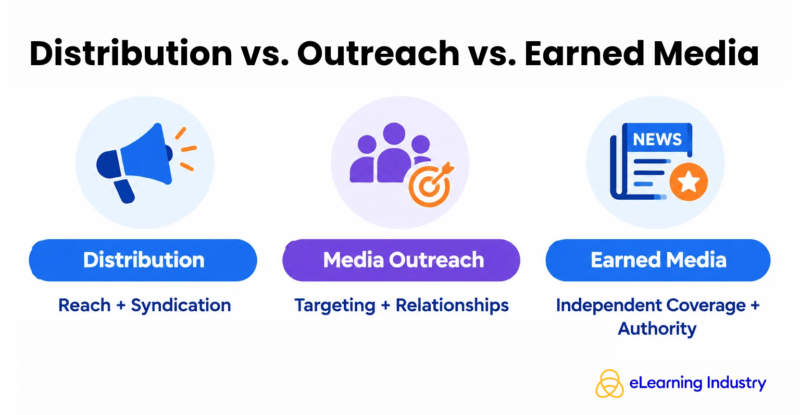
- Writing a press release means creating the announcement and presenting the relevant facts in a format suitable for media distribution.
- Press release distribution means circulating that announcement through a provider's network and available channels.
- Syndication means participating websites or platforms republish the release, usually with the original company or source identified.
- Media outreach means directly pitching relevant journalists or editors who may have an editorial reason to cover your story.
- Earned media happens when an independent third party chooses to cover, cite, discuss, or reference your announcement.
These differences matter because press release distribution platforms can create visibility without producing editorial coverage. A syndicated copy may generate impressions or referral traffic, while direct journalist outreach could create opportunities for deeper coverage and targeted leads. Therefore, your distribution strategy should match your actual communication goal rather than focus only on the size of a provider's network.
How Do Press Release Distribution Services Work?
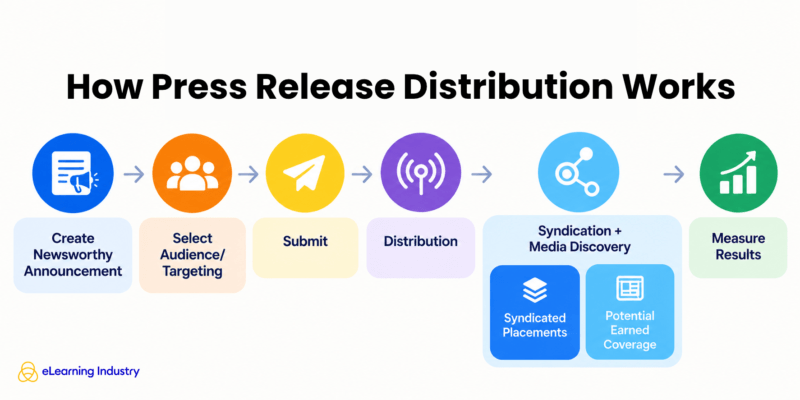
Step 1: Create The Press Release
Start with news that matters to your audience. Examples include:
- Funding
- Acquisition
- Partnership
- Research
- Product launch
- Market expansion
Step 2: Select Distribution And Targeting
Choose options that match your goals and audience. You may select:
- Geography
- Industry
- Media category
- Audience
- Language
- Distribution tier
Step 3: Submit The Release
The provider may check:
- Formatting checks
- Editorial review
- Compliance checks
- Link checks
- Multimedia processing
Step 4: Distribute The Announcement
The release enters the provider's distribution network. Newswire services may send it to publications, databases, feeds, and sites.
Step 5: Syndication And Media Discovery
Participating websites may republish the announcement. Journalists may also discover it through feeds, databases, alerts, or direct distribution. If you're researching how to get media coverage from a press release, remember that a syndicated copy does not equal independent editorial coverage.
Step 6: Measure Results
Review press release analytics, including:
- Pickups
- Placements
- Views
- Geographic reach
- Referral traffic
- Media interest
Use these results to refine future distribution and support your earned media strategy.
When Should B2B Brands Use Press Release Distribution?
Not every company announcement deserves wider distribution. PR distribution services work best when you have news that matters beyond your own organization and gives an external audience a reason to pay attention.
Funding Announcements
Funding can make a strong story when it signals significant growth, expansion, or market validation. If the round supports a major business development, distribution may help increase brand awareness.
Mergers And Acquisitions
A merger or acquisition can create wider industry interest, particularly when it changes your market position, expands capabilities, or affects customers.
Major Partnerships
Partnerships become more newsworthy when they involve recognizable organizations, create meaningful customer value, or open new markets.
Original Research
Industry reports, surveys, benchmarks, and proprietary datasets can give journalists useful information for their own stories. This makes research announcements particularly relevant for distribution.
Significant Product Launches
Focus on major launches rather than minor feature updates. Consider products that introduce a new category, deliver substantial customer value, or support market expansion.
Executive Appointments
Senior leadership appointments can attract attention when the executive has industry relevance or the appointment signals a meaningful strategic shift.
Market Expansion
Entering a new geography, vertical, or category can provide a clear external story. However, distribution should support, not replace, targeted media outreach.
The Newsworthiness Test
If you're asking, are press release distribution services worth it, start with one question: Would someone outside your company consider this news? If not, wider distribution probably won't solve the underlying problem.
What Makes A Press Release Worth Distributing?
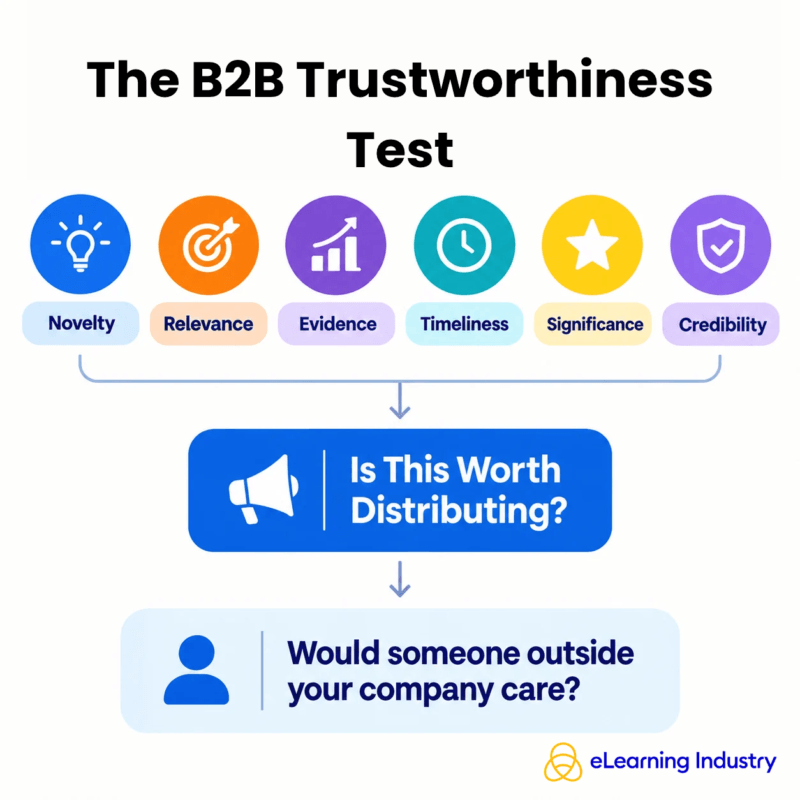
Before you invest in press release distribution companies, ask one question: Why would anyone outside your company care about this announcement? From a publisher's perspective, that question often determines whether a story earns attention or gets overlooked.
A useful Newsworthiness Test includes:
- Novelty: Something genuinely new has happened, such as a product launch, partnership, funding round, or research finding.
- Relevance: The announcement addresses an issue that matters to a specific industry, audience, or market.
- Evidence: Data, research, customer results, or measurable outcomes give the story substance.
- Timeliness: The announcement connects to a current trend, event, market shift, or industry conversation.
- Significance: The development has a meaningful effect on customers, the company, or the wider market.
- Credibility: Experts, customers, partners, or reliable evidence support the announcement.
The strongest releases offer a reason to care beyond “Our company launched something.” For example, new research on 1,000 HR teams could reveal the biggest barriers to AI adoption, followed by a solution designed around those findings.
If your announcement passes several of these tests, you have a stronger foundation for distribution, potential media pickups, and targeted outreach. Before sending it, review relevant email pitch examples to see how you can frame the broader story clearly.
What B2B Brands Should Look For In Press Release Distribution Services
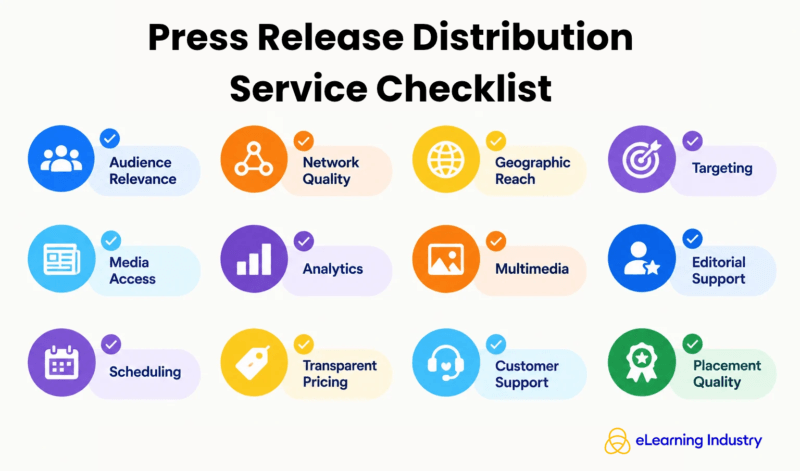
1. Audience And Industry Relevance Should Come First
When comparing press release distribution services, ask whether they can reach the audiences, media, and publications that matter to your business. A learning tech company may gain more value from HR, L&D, enterprise technology, and workplace-learning publications, like eLearning industry, than from hundreds of unrelated websites. Relevant reach beats theoretical reach.
2. Distribution Network Quality Needs Transparency
Don't accept claims such as "5,000+ websites" without asking questions. Which sites receive your release? Which placements are guaranteed, and which are potential? Are they automated syndication sites or publications with editorial teams? The answers tell you much more about the network's actual value.
3. Geographic Reach Should Match Your GTM Strategy
Your distribution needs should reflect where you operate and sell. Depending on your announcement, you may need local, national, international, regional, or multilingual distribution. A global network won't help much if your announcement targets one specific market.
4. Targeting Capabilities Can Reduce Wasted Exposure
Look for targeting by industry, location, publication type, audience, topic, or journalist beat. Knowing what to look for in a press release distribution service makes it easier to compare targeting options against your actual campaign goals.
5. Journalist Access Is Not Τhe Same As Journalist Attention
A media database gives you a way to send information to journalists, but it doesn't guarantee that they will read or cover your story. Strong distribution supports visibility; earning attention still depends on relevance, timing, and a compelling news angle.
6. Analytics Should Go Beyond Potential Reach
Look for reporting on placements, pickups, views, referral traffic, engagement, geographic reach, and links. Potential audience figures can provide context, but they don't necessarily represent actual readership. Media pitch examples can also help you understand how direct outreach differs from broad distribution.
7. Multimedia Support Can Add Useful Context
Check whether you can include images, logos, videos, infographics, research reports, and downloadable assets. These materials can make your announcement easier for journalists and readers to understand.
8. Editorial Support Can Help You Prepare The Release
Some providers offer writing assistance, formatting, headline guidance, editorial review, or compliance checks. These services can help when your internal team needs additional support before distribution.
9. Scheduling And Speed Matter For Time-Sensitive News
Funding announcements, product launches, events, and embargoes often require precise timing. Confirm how quickly the provider can review, schedule, and distribute your release.
10. Pricing Transparency Helps You Compare Packages
Compare the complete package rather than the advertised starting price. Check for additional charges for multimedia, word counts, geographic distribution, premium networks, analytics, or editorial support.
11. Customer Support Matters When Deadlines Are Tight
Responsive support can make a difference when your announcement has a fixed publication date. Consider the level of editorial, technical, pre-distribution, and post-distribution assistance available.
12. Brand Safety And Placement Quality Protect Credibility
Understand where your announcement may appear and whether those placements fit your brand. Low-quality or irrelevant placements can create credibility concerns and affect your wider online reputation management efforts. The best press release distribution services for B2B should therefore offer relevant reach, transparent reporting, and meaningful control over where your announcement appears.
Brand Safety And Placement Quality
Where your announcement appears can influence how people perceive your brand. Before choosing a provider, review the types of publications, websites, and audiences included in its network. Relevant media placements can strengthen visibility, while low-quality or unrelated placements may weaken credibility and create additional reputation concerns. Consider distribution as one part of your full-funnel marketing strategy, rather than treating every placement as equally valuable. The goal is to appear in credible environments that align with your audience, industry, and brand positioning.
Press Release Distribution Services Comparison Framework
| Factor | What to Compare | Question to Ask |
| Audience | Market relevance | Does this service reach our actual buyers/media? |
| Network | Publication quality | Which outlets are actually included? |
| Targeting | Precision | Can we target industry, geography, or media category? |
| Reach | Real distribution | What does the advertised reach figure represent? |
| Media Access | Journalist exposure | How are journalists reached? |
| Analytics | Measurement | What reporting will we receive? |
| Multimedia | Asset support | What formats are supported and what costs extra? |
| Editorial | Support | Is editorial review included? |
| SEO | Link handling | How are links and syndicated copies treated? |
| Pricing | Total cost | Which features require additional fees? |
| Support | Service level | What help is available before/after distribution? |
How Much Do Press Release Distribution Services Cost?
Pay Per Release
This model works well for companies with occasional announcements. For example, Business Wire lists U.S. local distribution from $475 for a 400-word release, including analytics and editorial review. If you only need press release services for major announcements, paying per release can help you avoid an ongoing subscription.
Subscription
Subscriptions may suit companies that distribute news regularly, particularly as part of a broader digital PR program. Before committing, check how many releases you can distribute and whether unused credits expire.
Distribution Packages
Providers may offer different tiers based on reach, geography, targeting, multimedia, network access, and reporting. Presswire, for example, lists North American and European distribution at $250 and global distribution at $400.
Add-Ons
Additional costs may apply for images, video, extra words, international distribution, industry targeting, premium networks, editorial services, analytics, or brand monitoring. When comparing providers, calculate the full campaign cost rather than relying on the advertised starting price. This gives you a clearer answer to how much does press release distribution cost for your specific needs.
Press Release Distribution Vs. Media Outreach
| Press Release Distribution | Media Outreach | |
| Approach | Broad/scalable | Targeted/personalized |
| Method | Distribution network | Direct pitching |
| Relationship | Limited | Relationship-driven |
| Payment | Usually paid | Usually earned/outreach |
| Control | Control distribution | Cannot control editorial response |
| Primary value | Reach and discoverability | Editorial interest and relationships |
Distribution puts your news into circulation, while media outreach puts your story directly in front of selected journalists. Understanding press release distribution vs media outreach helps you see why the two approaches serve different purposes. Distribution can increase visibility across relevant channels, while targeted outreach gives journalists a specific reason to consider your announcement. Earned media happens when an independent publication decides your story deserves coverage. Strong campaigns can combine original research, distribution, targeted outreach, media discovery, and potential earned coverage.
Press Release Distribution And SEO: What Marketers Should Know
Press release distribution can support SEO by increasing brand visibility around an announcement. It may generate brand mentions, referral traffic, search visibility, and opportunities for journalists to discover your story. However, press release syndication should not become a shortcut for generating backlinks.
The stronger path starts with a newsworthy announcement supported by research, data, or a meaningful business development. Distribution and targeted outreach then put the story in front of relevant journalists. If a journalist finds the announcement valuable, they may publish independent coverage that includes a brand mention or editorial backlink.
That differs from paying for distribution simply to generate hundreds of syndicated links. When assessing providers, consider what to look for in a press release distribution service, including placement quality, targeting, reporting, and audience relevance.
A strong approach can support:
- Brand visibility and share of voice SEO
- Referral traffic from relevant coverage
- Opportunities for independent media coverage
- Potential editorial mentions and backlinks
If you're researching what is share of voice, focus on meaningful visibility rather than counting every syndicated copy. Reviewing public relations examples can also show how newsworthy stories earn attention beyond distribution alone.
Can Press Release Distribution Support AI Visibility?
Generative Engine Optimization (GEO) can benefit from greater public visibility around genuine company developments. Press release distribution services can help make this information more discoverable across the web, while press release submission can extend its initial reach.
However, distribution alone does not guarantee that ChatGPT, Google AI Overviews, Perplexity, or other AI systems will cite or recommend a brand. AI visibility is influenced by the broader information environment surrounding a company.
The stronger opportunity comes when credible third-party sources independently cover, discuss, cite, review, reference, or validate the company and its developments. This creates a broader authority ecosystem and can strengthen brand authority over time.
How To Measure Press Release Distribution Results
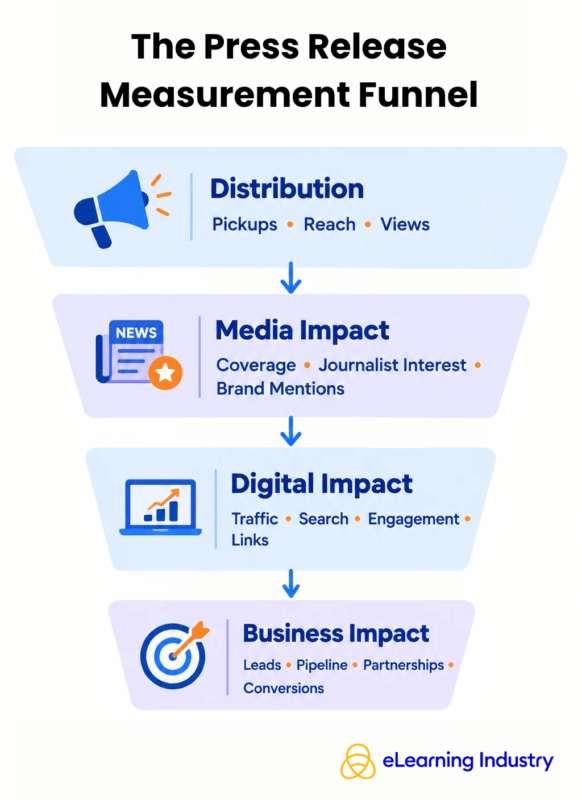
Media distribution services should not be measured only by how many outlets publish your release. Online reputation monitoring can help track broader visibility, while media placements should be evaluated for relevance and business value.
Distribution
- Pickups
- Placements
- Views
- Geographic reach
Media
- Relevant media coverage
- Journalist inquiries
- Independent mentions
- Interview requests
Digital
- Referral traffic
- Branded search
- Engagement
- Independent backlinks
- Brand mentions
- Share of Voice
Business
- Qualified traffic
- Leads
- Demo requests
- Target-account engagement
- Pipeline influence
- Partnerships
Common Press Release Distribution Mistakes
- Choosing a service based solely on network size rather than relevance.
- Distributing content that is not genuinely newsworthy.
- Assuming press release syndication is the same as earned media.
- Expecting guaranteed coverage from journalists.
- Treating distribution primarily as an SEO backlink strategy.
- Ignoring industry relevance and audience fit.
- Writing releases that are overly promotional.
- Overlooking the right geographic markets.
- Skipping media targeting when direct outreach would help.
- Measuring success only through pickups.
- Ignoring the quality of individual placements.
- Failing to define campaign objectives before distribution.
- Paying for features the campaign does not actually need.
- Treating crisis management tools as a substitute for a broader communications strategy.
A 7-Step Framework For Choosing A Press Release Distribution Service
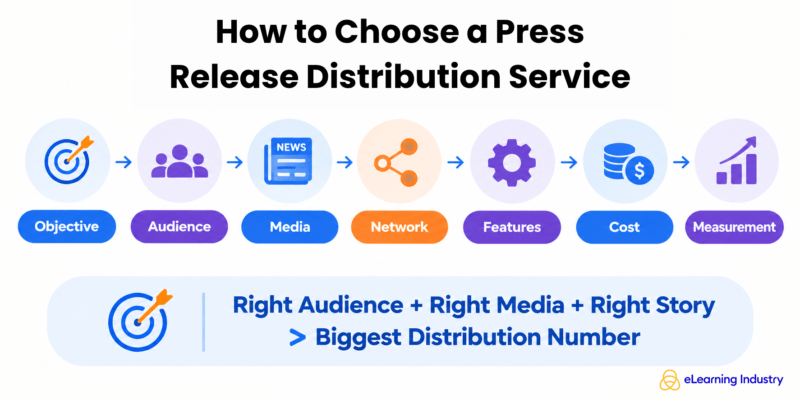
- Step 1: Define the Objective: Clarify what you are announcing and what you want distribution to achieve.
- Step 2: Define the Audience: Identify who needs to see the announcement and why.
- Step 3: Identify the Media Environment: Map relevant industries, publications, journalists, and regions.
- Step 4: Compare Distribution Networks: Assess relevance, quality, and reach, not just network size.
- Step 5: Compare Targeting, Reporting, and Support: Check targeting options, reporting depth, customer support, and whether journalist outreach is available.
- Step 6: Calculate the True Cost: Include add-ons, required upgrades, and other campaign expenses.
- Step 7: Define Success Before You Buy: Set KPIs, including media pickups, traffic, engagement, or leads, before selecting a provider.
Conclusion
Choosing the right distribution partner is not simply a matter of finding the largest network or the lowest price. The better approach is to start with the announcement, identify the audience, understand the relevant media environment, and choose a service that supports those specific goals.
If you're researching how to choose a press release distribution service, focus on relevance, targeting, reporting, placement quality, total cost, and the role distribution will play alongside broader PR activity. Press release syndication can increase visibility, but it should not be confused with independent editorial coverage or treated as a shortcut to SEO results.
It is also worth asking what is a PR team expected to achieve beyond distributing announcements. The strongest programs build relationships, develop useful stories, support executives, and create credible reasons for people to pay attention.
So, getting an announcement distributed is one step. Building lasting authority requires your brand, expertise, executives, research, customer stories, and ideas to appear consistently in the places your buyers already trust. Whether you're launching something new, sharing original research, building executive authority, or strengthening your position in the market, the goal shouldn't simply be distribution. eLearning Industry can help you get in front of the right eyes.
FAQPress release distribution services help businesses send announcements to journalists, news outlets, industry publications, and online media platforms. They can also publish releases across a network of websites and news channels.
You submit a press release, select relevant geographic or industry targeting, and the service distributes it through its media network. Some services also provide reporting on pickups, views, clicks, and other performance metrics.
They can be useful for increasing the reach and visibility of a newsworthy announcement, particularly when targeted to relevant audiences. Their value depends on the quality of the news, distribution network, targeting, and the organization's broader PR strategy.
Costs vary widely depending on the provider, distribution reach, geographic targeting, industry targeting, and additional services. Basic distribution can cost tens or hundreds of dollars, while broader or premium packages can cost significantly more.
Consider its media network, geographic and industry targeting, pricing, reporting capabilities, editorial requirements, and reputation. It is also important to understand exactly where the release will appear rather than judging a service solely by the size of its claimed network.
Press release distribution sends the same announcement through a distribution network, while media outreach involves directly identifying and contacting relevant journalists or publications. Outreach is typically more personalized and focused on earning specific editorial coverage.
Press releases can support online visibility and help make news and company information easier to discover, but distributing releases primarily to obtain backlinks is not a reliable SEO strategy. Search engines generally place more value on relevant, authoritative coverage and useful content.
No. Distribution can increase the number of journalists and outlets that receive a release, but it cannot guarantee that independent media will publish or report on it. Actual coverage depends on factors such as newsworthiness, relevance, timing, and editorial interest.
