



Balancing Creativity And Discipline In L&D Project Management
If you've spent time in custom eLearning development, you know that brilliant instructional design, compelling content, and cool learning technologies are only part of the story. The other part—the part that keeps projects running smoothly, on time, and within budget, all while keeping clients and team members happy—is project management.
In my experience as Director of Production and Project Management at SweetRush, I've spent a lot of time reflecting on what makes eLearning project management successful. We hear a lot about popular frameworks and shiny tools, but learning development has a rhythm all its own. The following is my advice on how to balance creativity and discipline, navigate project friction, and deliver exceptional work…without burning out your team.
Why Traditional Scrum Practices May Not Serve eLearning Projects
One question I often hear is: Why doesn't traditional Scrum work for eLearning projects?
To understand why, let's take a look at where Agile started. It began almost as an anti-management movement in software development: a collective realization that rigid, traditional project management didn't work when coding software. Software teams needed a way to iterate constantly, checking progress at every stage rather than waiting until the end to unveil a finished product. Scrum took those Agile ideas and packaged them into a system with its own language and practices: sprints, Scrum Masters, Product Owners, and daily standups.
The catch? Scrum is an all-or-nothing package. It's not a buffet of tools where you can just do "a little bit of Scrum." If you're doing it right, it's a strict methodology with prescribed steps, ceremonies, and roles.
That package often isn't what a custom learning project needs. The very nature of what L&D teams do and develop calls for elements of a Waterfall process: collecting client needs, documenting requirements, building a high-level design, and getting sequential sign-offs. Trying to force these steps into a pure Scrum process creates unnecessary friction.
My advice: Extract the core principles of Agile—iterative feedback, adaptability, and continuous communication—and apply them where they fit your process. You can even use Scrum terminology like "sprints" if it helps your team, but don't force a rigid framework onto a workflow that naturally demands structure.
Space For Creativity: Straightforward Deliverables Vs. Open-Ended Exploration
Custom learning projects require a talented and varied cast of characters: instructional designers, developers, animators—even 3D designers and engineers for projects featuring extended reality (XR) and generative AI (genAI). Giving all of these folks room to explore creatively while respecting client deadlines is a question of what kind of deliverable you're creating.
When a client needs something simple, well-defined, and delivered on an exact date, the creative runway is smaller. In those cases, we front-load the creativity during the initial definition phase. During that phase, we document client expectations, engage high-level design documents, and build mockups that the entire client-SweetRush team can see and sign off on upfront. Once that vision is secured, we execute quickly.
On the other hand, some projects come with high uncertainty—perhaps a client wants to test an open-ended idea, build an immersive simulation, or leverage emerging tech. Here, we lean heavily into Agile principles. We start with broad brainstorms and CoDesign sessions but, once we land on an idea, we move immediately into quick prototyping to validate the core functionality first.
For example, when we first tackled genAI simulations, AI's learning use case was just emerging. Our very first prototype wasn't pretty—it had no avatars or fancy graphics. We just needed to test the core mechanics: Could the AI engine interpret a learner's audio input and generate accurate feedback in real time? If that core functionality didn't work, all the visual polish in the world wouldn't save the project.
We did the same thing with a public speaking simulator. The core question was whether we could accurately track voice features and provide real-time performance feedback. Once we validated that core mechanic, then—and only then—did we iterate on the virtual setting, avatars, and visual polish.
TL;DR: Always find the core functionality you need, then validate it before iterating on graphics, animations, and features.
Transparency Without Chaos: High-Level And Granular Views Of L&D Projects
To keep a project running smoothly, it's important to keep three distinct audiences at top of mind: the client, the production team, and the operations team.
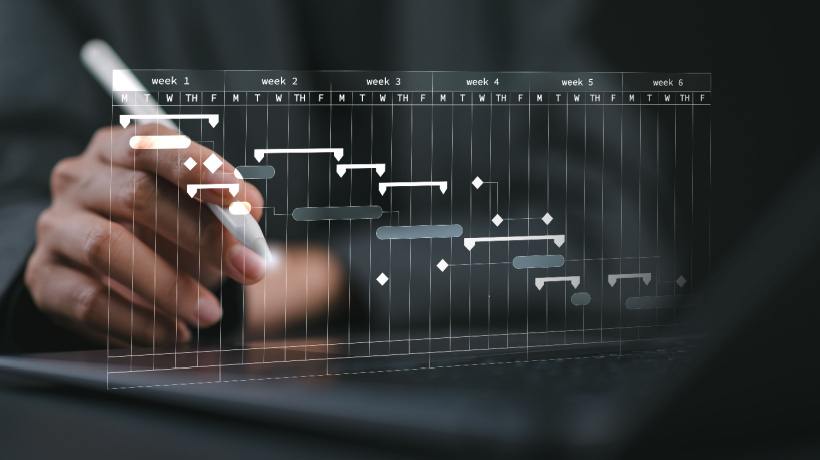
Clients and internal finance teams need big-picture clarity. They need visibility into milestones, delivery dates, and project health, and overall progress so they can plan rollout schedules for their learners. For this high-level, Waterfall view, tools like Microsoft Project, Celoxis, or Smartsheet work wonderfully. A client doesn't need to know that an animator is building 50 individual image assets this afternoon—they just need to be aware of broad strokes.
For internal project management purposes, though, a dedicated task management tool is vital to handle the granular, day-to-day work. At SweetRush, we use Jira (though tools like Asana, Monday, or even a well-organized spreadsheet for smaller organizations also get the job done). Jira is where the actual project "lives" for our team—it's where designers get assignments, developers log progress, and QA teams review bugs.
The project manager serves as the bridge between high-level client updates and granular task management, ensuring that everyone has the amount of detail they need to execute without undue "noise."
A Realistic Approach To The Review Process
One of the biggest friction points in L&D project management is handling delays in Subject Matter Expert (SME) reviews. With the best of intentions, these busy, in-demand folks often get pulled away from reviewing deliverables, which introduces delays into the production schedule.
It's important to differentiate between the situations L&D teams can and cannot control: When we create production workflows, we can control our own entry and exit points. What we can't control is client-side availability. That's why the most important protocol for managing SME bottlenecks happens before the project even starts: radical upfront transparency.
If a client requests 20 custom eLearning modules on a highly compressed timeline, they'll be thrilled to know that we can resource 20 instructional designers to work on them simultaneously. What might come as a surprise is what this timeline means for their team: a review of all 20 storyboards in a two-day window!
We like to share our expectations (and experience) for project timelines up front: For example, for some clients, the SME reviews take two full weeks. If legal team review is also part of the plan, that adds more weeks to the timeline: essentially, a full month during which no actual development can happen. It's important to factor that downtime into the project plan.
It's easy to underestimate the time needed, the competing priorities, and workplace emergencies that prevent client-side reviewers from adhering to timelines. Part of our job as project managers is helping clients preview the realities of the review cycle and their impact on project timelines early in the process so that we can land on realistic deadlines.
Scope Creep And Spaceships: Balancing Flexibility With Project Constraints
Keeping a project within scope while never ceasing to be a flexible, human-centered partner is an art form. I like to think of a custom project as a box of LEGOs.
Imagine you bought a LEGO set with everything you need to build a 100-piece spaceship. Halfway through the building process, you decide you want much larger rocket engines. It can absolutely be done, but those bigger engines will require new pieces.
There are two ways to acquire them:
- Exchange pieces: Trade in some smaller, more decorative pieces (like the wing decals) that don't affect spaceship functionality for larger engines.
- Get an extension pack: Make an additional investment to add the rocket engines to your existing LEGO set, which adjusts the overall budget and adds a little extra building time.
Sometimes, a client brings us a collection of LEGO pieces and says, "I know I need a vehicle, but I don't know if it should be a family van or a sports car." In those cases, we sit down and explore together. We look at their budget, their goals, and their timeline, guiding them step-by-step toward a final build that fits their price point and delivers maximum value.
Risk, Remedy, Recovery: Dealing With Setbacks
Even with immaculate planning, the unexpected can—and does—happen. A lead developer falls ill two days before a major release, a critical system integration hits a snag, a storm takes out a review team's electricity for a few days…you get the idea.
On complex projects, I always recommend building a simple Risk Matrix upfront to map out potential issues by likelihood and impact. When a risk does materialize, the key to preserving client trust is complete transparency with a clear recovery plan.
A project manager should never try to hide a delay. It's important to reach out immediately to the client, explain the situation candidly, and present a path forward, for example, "We can't deliver this Friday due to an unexpected resource bottleneck, but we can add extra engineering support during the beta phase to compress the review window and keep your target launch date intact."
Giving clients early, honest information allows them to strategize internally rather than getting caught off guard.
Psychological Safety As A Core Ingredient For Specialized Teams
Project management of often complex, multifaceted custom learning solutions means orchestrating incredible cross-functional talent—instructional designers, 3D animators, software engineers, and QA leads—all of whom speak very different languages.
A project manager's job isn't to jump in and act as translator for every single conversation. Our job is to build spaces grounded in psychological safety where team members feel free to voice ideas, test theories, collaborate, and respectfully differ with one another.
When you foster an environment where people feel safe to explore and ideate without fear of judgment, the team naturally builds its own shared vocabulary over time. The smart folks on your team will filter out the weaker or less feasible ideas and refine the great ones together—they just need the space to do it.
Defining Project Success, One Raindrop At A Time
Early in my career, my team members and I defined a successful project as delivering a cool solution we were proud of, no matter what it took. Over time, though, we came to realize that a project completed at the expense of our collective health and well-being isn't a true success.
True project success, we've discovered, is a balance of five criteria:
- Achieving effective learning outcomes
- Creating a product that fulfills the client's needs and expectations
- Delivering on time
- Staying within budget
- Keeping team members well, healthy, and maintaining sustainable work-life balance
To protect team well-being during crunch periods, it's important to separate true learning value from our perfectionism and, sometimes, our own egos. For example, I remember one virtual reality (VR) project that featured 3D cars driving through rain. Someone on the team pointed out that the scene would look more realistic if the individual water droplets splashed when they landed on the cars. It took us hours trying to engineer each nearly microscopic water splash. Of course, when we put the prototype in front of real learners, nobody even noticed them—they were focused on the immersive experience and the new skills they were learning.
To prevent team burnout, we focus first on the details that our client and their learners value. Once core functionality is built, we polish from the most high-priority core elements down to the nice-to-haves. We call that the "polish phase," and it has a concrete endpoint. Our team's own perfectionism and attention to detail must not break deadlines or budget.
The Ultimate Success Metrics: Project Efficacy And Unspoken Goals
In addition to the five criteria above, there's one simple question that will help you determine whether a custom learning project was successful: Did it achieve the client's ultimate goal?
When a client turns to a custom learning partner, there is almost always a deeper objective. They might want a solution that helps their learners feel more deeply connected to the company's culture or demonstrate that their organization is innovative and forward-thinking/As PMs, we must learn to listen for these unspoken goals to build a solution that truly lands.
Of course, learning efficacy is the ultimate validation. We can uncover this metric by embedding learner surveys, designing data-rich immersive experiences, creating dashboards that show the data that matters most, and so on. For example, one of our clients tested a safety hazard training program by splitting learners into two cohorts: one that received a standard PDF document containing the learning content, while the other experienced an interactive simulation.
By conducting surveys, knowledge checks, and tracking real-world job performance over the following months, the client discovered that the immersive experience created dramatically higher knowledge and skills retention and produced real behavioral change. We love learning from these real-world outcomes and helping clients build ever-more-successful programs through their data insights.
Turning Innovation And Ideas Into Impactful Learning Programs
Clearly, great L&D projects don't happen by accident—they're built on a foundation of trust, discipline, creativity, and clear communication. If you're curious about fresh ways to achieve your organization's skilling needs, align cross-functional teams, and bring your best ideas to life, we'd love to connect! Reach out to share your vision with our experts.