


Connecting Goals, Feedback, And Learning
Most companies run learning, performance, and feedback as separate systems. Goals sit inside a performance tool; feedback lives in manager notes or quarterly reviews; training sits in a learning platform where employees complete courses that may or may not connect to the work they are actually doing.
An employee sets goals at the start of the quarter. Weeks pass, and priorities shift. Managers give feedback when something goes wrong or when a review cycle approaches. Training happens after a gap becomes visible, often too late to affect the outcome that mattered.
The problem is not effort. The problem is timing and connection.
Work moves continuously, but development still happens in isolated moments. Goals do not adjust when feedback reveals a skill gap. Training does not respond to what employees struggle with right now. Feedback highlights issues, but nothing turns those signals into action.
Performance does not stall because people resist learning. It stalls because the system reacts too slowly to what work actually demands.
Goals, Feedback, And Learning: Where The Disconnect Shows Up
You don't see the problem in reports. You see it in conversations.
- A manager reviews a piece of work and gives feedback that sounds familiar. They remember saying the same thing before, and then the employee nods, agrees, and moves on. Nothing really changes.
- At the same time, the employee working remotely from another country completes a training module that the company assigned. It covers a skill they already feel comfortable with. The actual challenge they face every day never comes up.
- Goals stay where they were set at the start of the quarter, even though the role has already shifted. The team adjusted. The work changed. The system did not.
This is how the gap builds. Quietly. Feedback turns into a routine instead of a turning point. Training feels like something to finish, not something that helps. Performance conversations start to look backward because nothing in the system supports what needs to change next.
No one avoids learning. People are putting in the time. However, the learning happens in a course, a module, or a workshop, and the real work continues unchanged. What they study hardly shows up in what they do the next day.
Why Traditional Learning Systems React Too Late
Most learning systems run on a schedule; work does not.
- Goals get set once a quarter.
- Reviews happen twice a year.
- Training calendars fill up months in advance.
By the time development shows up, the situation that created the need has already passed.
Managers see the gap earlier. They notice when someone struggles with a new responsibility, slows down on a task, or avoids a type of work. But there is hardly an easy way to turn that observation into immediate support. So the feedback gets noted, then saved for the next check-in.
Employees adjust on their own. They search for resources, ask a colleague, or work around the problem until the pressure drops. The system stays out of the loop.
This delay changes how learning feels.
- Training becomes corrective instead of useful.
- Development plans describe what should have happened months ago.
- Reviews capture problems that everyone has already experienced in real time.
The issue is not the quality of learning; the system simply moves more slowly than the work.
How AI Closes The Loop Between Goals, Feedback, And Learning
The change is not about adding more learning. It is about paying attention at the right moment.
The signals already exist:
- A manager gives the same feedback twice.
- An employee struggles with a new responsibility.
- A project takes longer than expected.
Usually, these moments pass. The work moves on, and the system catches up later, if it catches up at all.
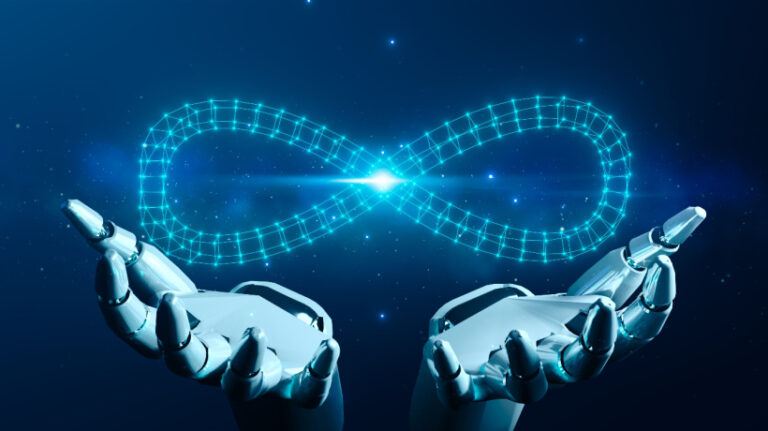
AI helps by noticing patterns early and connecting them to action.
- If feedback on the same skill keeps showing up, the system can surface a short resource that focuses only on that gap.
- If someone's work shifts into a new area, it can suggest learning that fits the new expectation.
- If goals no longer match what the role actually requires, it can flag that for a quick update instead of waiting for the next cycle.
Nothing heavy or formal. The support shows up close to the moment when the work feels difficult. Managers get a prompt when a conversation might help. Employees see learning that relates to what they are dealing with this week, not something broad and generic. Over time, this creates a simple rhythm. Learning stops feeling like a separate activity and starts showing up where improvement actually happens, inside the work.
What Ownership Looks Like For Managers And Employees
When the loop starts working, the biggest change is not the technology. It is the way managers and employees use the signals.
- Managers stop saving feedback for formal conversations. If the system highlights a pattern, they address it while the work is still fresh. The conversation becomes specific and short.
- What support would help? Beyond training, this might include benefits that support continuous development or adjustments to how remote employees access learning resources.
- What should change right now? This takes pressure off performance reviews. Those meetings no longer carry months of accumulated issues.
- Employees start to see development differently, too. Instead of waiting for assigned training, they pay attention to where their work slows down or feels uncertain. When the system surfaces something relevant, it connects directly to a problem they already recognize. Learning feels practical because it solves something immediate.
- Ownership becomes shared. Managers pay attention to patterns instead of isolated mistakes. Employees respond to friction instead of waiting for direction. Goals adjust as the role evolves.
- Development stops being something that happens during reviews. It becomes something both sides work on continuously, in small corrections that keep performance moving forward.
The Signal That The Loop Is Working
You can tell the loop is working by what stops happening.
- Managers no longer repeat the same feedback every few months. The issue comes up once, gets addressed, and then shows up less often in the work.
- Employees stop asking for generic training or skipping it altogether. When learning appears, it feels connected to something they dealt with recently. They use it because it helps them get unstuck faster.
- Performance conversations change tone. Instead of revisiting old problems, the discussion stays focused on what is shifting now and what the next stretch looks like.
The biggest signal is subtle. Development stops feeling like a separate track that runs beside the job. Small adjustments happen continuously. Goals move when the work moves. Support shows up before frustration builds. Nothing about the process feels heavy. But the work improves faster, and the same problems stop coming back.