The migration of Flash eLearning courses to HTML5
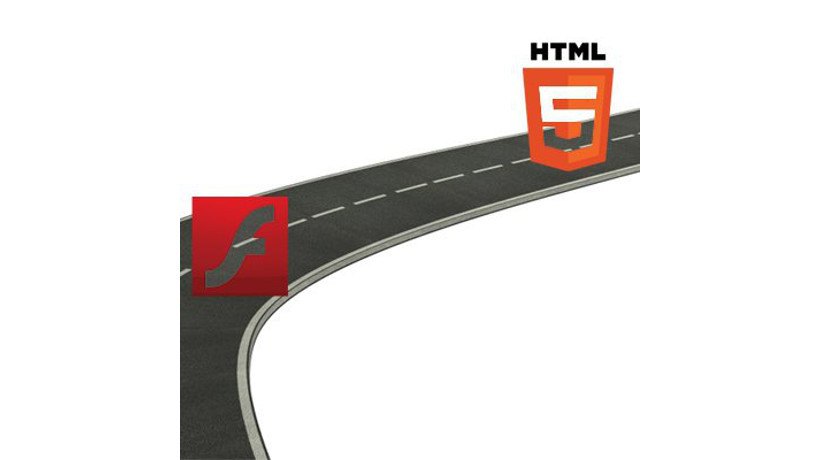
A reality indeed. As HTML5’s impact continues to ripple, many companies are dealing with the necessity of abandoning Flash applications. HTML5 is more flexible, allows movement, doesn’t affect SEO and doesn’t need a plug-in.
- Rapid development and use of iPads and Smartphones
More and more companies are looking to develop applications for iPads and Smartphones, which don’t support Flash and rather prefer HTML and JavaScript. - Cross-browser functionality
IE6 and IE7 are already considered old; yet some companies seem to be reluctant to abandon them. However, it’s practically impossible to seamlessly run multi-feature applications on PCs and iPads with such old browsers. Therefore, browser upgrade and HTML technology are necessary. - The necessity of mobility
In a continuously changing and fast pacing environment, we can’t chain users to their desks and offices. So the creation of HTML5 eLearning applications, training material, presentations etc. or the conversion of Flash to HTML for mobile devices is becoming inevitable. - Processing and battery power saving
With mobile devices being used and preferred for numerous multimedia applications, we shouldn’t forget about something that Apple first pointed out. Flash does use too much processing and battery power; something that makes it disadvantageous. So migration to HTML becomes somewhat unavoidable.
How to go from Flash eLearning course to HTML5 eLearning courses?
So what’s the way to go about this? It depends on the needs, the material and the company’s policies.
- For the companies who already have a substantial volume of applications using Flash, it’s recommended to convert their files and create all new material in HTML5.
- The companies that want to use mobile devices for their training and continue running older browsers, the safe way to go is to depend on HTML4 with CSS and to JavaScript for animations and interactivity.
- Select a new development tool that will meet the company’s needs and support export into HTML5. Build out all standards, masters, templates, models etc. upon this new tool.
- If the material was designed for a long shelf life, then it’s better to consider redeveloping a new toolset and migration for mobile delivery.
- A good intermediate ground is to convert the Flash to video and then embed that in the HTML5 page. It might not carry over the interactivity, but it faithfully reproduces the animations of Flash and can be created to be fully compatible with browsers on all current mobile devices.
- When it comes to Flash animations, it’s better to move the entire application on a single timeline and then use a conversion tool to turn it into SVG sequence and JavaScript code, while audio can be synced with JSplayer.
Conversion tools from Flash to HTML5
- The most popular Flash to HTML5 conversion tools right now are Swiffy by Google,
- Sothink SWF Decompiler, and
- Adobe’s Wallaby.
Last but not least, it’s always good to remember that HTML5 is still a relatively immature technology, especially regarding interactivity and video content protection, and that there is a substantial learning curve for using this new multi-channel, cross-platform IT framework.
You may also find useful Is HTML5 ready for the eLearning Industry?
References - Highly Recommended Articles:
- Why Brands Should Cool It on HTML5
- Transition to HTML5
- Flash-centric misconceptions of HTML5
- Adobe gears up for Flash to HTML5 migration
Originally published on March 20, 2013