


 ChatGPT
 Perplexity
 Claude
 Grok
Grok
Scaling Student Engagement And Operations
Artificial Intelligence (AI), Machine Learning (ML), and Deep Learning are disrupting and impacting every sector. Higher education is no exception. Every university department can use these technologies to improve efficiency and boost overall student success. There are three major areas where AI can be applied in higher education:
- Administration.
- Teaching.
- Learning.
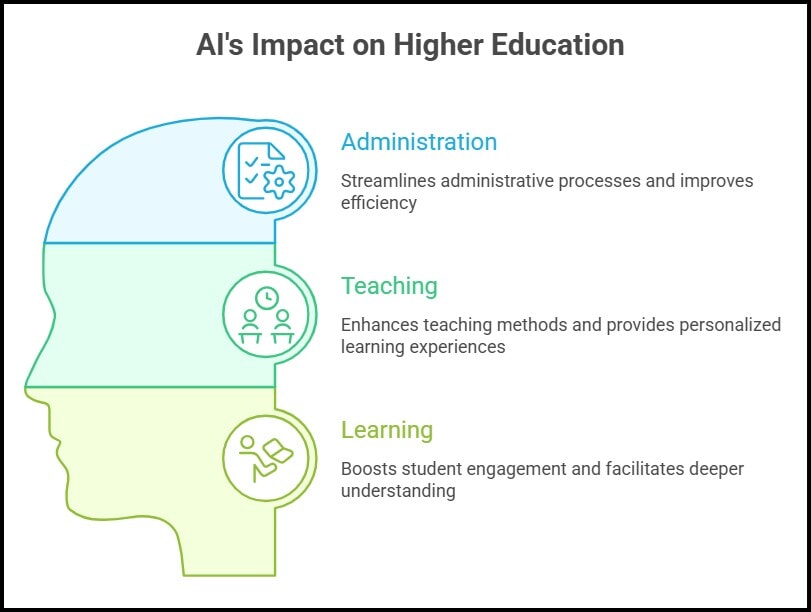
Figure 1. AI Strategic Impact Areas in Higher Education
Applying AI first in administrative areas can help reap early benefits. On the other hand, AI for teaching and learning—like virtual tutors—is still in its early stages and may take several years to become mainstream. However, in the case of administration, there are many routine tasks that AI can simplify and even transform completely. Processes such as student counselling, applications, enrollments, financial aid/scholarships, exams, grading and evaluations have the potential to leverage AI and help universities achieve efficiencies and operational scale.
Consider a student counselling department which is typically flooded with hundreds of queries from current/prospective students. The situation can be tricky in the area of new student recruitment. When multiple universities/colleges compete to recruit the same student, they don't have a choice but to respond to each query as early as possible. Speed and scale of response are critical. But counselling teams can't scale and often struggle to respond to students.
Using Counselor Bots
AI can completely rewrite this scenario. Smart AI-driven "counselor bots" can augment and enhance the ability of human admissions/career counselors for new student recruitment. The counselor bot, available 24X7 would think and respond just like its human counterpart. And as the number of queries changes, the bot could scale in proportion. Counselor bots can interact with prospective students like a real human and suggest the best courses matching a student's background, career interests, objectives, budget, and time commitment. The key here is the personalization of responses by the bot and the perceived accuracy of its suggestions, solutions, and recommendations.
Going Beyond Counseling
Now, assume you have a student who found the right course with help from your smart counselor bot. What next? How do you make it easy for the student to submit an application? Can AI help in converting a student who is interested in a course to one who has applied? Student engagement plays a crucial role in the interaction and subsequent conversion. And AI can be a strong element in improving the conversion. Using AI, you can send the right messaging over the right channel at the right time to increase the possibility of achieving your desired results. It's all about taking students across a personal journey based on their behavioral patterns.
As an example of how AI can assist, consider this: Not every student responds to email reminders the same way. Depending on whether students have opened an email or clicked a specific link in the time left to complete application/enrollment, AI can take different courses of action. It can also learn from past campaigns, predict the rate of success from specific engagement journeys and redesign processes to achieve specific campaign goals.
Once a program application has been submitted, the university needs to evaluate it. Here as well, AI can pitch in to screen most, if not all, applications and take decisions on student acceptance.
Machine Learning And Algorithms Improve With Age
Consider an MBA application received by an Ivy League university. Typically the university receives thousands of applications each year for a few hundred seats. Here, the goal of the admissions department could be to eliminate applicants, leaving behind only the very best for further scrutiny. AI can help automatically screen and eliminate applications that score low on one or more criteria. For example, automated essay scorers (an application of Natural Language Processing in AI) can help grade essays submitted by applicants and straight away reject those who scored less than a specific number. The complexity of the application screening algorithm may depend upon the number of acceptance criteria considered by the university and also the level of accuracy desired. Such algorithms can further be trained and fine-tuned by supplying feedback on the admission decisions taken by the algorithm. Over a period of time, the algorithm can learn from the completion rates of the students who get auto-accepted in the program. If there are many students who don't successfully complete the program after getting auto-admitted then the algorithm may be allowed to self-adjust acceptance rules and the criteria for student success.
While students are already in a program, it's always important to identify in advance those who are at risk and pitch in with right strategy to ensure student success in the program. Again, AI can help in this area. It can monitor and predict at-risk students based on specific behavioral patterns and trigger the right student engagement plans at the right time to bring students back on track.
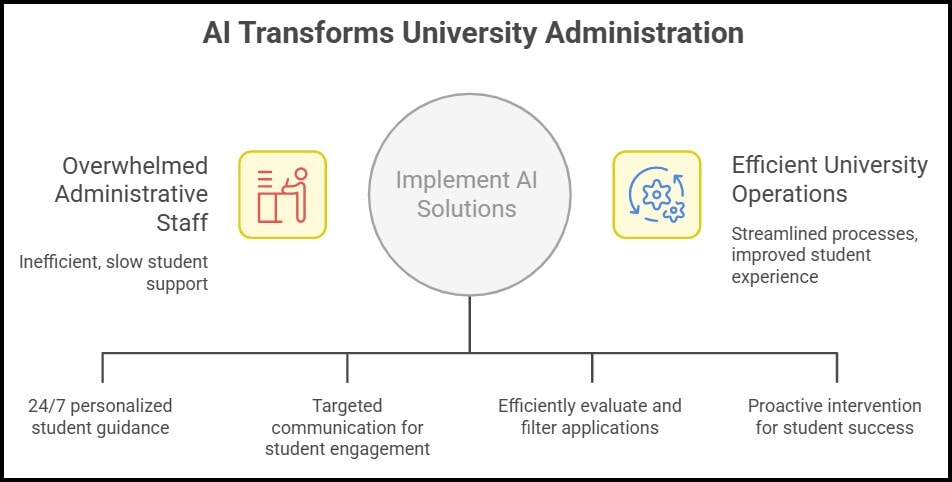
Figure 2. AI Transformation in Higher Education
Stepping Into Tomorrowland
AI, Machine Learning and other such advanced technologies are able to learn processes quickly and improve them continuously in a nonlinear fashion. AI can open new frontiers of success for universities; and without doubt, the time for it is now.
Image Credits
- The images within the body of the article were created/supplied by the author.