



What Is Cultural Awareness Training?
Cultural awareness training is now a key business skill that helps organizations thrive in today's diverse and connected workplaces. As companies work with global teams, adopt remote work, and serve international customers, employees need to communicate and work well with people from different backgrounds. This approach does more than traditional DEI programs. It helps employees feel they belong, leads to better decisions, and improves business results. Learning what cultural awareness means is the first step to creating workplaces where different perspectives lead to new ideas.
Cultural awareness means being able to see, understand, and value how culture shapes people's values, actions, and ways of communicating. In short, it is about noticing differences without jumping to conclusions or making judgments. But just seeing these differences is only the start. Truly understanding culture means learning about the beliefs and experiences that shape how others see the world, and it encourages open conversations.
Why Cultural Awareness Training Matters In Today's Workplace
Cultural awareness training is now a key investment for organizations that want to create more collaborative, innovative, and resilient workplaces. As teams become more diverse and spread out across locations, employees need to work well with people from different backgrounds, work styles, and experiences. If they lack these skills, misunderstandings can slow decisions, hurt team unity, and lead to poor business results.
Improved Collaboration
One of the primary reasons why cultural awareness is important is its impact on collaboration. Cultural awareness matters most because it helps teams work better together. When team members understand and respect cultural differences, they can share ideas more openly, solve conflicts in a positive way, and make smarter decisions. This also creates psychological safety, which means employees feel safe to share their views, ask questions, and challenge ideas without worrying about being judged. Google's Project Aristotle found that psychological safety is the top trait of high-performing teams, showing how important it is for learning and success.
Higher Employee Engagement
Organizations also see higher employee engagement. When people feel valued and included, they are more likely to do their best work, stay loyal to their employer, and help build a positive workplace culture. Gallup reports that employees who believe their opinions count at work are much more engaged and less likely to leave.
Better Customer Interactions
Beyond internal collaboration, cultural awareness in the workplace also affects how organizations serve customers and grow their business. Employees who can adjust their communication for different customers and partners build better relationships, avoid misunderstandings, and offer more inclusive services. This is especially important for companies working in global markets or with diverse communities.
Because of these benefits, cultural diversity training should be seen as an ongoing learning process, not just a one-time requirement. By building cultural awareness over time, organizations can boost innovation, improve teamwork across departments, and get ready to compete in a global economy.
Cultural awareness is a key business skill, and not just a soft skill. It affects how people work together, create new ideas, and build trust at all levels of an organization.
-Christopher Pappas, CEO and founder of eLearning Industry
What Makes An Effective Cultural Awareness Training Program?
Cultural awareness training works best when it helps people build practical skills they can use in daily work, not just when it introduces cultural ideas. Many organizations still use one-time workshops, but real change happens through a structured learning process that includes reflection, practice, feedback, and ongoing support. The most effective cultural training programs use adult learning principles and connect real workplace challenges to meaningful learning, supporting both personal growth and company goals.
Self-Awareness Before Cultural Awareness
Before employees can understand other cultures, they first need to see how their own experiences, values, and assumptions shape their view of the world. Good culture training starts with guided self-reflection, helping people look at their communication styles, decision-making habits, and hidden preferences without blaming anyone. This approach builds psychological safety and helps participants feel ready to consider different perspectives.
Building Cross-Cultural Communication Skills
Awareness by itself is not enough if employees have trouble communicating across cultures. Good cultural training helps people build skills like active listening, empathy, inclusive language, and the ability to adjust how they communicate in different situations. Instead of teaching strict rules about each culture, effective training focuses on curiosity, respectful questions, and flexibility. These skills are useful in any diverse and changing workplace.
Reducing Unconscious Bias
Unconscious bias can affect hiring, teamwork, performance reviews, and leadership choices. Rather than trying to remove bias completely, strong training teaches people to spot common mental shortcuts and use strategies to lessen their effects. Activities like reflection, group discussions, and using proven decision-making tools help participants act more thoughtfully in their daily work.
Inclusive Decision-Making
Inclusive organizations do more than just value different perspectives; they make sure to include them in decision-making. Good programs give leaders and employees practical ways to encourage everyone to join in, consider different opinions, and avoid groupthink. Teaching these skills as part of cultural awareness training helps teams make better decisions and build trust and safety.
Scenario-Based Learning
Adults learn best when they solve real problems. For this reason, training should focus on realistic scenarios instead of long lectures. Activities like case studies, simulations, and role-playing give learners a chance to practice handling complex cultural situations in a safe space. These methods help people reflect, remember what they learn, and apply it to real work challenges.
Continuous Reinforcement Instead Of One-Time Workshops
Building cultural competence takes time and is not just a one-time event. The best training programs reinforce learning with short lessons, coaching, group discussions, manager support, and regular refreshers. Using spaced practice, review activities, and real work tasks helps turn awareness into lasting change. This ongoing approach makes cultural awareness part of daily work, not just a box to check.
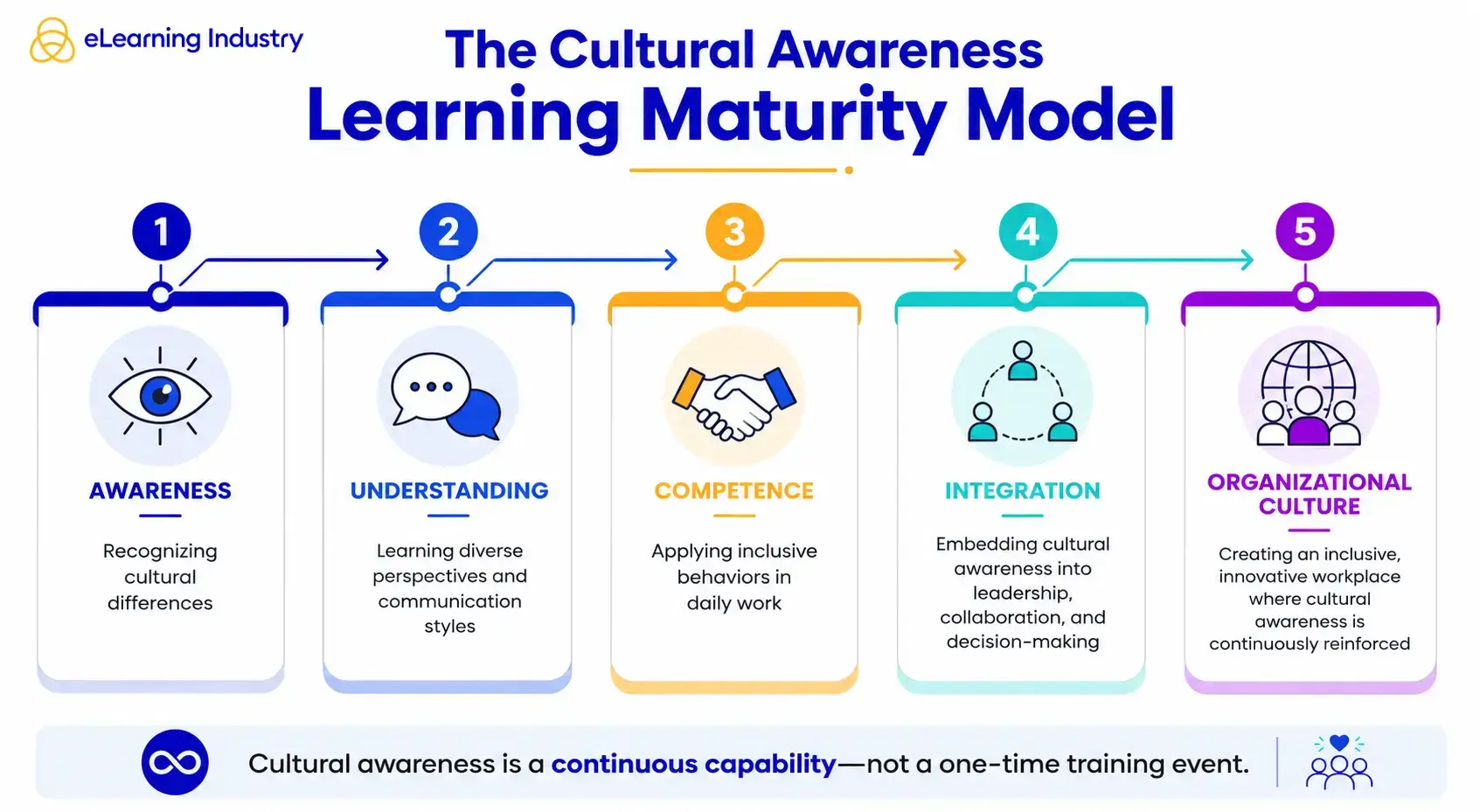
Cultural Awareness Training Across Different Industries
Cultural awareness training is most effective when it addresses the specific challenges professionals encounter in their own industries. Although the main ideas, such as understanding culture, recognizing unconscious bias, and improving cross-cultural communication, stay the same, organizations should adapt training to fit the settings where employees work with colleagues, customers, and communities.
Healthcare
In healthcare, being aware of cultural differences can have a real impact on patient outcomes. Language barriers, health beliefs, family roles, and communication styles all play a part in diagnosis, treatment, and patient satisfaction. Because of this, cultural competency training for healthcare providers has become an essential part of professional development rather than an optional initiative. Effective cultural competency training in healthcare equips clinicians to give respectful, patient-centered care that takes each person's background into account. It also helps providers understand how culture affects health behaviors, access to care, and overall well-being.
Behavioral Health
Behavioral health professionals often work with people whose cultural backgrounds shape how they view mental illness, addiction, trauma, and recovery. Ongoing training and education help these professionals develop the skills needed to provide fair and culturally sensitive care. Instead of making assumptions, good training encourages them to adjust their communication, assessment, and support of people from different backgrounds. As organizations improve cultural competency, they make their services more inclusive and build stronger trust with the communities they serve.
Mental Health
For mental health practitioners, being culturally competent is an important part of ethical and effective care. Training courses now often include topics like cultural identity, intersectionality, trauma-informed care, and inclusive communication. These programs, whether part of continuing education or official training, help clinicians see how culture affects symptoms, treatment choices, and relationships with clients. By investing in this training, organizations help practitioners support clients from many backgrounds and lower barriers to care.
Corporate Organizations
Outside of healthcare, cultural awareness is now a key skill for businesses. Companies with global teams need employees who can work effectively across diverse cultural norms, communication styles, and decision-making styles. Good cultural awareness also helps employees understand what customers from different backgrounds expect and build strong relationships. For leaders, it supports inclusive decisions and helps create a safe environment for everyone. As remote work brings people from around the world together, companies that invest in cultural training are better prepared to boost teamwork, spark new ideas, and achieve long-term success.
Examples Of Cultural Awareness Training Activities
Cultural awareness training works best when it goes beyond theory and lets learners practice new skills in real-life situations. While basic knowledge matters, building cultural awareness also takes reflection, discussion, and regular exposure to different viewpoints. Instructional Designers should aim to create learning experiences that help employees question their assumptions, communicate better, and use inclusive behaviors at work.
Role-Playing
One of the most impactful cultural awareness examples is role-playing. Learners are presented with workplace scenarios, such as collaborating with an international team, handling cultural differences in negotiations, or solving misunderstandings, and respond from different points of view. These exercises help participants develop empathy and see how cultural norms shape communication, decisions, and expectations.
Case Studies
Case studies are also helpful because they link theory to real business situations. Looking at examples of successful cross-cultural teamwork, or cases where misunderstandings caused problems, helps learners build cultural understanding and think critically about different ways to handle challenges.
Simulations
Cultural simulations are another good way to train cultural awareness. These activities put participants in new situations where they need to adjust to different social rules, communication styles, or workplace expectations. Simulations offer a safe space to practice inclusive behaviors and improve decision-making when things are uncertain.
Reflection
It helps to include reflection exercises throughout a learning program. Using guided journals, self-assessments, and group discussions can encourage learners to notice their own cultural assumptions and biases without making anyone feel blamed. Building this self-awareness gives people a better starting point for real behavioral change.
Storytelling
Storytelling and reverse mentoring make learning more meaningful by bringing real experiences into the classroom. When employees share personal stories about their cultural backgrounds, it builds trust and understanding. Reverse mentoring also allows senior leaders to learn directly from colleagues with diverse cultural experiences or viewpoints. These conversations often reveal insights that traditional lectures might miss.
Communication Workshops
Inclusive communication workshops and structured team discussions help learners practice active listening, respectful questioning, and inclusive language in daily workplace interactions. Instead of treating cultural awareness as a one-time event, these group activities reinforce learning over time and help build a culture that welcomes and values different viewpoints.
Activity |
Skill Developed |
| Role-playing | Empathy |
| Cultural simulations | Decision-making |
| Reflection exercises | Self-awareness |
| Case studies | Cultural understanding |
Conclusion
Cultural awareness training is no longer just about meeting compliance standards. Today, it is a strategic investment that helps organizations work better together, encourages new ideas, and gives employees the confidence to succeed in diverse workplaces. Learning leaders and Instructional Designers should focus on building programs that change behavior in meaningful ways. This involves using realistic scenarios, encouraging reflection, and providing ongoing support. When organizations make cultural awareness a regular part of their learning culture rather than a one-time event, they are more likely to build inclusive teams, keep up with global business needs, and create workplaces where everyone can succeed.