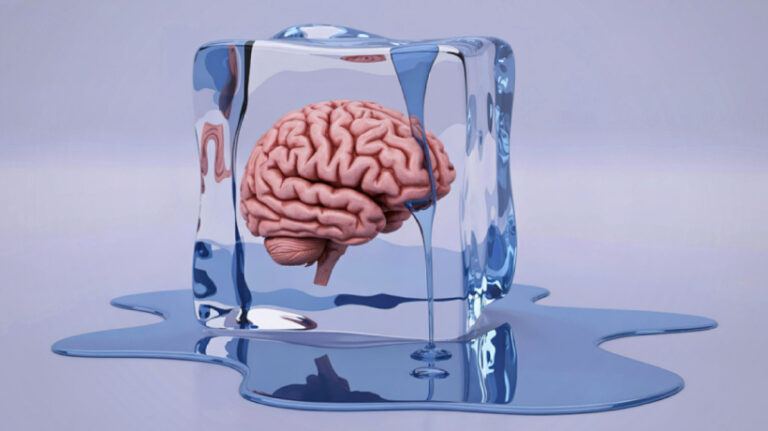



Learners Under The Freeze Response
As a learner, you have most likely experienced the moment when a pretty straightforward task suddenly feels insurmountable. The topic is familiar, the instructions are clear, and yet...crickets. No amount of pushing yourself to act seems to help. In learning environments, this is an extremely common experience. But do you know its underlying mechanisms? Surely you have heard of fight-or-flight, but have you heard of the freeze response that activates when the brain perceives threat or overload? Resembling a deer in headlights, the freeze response is part of the body's ancient survival system, and yes, even modern learners can experience it. Understanding what happens in the brain during these moments of shutdown is crucial for educators to design learning experiences that support learners during and after freeze. Let's get started.
The Science Behind The Freeze Response
While "fight, flight, or freeze" reactions once served to protect our ancestors from physical danger, modern learners can be triggered by cognitive, social, or emotional stressors. The freeze response occurs when neither fighting nor fleeing seems possible. From a neurobiological perspective, it's a state of hypoarousal where the body becomes defensively immobile, controlled by the parasympathetic part of the nervous system. The amygdala, responsible for detecting threat, signals that danger is present, while the prefrontal cortex (the part of the brain responsible for reasoning, planning, and decision making) downregulates. This mechanism was once used to increase survival odds by reducing movement and visibility in the face of predators, as well as to conserve energy.
You may ask, "What does that have to do with 21st-century learners?" Well, in learning contexts, this mechanism can render the mind inactive when action is required. Learners may describe feeling "numb," "stuck," or "blank," and cognitive processes like working memory, language retrieval, and executive control can become impaired in a freeze state. The learner's awareness of the task remains intact, but the ability to act on it is brought to a standstill. This can also manifest as procrastination, disengagement, or avoidance of participation, which may be misinterpreted as laziness or disinterest.
What Triggers The Freeze Response In Learners?
So, what causes it? Typically, for learners in freeze, triggers are largely psychological or cognitive; for example, perceived failure, time pressure, unclear expectations, fear of evaluation. Research in educational psychology shows that uncertainty is a potent activator of the stress response. When learners are unsure of what's expected, or when the consequences of failure feel vague, the brain can interpret this ambiguity as danger. In eLearning settings, several factors may amplify these triggers:
- Information overload. eLearning platforms often present dense content without clear structure or scaffolding. The prefrontal cortex, which filters and prioritizes information, becomes overburdened, increasing cognitive load and bringing on the shutdown.
- Social exposure. Many learning environments measure progress and success through visible participation. This mandatory exposure can evoke fear of negative evaluation, increasing stress and the likelihood of freeze.
- Performance monitoring. Progress dashboards, visible stats, and timers can heighten stress by continuously reminding learners of not only what remains undone but also that they're constantly being monitored.
Even if these individual stressors seem minor (and the list above is by no means exhaustive), together they can overwhelm the learner's regulatory capacity, leaving them frozen and immobilized. In this state, even simple decisions like writing the first sentence or choosing an answer can feel excessively demanding, flooding the nervous system with stress hormones like cortisol. Now, what can we do about this?
How To Recognize Freeze In Learners
Identifying a freeze response requires vigilance to subtle behavioral and cognitive signals. In online or in-person learning contexts, this may present as:
- Long pauses or incomplete submissions despite understanding the content.
- Sudden drops in participation or communication, zoning out, becoming very still, or saying "I don't know" frequently.
- Repeated postponement of tasks with vague rationalizations ("I just need to be in the right mindset").
- Over-preparation, such as spending excessive time organizing materials without beginning the actual task.
Viewing these patterns as manifestations of stress rather than "laziness" should guide how instructors respond. Instead of pushing for productivity, the goal should be restoring a sense of psychological safety.
How To Help Learners Overcome Freeze
Education professionals have the responsibility to understand the freeze response and to develop learning experiences with it in mind. For example, from a technical/design perspective, the architecture of a learning platform can either amplify feelings of threat or calm. Interfaces cluttered with alerts, countdowns, or achievement stats may keep your learners in a constant state of stress. Conversely, designing with simpler visuals, consistent navigation, and discreet feedback cues offers a sense of predictability that helps learners regulate.
Moreover, supporting learners already under the freeze response should be a top priority. Begin with downregulation. This is how you help the nervous system return to a state where the learner can re-engage. Here are some simple, evidence-backed strategies, based on research on stress recovery and emotion regulation.
Clarity For Safety
Ambiguity is one of the strongest triggers of freeze. As we mentioned above, clear instructions and predictable structures reduce cognitive uncertainty. Also, breaking down large tasks into small, sequenced steps helps learners complete them in a manageable manner, rather than letting themselves get overwhelmed by the scope alone.
Normalize Difficulty
Framing struggle as a natural part of learning counters the brain's threat perception. Rather than a hindrance, difficulties are a typical aspect of the learning and growth process, so encourage learners to persevere. It's also important to recognize that many others experience similar challenges, such as stress, freeze, disconnection, or struggles with new tasks, to help learners avoid feelings of self-blame.
Emotional Regulation Techniques
By effectively regulating our emotions, we are better equipped to handle life's challenges. One common method of emotional regulation is cognitive reappraisal, which involves actively changing your perspective on a situation to alter its emotional impact. For example, viewing failure as a growth opportunity versus something disgraceful. Other ideas educators can use include embedding short grounding activities, like controlled breathing, brief movement, or reflection pauses, to help learners lower those stress hormones and prevent freeze before it escalates.
Social Connection
Positive social interactions lower cortisol levels and diminish the body's stress response, simultaneously increasing the release of mood-lifting endorphins. This makes challenging situations feel less overwhelming and fosters resilience. Additionally, sharing experiences with others can provide valuable perspectives, helping you step outside your own thoughts and ultimately altering your perceptions of stressors or typical triggers. For controlled exposure, educators can use 1:1 mentoring structures that reduce isolation and alleviate the pressure of socialization in large groups.
Conclusion
Learning is a neuro-emotional process, not a purely cognitive one. In very simple terms, this means that it involves both thinking and feeling. If a learner's ability to think clearly is heavily affected by feeling safe enough to do so, developing spaces where learners can safely recover from the freeze and even alleviate it should be a top priority for education and L&D professionals.
References:
- Freezing Effect and Bystander Effect: Overlaps and Differences
- Uncertainty and anticipation in anxiety: an integrated neurobiological and psychological perspective