




How AI Is Finally Speaking L&D's Language
There is a particular kind of frustration that most L&D professionals know well. You have data. Somewhere in your LMS, your HRIS, your performance platform, there are numbers that could answer the question your CHRO just asked in the all-hands. But getting from "the data exists" to "here is the answer" requires a data analyst, a few days, a spreadsheet, and a healthy amount of luck that the question hasn't changed by the time the report lands.
The promise of AI in enterprise analytics has always been that this gap would close. In 2025, for the first time, it genuinely is—and the technology responsible isn't a dashboard upgrade or a smarter BI tool. It's a family of natural language AI capabilities that allow people to interact with data the way they interact with a knowledgeable colleague: by asking questions in plain English and receiving clear, direct answers.
For L&D professionals, understanding what these technologies are—not at a technical level, but at a practical "how does this change my work" level—is increasingly important. Because the organizations using them well are measuring learning in ways that were impossible two years ago.
Three Technologies, One Shift
The AI capabilities behind modern data intelligence tools are often bundled under the umbrella of "natural language AI" or "conversational analytics." But there are three distinct technologies involved, each handling a different part of the journey from human question to useful answer. Understanding them separately makes it much clearer what the combined system can actually do for an L&D team.
Natural Language Query: The Interface That Removes The Technical Barrier
The most visible of the three is Natural Language Query. NLQ is the technology that lets you ask a question about your data in everyday language and receive a result—no technical knowledge required.
Instead of submitting a request to a data analyst and waiting two days, you type: "What are the five training modules with the most incomplete attempts in the last 90 days?" and the answer comes back immediately, drawn from the actual data.
For L&D teams, the practical implication is significant. Analytics capability in most organizations sits behind a technical wall: the people who can query data are not usually the same people who understand what questions need answering. NLQ removes that wall. An Instructional Designer, a program manager, a regional L&D lead—anyone who can describe what they want to know can now get the answer directly, without waiting for IT or a data team. The speed of insight shifts from days to seconds, and the quality of decisions that follow shifts accordingly.
Natural Language Understanding: The Technology That Grasps What You Actually Mean
NLQ handles the mechanics of translating a question into a data retrieval. But there is a more fundamental challenge underneath it—understanding what the question actually means.
Human language is imprecise, contextual, and often ambiguous. "Which programs aren't working?" means something different from "Which modules have low engagement?"—and both mean something different from "Which training initiatives have the lowest business impact?" A system that only matches keywords will treat these as equivalent. One that genuinely understands language will recognize that they are asking three different things.
Natural Language Understanding is the AI capability that handles this. NLU goes beyond surface-level word recognition to interpret intent, context, and meaning—processing not just what words are used, but what the person asking actually wants to know.
In an L&D analytics context, this matters in ways that are easy to underestimate. When you ask, "Why did Q2 sales training underperform?", a system with strong NLU understands that you're asking for a causal explanation—not just a list of Q2 completion rates. When you ask, "Which managers' teams are most engaged with the new compliance program?", it understands that "engaged" is a proxy for a cluster of behaviors and that you want them ranked meaningfully, not returned as a raw table.
This is the difference between a data tool that answers the question you typed and one that answers the question you meant. For L&D professionals translating complex organizational questions into data queries, that distinction is everything.
Natural Language Generation: The Technology That Turns Numbers Into Narratives
The third capability runs in the opposite direction. Where NLQ and NLU are about getting information into the system in human language, Natural Language Generation is about getting information back out in human language.
NLG is the AI capability that takes structured data—tables, figures, query results—and produces readable, plainly written text. Rather than returning a table of numbers, an NLG-powered system writes a paragraph: "Completion rates in the new manager program dropped 18% in Q2 compared to Q1, with the steepest declines in the Sales and Operations departments. This coincides with a period of high workflow volume and correlates with a 22% increase in support ticket volume from those teams."
For L&D teams, this solves one of the most time-consuming problems in the profession: the translation layer. The people who make decisions about learning budgets, program continuation, and organizational capability investment are executives who do not, in general, read analytical dashboards with fluency. What they respond to is a clear, plainly written narrative that tells them what the data shows, what it means, and what action it implies.
L&D professionals currently spend significant time doing this translation manually—taking analytical outputs and rewriting them into executive-friendly language. NLG automates the mechanical work of that process. The human expertise still determines what questions to ask, what the answers mean in context, and what action to take. NLG simply removes the formatting and reformatting that currently consume the hours in between.
Why The Three Together Change The Analytics Conversation
These technologies are individually useful. But their real impact comes from how they work as a unified experience.
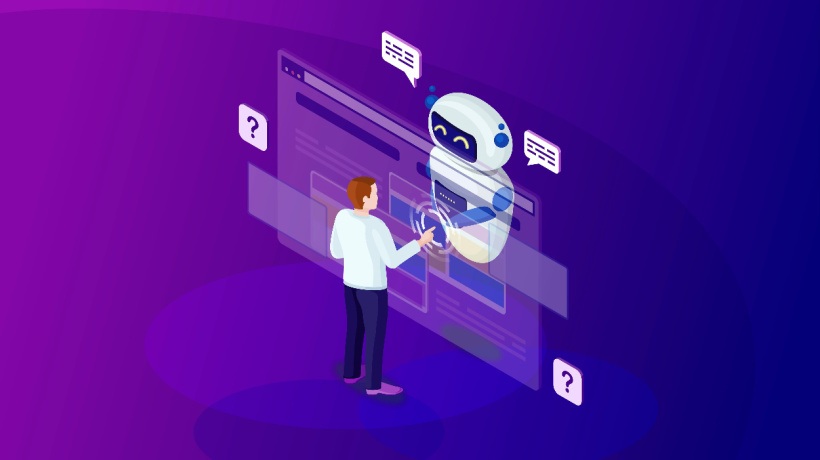
A user asks a question in natural language. The system understands not just the words but the intent and context behind the question. The relevant data is retrieved and returned—not as a raw table, but as a readable explanation of what the data shows and what it means.
The result is an interaction that feels less like running a query and more like consulting a well-informed analyst: you ask, in your own words, and you receive a clear, contextualized, actionable answer. For L&D, this changes the entire cadence of data-informed decision-making. Instead of a monthly reporting cycle where data is reviewed after decisions have been made, analytics becomes a live resource that teams consult in the moment—during a planning conversation, before a stakeholder meeting, at the point when the question arises.
The L&D Measurement Problem These Technologies Are Built To Solve
The reason this matters specifically for L&D comes back to a persistent professional challenge: demonstrating impact in the language business leaders use.
Completion rates and satisfaction scores are easy to measure with traditional LMS tools. They are also insufficient. Business leaders want to know whether learning is changing behavior, improving performance, and contributing to organizational outcomes. Answering those questions requires connecting learning data to performance data, operational data, and business results in ways that traditional LMS reporting was never designed to support.
Natural language AI makes this connection tractable. A system built on these technologies can draw on data from multiple enterprise sources simultaneously and surface insights that cross those boundaries. "Is there a relationship between completion of the new sales methodology program and pipeline conversion rates in the 90 days following training?" is a question that requires joining learning data to sales data. With natural language AI, it's a question any L&D professional can ask and receive an answer to—in seconds, in plain English, in a format ready to share with a CFO.
That is the standard of measurement the profession is moving toward. And the technology is now capable of meeting it.
What This Means In Practice
The tools that make this possible are no longer experimental. They are available, deployable, and increasingly expected by business leaders who have experienced real-time data intelligence in other parts of the organization and are asking why L&D is still sending quarterly spreadsheet exports.
Understanding what NLQ, NLU, and NLG actually do—at the level of "what problem does each one solve for me"—is the foundation for making good decisions about which tools to adopt and how to use them.
The transition from static LMS reports to natural language analytics isn't a technology story. It's a credibility story. L&D functions that can answer the questions leadership actually asks, in real time, in clear language, earn a different kind of seat at the table than those presenting completion rate decks once a quarter.
The technology to do that is here. The question now is which L&D teams use it first.