



What Is An Instructional Design Degree?
An Instructional Design degree prepares professionals to create effective learning experiences for schools, businesses, and digital training environments. The field combines learning science, technology, and communication to help people gain knowledge and apply skills more effectively. For teachers transitioning into corporate learning or L&D, it offers a structured path into modern training and development roles.
Many programs combine Instructional Design and technology to teach both learning strategies and the implementation of digital tools. You may also see related terms like instructional technology and design, instructional systems design degree, or educational technology degrees. While the names vary, these programs often focus on the same core goal: designing learning experiences that improve performance and engagement.
Typical courses cover topics like adult learning theory, creating online courses, managing Learning Management Systems (LMS), developing assessment strategies, analyzing learning data, and using multimedia resources. Students learn how to design online courses, create teaching materials, assess training effectiveness, and use common workplace training tools.
In 2026, Instructional Designers are needed beyond schools. Companies across industries hire them to support onboarding, skills training, compliance, leadership development, and digital transformation efforts. So, this is why it's important to clear things up regarding the pursuit of an Instructional Design degree. Shall we begin?
Do You Actually Need An Instructional Design Degree In 2026?
An Instructional Design degree can still open doors in 2026, but it is no longer the only path into the field. For teachers transitioning into Instructional Design, the answer depends on the type of role you want, the industry you plan to enter, and how quickly you want to make the move.
When A Degree Matters
A formal degree in Instructional Design is often valuable in structured environments with strict hiring requirements. Higher education institutions, government agencies, and large enterprise organizations may still prefer candidates with an instructional systems design degree or a background in Instructional Design and technology. The same applies to leadership-track L&D positions, where employers may seek advanced credentials, such as an online Instructional Design master's degree or other graduate-level qualifications. In these settings, a degree can strengthen credibility and support long-term career growth.
When A Degree May Not Be Necessary
In many corporate Instructional Design roles, hiring managers are shifting toward skills-first evaluation. Startups, agencies, and freelance clients often care more about what you can build than where you studied. A strong portfolio, practical experience, and familiarity with workplace learning challenges may matter more than completing a traditional online Instructional Design degree. This shift has made it easier for teachers to transition into ID by combining transferable classroom experience with targeted upskilling and portfolio development.
What Employers Value Most Today
Today's hiring landscape is more practical and performance-driven. Employers increasingly look for:
- A relevant degree or certification
- Portfolio quality and real project samples
- Storyboarding ability
- Articulate Storyline or Adobe Captivate skills
- Learning strategy knowledge
- Stakeholder communication
- AI-enhanced content development skills
- Business understanding and performance alignment
In many cases, the strongest candidates combine formal learning with hands-on experience, modern tools, and a clear understanding of how learning supports business goals.
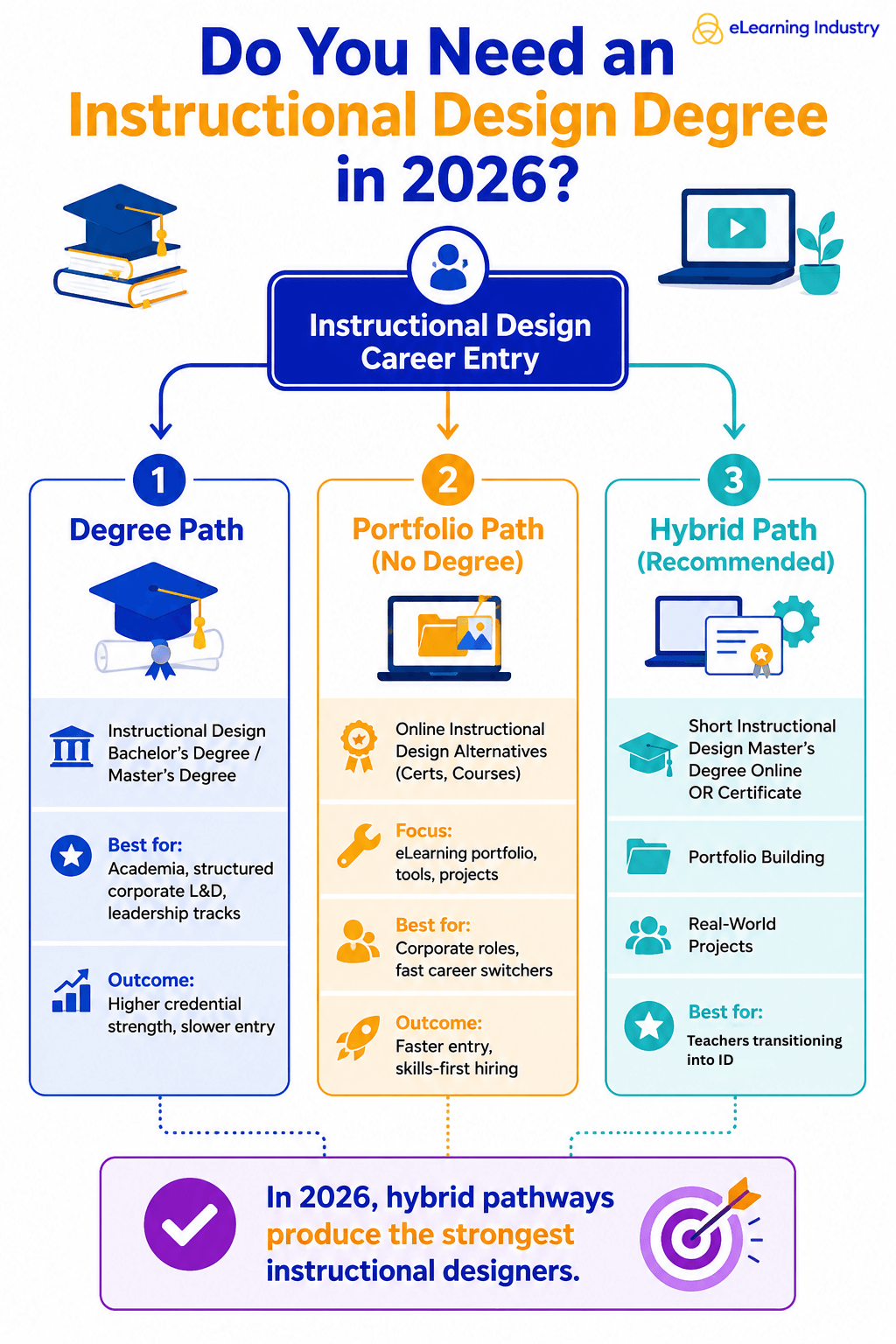
Best Degree Paths For Teachers Transitioning Into Instructional Design
An Instructional Design degree can help teachers translate their classroom experience into careers in corporate learning, higher education, EdTech, and workforce training. But not every degree path offers the same value. For teachers transitioning into Instructional Design in 2026, the best option often depends on career goals, budget, and how quickly they want to enter the field.
Bachelor's Degree Options
An Instructional Design bachelor's degree is usually best for professionals who are early in their careers or do not already hold a college degree. These programs introduce foundational concepts such as learning theory, curriculum development, eLearning design, and instructional technology.
Some schools offer a Bachelor of Arts in Instructional Design with a stronger focus on communication, digital media, and learner engagement. Others emphasize technical development and learning systems. Teachers with classroom experience may find many concepts familiar, especially in lesson planning and assessment design.
An online Instructional Design bachelor's degree can also appeal to working professionals who need flexibility while continuing to teach. Online programs typically allow students to build digital collaboration skills and become familiar with remote learning environments, which are highly relevant in modern L&D teams.
However, earning a second bachelor's degree requires a significant time investment. Most programs take two to four years to complete, depending on transfer credits and course load. For experienced educators looking to switch careers quickly, this path may feel longer than necessary unless they want a full academic reset or specialized technical training.
Career entry points after graduation may include:
- Junior Instructional Designer
- Curriculum Developer
- Training Coordinator
- Learning Support Specialist
Master's Degree Options
For most teachers transitioning into Instructional Design, a master's degree is the more practical and common route. It allows educators to build on their existing teaching background while gaining specialized knowledge in adult learning, instructional systems, and workplace training.
Many of the best Instructional Design master's programs focus on real-world application rather than theory alone. Strong programs include portfolio development, hands-on work with authoring tools, LMS platforms, and opportunities to design learning experiences for corporate or higher education environments.
Master's programs also tend to offer more specialization options. Depending on the institution, students may focus on:
- Learning Experience Design (LXD)
- Educational technology
- Corporate training
- Learning analytics
- eLearning development
- Instructional systems design
From an ROI perspective, a master's degree often provides the strongest balance between time, cost, and career impact. Many programs can be completed in 12 to 24 months, making them attractive for teachers who want to transition into the field without spending several more years in school.
Importantly, employers in corporate learning often care as much about portfolios and practical skills as they do about credentials. That is why many transitioning teachers benefit more from a targeted master's degree plus portfolio development than from starting a second bachelor's degree.
PhD Programs
The best Instructional Design PhD programs are typically designed for professionals interested in research, leadership, or academic careers rather than direct entry into corporate Instructional Design roles.
PhD programs explore learning science, instructional theory, organizational learning, and emerging educational technologies at a deeper level. Graduates often pursue careers in:
- Higher education faculty positions
- Learning science research
- Educational leadership
- Enterprise learning strategy
- Policy and innovation roles
For teachers who want to shape the future of learning, lead large-scale learning transformation initiatives, or contribute to research in Instructional Design and educational technology, a PhD can provide long-term value. However, it is usually not necessary for most professionals entering corporate L&D or Instructional Design positions.
Online Vs. Traditional Instructional Design Degree Programs
An Instructional Design degree can be completed through either traditional on-campus study or an online Instructional Design degree, and the choice between the two often depends on flexibility, career stage, and learning preferences. In 2026, online learning paths have become increasingly common for teachers transitioning into Instructional Design because they better align with working schedules and real-world practice needs.
Benefits Of Online Instructional Design Degrees
Online programs, including an online Instructional Design degree, are designed for professionals who need flexibility while upgrading their skills. This is especially important for teachers who are already working full-time and cannot pause their careers.
Flexibility
One of the biggest advantages is the flexibility it offers working professionals. Online programs allow learners to study at their own pace, often with asynchronous modules that can fit around teaching schedules or family responsibilities.
Remote Collaboration Skills
Another key benefit is the development of remote collaboration skills. Since Instructional Designers frequently work in distributed teams, online programs naturally mirror real workplace environments where communication happens through digital tools, project boards, and virtual meetings.
Access To Worldwide Programs
Finally, online learning provides access to nationwide programs. Instead of being limited to local universities, learners can choose from a wider range of institutions offering specialized Instructional Design and technology tracks, often with more updated curricula and tools.
What To Look For In An Online Program
Not all programs deliver the same value. When evaluating an Instructional Design degree online, it's important to focus on practical outcomes rather than just academic structure.
Portfolio-Building Opportunities
A strong program should include portfolio-building opportunities, allowing students to create real eLearning projects that can be used in job applications. Without a portfolio, it becomes harder to demonstrate job-ready skills.
Practice
Look for programs that offer internship or practicum experiences, where students can work on real instructional problems with organizations or simulated business cases.
LMS Exposure
Another essential factor is LMS exposure, ensuring learners gain hands-on experience with platforms like Moodle or Canvas, which are widely used in corporate and academic environments.
Authoring Tools Training
Programs should also provide training in authoring tools such as Articulate Storyline or Adobe Captivate, since these are core tools in Instructional Design roles.
Industry Relevance
It's also important to evaluate industry relevance, meaning the curriculum reflects current trends like AI in learning, performance support, and digital learning design.
Faculty Experience
Finally, check faculty experience. Instructors with real-world L&D or corporate training backgrounds tend to deliver more practical and applicable insights.
Red Flags To Avoid
Some programs may look appealing but lack real career value. So, be cautious of:
- Theory-heavy programs with no portfolio output may not prepare you for hiring expectations.
- Courses that use an outdated technology stack, since Instructional Design is highly tool-driven and constantly evolving.
- Lastly, programs that show no corporate learning focus, especially if your goal is to move into L&D or Instructional Design in business settings. These programs may be more academic than practical, which can slow down career transitions.
How To Evaluate The Best Instructional Design Programs
Choosing between different Instructional Design degree programs can feel overwhelming, especially with so many options labeled as the best Instructional Design programs. For teachers transitioning into Instructional Design, the goal is not just to find a "good school," but to find a program that actually prepares you for real L&D work in 2026.
Instead of focusing only on rankings or brand names of Instructional Design schools, it helps to evaluate programs using five practical criteria. This approach is more aligned with how hiring managers assess candidates today.
Curriculum Relevance
A strong program should reflect modern Instructional Design and technology practices. Look for courses that include adult learning theory, eLearning development, UX for learning, and learning analytics. Avoid programs that are mostly theoretical or outdated.
Portfolio Opportunities
This is one of the most important factors. The best programs help you build real projects—like eLearning modules, storyboards, or training simulations. A strong portfolio often matters more than the degree itself when applying for jobs.
Technology Training
Good degrees in Instructional Design should include hands-on experience with tools like Articulate Storyline, Rise, Captivate, LMS platforms, and basic multimedia tools. Without this, graduates often struggle in real job settings.
Industry Alignment
Check whether the program is designed with corporate learning in mind. Programs connected to Instructional Design schools with industry partnerships or internships tend to produce more job-ready graduates.
Career Outcomes And Networking
Look at graduate outcomes: where do alumni work? Do programs offer career coaching, job boards, or networking with L&D professionals? These support systems often make a major difference when entering the field.
What Careers Can You Get With An Instructional Design Degree?
An Instructional Design degree can open the door to a wide range of careers in learning, training, and workplace development. As organizations invest more in employee growth and digital learning, the demand for skilled professionals in this field continues to rise. This is especially true in corporate L&D, where companies need experts who can design effective learning experiences, not just deliver content. With that said, some common careers are:
- Instructional Designer: You create structured learning programs for online and in-person training.
- Learning Experience Designer: A more modern role focused on building learner-centered, engaging digital experiences.
- Curriculum Developer: You are designing course content for schools, universities, or training organizations.
- Corporate Trainer, Learning Consultant, or Enablement Specialist: These focus on improving employee performance and supporting business goals.
- LMS Administrator or eLearning Developer: These are common, especially for those working with platforms and tools that deliver online learning.
- Learning Strategist: A strategic position helping organizations align training with long-term business outcomes.
Degree Vs. Portfolio: What Gets You Hired Faster?
In Instructional Design hiring, candidates often compare an Instructional Design degree with a strong portfolio. Both matter, but they play different roles in how quickly you get hired into Instructional Design and technology roles.
A degree in Instructional Design or structured Instructional Design degree programs helps you build formal knowledge in learning theory, design models, and instructional systems. It signals credibility, especially for academic or enterprise roles. This includes paths such as an online Instructional Design master's degree, which is common for career changers. However, it takes more time and costs to complete.
A portfolio shows real work. It includes eLearning samples, storyboards, and course designs. Hiring managers in corporate L&D often rely on portfolios to decide who gets interviews because they can quickly see practical skills in action.
In corporate L&D hiring, portfolios often determine who gets interviewed, while an Instructional Design degree strengthens long-term career mobility and credibility. For teachers transitioning into Instructional Design, building both is the most balanced approach. Most candidates benefit from combining structured learning with visible, applied work to improve their chances of getting hired faster.
Conclusion
An Instructional Design degree can be a helpful step, but it is not the only path to a successful career in 2026. There is no single "correct" route, especially for teachers transitioning into Instructional Design. Degrees are valuable tools, not guarantees of employment or success. Many educators already bring strong core skills, such as lesson planning, assessment, and learner engagement. The best next step depends on career goals, budget, timeline, and the desired industry. In 2026, the strongest Instructional Designers combine theory, technology fluency, strategy, and portfolio experience, whether or not they studied through formal Instructional Design programs or degrees.