

 ChatGPT
 Perplexity
 Claude
 Grok
What Is Instructor-Led Training (ILT)?
Instructor-Led Training involves live sessions where an instructor guides participants in real time. These sessions can happen in person or online using video conferencing tools. Learners and instructors interact directly, get immediate feedback, and communicate openly.
ILT Models
In Instructor-Led Training, a trainer or subject expert leads employees through a planned learning session. Here are some common models:
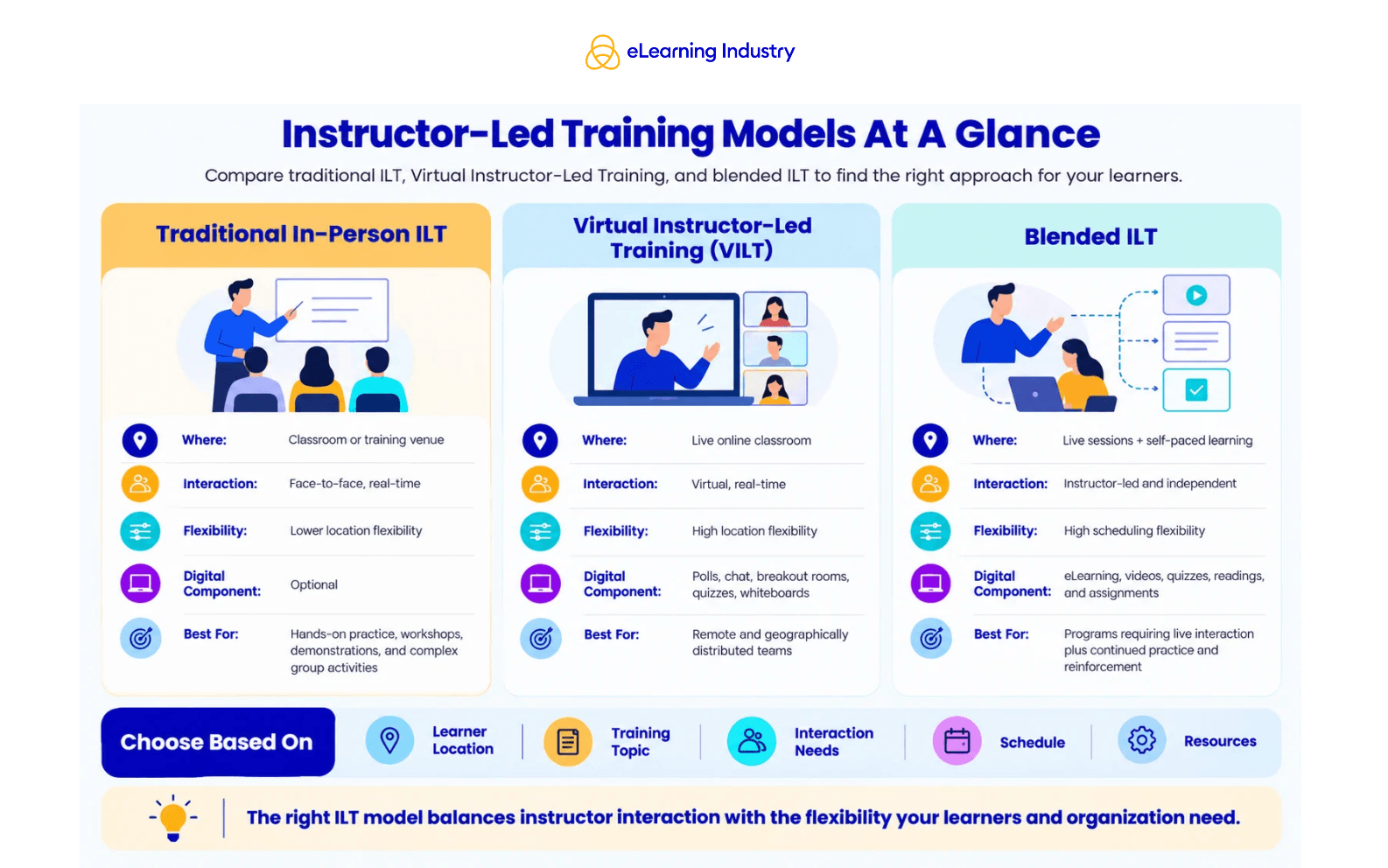
Traditional In-Person ILT
In traditional in-person ILT, the instructor presents and explains concepts directly to learners in a classroom. Learners also join group discussions and hands-on activities during the course.
Virtual Instructor-Led Training (VILT)
In Virtual Instructor-Led Training (VILT), trainers hold live sessions online, so employees can join from anywhere. As long as learners have internet access and a smart device, they can take part without worrying about location.
Blended ILT (In-Person + Digital)
Blended ILT mixes live instructor sessions with self-paced digital resources like videos, quizzes, or online assignments. This approach gives you the advantages of both VILT and traditional ILT.
Benefits Of Instructor-Led Training
Instructor-Led Training provides an engaging and responsive learning environment, which makes the entire learning experience far more enriching. ILT brings structure, interpersonal dynamics, and real-time response. Here are some of the most noteworthy benefits of this learning model:
Real-Time Interaction And Feedback
With Instructor-Led Training, learners can talk directly with instructors, ask questions, clear up confusion, and get instant feedback. This helps spot and fix misunderstandings early.
Adaptability To Learner Needs
Instructors can change their teaching style based on what learners know. By watching students' pace, performance, and questions, experts can personalize lessons and focus on areas where learners need more help.
Cost-Effective Reach For Distributed Teams (VILT)
Virtual Instructor-Led Training lets organizations train employees in different places without needing them to travel. This saves on travel, accommodation, and venue costs, while still allowing teams to learn together.
Stronger Engagement For Complex Topics
Instructor-Led Training can make complicated subjects easier to understand through demonstrations, discussions, case studies, and practical activities. Direct interaction also keeps learners involved and gives them opportunities to apply concepts during the sessions.
Challenges Of Instructor-Led Training
Instructor-Led Training is a popular method in today's business world. Industries like healthcare, pharmaceuticals, utilities, and finance benefit from it the most. However, implementing instructor-led training comes with some challenges. Here are a few to consider:
Requires Knowledge
ILT works best when the facilitator has strong subject knowledge, good communication, and is well-prepared to engage learners. If the facilitator's skills don't meet expectations, the sessions may not be effective.
Harder To Grab Learners' Attention
In virtual sessions, it can be harder for instructors to keep learners' attention and encourage participation. Technical issues, distractions, screen fatigue, and fewer non-verbal cues can also reduce engagement.
Potential High Cost
Traditional ILT involves costs for instructors, venues, printed materials, and equipment. These expenses can add up if training is repeated or held in many locations.
So, how can you address these challenges? The next section explains how to design an effective instructor-led training session.
Designing An Effective VILT Session
Despite its challenges, Instructor-Led Training offers many benefits. Designing an effective VILT session is key to success. Here are the steps to create a strong learning session.
Choosing The Right Video Conferencing Platform
Start by choosing a video conferencing platform that fits your content. Decide which features you need, like quizzes, whiteboards, or polls, and look for tools that offer them.
Once you have a shortlist of tools, compare them using these key criteria:
- Check how many learners can join a session at once.
- Look for interactive features and check which tool best keeps learners actively involved.
- Consider features such as live captions, transcripts, keyboard navigation, and adjustable display options.
- Easy integration with the organization's LMS, calendar, productivity tools, and other learning technologies.
- Compare the costs of pricing, licensing models, and additional features to determine the most feasible option.
Building In Polls, Breakouts, And Interaction Points
Adding interactive elements makes Virtual Instructor-Led Training more engaging and encourages learners to take part instead of just listening. Including these features helps your audience enjoy the sessions.
Use polls to check understanding, gather opinions, assess prior knowledge, or spot topics that need more explanation. Breakout rooms let learners work in small groups, discuss scenarios, solve problems, or do group activities. Other interactive points can include Q&A sessions, quizzes, chat discussions, virtual whiteboards, demonstrations, and role-player exercises.
A good VILT session combines all these elements. This makes learning more active and helps instructors track participation and understanding.
Preparing Facilitators For A Virtual Room
VILT facilitators need more than subject knowledge. They should know how to use the video conferencing platform and its features. Doing a technical rehearsal before the session helps spot any audio, video, or connection problems.
Facilitators should adjust their delivery style for online sessions. Planning questions, activities, polls, and discussion topics ahead of time helps keep learners engaged and avoids long stretches of passive listening.
Tips For Blended ILT Delivery
Blended Instructor-Led Training mixes live instruction with self-paced digital learning. This gives learners flexibility and keeps instructor interaction. Here are a few tips to make this approach more effective:
Pair ILT With Self-Paced eLearning
Combining Instructor-Led Training with self-paced eLearning offers a flexible approach that balances instructor support and independent study. Learners can finish introductory materials, videos, readings, or quizzes on their own before joining an ILT session.
This flexibility makes live sessions more effective, as instructors can spend more time on discussions, hands-on exercises, and problem-solving instead of basic information.
Use Pre- And Post-Session Assignments
Pre- and post-session assignments help extend learning beyond the live session. Pre-session tasks introduce key ideas, ask learners to review resources, or complete a short quiz. This helps instructors see what learners already know and focus live training on areas that need more attention.
Post-session assignments let learners practice and apply what they've learned. These can be quizzes, case studies, hands-on exercises, or tasks at work. Instructors can review the work and give feedback to spot any knowledge gaps.
Choosing An Instructor-Led Training Provider
Choosing the right Instructor-Led Training provider can greatly affect your program's quality and results. Here's what to look for when picking an ILT provider:
- For virtual and blended ILT, check whether the provider uses reliable conferencing and learning technologies
- Check the trainer's subject expertise, industry experience, and facilitation skills. Their ability to explain complex ideas and engage learners is just as important as the platform they use.
- A good training provider should tailor course content to your organization's goals, learner experience, and skill gaps. Avoid programs that only use a fixed curriculum.
- Check if the interactive features will keep learners actively involved in the training process.


