
 ChatGPT
 Perplexity
 Claude
 Grok
Grok
What Is Confined Space Training?
Confined space training plays a key role in keeping workers safe in high-risk industries like manufacturing, utilities, oil and gas, construction, water treatment, energy, and food processing. People who work in tanks, silos, vaults, pipelines, and other enclosed spaces face dangers that require more than just knowing the rules. They need the skills and judgment to make safe choices, especially under pressure.
OSHA (Occupational Safety and Health Administration), a U.S. government agency that ensures safe working conditions, has clear requirements for training in permit-required confined spaces. However, many companies still see training as just a box to check for compliance, not as a way to build real skills. This leads to an important question for learning professionals: How can Instructional Designers create confined-space safety training that truly prepares workers for real-life risks, rather than just deliver information?
First, let's see what a confined space is. A confined space is any area large enough for a worker to enter, with limited access in or out, and not meant for people to stay in for long periods. Some of these spaces are called permit-required confined spaces because they pose serious dangers, such as unsafe air, the risk of being trapped, or moving parts. Therefore, an effective confined space training should do more than just cover the rules. It should help workers spot hazards, use safe work habits, communicate clearly, follow permit steps, and know what to do in an emergency.
In this article, we'll look at what OSHA expects, the roles of learners, ways to design and deliver training, certification options, and tips for creating training that boosts both compliance and on-the-job safety.
Who Needs Confined Space Training?
Confined space training must align with the responsibilities of each person involved in a permit-required entry. Everyone must know the hazards and safe work practices, but the skills needed depend on the role. Creating training for each role helps organizations stay compliant and makes sure every team member can work safely and effectively.
Entrants
Workers who enter confined spaces are exposed to the most hazards, so entrant training is crucial. Entrants need to know how to spot atmospheric, physical, and mechanical hazards, use personal protective equipment (PPE), follow entry permits, stay in touch with attendants, and leave immediately if conditions become unsafe. Good training mixes hazard awareness with real-life scenarios to help workers make safe choices under pressure.
Attendants
Attendants stay outside the confined space and are key to keeping entrants safe. Their training covers constant monitoring, keeping in contact with workers inside, spotting signs of danger, and starting emergency procedures without going in themselves. Since attendants are often the first to notice changes, they need to be ready to act fast and follow rescue protocols.
Entry Supervisors
Entry supervisors manage the whole operation. They issue permits, assess hazards, ensure safety controls are in place, and coordinate the team. Their training should focus on risk assessment, compliance with regulations, and making sound decisions so that every confined space entry is safe from start to finish.
Rescue Personnel
Rescue teams need the most advanced preparation. Confined space rescue training includes specialized rescue techniques, retrieval systems, respiratory protection, and hands-on practice with emergency equipment. Regular scenario-based drills help rescue workers build the confidence and teamwork needed to respond quickly and effectively in high-risk situations, where fast, skilled action can save lives.
Understanding OSHA Confined Space Training Requirements
Confined space training is only effective when it evolves alongside the workplace. OSHA's confined space training requirements ensure employees know how to work safely in permit-required confined spaces, not just at the start but whenever conditions change. The aim is to keep workers competent as hazards, equipment, and job duties change over time.
Updated Training And Retraining
Organizations need to update confined space safety training whenever new hazards appear, like changes in air quality, chemicals, or work methods. Retraining is also needed if entry procedures change, new monitoring tools or PPE are used, or employees take on new roles. For instance, someone moving from entrant to attendant or supervisor will need extra training to handle new tasks safely. Updates to emergency response plans may also mean new rescue training is needed.
Verifying Training Effectiveness
Another key requirement is verifying that training has been effective. Instead of just looking at attendance or quiz results, organizations should ensure employees can apply what they've learned in real or simulated confined space situations. Watching employees in the field, running practice drills, and using scenario-based tests show true competency better than written tests alone.
Documentation
Employers should track who completed confined space training, when it happened, and what topics were covered. These records help with compliance and make it easier to know when refresher training or a new certificate is needed.
Regular Reminders
Even experienced workers can forget rarely used steps or pick up unsafe habits over time. Short refreshers, toolbox talks, microlearning, and hands-on drills help keep safety skills sharp between formal training sessions. When organizations treat training as an ongoing process rather than a one-time event, they can reduce risks, improve compliance, and ensure workers are ready for the challenges of confined space work.
How Instructional Designers Can Design Effective Confined Space Training
Confined space training works best when it helps workers make safe choices on the job, not just meet compliance rules. OSHA sets the minimum requirements, but Instructional Designers are key to turning those rules into training that truly improves performance. Using proven Instructional Design methods, organizations can go beyond basic compliance and build training that develops real skills, confidence, and awareness.
Start With Job Tasks Instead Of Regulations
A common mistake in confined space safety training is building the curriculum around regulations instead of the actual work employees do. While compliance is important, the training should focus on what workers need to do their jobs safely.
Start by analyzing the tasks workers perform before, during, and after entering a confined space. This means figuring out what decisions they make, what hazards they might face, and which actions keep them safe. For example, workers may need to check if air tests show it is safe to enter, spot signs of low oxygen, make sure entry permits are filled out correctly, or know when to evacuate right away. When training is based on real job tasks, it helps workers build practical decision-making skills instead of just memorizing rules they might not use on the job.
Build Scenario-Based Learning
When workers enter a confined space, they rarely encounter simple, textbook situations. They need to adapt to changing conditions, talk with their team, and react quickly if something unexpected happens. Scenario-based learning lets them practice handling these challenges in a safe setting.
Rather than using lecture-heavy presentations, Instructional Designers can create realistic scenarios where learners review permits, spot hazards, handle equipment failures, or decide if it is safe to enter. Branching scenarios are especially useful because each choice leads to different outcomes, prompting learners to think critically rather than just memorize facts.
For instance, a learner might find that gas monitor readings go above safe limits during an entry, or notice that communication between the entrant and attendant has stopped. These situations help build decision-making skills by making learners assess risks, follow procedures, and explain their actions under pressure. Traditional presentations rarely develop these abilities.
Differentiate Training By Worker Role
People working in confined spaces have different jobs, so their training should match their responsibilities. Good training programs set learning goals based on each worker's role. Specifically:
- Entrants should learn how to spot hazards, use equipment, follow communication steps, and enter or exit safely.
- Attendants need to focus on constant monitoring, keeping communication open, spotting emergencies, and stopping unauthorized entry.
- Supervisors need extra training on permits, hazard checks, and following rules.
- Maintenance staff and contractors should get training that fits the equipment and settings they use.
- Rescue training is even more specialized, covering rescue methods, emergency teamwork, and hands-on practice with rescue tools.
Role-based learning ensures employees get the knowledge and skills they really need, rather than taking a general course that may not fit their job.
Include Practice, Not Just Knowledge Checks
Testing knowledge is important, but it should not be the only way to measure skill. Someone who does well on multiple-choice questions might still have trouble working safely in a real confined space.
Instructional Designers should incorporate opportunities for active practice through simulations, equipment demos, tabletop exercises, VR experiences, and hands-on tests. These activities help learners use procedures, solve problems, and gain confidence before working on the job.
If your organization offers confined space training online, try mixing digital lessons with instructor-led demos or on-the-job assessments. This blended approach gives flexibility and helps build real skills. Practicing tasks shows readiness much better than quizzes alone.
Reinforce Learning After Initial Certification
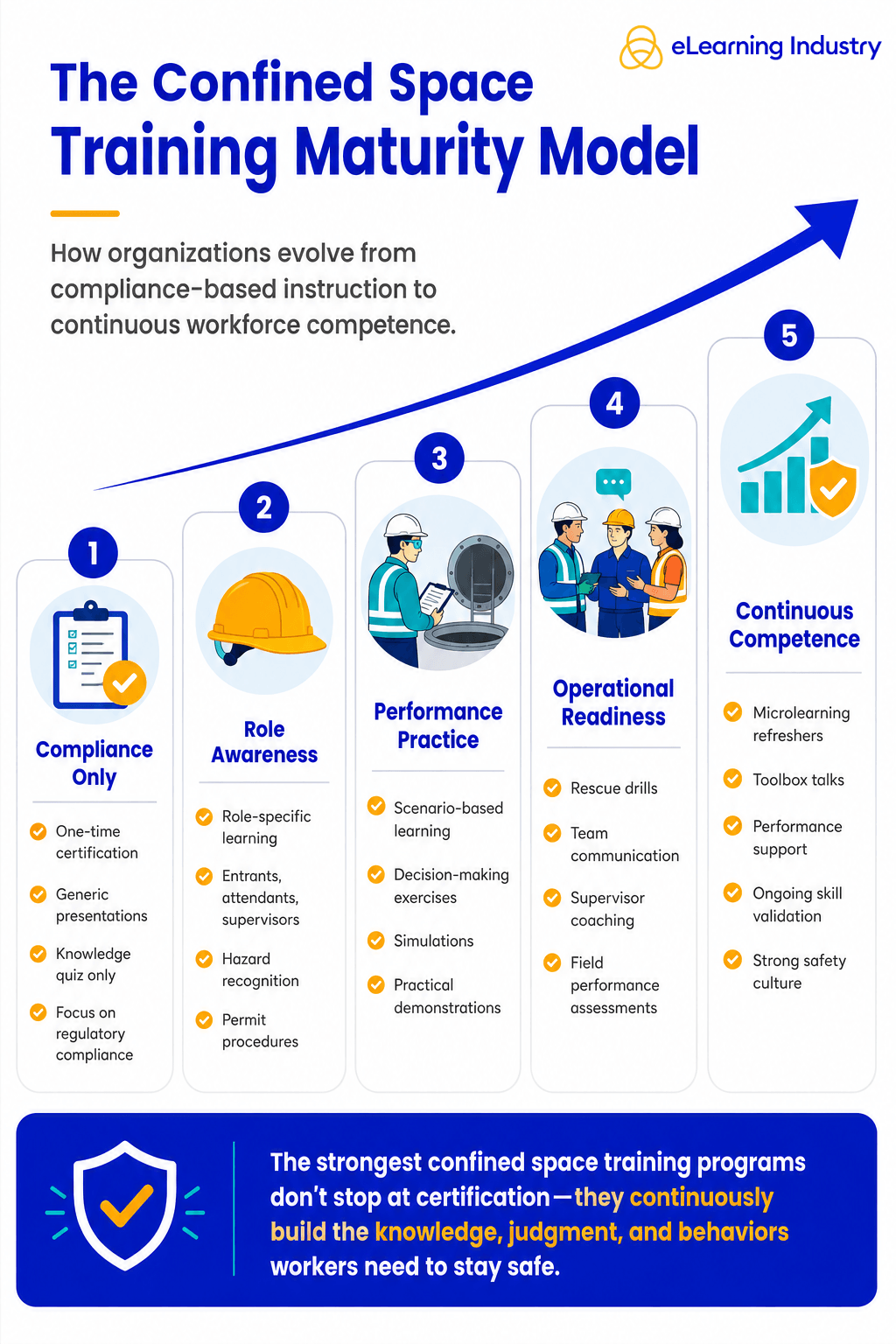
Learning should not stop once employees have a confined space certificate or have completed certification. Without regular practice, important safety knowledge and procedures fade over time.
Instructional Designers can help people remember what they learn by using short lessons, toolbox talks, refresher courses, digital resources, and supervisor coaching. Using spaced learning, where key ideas are reviewed at set times, helps workers remember and use safe habits regularly.
Instead of seeing certification as a one-time goal, organizations should treat confined space training as a continuous process. Ongoing training helps workers make safe choices, adapt to workplace changes, and build a strong safety culture. This way, companies improve compliance and better prepare workers to prevent accidents.
Online Vs. In-Person Confined Space Training
Confined space training works best when organizations pick a delivery method that fits both the rules and the actual work environment.
Online Confined Space Training
Online training is flexible and can reach many people, but it does not fully replace the hands-on experience needed for high-risk jobs. It's good for teaching the basics, such as how to spot hazards, follow permit procedures, understand atmospheric testing, and understand the roles of entrants, attendants, and supervisors. They are also easy to update when rules or company procedures change, which makes them a cost-effective choice for organizations with teams in different locations.
In-Person Confined Space Training
In-person training is still necessary for building hands-on skills that online learning cannot fully measure. Activities like checking equipment, using personal protective equipment (PPE) correctly, practicing rescue drills, following communication steps, and doing practical tests help employees use what they have learned in real situations. Working together in teams also builds coordination, which is very important during confined space entry and emergencies.
Hybrid Approach
For most organizations, using both online and in-person training works best. Employees can learn the basics of confined space safety online, then join instructor-led sessions to show they are competent. This mix helps people learn more efficiently and makes sure they can safely do confined space work. No matter if the goal is certification or just completing a course, hands-on demonstrations should always be a key part of training.
Choosing The Right Confined Space Training Course
Confined space training is most valuable when it prepares workers for real hazards on the job, not just when it hands out certificates. The right confined space training program is:
- OSHA-Aligned
- Adaptive to different roles
- Engaging
- Practical
- LMS-integrated
- Offered by reputable providers
Conclusion
Confined space training should help workers build the knowledge, judgment, and confidence they need to stay safe in high-risk situations. This is why Instructional Designers should aim to create training that reflects real workplace conditions, covers specific job duties, and encourages safe choices over time. When organizations combine OSHA compliance with proven instructional methods, they can improve performance, build a stronger safety culture, and prevent more incidents.