
 ChatGPT
 Perplexity
 Claude
 Grok
Grok
What Is Enterprise Learning Management?
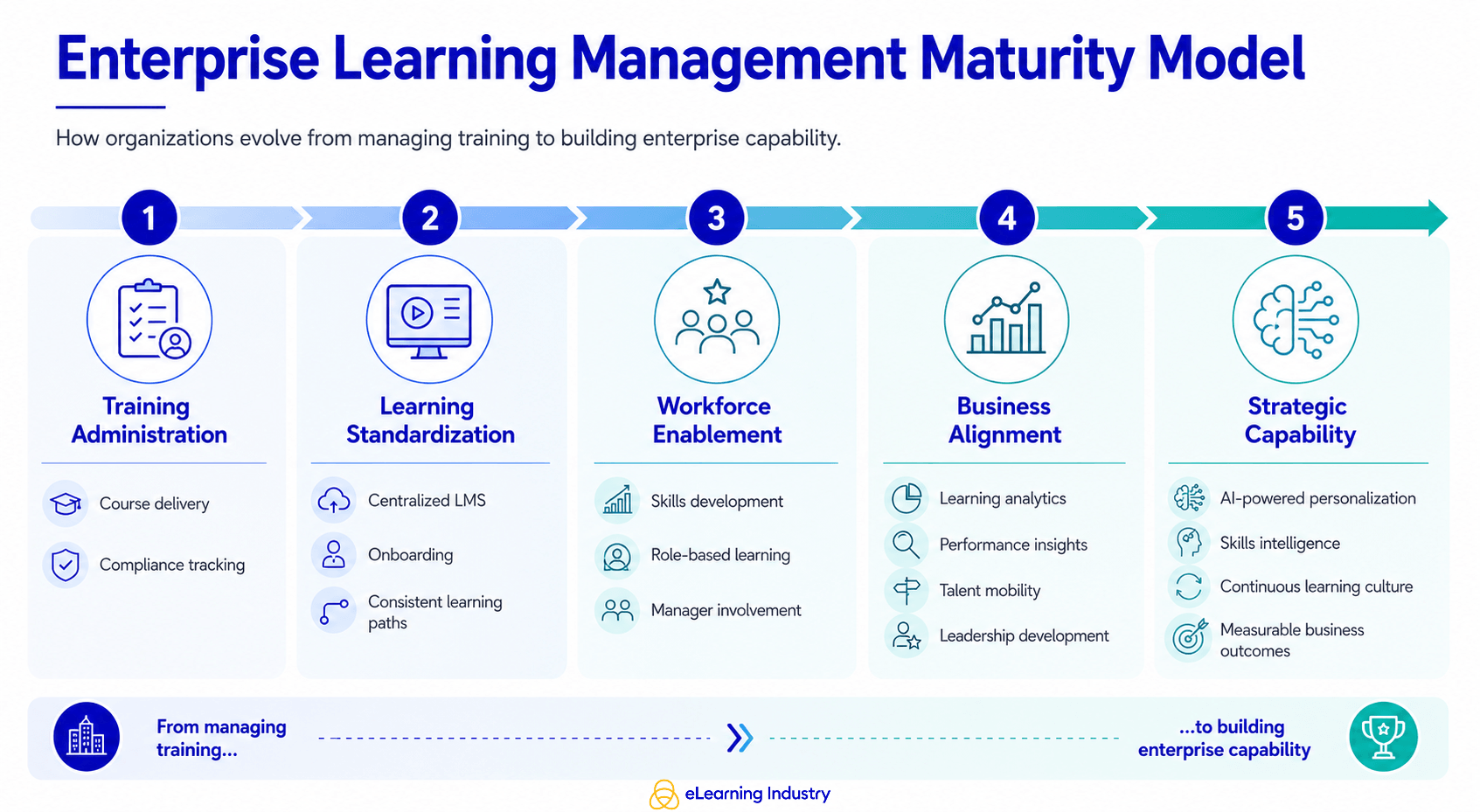
Enterprise learning management has grown so much that it is now far more than just a means of providing online courses. At this point, it represents a strategic method for creating a workforce capable of keeping up with continuous change. This means that organizations are now required to reskill employees, onboard new hires more quickly, meet compliance standards, empower managers, support career growth, and measure learning impact, all at scale. To do this, learning leaders need more than just separate training tools. They need a framework that connects learning to business goals and provides the right technology and structure to make it work.
But what is enterprise learning management? At its core, it involves the strategic planning, implementation, administration, evaluation, and constant improvement of learning across a large organization. It brings together technology, structure, learning strategies, data, and employee growth to create reliable, measurable learning experiences. While learning administration focuses on assigning and tracking training, enterprise learning also builds workforce skills to boost business results. This is where enterprise Learning Management Systems and modern LMS platforms become essential.
In this guide, we will cover what enterprise learning management is, how enterprise LMS platforms work, which features matter most, and how organizations can choose the right solutions for long-term success.
What Is An Enterprise LMS?
Enterprise learning management relies on technology that can handle large-scale training. That is the main reason enterprise Learning Management Systems (LMSs) exist. Unlike systems for small businesses, an enterprise LMS is made to support thousands of learners across different business units, regions, and departments, while still offering a consistent learning experience.
An enterprise-level Learning Management System does not simply involve delivering online courses; it also enables organizations to manage compliance training, certifications, onboarding, leadership development, and ongoing skill development from a single platform. It also integrates with key business systems such as HRIS, CRM, and collaboration tools to streamline user management, reporting, and workforce planning.
The more organizations grow, the more complicated their learning needs become. Different teams may need their own learning programs, administrators need role-based permissions, and managers want detailed insights into learning results. This is what makes enterprise LMS software unique. The best enterprise LMSs offer advanced analytics, automation, and governance tools to support both local and global learning programs.
A standard LMS usually focuses on delivering courses to smaller teams. In comparison, an enterprise-level LMS is built to grow with the business. It helps manage learning for teams spread across different locations and makes sure training matches the organization's goals. In short, enterprise LMS platforms are meant to deliver training and support strategic workforce development.
Standard LMS |
Enterprise LMS |
| Built for small teams | Designed for large organizations |
| Basic reporting | Advanced analytics and dashboards |
| Limited integrations | Enterprise-grade integrations with HR, CRM, and other business systems |
| Simple user permissions | Role-based governance and administration |
| Few learning paths | Enterprise-wide learning ecosystems with personalized learning journeys |
Why Enterprise Learning Management Matters Today
Enterprise learning management is now a key focus for companies facing fast technological changes, new workforce expectations, and complex regulations. Rather than treating training as a one-time event, leading companies invest in learning solutions that build employee skills over time and connect learning to business goals.
Workforce Transformation
Digital transformation, AI, and changing job roles are reshaping the skills employees need. This means that companies can no longer rely on occasional training. Instead, they must regularly help employees learn new skills. An enterprise training management system makes it easier to offer personalized learning to many people, close skills gaps, encourage ongoing learning, and prepare staff for new technologies.
Employee Retention
Employees tend to stay with companies that invest in their growth. When they have clear learning paths, chances to advance, and training that fits their jobs, they feel more engaged and can picture a future with the company.
Compliance
For companies in highly regulated industries, staying compliant is always a challenge. Modern enterprise learning management systems can automate tracking certifications, monitoring policy changes, and creating audit-ready reports. This reduces paperwork and lowers the risk of noncompliance.
Leadership Development
Building strong leaders does not happen by accident. An enterprise LMS helps organizations find high-potential employees, give them focused development programs, and support succession planning with clear learning results.
Operational Consistency
Finally, global organizations need to offer consistent training across all locations, departments, and teams. Using standard materials, central reporting, and local delivery helps ensure every employee gets the same high-quality learning experience while meeting local business and regulatory needs.
Core Features Of Enterprise Learning Management Systems
Enterprise learning management is only as effective as the technology supporting it. While every organization has unique learning goals, the best platforms have core features that make training easy to scale, track, and connect to business needs.
Learning Path Management
A key feature of enterprise LMSs is creating personalized learning paths. Rather than giving everyone the same content, administrators can set up learning journeys based on each employee's role, experience, or career goals. As employees reach milestones, the platform suggests the next courses, certifications, or growth opportunities. This makes learning more relevant, engaging, and connected to company goals.
Skills And Competency Mapping
Leading enterprise Learning Management Systems help organizations see current skill levels, find gaps, and link learning to business needs. By matching needed skills to specific roles, these systems let learning leaders create focused upskilling and reskilling programs. This approach also helps with succession planning and internal mobility, so employees gain the skills they need for future roles.
Certifications And Compliance
For many enterprises, compliance training is a must. An enterprise Learning Management System makes this easier by automatically assigning required training, tracking completions, issuing certifications, and sending reminders for renewals. This reduces administrative work and helps keep accurate records for audits and reports.
AI-Powered Recommendations
Artificial Intelligence is changing enterprise learning by making training more personal. Instead of using fixed catalogs, modern platforms look at employee roles, past learning, skill gaps, and career goals to suggest the right content. This boosts engagement and supports ongoing development without flooding employees with unnecessary courses.
Analytics And Reporting
Advanced enterprise LMS software stands out for its data-driven decision-making. Dashboards let learning teams track completion rates, engagement, test results, and skill growth. Analytics also help organizations see if learning programs are making a real impact, so they can improve them over time.
Integrations
An enterprise LMS should work smoothly with other technology systems. Typical integrations include HRIS platforms for employee data, CRM systems for sales, single sign-on for secure access, content libraries for more learning resources, and tools like Microsoft Teams or Slack for collaboration. These links make workflows easier and create a better learning experience.
Global Learning Support
Finally, organizations operating across multiple regions need enterprise LMSs that support multiple languages, localization, and local compliance rules. By offering consistent yet locally relevant learning, global companies can maintain high quality and meet the needs of a diverse workforce.
Common Enterprise Learning Use Cases
Enterprise learning management works best when it supports real business goals, not just as a separate training program. While each organization has its own objectives, most enterprise Learning Management Systems help employees build skills, improve performance, and adapt to change. This approach lets organizations create consistent learning experiences and track the impact of training on the business.
Here are some common ways organizations use an enterprise LMS:
- Employee onboarding
A structured onboarding program helps new hires get up to speed faster by providing role-specific training, company policies, and key resources in one place. An enterprise Learning Management System lets organizations standardize onboarding across teams and locations, while still customizing content for each role. - Compliance training
For organizations in regulated industries, staying compliant is a constant task. An enterprise training management system can automate required training, certification renewals, and reporting. This makes it easier to stay ready for regulations and show compliance during audits. - Sales enablement
Sales teams need ongoing access to product updates, market insights, and sales techniques. An enterprise learning management platform helps organizations deliver timely, personalized training so sales reps stay informed, build product knowledge, and have better conversations with customers. - Customer and partner education
Learning goes beyond employees. Many organizations use an enterprise learning system to train customers, partners, and resellers. Consistent product training helps people use your products better, reduces support needs, and helps others get more value from what you offer. Often, a single platform can manage all these groups. - Leadership development
Building future leaders takes more than just occasional workshops. Enterprise learning solutions support long-term leadership programs with personalized learning paths, coaching, assessments, and succession planning. This helps organizations grow strong talent pipelines and get employees ready for leadership roles. - Technical upskilling
With AI, automation, and new technologies changing the workplace, ongoing learning is now essential. ELM training helps employees build technical, digital, and job-specific skills through structured programs. Top enterprise LMS software also uses analytics to spot skill gaps and suggest targeted learning, so the workforce is ready for new business needs.
How To Choose The Best Enterprise LMS
Choosing the right enterprise Learning Management System means looking past just the features. The best LMS fits your company's learning goals, can grow with your business, and helps you track real results. Instead of chasing trends, focus on what will matter most for your organization in the long run.
Here's a checklist to help you compare different vendors:
- Scalability
Can the platform handle thousands of users, different departments, and global teams without slowing down? The right LMS should be able to grow with your company. - User Experience
An easy-to-use, modern interface helps employees get started quickly. Everyone—learners, managers, and admins—should be able to use the system without much training. - Analytics
Good reporting should show more than just course completions. Look for dashboards that track engagement, skill growth, compliance, and how learning affects your business. - AI capabilities
Many leading LMS platforms now use AI to suggest personalized learning, spot skill gaps, and handle routine admin work automatically. - Content management
Pick a platform that works with different types of content, lets you manage versions, and makes it easy to update materials for all teams. - Automation
Features like automatic enrollments, reminders, certifications, and reports can save time and help keep things consistent. - Security
Strong security, role-based access, and meeting standards like SOC 2 or GDPR are must-haves, especially for global companies. - Integration ecosystem
The right LMS should work smoothly with your HR, CRM, collaboration tools, and other business systems to create a connected learning environment. - Vendor support
Good support from your vendor, including help with setup, training materials, and quick customer service, can make a big difference over time. - Total cost of ownership
Don't just look at the license price. Think about setup, integrations, maintenance, support, and future growth to see the real cost. The best LMS gives lasting value, not just a low starting price.
Conclusion
Enterprise learning management is now much more than just running courses or keeping track of completions. It has become a key part of how organizations build important skills, respond to change, and connect learning to business goals. As technology, employee expectations, and market needs continue to change, companies need learning systems that can grow with them. They also need tools that give real insights into what their workforce can do and how learning is making a difference. When choosing an enterprise Learning Management System, organizations should look for platforms that help develop their workforce strategically, not just manage courses, and that can adjust as business needs change.