
 ChatGPT
 Perplexity
 Claude
 Grok
Grok
What Are The Four Stages Of Competence?
The four stages of competence show how people go from being unaware of a skill to doing it automatically and well. This model, sometimes called the conscious competence model or the four stages of learning, helps explain how we build skills, confidence, and consistent behavior over time.
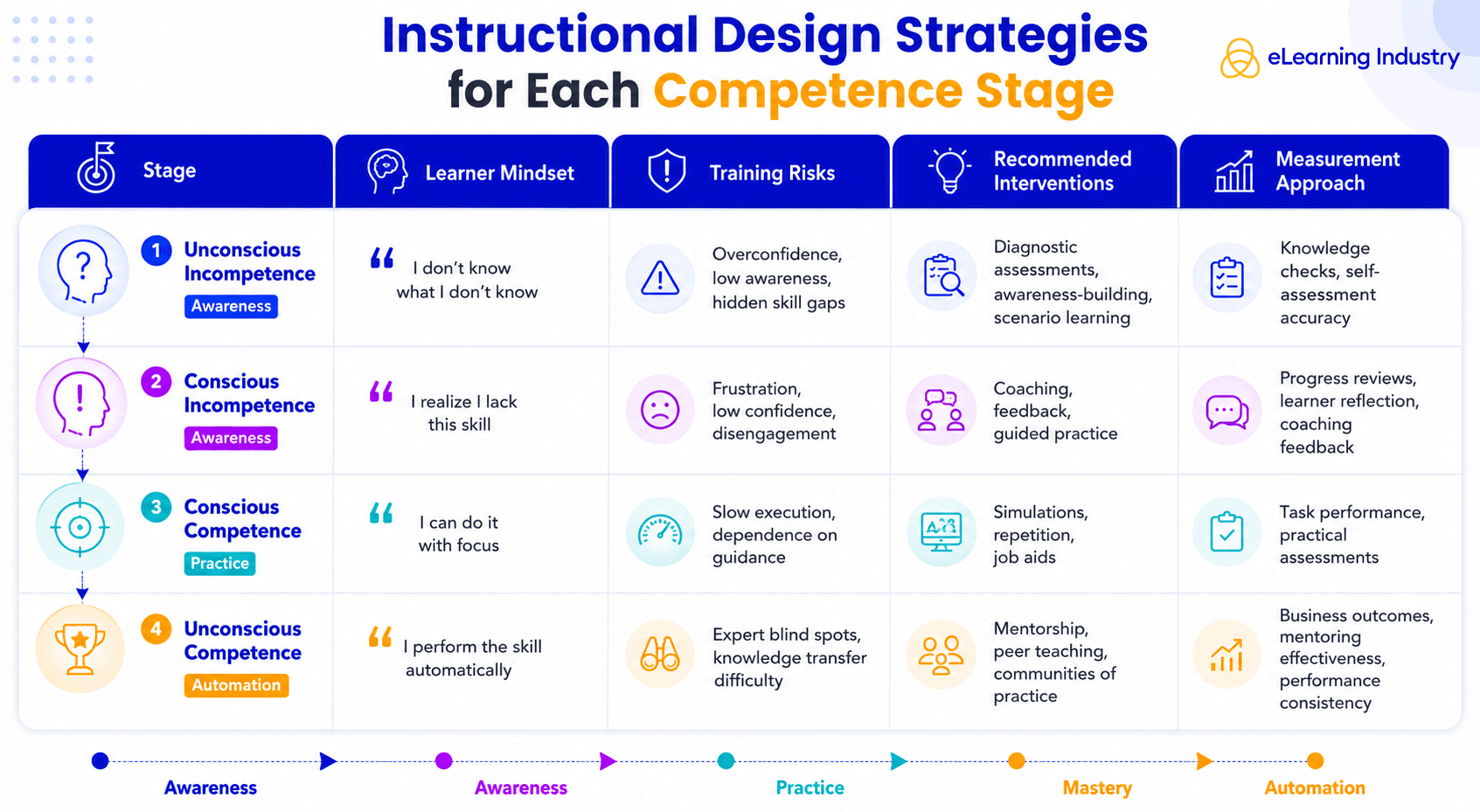
The model has four levels: unconscious incompetence, conscious incompetence, conscious competence, and unconscious competence. Together, these levels of competence help Instructional Designers and L&D leaders see where learners have trouble, understand why performance gaps appear, and find ways for training to better support skill growth.
The four stages of competence are still very important in today's workplace because organizations are always changing. Employees need to keep learning as they face rapid reskilling, AI adoption, digital transformation, and new job roles. At the same time, complex onboarding and behavior change make traditional one-size-fits-all training less effective.
For Instructional Designers, the conscious competence learning model is more than just a teaching theory. It is a practical tool that helps teams design learning experiences for each stage of understanding and readiness. When training matches the learner's current level, organizations can boost engagement, build skills faster, and help employees adapt over time.
Four Stages Of Competence: An Overview
Stage 1: Unconscious Incompetence
The first of the four stages of competence is unconscious incompetence. At this stage, learners do not realize they are missing a skill or understanding. They may feel confident, but they are unaware of their knowledge gaps.
Unconscious incompetence often shows up during workplace learning and onboarding. Employees at this stage may think tasks are easier than they really are. With little experience, they cannot judge their own performance well, which can lead to blind spots, poor decisions, and misplaced confidence.
An unconscious incompetence example can often be seen when someone steps into a new leadership role. A first-time manager might think leadership is just about delegating and managing tasks. They may not yet realize how important coaching, conflict management, emotional intelligence, and employee development are. Because they have not faced these challenges, they do not see how complex the role really is.
Unconscious incompetence can cause problems during corporate training and onboarding. Employees might skip key learning steps if they believe they already know the job. Teams may also think new hires are ready to work on their own before they actually are. That is why building awareness is so important early in the learning process.
Instructional Designers and L&D leaders need to handle this stage with care. The aim is not to embarrass learners, but to help them see their skill gaps in a supportive way. Using scenarios, self-assessments, simulations, and feedback can help learners become more aware and move forward. Without this awareness, learning will not work. This is because people need to realize that improvement is needed before they can get better at their work.
Stage 2: Conscious Incompetence
The second stage is called conscious incompetence. At this point, learners start to realize what they do not know. Unlike before, they now see their own limitations and where their skills are lacking.
If unconscious incompetence means not seeing your own weaknesses, conscious incompetence is when those struggles become clear. Learners see that a task is harder than they thought and know they need more learning, practice, or support.
So, what is conscious incompetence in workplace learning? It is the moment employees notice the gap between how they are performing now and what is expected. This stage can feel uncomfortable, but it is also key to long-term growth. For example, a new manager might receive feedback about low team engagement or communication problems. They start to see that leadership means having coaching conversations, offering emotional support, and helping with performance, not just giving out tasks. This new understanding can lower their confidence at first, but it also motivates them to get better.
At this stage, learners know how important the skill is, but they also see that they cannot do it well yet. This is when good coaching and feedback are most important. Employees need to feel safe, get clear guidance, and have chances to practice without worrying about failing. Without this support, they might lose motivation or stop trying.
For instructional Designers, this stage is especially important when creating workplace training. Learning programs should offer mentorship, practice spaces, chances to work with peers, and useful feedback. These supports help learners keep moving forward instead of getting stuck. So, even though conscious incompetence can feel like failing, it actually shows that learning is taking place. Being aware is the first step toward becoming skilled.
Stage 3: Conscious Competence
The third stage is called conscious competence. Here, learners can perform a skill well, but they still need to focus, prepare, and put deliberate effort into it.
An employee at this stage understands the process and can apply it correctly, but their performance may still feel slow or require significant mental effort. They follow structured steps on purpose, rather than working automatically. For example, a facilitator might run a good training session but still rely a lot on notes, checklists, preparation documents, or practice. They can do the job, but the skill still doesn't feel natural.
This stage is very important in workplace learning because it shows that employees are actively building their skills. They are no longer beginners, but they still need practice and repetition to improve. L&D teams can help employees at this stage by offering guided practice, simulations, job aids, and performance support tools. These resources help learners become more consistent and confident as they keep practicing.
Moving from conscious incompetence to conscious competence is often when employees make the biggest gains in workplace performance.
Stage 4: Unconscious Competence
The last of the four stages of competence is called unconscious competence. At this point, you perform a skill so often that it feels automatic.
Basically, employees do not have to think about each step. Their skills become second nature through practice and experience. For example, experienced trainers can lead discussions, adjust their presentations, and answer questions easily, often without needing to check their notes.
The idea of unconscious competence is helpful because it shows how people build expertise over time. But it also brings a challenge called the "expert blind spot." Experts may find it hard to teach beginners since many steps feel automatic to them. Because of this, top performers are not always the best teachers. They might skip explanations, miss beginner struggles, or expect new learners to know things they have not learned yet.
This is an important point for organizations. Being an expert does not always mean you can teach others well. Instructional Designers need to help experts slow down, write out their steps, and explain their thinking clearly.
Why The Four Stages Of Competence Matter In Modern Workplace Learning
Demand For Continuous Learning
The four stages of competence are still important today because organizations work in fast-changing environments where learning never stops. Employees need to adapt quickly, pick up new systems, and keep building their skills as technology and business needs change. For Instructional Designers and L&D leaders, this model is a useful tool for understanding how people build skills over time.
Changes Due To AI
Today's workplaces are shaped by AI, automation, and digital changes. When companies bring in new tools and ways of working, employees often go through the four stages of learning again and again. Someone might feel confident with an old system but not realize what they don't know when a new one arrives. Noticing these changes helps organizations create better training plans.
Reskilling And Upskilling
The conscious competence model is very helpful for reskilling and upskilling. Employees usually don't become experts right after a course. Instead, they build their skills step by step as they practice, get feedback, and use what they learn on the job. This framework helps design learning programs that support long-term growth, not just one-time training.
Identifying Skills Gaps
This model also helps teams and organizations grow their skills. Leaders can use the stages of competence to spot where people need help and what kind of support works best at each step. For example, employees who know what they don't know may need coaching and practice, while those who are already skilled benefit from repeating tasks and using support tools.
Understanding Failure
Most importantly, this competence model helps Instructional Designers figure out why learners struggle, not just what they struggle with. Problems with performance often come from issues like awareness, confidence, not enough practice, or lack of support. Knowing the stages of competence helps organizations design learning experiences that boost performance, speed up skill growth, and support ongoing workforce change.
Many organizations focus on course completion to measure learning, but real progress comes from tracking how employees build their skills over time. Training works best when we understand where people are in their development and provide the support they need to keep growing.
- Christoper Pappas, CEO of eLearning Industry
How Instructional Designers Can Apply The Conscious Competence Model
The four stages of competence provide Instructional Designers with a useful framework for creating learning experiences that align with how people actually build skills at work. Rather than treating everyone the same, the conscious competence model helps L&D teams see where employees are in their learning journey and offer support that fits their needs.
Designing Learning For Unconscious Incompetence
At the unconscious incompetence stage, learners do not realize they have skill gaps. They might feel confident even if they lack the knowledge or behaviors needed to succeed. That is why building awareness is the first step in effective workplace learning.
Instructional Designers can use diagnostic tools to spot gaps early. Short quizzes, self-assessments, and skill audits help learners see their current skill levels. Scenario-based learning also works well because it puts employees in real situations where their assumptions might not hold up. For example, a new manager might think they are good at communication until they try a tough employee conversation in a simulation.
Reflective questioning is another helpful strategy. When learners think about their own decisions, it helps them move through the early stages of understanding. Content like case studies, benchmarking data, or peer examples can also show employees what good performance looks like.
Supporting Learners Through Conscious Incompetence
When learners recognize their limitations, they reach a state of conscious incompetence. This stage can feel uncomfortable because employees now see what they cannot do well yet. Still, it is an important stage because motivation and growth often start here.
Instructional Designers should set up coaching systems that give clear guidance during this stage. Managers, mentors, and facilitators can help learners stay engaged and build confidence. Practice environments matter too. Employees need safe places to try new skills before using them in real situations.
Psychological safety is important too. Learners are more likely to try new things, ask questions, and make mistakes when their organization supports learning rather than punishing failure. Good feedback helps learners see their progress and know what to work on next.
Reinforcing Conscious Competence
At the conscious competence stage, employees can perform tasks well but still need focus and practice. Instructional Designers should prioritize structured practice and performance support here.
Simulations let learners use their skills in real-life situations without much risk. Guided practice helps make the right behaviors feel more natural. Job aids, checklists, and workflow guides are also helpful because they make tasks easier to manage.
Deliberate practice is especially useful in leadership training, sales, technical learning, and customer service. Over time, these activities strengthen support systems and help employees move from effort-based work to consistently doing tasks well.
Scaling Unconscious Competence Across Organizations
At the unconscious competence stage, skills become automatic. Employees can complete tasks quickly without having to think through every step. But at this point, organizations often face a new challenge: experts may struggle to explain how they do things so well.
That is why Instructional Designers should focus on both building expertise and making it easy to share. Mentorship programs let experienced employees guide others through real situations. Knowledge transfer efforts help keep important skills from being lost. Sessions led by Subject Matter Experts give teams direct access to practical advice.
Communities of practice also support long-term learning by fostering teamwork, peer learning, and ongoing skill development. When organizations build unconscious competence across teams, they create stronger learning cultures and more resilient workforce development.
The Four Stages Of Competence In Corporate Training Programs
The four stages of competence help organizations create training programs that fit how employees really learn and build skills at work. Moving from unconscious incompetence to unconscious competence, this model gives L&D teams a practical way to boost performance, close learning gaps, and support long-term growth.
Employee Onboarding
Early in onboarding, a common challenge is that new employees may not realize what they do not know. They might feel confident before they fully understand systems, processes, or expectations. This early overconfidence can slow learning and lead to more mistakes.
The conscious competence model helps Instructional Designers create onboarding programs that build awareness before mistakes become expensive. Using scenarios, guided practice, and feedback, learners can move from not knowing what they do not know to becoming more skilled and aware.
Organizations can help employees learn faster by matching onboarding content to clear skill levels. Rather than giving too much information at once, training should support steady skill growth through structured lessons and hands-on practice.
Leadership Development
The stages of competence are especially helpful in leadership development because leaders need ongoing self-awareness and the ability to adjust their behavior. Many new managers realize that technical skills alone are not enough to lead a team well.
Good leadership programs help people build flexible leadership skills through coaching, reflection, and real-world practice. As leaders grow more skilled, they become more thoughtful in how they communicate, make decisions, and manage their teams.
Coaching skills also get better with experience. Leaders who have reached unconscious competence often become better mentors when training programs encourage them to reflect on how they learned and grew.
Sales Enablement
In sales enablement, the four stages of learning help salespeople develop consultative skills instead of just following scripts. They need to learn how to ask good questions, understand what customers need, and respond thoughtfully in conversations.
Handling objections is a good example of conscious competence. New salespeople often depend on scripts, but with practice, experienced sellers respond naturally and with confidence.
Role-playing is especially helpful for building skills at each stage of competence. Structured practice lets sales teams try out new skills in a safe setting before using them with real customers.
Technical And Compliance Training
Technical and compliance training often needs clear ways to measure skill growth, especially in healthcare, manufacturing, and other regulated fields. In healthcare, for example, competence often means being able to use knowledge safely and reliably in real situations.
In these fields, a competency-based curriculum means learners must demonstrate mastery of skills before moving forward. High-risk industries cannot just assume people understand. They need proof that employees have reached each stage of competence and can do their jobs well, even under pressure.
Conclusion
The four stages of competence offer more than just a theory about learning. They give a clear way to see how employees grow their skills, confidence, and performance over time. For Instructional Designers and L&D leaders, this model makes it easier to track learning progress and create training that fits what learners need at each stage. This approach helps with smoother onboarding, better coaching, and stronger long-term development. As workplaces change with automation, AI, and new business needs, organizations that understand how competence grows can build learning systems that help people adapt, get ready faster, and keep improving.