


What Is Higher-Level Thinking?
Higher-level thinking is a part of the learning process that goes beyond the traditional listening-repeating framework; listening and memorizing lessons, and merely repeating them when asked. Instead, it focuses on building critical thinking skills, encouraging students to think at a higher level and to analyze and assess rather than simply recall facts. The main idea behind higher-order thinking is to engage students in moving from what they know to what they can do with what they know.
One of the best ways to understand the concept of higher-order thinking is through Bloom's Taxonomy. It is a renowned framework in educational psychology that provides a comprehensive picture of a learner's intellectual skills by categorizing them into levels. According to this framework, effective questioning occurs when educators ask questions based on a learner's level.
Bloom's Taxonomy lists six levels, from higher-order thinking skills to lower, as detailed below:
- Knowledge: The basic recollection of data or information. Questions for this level generally start with words like "repeat" or "define".
- Comprehension: Possessing a deeper understanding of a central idea and its underlying concepts, in their own words. Questions for this level can start with "describe" or "identify".
- Application: Implementing a learned concept to formulate a correct answer or solve a problem. Questions for this level often begin with "demonstrate" or "solve".
- Analysis: Describing each component or element of a topic, and further breaking it down to clearly distinguish assumptions and hard facts. Questions for this level can begin with "compare" or "relate".
- Synthesis: Combining various parts of a topic or learned concept to create an original opinion or idea, or to solve a problem using a new approach. Questions for this level can start with "create" or "plan".
- Evaluation: Assessing a learned concept's value, effectiveness, or usefulness. Questions for this level can start with words like "interpret" or "assess".
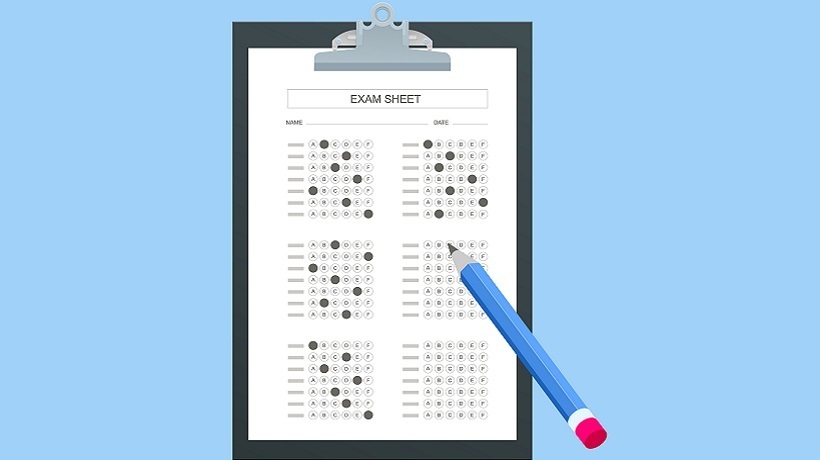
In eLearning, educators can engage higher-level thinking by introducing learners to open-ended questions, as seen in Bloom's Taxonomy, along with real-world scenarios and simulations. While standardized tests with multiple-choice questions may jog their memory, these questions with real-world connections will establish their critical thinking capabilities. Through such questions, you can ask learners to explain their reasoning, craft solutions from acquired knowledge, and predict solutions by connecting ideas and adapting their thinking to new circumstances.
Higher-order thinking is critical because it mirrors the decision-making and problem-solving skills required to tackle real-world problems. Traditional learning methods only teach students how to memorize facts or formulas, but what truly matters is grasping the idea of implementing them to solve a real challenge. Doing this requires more profound thought, which is what higher-level thinking is about.
Why Higher Order Thinking Leads To Effective Study
Most learning experiences in school focus on memorizing and understanding large chunks of information and on demonstrating that knowledge on standardized tests. Bloom's Taxonomy starts with the initial levels of thinking as the foundation for pushing learners towards higher-order thinking, which empowers them to move from merely recalling information to exploring more profound understanding, analysis, synthesis, and application; for example, studying a classic novel by dissecting its various concept layers, understanding how they may resonate with real-world situations, and learning their applications to implement later.
Higher-order thinking supports more impactful studying by pushing learners to higher levels of thinking, where they deeply absorb knowledge. Here's how:
1. Better Retention Through Better Understanding
Simply memorizing facts may help you succeed on tests, but it rarely drives long-term impact. Higher-order thinking enables a learner to engage with information hands-on. They absorb concepts, break them into sub-topics to ideate different solutions, and then explain them in their own words. This approach results in deeper processing of information, which they can retain longer, reducing the need to learn it repeatedly.
A great eLearning example of this is a project management course. Here, learners memorize a project's stages but must also depict them in a case study. This approach requires them to think critically about how each stage works in practice rather than simply memorizing it.
2. Fostering Critical Thinking
Higher-order thinking questions force learners to think critically rather than engage in surface-level dissection, seeking answers. Educators can encourage students to question assumptions, formulate opinions, evaluate the credibility of evidence, and use these to develop actionable solutions or judgments. More importantly, this becomes an invaluable skill in the real world, where abundant information coexists with unreliable sources. Through higher-order thinking, learners can question whether information is accurate, instead of simply accepting it at face value.
As an educator, you can foster critical thinking by crafting higher-order thinking questions that don't have one correct answer. For instance, you could ask learners how they would handle an argument between two individuals. They can give different answers, but this will push learners to think critically and make choices based on reasoning.
3. Learning To Tackle Real-World Scenarios
A crucial benefit of higher-level thinking is building the ability to navigate real-world situations. In the workplace, one wouldn't necessarily encounter multiple-choice quizzes. Instead, they will face problems that call for deep thinking, creativity, adaptability, and concrete decision-making. Practicing higher-order thinking while studying enables learners to acquire real-world skills that turn expertise into action, enabling them to make judgements based on knowledge and take the proper steps toward a successful outcome.
Educators can implement this in eLearning by providing situation-based questions replicating real-world scenarios. These will stir decision-making within learners as they consider practical contexts and devise deep-thinking solutions.
4. Connecting Concepts
Learning processes aren't just for absorbing knowledge, but also for retaining and applying it efficiently. This approach involves connecting ideas and bridging the gap between existing knowledge and learning concepts. As learners connect the dots and see the relationships between what they know and what they're currently learning, they form a holistic understanding of a concept. Doing this equips them to apply their learning to solve a real-world problem, instead of merely studying to ace an examination.
For example, educators can highlight the connection between math problems and their applications in the real world, such as budgeting, calculating taxes, assessing goods costs, etc.
5. Fostering Innovation
Another key benefit of higher-level thinking is that it enables learners to think creatively. As educators, you can facilitate better learning by asking learners to create and design solutions rather than simply following instructions or course lessons. Doing this fosters innovative thinking by enabling them to seek and combine ideas, explore possibilities, think outside the box, and ultimately come up with solutions beyond the textbook. In a nutshell, it develops a habit of studying that is more engaging, which prepares them to contribute ideas in the future and sets them up for success, both personally and professionally.
Educators can encourage creativity and innovation by designing questions beyond simply forming answers, which means asking learners to showcase hands-on work, such as designing presentations, creating lesson plans, writing proposals, or devising concept strategies. These transform basic learning into producing meaningful solutions that foster ownership and make studying more rewarding.
Higher Order Questions In eLearning
The hallmark of a higher-order question is that it prompts the learner to explore an idea or concept, instead of simply trying to find a singular solution. They are more complex by nature, as learners must reflect upon the subject matter, use previously learned knowledge, and create assumptions or hypotheses based on their findings. In essence, higher-order questions go beyond all other forms of inquiry by asking learners to think about the why and how of things, rather than the what.
By engaging in abstract higher-order thinking, your learners can draw comparisons, formulate their own interpretations, and examine various solutions to arrive at the most accurate answer. They must also back their opinions and assumptions with facts and make speculations that stretch their mental boundaries.
Low-Order Vs. High-Order Questions
Before discussing the different types of higher-order questions and how to use them effectively in eLearning experiences, it's essential to distinguish between high- and low-order questioning.
- Low-Order Questions
A low-order question has a limited number of acceptable answers. "How do you perform a transaction on the point of sale system?" is an example of a low-order question. There are only a handful of correct answers, and the question is designed to test your learner's ability to carry out a specific task. - Higher-Order Questions
Higher-order questions prompt your learners to explore the reasoning and logic behind the idea or concept. "Why do you have to follow company procedure when performing a transaction?" is an example of a higher-order question. Your learner must not only think about how to conduct a transaction, but also why it is important for them to follow corporate policy.
Types Of Higher-Order Questions
Higher-order questions are most effective when they align with Bloom's Taxonomy. Here are the 6 types of higher-order questions, based on the hierarchy of levels:
1. Knowledge
This form of higher-order questioning requires the learner to apply previously learned knowledge and recall important facts and ideas in order to formulate their response.
2. Comprehension
Learners must demonstrate their level of comprehension by comparing and organizing ideas or concepts. This type of question also involves interpretation and explanation.
3. Application
Application questions require learners to find new applications for previously learned knowledge. For example, they might ask them to use facts and techniques that they acquired in an earlier lesson to tackle a problem that may seem unrelated.
4. Analysis
Analysis questions require the learner to analyze and assess the information, then determine the cause or reason. Learners must formulate assumptions or hypotheses and uncover evidence or facts that support them.
5. Synthesis
Synthesis questions encourage learners to gather and examine all necessary information from a different angle. They must combine various ideas and concepts to devise a solution.
6. Evaluation
Learners must share their opinions or defend their positions by presenting ideas and assumptions that rely on a specific set of criteria. Asking them how they would tackle a problem differently is an example of an evaluation question.
4 Tips To Use Higher-Order Questions in eLearning
1. Encourage Free-Thinking
One advantage of higher-order questions is that they encourage learners to use their creativity without risking judgment. By creating open-ended higher-order questions, online learners can devise various solutions to the problem. They can think freely about all possible outcomes and use facts, opinions, and assumptions to explore all aspects of the issue.
2. Use Divergent Questions To Tap Into Previously Learned Knowledge
Divergent questions are a form of higher-order questioning. They don't have a single correct response and prompt the learner to look at the subject matter broadly. Divergent questions allow learners to seek knowledge independently and create a hypothesis based on previously learned knowledge. "What do you think might have happened if the main character chose to walk away from the argument?" is an example of a divergent question. Learners must use their personal experience, insight, and information they have learned to predict an alternative outcome.
3. Use Convergent Questions To Create A Connection
Convergent questions test a learner's comprehension and create a connection between ideas and concepts. This approach helps them develop their critical thinking and comparison skills. They must search their memory banks for information they can apply to this new challenge or situation, thus boosting their knowledge retention. "What other tools could the main character have used to resolve the conflict?" is another example of a convergent question. To answer the question, learners must examine other conflict resolution tools they have discovered in the past, then figure out which ones would be ideal for the online scenario.
4. Ask Students To Explore Their Responses
When a learner responds to a higher-order question, make the learning experience even more beneficial by asking them to clarify or elaborate upon their answer, which is known as "probing". It allows learners to gain a better understanding of why the answer is correct, which makes the subject matter more memorable and greatly improves comprehension.
Encourage your learners to reflect, connect with the subject matter, and interact with it in a profound and powerful way by using higher-order questions in your next eLearning course.
Interested in learning more about how to use Bloom's Taxonomy in assessment? The article on How To Write Multiple-Choice Questions Based On The Revised Bloom's Taxonomy will show you how to write multiple-choice questions based on the revised Bloom's Taxonomy.