



Instructional Design Certificate: All You Need To Know
Instructional Design certificates are becoming more valuable as organizations now expect learning professionals to do much more than create engaging training. Today's L&D leaders, Instructional Designers, HR professionals, and talent development teams need to connect learning with business goals, use AI-powered learning tools, and show clear results. As workplace learning changes, professionals need both strategic and technical skills to stay competitive.
Simply put, Instructional Design certificates are professional programs that teach you to analyze learning needs, design effective training, create instructional materials, and measure learning outcomes using proven methods such as the ADDIE model. In contrast, an Instructional Designer certification shows you already have expertise, usually through tests or experience. Certificate programs are about building the knowledge and practical skills you need to design strong learning experiences.
If you are new to the field, want to specialize, are moving from education to corporate learning, or are getting ready for a leadership role, an Instructional Design certificate can help you gain practical skills and boost your professional reputation. Still, picking the right program takes careful thought. Program quality, curriculum, industry reputation, hands-on learning, and career outcomes can vary widely, so it's important to find the option that fits your long-term goals.
This guide covers what you can expect from Instructional Design certificate programs, the benefits of earning a certificate online compared to a university program, and what to look for when comparing top providers.
What Is An Instructional Design Certificate?
An Instructional Design certificate is a professional credential that equips learning professionals with the knowledge and hands-on skills to design, develop, and assess effective learning experiences. Unlike a degree, this certificate focuses on practical skills you can use right away in the workplace, learning, corporate training, higher education, or consulting.
Most Instructional Design certificate programs blend learning science with practical experience. Participants start with the basics, such as learning theory and adult learning principles, then use frameworks such as ADDIE and the Successive Approximation Model (SAM) to solve real training problems. Courses also include Learning Experience Design, curriculum development, assessment methods, storyboarding, and eLearning authoring with common industry tools. More programs now cover AI-assisted Instructional Design, showing professionals how to use generative AI for content creation, personalized learning, and more efficient workflows while keeping strong instructional standards.
Instructional Design certificate programs, whether on campus or online, focus more on practical skills than on theory alone. Learners usually work on projects that show they can assess learner needs, design engaging materials, create digital learning experiences, and measure training results. These programs help professionals build technical skills and create a portfolio that highlights their ability to solve real learning and performance problems in organizations.
Who Should Consider An Instructional Design Certificate?
An Instructional Design certificate is a great option for professionals who want to grow their skills in creating effective learning experiences that help achieve business goals. Whether you are new to the field or looking to advance, the right program can help you design learning solutions that boost performance, increase engagement, and support your organization's success.
L&D Professionals
Many Learning and Development (L&D) professionals choose Instructional Design certification to learn more about learning science, instructional methods, and new technologies. This helps them keep up with changes in workplace learning.
Corporate Trainers
For corporate trainers, an online certificate offers hands-on skills to design digital, blended, and Instructor-Led Training, not just classroom sessions.
Teachers
Teachers moving into corporate learning can also benefit from an Instructional Design certificate. It helps them turn their classroom experience into skills that employers want, such as needs analysis, curriculum development, eLearning design, and performance-focused strategies.
HR Pros
HR professionals, talent development leaders, and workforce specialists can also use these programs to connect learning with bigger business and people goals.
Learning Consultants And eLearning Developers
Learning consultants and eLearning developers can use an online Instructional Design certificate to build their credibility, improve their design skills, and keep up as more companies use AI and data-driven training.
Managers
Managers in charge of workforce learning, onboarding, or leadership development also gain a solid base for understanding learning needs, choosing the right delivery methods, and measuring results.
What You'll Learn In Most Instructional Design Certificate Programs
An Instructional Design certificate gives you practical and strategic skills to create learning experiences that boost performance and support business goals. Most programs mix learning science with hands-on practice, so you learn to design, develop, implement, and evaluate training for different industries.
Learning Needs Analysis
Successful learning starts with finding the real problem to solve. You will learn how to assess needs, spot performance gaps, set clear learning goals, and connect training to your organization's priorities. These skills help make sure your training meets business needs, not just delivers information.
Adult Learning Theory
Knowing how adults learn is key to good Instructional Design. Most Instructional Design certification programs cover adult learning principles, motivation, cognitive load, and ways to keep learners engaged. These ideas help you create training that is relevant, focused on the learner, and leads to real changes in knowledge and behavior.
ADDIE And Other Design Models
The ADDIE framework, which stands for Analyze, Design, Develop, Implement, and Evaluate, is one of the main methods taught in Instructional Design. Some programs also cover agile methods like SAM and Learning Experience Design (LXD). While you can get certified in ADDIE, most certificate programs teach it as part of a larger set of tools instead of focusing on just one method.
Curriculum Design And Assessment
Most programs also teach curriculum mapping, planning the order of lessons, and ways to assess learning. This makes them useful for anyone interested in curriculum design or development. You will learn to create assessments that track both learner progress and how training affects the business.
Emerging Technologies
Modern online training focuses on digital tools and AI. More certificate programs now include generative AI for making content, adaptive systems that personalize learning, and analytics to measure engagement and improve future courses. These new tools help Instructional Designers create flexible, data-driven learning while still following strong design principles.
Best Types Of Instructional Design Certificate Programs
When choosing an Instructional Design certificate, it's more important to find a program that matches your career goals, experience, and learning style than to look for the single "best" provider. University credentials and industry-recognized programs each have their own benefits and serve different needs.
University Graduate Certificates
Colleges and universities usually offer graduate certificates in Instructional Design, focusing on learning theory, instructional systems, curriculum development, and educational technology. Many people choose these programs to boost their credentials, specialize in workplace learning, or get ready for leadership roles in Learning and Development (L&D). If you're thinking about a master's degree, some credits may transfer. This path is a good choice if you want academic recognition or to advance your career in higher education or corporate learning.
Professional Association Programs
Professional associations offer programs that teach practical, industry-focused skills instead of academic credits. For example, the ATD Instructional Design Certificate covers real-world topics like needs analysis, course design, and learner engagement. Experienced professionals can also earn the ATD Master Instructional Designer credential to show advanced expertise. These programs are especially helpful for corporate trainers, Instructional Designers, L&D managers, and consultants who want to grow professionally and gain recognition in the talent development field.
Online Certificate Providers
An online Instructional Design certificate is a flexible option for working professionals. If you want to move into this field or improve your skills while keeping your current job, you can choose from self-paced or group-based courses. The top programs include hands-on projects, help you build a portfolio, and teach you to use industry-standard tools. This way, you can gain practical, job-ready skills without needing to enroll in a full graduate program.
Employer-Sponsored Training
Many companies now build their own Instructional Design skills through in-house training and employer-sponsored programs. These programs often include mentoring, practical projects, and methods tailored to the company. While they might not lead to a well-known certificate, they give employees useful experience, improve internal skills, and let learning professionals use Instructional Design principles to solve real business problems.
How To Evaluate An Instructional Design Certificate Program
When choosing an Instructional Design certificate, it's important to look past course titles and marketing. The best programs help you solve real workplace learning problems, not just finish assignments. Whether you're considering an online certificate, a university graduate program, or a professional certification, use this checklist to judge long-term value.
- Learning objectives: Make sure they align with key skills such as needs analysis, learning strategy, assessment, and performance improvement.
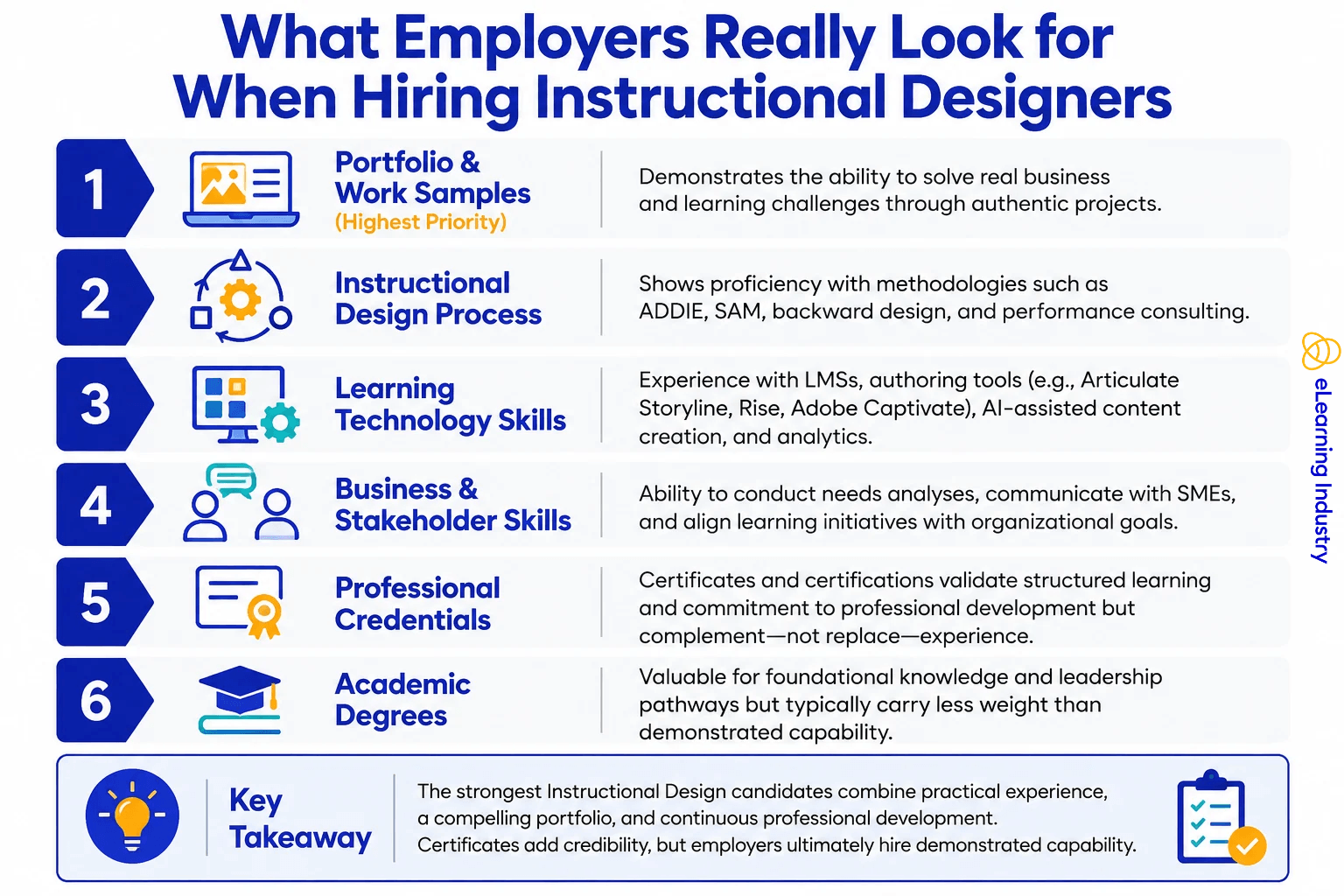
- Portfolio projects: Find programs that let you build work samples you can show to employers, and that highlight your Instructional Design process.
- Practical assignments: Choose programs that use real business situations, not just theory.
- SME interaction: Working with Subject Matter Experts is a key part of what Instructional Designers do in real jobs.
- LMS exposure: Getting hands-on experience with Learning Management Systems is important for today's Learning and Development jobs.
- Authoring tools: Good programs give you practice with tools like Articulate Storyline, Rise, or Adobe Captivate.
- AI integration: Top programs now teach how to use AI to create content, automate tasks, and check quality.
- Faculty experience: Look for instructors who have led corporate learning or Instructional Design teams.
- Industry recognition: Choose programs from respected providers, such as universities or organizations that offer credentials like the ATD Instructional Design Certificate.
- Alumni outcomes: Check where graduates work, which employers partner with the program, and read success stories to see its real-world impact.
Choosing The Right Instructional Design Certificate For Your Goals
To choose the right Instructional Design certificate, start by thinking about your current job, your long-term career goals, and the skills you want to build. There are many programs out there, but the best one is the program that matches your professional goals, not just the one with the most well-known name.
Switching Careers
If you are moving into Learning and Development from another field, a practical Instructional Design certificate can give you a strong base in learning theory, instructional models like ADDIE, and eLearning development.
L&D Team Leaders
If you already lead L&D teams, you might get more from a graduate certificate, which usually covers learning strategy, organizational performance, and leadership in more detail.
Corporate Trainers
Corporate trainers who are working while studying often choose online Instructional Design certificates that let them learn at their own pace.
Independent Consultants
Independent consultants should look for programs that focus on real-world projects and building a portfolio, since clients want to see proven skills as well as credentials.
Educators
Educators moving into corporate learning may benefit most from online certificate programs that mix Instructional Design basics with hands-on practice using authoring tools and assessment methods.
Conclusion
The best Instructional Design certificate is the one that helps you gain the skills and experience to create real learning results, not just the one with the highest price or most famous name. Today, organizations want learning professionals who know Instructional Design and also understand business, technology, and AI. Therefore, look for a program that offers hands-on projects, helps you build a portfolio, covers topics that matter in the industry, and ultimately, ensures you make a real difference for both learners and organizations.