
 ChatGPT
 Perplexity
 Claude
 Grok
Grok
LMSs Or LXPs? What Are Organizations Using Today?
The debate about LMS vs. LXP has become one of the most discussed topics in workplace learning. As organizations modernize their learning ecosystems, many experts see the Learning Experience Platform (LXP) as the future, while the Learning Management System (LMS) is often seen as outdated. However, the situation is more complex. Is the LXP really replacing the LMS, or are organizations choosing another path?
Instead of guessing or listening only to vendor marketing, it helps to see what is really happening in the market. The 2026 benchmark report from eLearning Industry surveyed over 500 L&D buyers and learning technology vendors to find out how organizations choose and use learning platforms. The results show a clear difference between what vendors promote and what L&D teams actually use.
In this guide, we will compare LMS vs LXP, explain how they differ, and look at where each one fits in a modern learning strategy. You will learn why the Learning Management System is still widely used in enterprise learning, why vendors are focusing on the Learning Experience Platform, and what current trends mean for organizations choosing between an LMS, an LXP, or both.
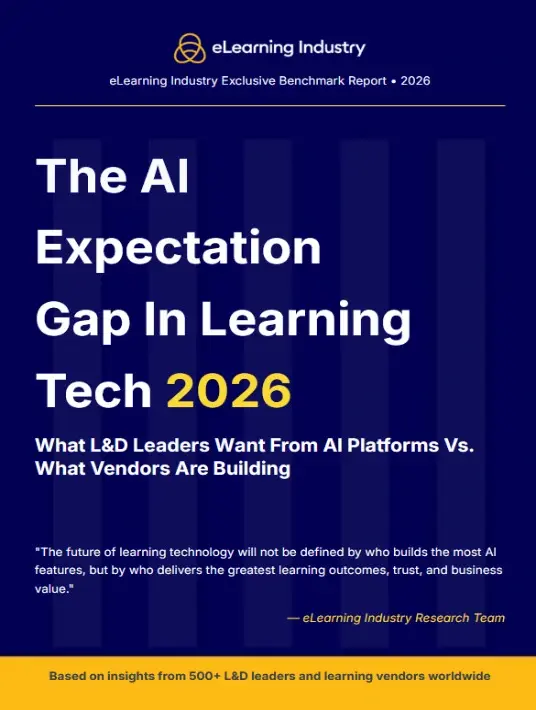
The AI Expectation Gap In Learning Tech 2026: What L&D Leaders Want From AI Platforms Vs. What Vendors Are Building
LMS Vs. LXP: What's The Difference?
LMS vs. LXP is one of the most common comparisons in corporate learning, but these platforms are meant to address different needs. Both help employees grow, so knowing how they differ is important when picking the best learning technology.
An LMS is designed to deliver, manage, and track formal training. Companies use LMSs to assign courses, make sure employees meet compliance requirements, track progress, manage certifications, and create reports. Because of this structured, administrator-led setup, LMSs are essential for mandatory training, onboarding, and regulatory learning. According to our report, 70% of L&D buyers still use an LMS, showing it is the main platform in today's learning environment.
An LXP is different because it focuses on engaging learners and supporting ongoing development. Instead of assigning courses, an LXP helps employees find useful content through personalized recommendations, AI suggestions, user-created materials, and curated learning paths. It supports self-directed learning and skill growth beyond required training.
Even though people often debate whether LXPs will replace LMSs, the data shows otherwise. L&D teams still use LMSs for structured learning and are slowly adding LXPs to make learning more personal and ongoing. More and more, organizations see these platforms as working together instead of competing.
LMS |
LXP |
| Structured learning | Self-directed learning |
| Compliance | Skill development |
| Administrator-led | Learner-led |
| Mandatory training | Personalized learning |
| Tracking | Content discovery |
What Does The Market Actually Use?
People often say that Learning Experience Platforms are taking over from traditional Learning Management Systems. But recent market data shows a more balanced picture. Our research found that:
- 70% of L&D buyers use an LMS, making it the most common learning platform.
- In contrast, only 16% use an LXP, even though interest in personalized learning is growing.
- Also, 62% of learning technology vendors offer LMSs, while 31% provide LXP features. This shows a clear gap between what vendors are developing and what organizations are actually using.
This data shows that Learning Management Systems remain the primary tool for corporate learning. Companies use LMSs for compliance training, managing certifications, tracking progress, and running training programs across the business. At the same time, Learning Experience Platforms are becoming more popular as add-ons. They support self-directed learning, skill development, and AI-powered personalization, but they are not replacing LMSs.
Market Insight: Vendors are investing in LXPs nearly twice as quickly as organizations are adopting them. Our report points out that providers are preparing for future needs, while L&D buyers prefer platforms that already work well with their current systems and show clear business results now.
Why LMSs Still Dominate Corporate Learning
Learning Experience Platforms are growing, but the LMS remains the primary tool for corporate learning because it addresses the daily challenges organizations face.
Structured Learning
The main advantage of an LMS is that it can manage structured learning for large groups. Companies use it to deliver compliance training, assign required courses, track progress, issue certificates, and generate reports to demonstrate compliance with regulations. These features are especially important in fields such as healthcare, finance, manufacturing, and government, where maintaining accurate records and being prepared for audits are crucial.
Integration
An LMS can also connect with other company systems, which makes it easier to link learning with HR tools, identity management, and performance data. The report also found that integration remains one of the top factors L&D buyers consider when choosing learning technology, even more important than AI features.
Purpose
The difference between an LMS and an LXP is not just about technology; it's about their purpose. An LXP is great for personalized and self-directed learning, while the LMS still runs the workflows that keep corporate learning organized, measurable, and in line with business needs.
Why Vendors Are Betting On LXPs
LMS vs LXP is no longer just a comparison between two learning platforms. It also shows how learning technology vendors see the future of the market. Learning Management Systems are still the main platform in most organizations, but vendors are investing heavily in Learning Experience Platforms (LXPs) because they align with where workplace learning is headed.
LXPs are different from traditional LMSs not only because they focus on personalized, learner-driven experiences, but also because they use AI to suggest content, show resources based on an employee's role or skills, and encourage ongoing development instead of just one-time training. Our report says that:
- 65% of L&D buyers see personalized learning as the most valuable AI feature, which explains why vendors view personalization as a long-term advantage.
- Also, 70% of vendors are investing in AI-generated content, showing that providers want to make learning more scalable and adaptable.
However, the report also reveals that vendors are building ahead of current demand. Specifically, while 31% of vendors offer LXP capabilities, only 16% of L&D buyers report using them today. As the report explains, "Vendors appear to be investing ahead of demand in areas such as LXPs and AI-enabled capabilities, while L&D buyers continue to rely heavily on proven solutions that support immediate operational needs."
This gap does not mean there is a clear winner between LXPs and LMSs. Instead, it shows that vendors are getting ready for a future where AI-powered discovery, personalized learning, and ongoing skills development are standard parts of workplace learning, even if many organizations are taking their time to adopt these features.
Why Buyers Aren't Switching As Quickly
The data shows that, even though vendors are putting more money into LXPs, many L&D teams are moving more slowly. Their choices are based on what the business needs right now, not just on new technology trends. According to our report, when evaluating learning platforms, buyers prioritize:
- User Experience (70%)
- Pricing (63%)
- Integration with existing systems (59%)
- Analytics and reporting (46%).
- AI capabilities rank at 30%, placing them below the practical considerations that affect everyday learning operations.
As the report explains, "L&D buyers continue to evaluate learning technology through the lens of usability, value, and operational fit." This helps explain why LXP vs. LMS isn't an either-or decision for most organizations. Companies aren't rejecting LXPs or questioning their potential. Instead, they're asking whether a new platform will integrate seamlessly with existing workflows, improve learner engagement, and deliver measurable business value before making a significant investment.
In fact, the report concludes that "vendors appear to be investing ahead of demand in areas such as LXPs and AI-enabled capabilities, while L&D buyers continue to rely heavily on proven solutions that support immediate operational needs."
For organizations weighing LXP vs. LMS, the main point is clear: innovation is important, but only if it addresses current challenges. Until LXPs can consistently deliver better results for operations and business, many L&D leaders will keep improving their LMSs and gradually add new learning technologies rather than replace them all at once.
LMS Vs. LXP: Which Should Your Organization Choose?
Choosing between an LMS and an LXP isn't just about picking the better platform. It's about finding the right fit for your organization's learning goals. The difference between LMS and LXP matters, but the best option depends on how you deliver training, track results, and help employees grow. More and more, organizations are realizing that combining both platforms can be the most effective approach.
Choose an LMS if...
A Learning Management System is the best choice when you need structured learning and compliance. If your organization must deliver required training, manage certifications, track course completions, or create reports for regulations, an LMS gives L&D teams the control and accountability they need.
Choose an LXP if...
A Learning Experience Platform works best when you want to move from assigning training to encouraging ongoing learning. LXPs help employees find useful content, build new skills, and learn at their own speed with personalized suggestions and opportunities to share knowledge. LXPs are especially useful for organizations focused on upskilling, reskilling, leadership development, or building a culture of lifelong learning. Personalization is now a key feature.
Choose both if...
For many organizations, the future is not about choosing between an LMS and an LXP, but about bringing both together in a connected learning system. An LMS handles compliance, certifications, and required training. An LXP supports ongoing development, personalized learning paths, and growth driven by employees.
This combined approach aligns with the market's direction. Right now, only 16% of buyers use an LXP, while 70% use an LMS. However, vendors are investing in LXP features and AI-powered personalization, suggesting long-term growth without replacing the LMS. As the report says, "successful platform strategies may require balancing future-focused innovation with the practical realities of how learning is delivered today." Organizations that use both the structure of an LMS and the learner-focused experience of an LXP are often best prepared to meet current business needs and future workforce goals.
The Future Isn't LMS Or LXP, But An Integrated Learning Ecosystem
Choosing between LMS and LXP is no longer the main concern. Now, organizations are creating connected learning ecosystems that bring together the structured management of an LMS and the personalized, learner-driven features of an LXP. In the end, what matters most is how LMS and LXP work together, not their differences. The future of workplace learning is about bringing together technologies that support compliance, ongoing development, personalized learning, and meaningful human experiences in one connected ecosystem.