

 ChatGPT
 Perplexity
 Claude
 Grok
What Is A Professional Development Plan?
A professional development plan, or PDP, is a clear plan that links what an employee can do now with their career goals and the skills they want to build. It usually lists development goals, learning activities, needed support, timelines, and ways to track progress. For learning and development teams, a PDP is more than just a form. It provides a practical way to turn career hopes into concrete steps, while ensuring those steps align with the organization's needs.
The process begins by looking at the employee's current skills and situation. Next, the employee and manager work together to identify any skill gaps, set realistic goals, and choose ways to close them. The plan can be updated as job duties, career interests, or company needs change. This approach makes professional development a regular part of work, not just a topic for yearly reviews.
Why Professional Development Plans Matter For L&D Teams
L&D professionals help others learn, adapt, and improve, so their own growth should get the same focus. A good professional development plan keeps L&D teams up to date on learning technologies, Instructional Design, facilitation, data analysis, and other important skills. It also helps team members see where they can grow next. Here are some practical benefits:
- Greater Credibility: When L&D professionals continue building their own skills, they can recommend learning methods they have experienced firsthand.
- Better Skill Alignment: By regularly comparing team skills with new business and technology needs, teams can spot gaps before they become bigger issues.
- Higher Engagement: When development opportunities are clear and realistic, employees are more likely to see a future with the organization.
- Stronger Business Impact: Skilled L&D teams can design and deliver learning programs that more effectively support the organization's goals.
That's why professional development should focus on L&D teams themselves, not just the rest of the workforce.
Types Of Professional Development Plans
Every employee is different, so their professional development plans should be too. The right plan depends on where someone is in their career, their job, how they're performing, and what they want for the future.
Individual Development Plans (IDPs)
An individual development plan (IDP) is like a personal guide for an employee's growth. It highlights long-term goals and the skills or knowledge needed to reach them. The employee leads the process, while the manager offers feedback and support. Unlike a performance review, an IDP looks ahead to future development instead of focusing on past results.
Employee Development Plans (EDPs)
An employee development plan (EDP) outlines what an employee wants to learn or achieve over a set period. It might list new skills, certifications, projects, or other activities that help with career growth and support the company. EDPs help employees and managers get on the same page about what development means and how progress will be tracked.
Career Development Plans (CDPs)
A career development plan (CDP) is all about an employee's long-term career path. It helps people see what experience or skills they'll need for a future job, promotion, or even a different kind of role. For companies, CDPs make career paths and internal moves clearer. Employees don't have to be aiming for a promotion—career growth can also mean learning new things or trying out a different job.
Performance Development Plans
A performance development plan combines learning with getting better at your job. It might include a self-check, clear goals, ways to develop, resources you'll need, and a timeline. The main focus is on building skills you can show in your work, not just finishing training.
What Should A Professional Development Plan Template Include?
A useful PDP template should help employees work toward their goals, but it should not make development feel like just another paperwork task.
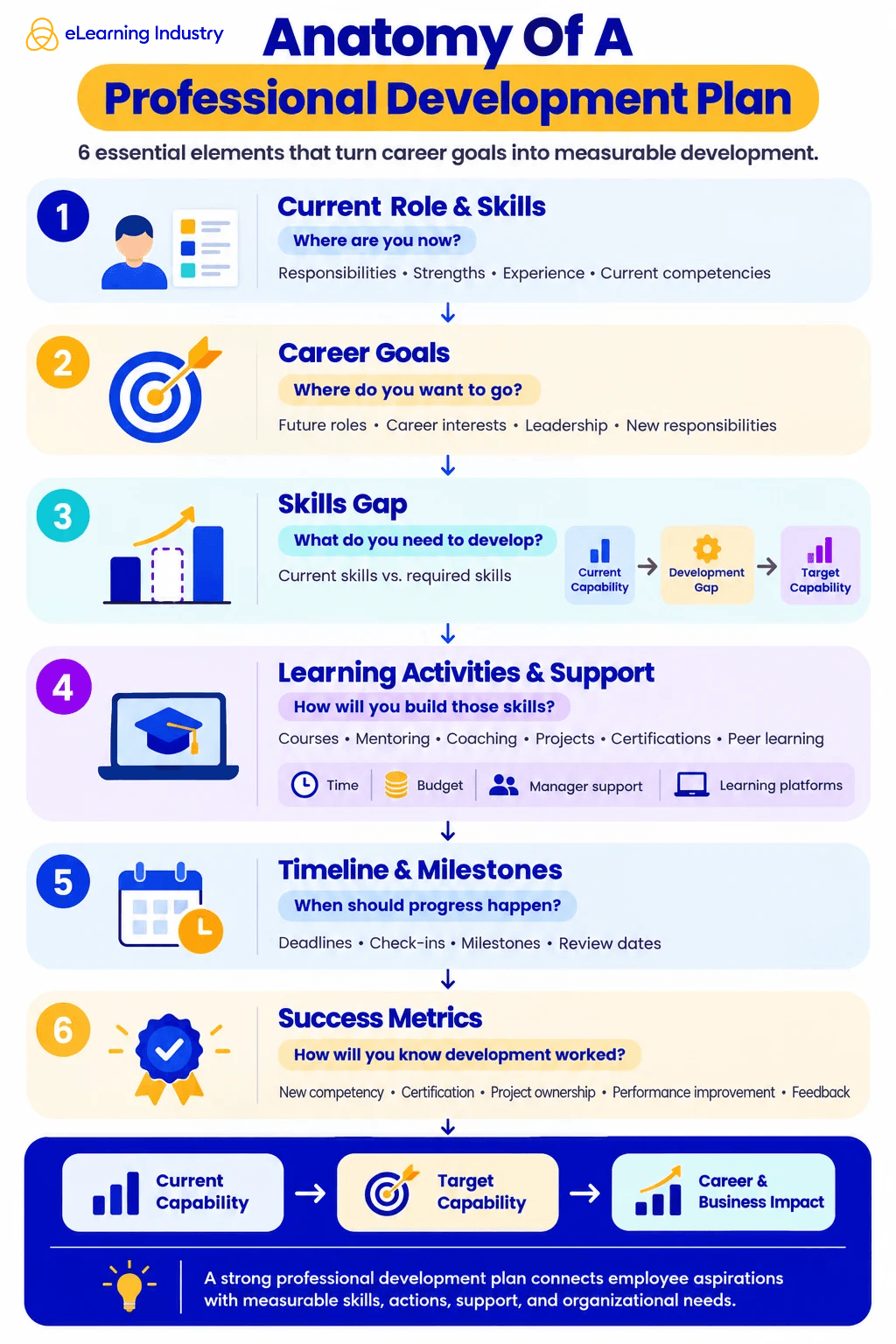
Employee Information And Current Role
Begin by listing the employee's name, role, department, manager, and the plan's date. Add a short summary of current responsibilities to give context for the development goals.
Career Goals And Aspirations
The employee should clearly describe what they want to achieve in their career. For example, they might want to move into a leadership role, build skills in a specific technology, take on more responsibility, or switch to a different part of the organization.
Skills Gap Analysis
A skills gap analysis examines the skills the employee currently has and those they need to reach their goals. This helps them see which skills they already have and which ones they need to develop. It also keeps them from spending time on training that is not useful for their role or career path.
Learning Activities And Resources
The plan should explain how each development goal will be met. This might involve courses, certifications, mentoring, workshops, coaching, peer learning, special assignments, or hands-on projects. It is also important to note what resources and support are available, such as access to learning platforms, budgets, time, experts, or managers.
Timelines And Milestones
Each development activity should have a realistic deadline. Break bigger goals into smaller steps so you can check progress along the way, not just at the end.
Success Metrics
Success should be measurable wherever possible. Depending on the goal, this could mean completing a certification, demonstrating a new competency, taking complete ownership of a project, improving a performance measure, or receiving constructive feedback.
How To Create A Professional Development Plan (Step-By-Step)
A good professional development plan can be simple. You just need to follow five practical steps.
Step 1: Assess Current Skills And Role Requirements
Start by honestly assessing the employee's current responsibilities, strengths, experience, and areas for improvement. Then, compare these with what is needed for their current job and any future roles they want to pursue.
Step 2: Set SMART Development Goals
Change broad ambitions into clear goals by using the SMART framework: Specific, Measurable, Achievable, Relevant, and Time-bound. For example, instead of saying "improve leadership skills," you could set a goal to lead a cross-functional project in the next six months and get feedback from the project team afterward.
Step 3: Choose Learning Methods And Resources
Pick learning activities that match the skill you want to build. Formal training is good for technical skills, while mentoring, job shadowing, or taking on new tasks can help with leadership and hands-on skills.
Step 4: Set A Timeline And Check-In Points
Set deadlines for each activity and plan regular check-ins. Talking every month or quarter can help spot problems early and keep progress on track.
Step 5: Review, Measure, And Adjust
A professional development plan should be flexible. Review what has been accomplished, look for progress, and adjust goals or learning activities as needed. Feedback from managers, mentors, peers, and the employee can make these reviews even more useful.
How To Implement Professional Development Plans Across An Organization
A successful professional development program for the whole organization needs more than just a template. Employees need enough time, resources, and support to actually use their plans.
Match Business Goals With Employee Needs
Start by identifying which development priorities align with both your business goals and employees' needs. One learning program probably won't work for every department. Different teams may need different technical, behavioral, or functional skills.
Make It A Continuous Process
Think of professional development as a long-term commitment, not just a one-time project. Since skills and business needs change, review your development programs regularly.
Offer Organization-Wide Access
Make sure everyone in the organization has access, not just senior staff. If only leaders get development opportunities, employees may feel the company's commitment to learning is not genuine.
Provide Flexible Options
Offer a mix of learning options, like workshops, mentoring, peer learning, microlearning, self-paced courses, guest speakers, and hands-on assignments, depending on your goals. Also, give employees enough time during work hours to learn. If they have to do everything outside their regular workload, the program may not succeed.
Track Performance
Learning and Development teams should track participation, collect feedback, and check if the training is actually improving skills or performance.
Professional Development Plan Vs. Employee Development Plan: What's The Difference?
People often use these terms interchangeably since both focus on helping employees grow in a structured way. The main difference is what each one emphasizes.
A professional development plan usually centers on a person's career direction, skills, and learning goals. It is closely tied to what their job requires and how they want to move forward in their career.
An employee development plan is often broader. It covers the steps that both the employee and the organization agree to take for growth. This might include training, earning certifications, taking on new tasks, and other actions that help both the employee and the company.
In practice, organizations can use either term to refer to a similar process. What matters most is how you set up the plan. It should have clear goals, specific actions, a responsible person, a timeline, and ways to track progress.


