

 ChatGPT
 Perplexity
 Claude
 Grok
Reclaiming Expert Time As Demand Grows
Earlier this year, a training lead joined a call with our team from Minnesota, the morning after a blizzard had dropped more than a foot of snow on her city. The weather had been warm for weeks. The grass had come back. Then, overnight, winter returned.
We laughed about it, and then she told us more about her role, which was brand new. Her organization provides security for the data centers of one of the world's leading technology companies, and its field training team had grown so quickly that leadership created a position just to support it.
Then she raised a question I wish more training leaders asked out loud: what kind of training team should we become?
Many enterprise training teams reach this same point. The business grows, training demand grows with it, and the experts who know the work best end up stretched between delivering training and producing it.
This guide walks L&D leaders through the practical steps to answer that question and scale field training: keeping trainers focused on coaching, building on existing training materials, bringing training records into one system, and setting up a development partnership that makes growth easier to manage.
What Happens When Your Best Trainers Spend Their Time Building Decks?
Let me describe the team she supports, because you may recognize your own.
The training lead's trainers are experienced regional leaders. They know the work inside out. They know which steps matter most when a checkpoint gets busy, which situations make a new officer hesitate, and how a procedure written in a manual actually plays out on a Tuesday night shift. Officers trust them because they have stood in the same spot.
Over the years, these trainers built their own materials. They wrote guides in Word, designed slides in PowerPoint, and shared them through the LMS. That is how great training teams usually start. The experts write down what they know.
Here is the challenge. As the team grows, every hour a trainer spends building a deck is an hour spent away from the officers who need them. The work is valuable, yet it slowly pulls the most knowledgeable employees away from the floor.
The training lead's organization saw this coming and acted on it. They created her role so trainers could spend more time coaching and less time formatting. If you lead a growing training team, that is the first move worth borrowing.
Why Should You Start With Your Existing Training Library?
When teams decide to modernize their training, the first instinct is often to start fresh. New curriculum, new design, new everything. I would gently suggest the opposite.
Look at what your team has already built. This team had a solid library of trainings in active use. Some were single reference sheets. Others were short presentations. Every one of them had been written by an expert and approved by the business. That library is a gift.
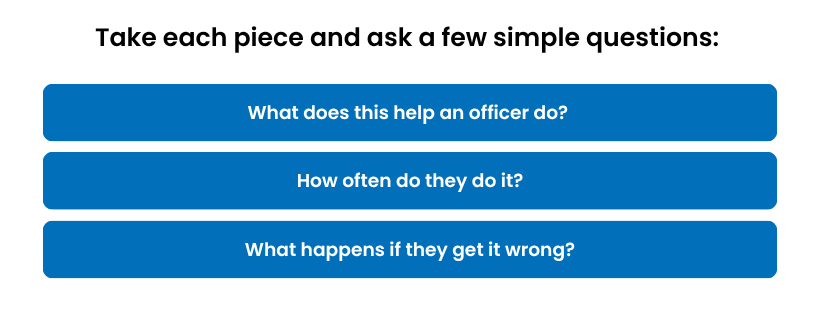
The answers tell you what to build. Turning them into job aids, scenarios, and facilitator guides is where external execution capacity helps, so your trainers keep coaching while the library takes its new shape. Within weeks, you have something real to show your leadership. And when a team is entering a new chapter, early wins matter.
How Can Digital Training Records Prove Every Officer Is Ready?
Our conversation then turned to records. Like many global teams, the training lead's team tracked training completion in folders kept at each site. She wanted every officer to have an online transcript instead, so the history would be easy to find, share, and trust.
This is worth getting right, especially in security. When a client trusts you with its data centers, it wants to know that every officer on every post has completed the right training. A regional manager wants to see progress across sites without making a dozen phone calls. And when an audit comes around, everyone wants the answer in minutes.
The fix is practical. Courses built as SCORM packages report completions to your LMS automatically. Historical classroom records can be brought into the same system. Each officer ends up with one complete history.
What Should You Settle With A Training Partner Before Work Begins?
Something I appreciated about this training lead: before she asked a single question about design, she asked about logistics. Where would the contract be signed? How would invoicing work? What would onboarding look like, and what would happen if needs changed down the road?
These are smart questions. A partnership can have brilliant designers and still frustrate you if every course needs a new quote and a new purchase order.
So here is how we like to set things up with our enterprise clients. We agree on one master services agreement that covers our services and rates. We work from a single annual purchase order and invoice as each project closes. If your needs grow during the year, the PO grows with you. And if you need specialists like learning architects working inside your team for a while, we can arrange that too.
Most important, you get the same project manager and the same design team every time. Think about how much easier that makes your life. You explain your products, your policies, and your learners once. After that, the team simply knows.
How Does Protecting Trainers' Time Speed Up Development?
Everyone wants training built faster, and a good partner should deliver on that. A deck can often be redesigned overnight. With our team working while yours sleeps, you can wake up to finished work.
A full custom eLearning course takes a few weeks, because good design goes through rounds of review before it reaches learners. The one thing that shapes that timeline more than anything else is time with your subject matter experts.
Which brings us right back to the trainers. When their time is protected, reviews happen faster, courses launch sooner, and the coaching in the field gets stronger too. Everyone wins.
What Should Your Training Team Own As AI Changes Learning?
So what kind of training team do you want to become?

For most enterprise teams, that value sits in three places: the field expertise of their trainers, the strategy that decides where learning goes next, and their relationship with the business they serve. These are worth owning fully. Course production, format conversion, record migration, and peaks in demand can be shared, whether with internal support roles or external partners.
At CommLab India, we have worked alongside enterprise L&D teams through more than two decades of these shifts, and we have seen the same thing again and again. Teams that draw this line early grow with confidence. They spend their energy on the decisions only they can make, and each new wave of demand becomes a chance to extend their reach.
The best time to draw that line is now, while your team is deciding what it will become.