
 ChatGPT
 Perplexity
 Claude
 Grok
Grok
Turning Individual Training Into Shared Practice With Social eLearning
Most workplace knowledge isn't acquired through formal courses. It happens more naturally and subtly, through conversations, quick Slack messages, shadowing a colleague virtually, or observing how a manager handles a difficult situation in meetings or recorded scenarios. Formal training often documents this knowledge, but it rarely recreates the environment where learning feels organic.
Social learning fills that gap. At its core, it's about observation, interaction, and shared meaning-making. These principles were described decades ago in social learning theory. What matters today isn't the theory itself, but how it plays out in modern distributed teams.
This article examines social learning as a system, exploring why it matters, how it influences behavior at work, and how learning platforms like iSpring LMS can support it without turning training into an inauthentic, forced social network.
Why Traditional eLearning Struggles To Create Impact
Classic training setups are optimized for control. You assign courses, enforce deadlines, and measure completion. This approach is excellent for proving that training occurred. However, it carries much less value when you need to prove that trainees' behavior changed in a way that the learning objectives mapped out.
Here's why:
- Learning is decontextualized. Courses exist separately from daily work.
- There's no visible peer influence. Learners don't see how others apply knowledge.
- Feedback is delayed or absent. Questions go unanswered, and insights disappear.
- Motivation is external. People learn to comply, not to improve.
Social eLearning adds to structured training by making learning more natural to apply in real work situations. It layers interaction on top of formal content and gives learners a reason to engage beyond checking a box.
What A Learning Community Looks Like
A learning community isn't a forum that nobody participates in or a comment section filled with "Thanks!" posts. In effective organizations, it shows up in several powerful ways:
- New hires ask questions publicly and get answers from peers, not just instructors.
- Employees share examples of how they applied training on the job.
- Managers recognize progress, not just completion.
- Learning becomes part of daily communication.
This is how a learning culture forms through repeated social signals that learning is visible, valued, and shared. Over time, these signals shape behavior far more than policies ever can.
The Role Of The LMS In Social Learning
An LMS can either support this dynamic or suppress it. When learning platforms are designed purely for content delivery, social interaction can get lost in the process. Learners would technically have access to discussion tools, but there's no reason to use them. That's why choosing an LMS that features solid social learning capabilities is an excellent investment in building a true learning community in the workplace.
A social-learning-ready LMS embeds interaction into the learning flow. Notifications, comments, reactions, and messaging become signals that learning is happening among people rather than in isolation.
Platforms like iSpring LMS for social learning do this exceptionally well. Instead of positioning social features as optional extras, iSpring treats them as part of the learner experience, supporting conversation, visibility, and real-time connection around training.
Social Features That Actually Change Behavior
Not every social feature drives learning. Some simply create LMS noise. The difference lies in whether interaction supports reflection and action. Here are examples of social mechanisms that consistently make a difference:
1. Activity Feeds And Learning Updates
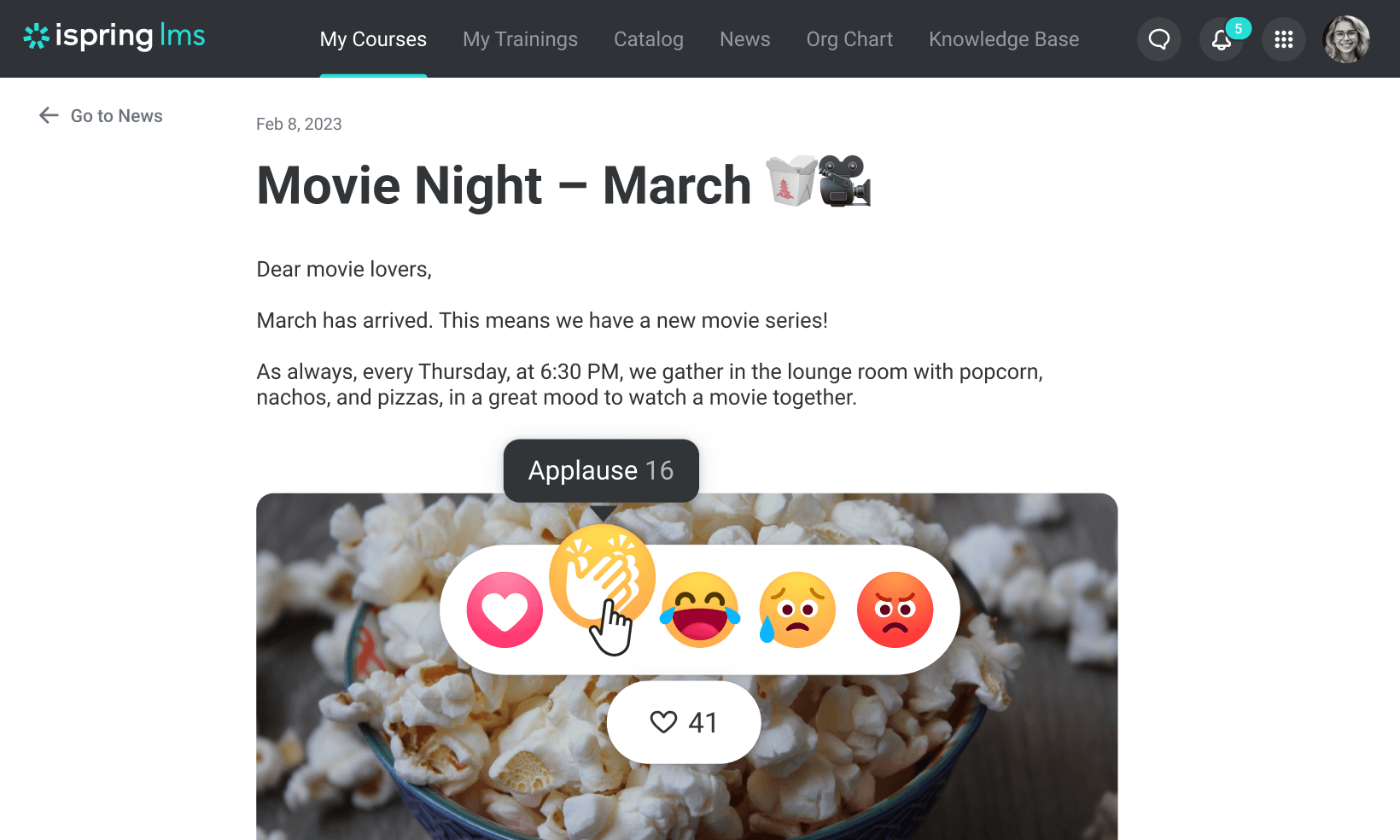
When learners see progress updates, achievements, or upcoming events in one place, learning becomes part of their workday rhythm. True corporate activity is no longer hidden behind course catalogs, and this visibility creates momentum. In iSpring LMS, for example, the Newsfeed is a central space where trainees see updates, achievements, events, and peer activity in real time. Reactions bring even more social context to learning.
2. Comments And Discussions Tied To Content
Discussion works best when it's contextual. Asking a question directly under a lesson or assignment keeps the conversation relevant and searchable. Over time, this turns courses into living knowledge spaces.
3. Direct Messaging And Mentorship
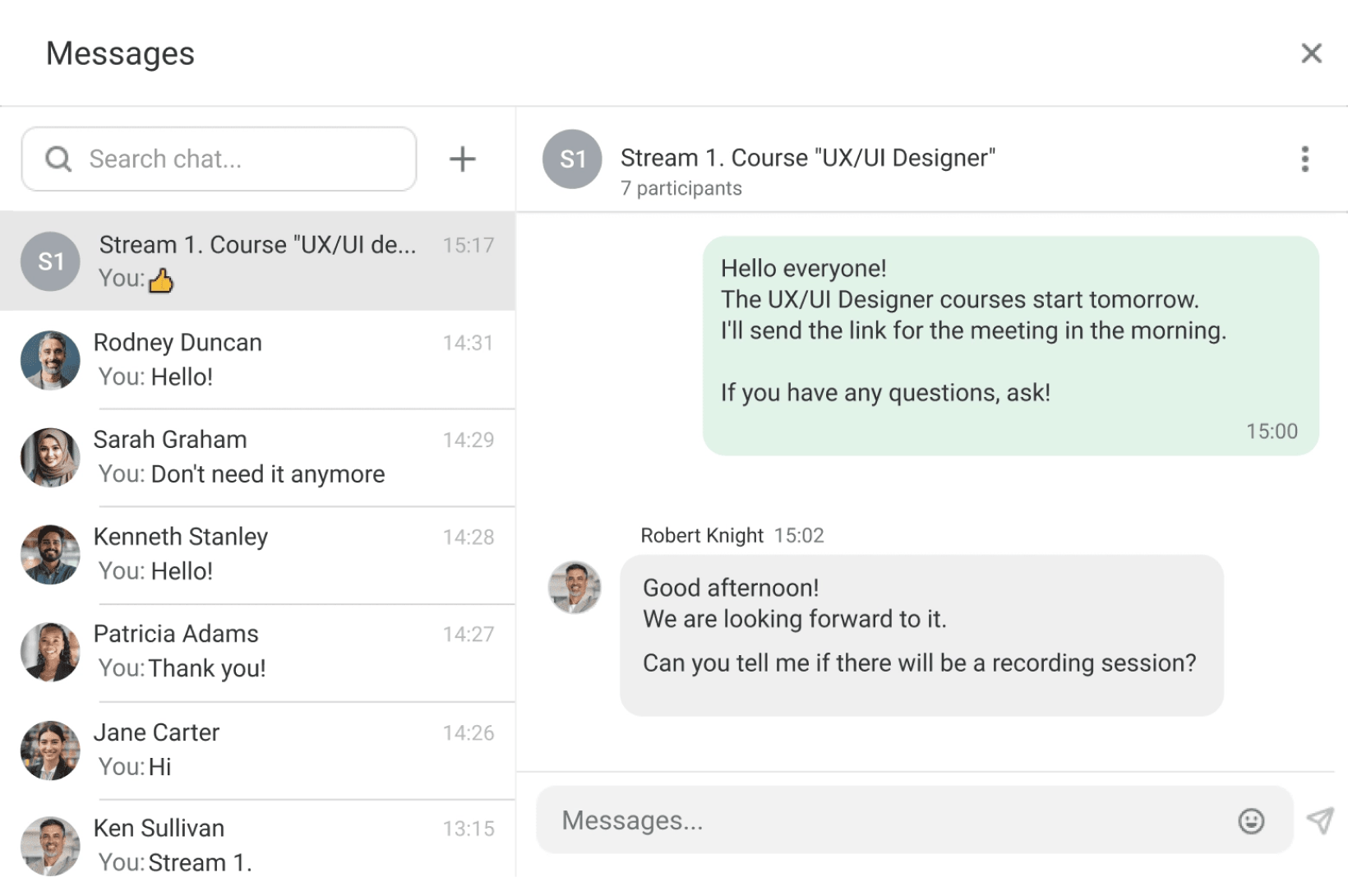
Private messages between learners, instructors, or mentors help prevent misunderstanding and build stronger peer relationships faster. People ask more questions when they don't have to schedule a meeting or switch platforms. Group chats are especially effective for onboarding, peer support, and ongoing collaboration around shared learning goals.
4. Gamification With Social Meaning
Badges and leaderboards work best when they reflect meaningful behavior like helping others, completing learning paths, and contributing insights. When used carefully, gamification reinforces participation and shared progress, rather than competition for its own sake.
5. Live Learning Moments
Webinars, virtual classrooms, and live sessions create shared experiences. Even in remote teams, learning feels collective when people interact in real time. That's why your LMS should support integrations with major video conferencing tools like Zoom and MS Teams.
How Social Learning Improves Completion Rates
One of the strongest arguments for social learning is its effect on completion and retention.
When learners feel seen (when their progress is visible, their questions are answered, and their contributions matter), motivation shifts. Completion becomes a byproduct of engagement, and trainees feel much less pressure.
Collaborative learning environments consistently show:
- Higher course completion rates.
- Faster onboarding for new hires.
- Better knowledge transfer between teams.
- Stronger alignment with company values.
These outcomes emerge when learning systems support interaction, not mere administration.
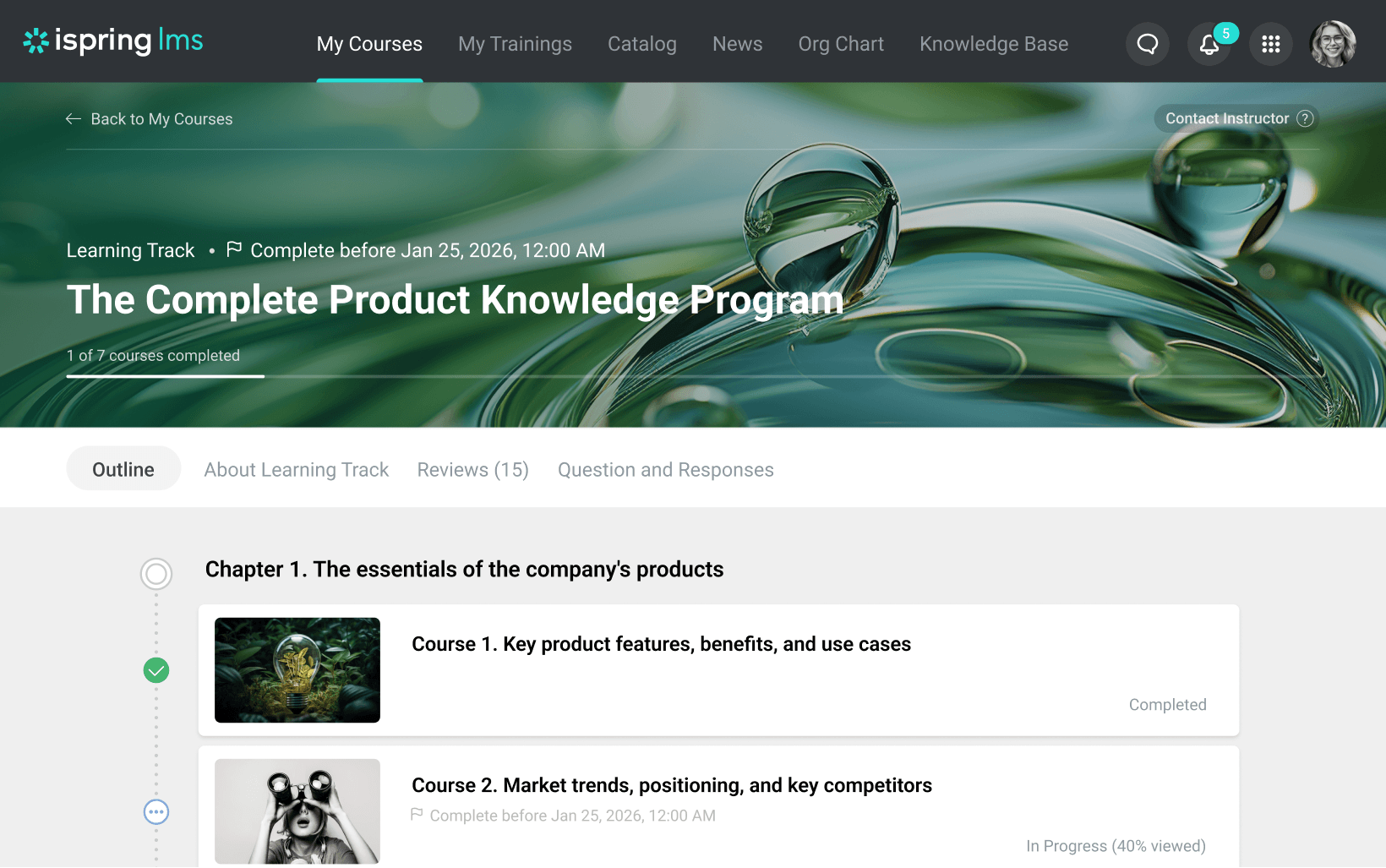
Pro tip: Use group-based learning tracks in iSpring LMS to place learners into shared cohorts. This way, progress feels collective rather than individual, which reduces drop-off and improves completion even further.
Building A Sustainable Learning Culture
A sustainable learning culture doesn't need more courses and complex interactions. What helps build it is a set of repeatable behaviors that make learning visible, shared, and easy to act on.
1. Tie Discussion Prompts To Real Work Tasks
After key modules and tracks, add short, practical discussion prompts (for example: "How would this apply to your current project?"). This shifts learning from theory to application and creates reusable peer-generated knowledge. Trainees can discuss these questions during live Zoom meetings, in group chats, or even personally.
2. Assign Visible Learning Roles
Rotate simple roles such as Discussion Starter or Practice Lead within learner groups. When responsibility is distributed, participation becomes expected and less instructor-dependent. This is also a great way to encourage peer accountability and normalize knowledge sharing across the group.
3. Actively Respond Within The Platform
Have instructors or managers answer questions and acknowledge contributions directly in the LMS instead of moving conversations to email or chat apps. Fast, in-context feedback is one of the strongest predictors of retention.
4. Track Interaction Together With Completion
Monitor discussion activity and peer interaction alongside course progress. Learners who stop interacting often disengage before they miss deadlines, giving L&D teams a chance to intervene early.
To support these behaviors, organizations need Learning and Development tools that are built for visibility and interaction. Remember to do your research and choose the platforms that integrate social learning capabilities into key training processes.
Final Word
Most organizations already have social learning in place to some degree, but it happens informally and easily disappears. When questions, explanations, and workarounds aren't shared, team members repeatedly solve the same problems from scratch. Companies that take social learning seriously capture and share these insights.
When you're launching your social learning strategy, don't try to do everything at once. Start small and design for repeatable workflows: short discussions, visible contributions, and shared practice tied to actual work. These patterns scale more reliably than any single course and deliver measurable gains over time.