
 ChatGPT
 Perplexity
 Claude
 Grok
Grok
Deconstructing Traditional Job Descriptions With An Industry Thought Leader
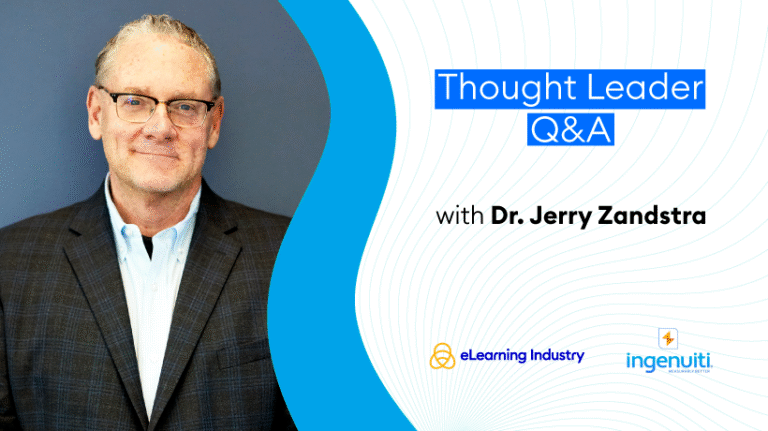
In an era where the shelf-life of professional skills is shrinking faster than ever, the traditional "job description" is no longer a blueprint for success—it's a bottleneck. As global enterprises grapple with rapid technological disruption, a fundamental shift is occurring: the move from rigid roles to a fluid, skills-first architecture. Today, Jerry Zandstra, Ingenuiti's Senior Director of Learning, who has been in the learning, training, and development space for more than 30 years, speaks with us about this transition and why it's not merely an HR trend, but a total reimagining of how human potential is identified, deployed, and retained.
What is a "skills-first" architecture, and why is shifting from rigid to more fluid roles such a challenge for modern organizations?
In my experience, a "skills-first" architecture is a fundamental pivot from seeing people as fixed job titles to seeing them as a dynamic portfolio of capabilities. Instead of a rigid hierarchy, we map granular skills to business needs, allowing us to deploy talent with much higher precision.
The challenge in moving from rigid roles to fluid ones isn't usually the technology, it's the cultural "unlearning." For decades, our entire corporate infrastructure, from pay scales and performance reviews to our very identities, has been anchored to a static job description. Asking a manager to share "their" talent across departments or asking an employee to embrace a shifting remit feels like losing solid ground. It requires a massive leap of trust and a total redesign of how we value work, moving from "who you are in the org chart" to "what you can solve right now."
Based on your years of experience, what are the risks of "talent hoarding," and what are some of the most common mistakes organizations make when it comes to skills mapping?
I've seen talent hoarding act as a silent killer of organizational agility. When managers "hide" their best people to protect their own KPIs, it creates a stagnant ecosystem. The risk is twofold: the organization misses out on high-impact cross-pollination, and your top performers—feeling stifled and underutilized—eventually leave for an employer that offers the growth they crave.
Regarding skills mapping, the most common mistake I see is "The Encyclopedia Trap." Organizations try to catalog every single skill a person possesses, resulting in a static, 500-page spreadsheet that is obsolete by the time it's finished. Another pitfall is ignoring adjacent skills; if you only map what someone does today, you miss the latent potential of what they could do tomorrow with minimal upskilling. Precision is great, but over-engineering leads to paralysis.
Why is it so imperative for organizations to deconstruct traditional job descriptions in order to disclose hidden talent and build an internal talent marketplace?
Traditional job descriptions allow us to see the skills required for a specific output. When we deconstruct these roles, we finally see the "hidden" talent—those specialized skills or past experiences an employee has that aren't being used in their current seat. Without this granular view, your internal talent marketplace is just a digital job board rather than a true engine for mobility.
It is imperative because business moves faster than hiring. If you can't see the skills already sitting in your quietest corners, you'll spend a fortune on external recruitment for capabilities you already own. By breaking jobs into tasks and skills, you empower employees to raise their hands for projects that match their passions, effectively turning a "worker" into a "contributor" across the whole enterprise.
Can you tell us more about your upcoming webinar, The Death of the Job Title: Building a Skills-First Architecture?
The guest panelist is a remarkable person and learning leader, Sarah Truchard, who is the Manager of Talent and Leadership Development at Citgo. She holds a Master's Degree in Educational and Instructional Technology from Texas A&M University and has spent many years working in L&D.
Want to expand on this topic? Join Sarah Truchard (CITGO) and host Jerry Zandstra (Ingenuiti) on 3/24/2026 at 12:00 PM EST for a deep dive into the roadmap of a skills-first transformation. They will move past theory to discuss the practical "how-to" of deploying capabilities across roles. This executive-level session is designed for CHROs, VPs of Talent, and Heads of Learning & Development at mid- to large-scale organizations who are navigating digital transformation and workforce modernization.
How can the right learning solutions help leaders navigate digital transformation and prioritize capabilities over roles?
The right learning solutions act as a bridge between high-level digital strategy and daily execution. For leaders, digital transformation is often overwhelming because they view it through the lens of replacing old roles with new ones. Modern L&D solutions change that narrative by providing visibility into underlying capabilities.
Instead of massive, one-size-fits-all training, the most effective solutions use microlearning and AI-driven diagnostics to deliver "learning in the flow of work." This allows leaders to pivot their focus from "Who do I need to hire?" to "What skills can we activate?" By providing real-time data on the workforce's actual skill proficiency, L&D empowers leaders to make evidence-based decisions, reducing the anxiety of the unknown and fostering a culture where adaptability is a measurable, rewarded asset rather than a vague expectation.
Wrapping Up
Thanks so much to Dr. Zandstra for sharing his insights on how the shift to a skills-first enterprise is as much a cultural revolution as it is a logistical one, and how, by moving beyond the "pedigree" of degrees and the silos of departments, organizations can finally unlock a truly dynamic internal marketplace—one where employees are defined by the value they deliver rather than the titles they hold. You can check out Ingenuiti's website to learn how they help organizations pave a path to agility and overcome challenges, from "talent hoarding" to real-time skill mapping, through custom learning journeys.