


"Tell Me Why" Backstreet Boys Understood Retention
Somewhere, right now, a millennial who cannot remember where they put their keys can still flawlessly perform the choreography to Bye Bye Bye. And honestly? That should humble all of us in Learning and Development.
Because if learners can remember:
- Every word to "I Want It That Way"
- Which member was "the mysterious one"
- Entire music video plots from 1999
…but cannot remember last quarter's compliance training…
We may need to have a conversation. A respectful one. But a conversation nonetheless.
The truth is, memorable learning doesn't happen by accident. Neither did boy bands. From New Kids on the Block to Backstreet Boys, *NSYNC, One Direction, BTS, and every emotionally devastating heartthrob collective in between, these groups were engineered to stick in our brains.
And surprisingly? The same psychological principles that made boy bands unforgettable are the exact principles that make training memorable too. So let's talk about the science of "training that sticks" through the deeply serious academic lens of frosted tips and coordinated dance numbers.
Why Most Training Is Forgettable
Let's start with the uncomfortable truth. A lot of workplace training is designed for completion, not retention.
We focus on:
- Covering information.
- Checking boxes.
- Getting through slides.
- Tracking completions.
And then we act surprised when learners retain approximately three fragments of information and one stock photo of someone wearing a headset. But memory doesn't work like a filing cabinet. Learning sticks when the brain decides: "This matters."
Research around learning retention consistently shows that emotion, repetition, context, and active participation all play major roles in long-term recall. And the brain tends to prioritize things that are:
- Emotional
- Repetitive
- Distinctive
- Social
- Story-driven
- Personally meaningful
You know, like boy bands.
The Boy Band Formula Was Basically Cognitive Science
Boy bands weren't just music groups. They were memory machines.
Every member had:
- A recognizable identity
- A clear role
- A distinct emotional appeal
There was:
- The bad boy
- The sweetheart
- The mysterious one
- The funny one
- The future solo act
- The one your parents trusted slightly more than the others (usually overlapped with the sweetheart if it was a 5-member group)
This wasn't random. It made the group cognitively easier to process and remember. Which brings us to an important learning principle: Distinctiveness improves memory. When everything in training feels the same, the brain compresses it into beige corporate soup. But when elements are differentiated, emotionally resonant, or surprising, learners retain more.
Your Training Needs A "Justin Timberlake / Harry Styles"
I said what I said. Every memorable learning experience needs standout elements. Not chaos. Not gimmicks. Distinctive anchors.
In cognitive psychology, this is tied to the Von Restorff Effect, the idea that unusual or emotionally distinct items are more likely to be remembered.
Translation? Your brain remembers:
- The weird thing
- The funny thing
- The emotionally charged thing
- The thing that broke the pattern
This is why:
- Stories work
- Humor works
- Scenarios work
- Surprise works
And why no one remembers Slide 47 of "Q3 Policy Updates_Final_FINAL_v2."
Repetition Matters (But Please, Not The Soul-Crushing Kind)
You know why you still know the lyrics to songs you haven't heard in 15 years?
YOU ARE…_________ [you know you know it]
THE ONE…_________ [come on, it's already in your head]
Repetition. But importantly, meaningful repetition.
Boy bands mastered this:
- Repeated choruses
- Repeated themes
- Repeated emotional messaging
The brain loves patterns. In learning science, repetition strengthens neural pathways and improves recall. But here's where L&D sometimes goes horribly wrong: We confuse repetition with dumping the same information onto learners 14 different times in 14 equally boring ways.
That's not reinforcement, that's hostage negotiation.
Effective repetition:
- Revisits concepts in different contexts.
- Encourages retrieval.
- Builds application over time.
This is why scenario-based reinforcement and spaced learning are so powerful in modern training design.
Emotion Is The Real Lead Singer
Here's the part many organizations overlook: emotion drives memory.
The amygdala helps determine what gets stored long-term. That means learners are more likely to remember experiences tied to:
- Humor
- Curiosity
- Tension
- Surprise
- Empathy
- Pride
- Even mild embarrassment (respectfully)
Which explains why you remember:
- Your middle school crush's lunch order.
- Every lyric to songs tied to emotional memories.
- That one horrifying icebreaker from onboarding in 2017.
Emotion creates retrieval cues. Dry information alone rarely does.
Storytelling Is Basically The Boy Band World Tour Of Learning
Nobody fell in love with boy bands because of raw data. People connected to:
- Narratives
- Personalities
- Drama
- Identity
- Relationships
Story creates context. Context creates meaning. Meaning improves memory.
This is why storytelling remains one of the most effective instructional tools we have. This is also why strong learning experience design focuses on creating emotional and cognitive engagement rather than simply delivering information.
The brain remembers narratives more effectively than disconnected facts because stories:
- Organize information.
- Trigger emotion.
- Create sequence.
- Improve retrieval.
Which means your training should stop sounding like "Review the following policy framework…"
…and start sounding more like "Here's a situation you're probably going to encounter in real life."
Multi-Sensory Learning: Or, Why We All Learned Dance Moves Against Our Will
Boy bands weren't just auditory experiences. They were:
- Visual
- Social
- Kinesthetic
- Emotional
There were music videos. Dance moves. Fashion. Concerts. Merchandise (yes, I still have my set of NKOTB bedsheets, and I refuse to be ashamed). Magazine interviews. Fan communities.
The more ways the brain engages with information, the stronger encoding becomes.
Which is why strong learning experiences combine:
- Visuals
- Discussion
- Practice
- Reflection
- Application
Not because it's trendy, but because it works.
Social Learning Is Criminally Underrated
Let's be honest; half the fun of boy bands was arguing with your friends about which member was objectively superior. (And yes, people absolutely ended friendships over this.) But socially discussing information strengthens memory.
Humans learn socially. Always have. Which is why:
- Discussion
- Peer learning
- Roleplay
- Collaboration
- Coaching
…are often more impactful than passive content consumption.
Learning sticks better when people actively process it together.
The Real Problem: We Design For Completion, Not Recall
This is the big one. Most training is optimized for:
- Scalability
- Speed
- Compliance
- Efficiency
Very little is optimized for remembering.
If learners cannot retrieve and apply information later, the learning experience failed, regardless of completion rates.
That's the uncomfortable truth.
So What Actually Makes Training Stick?
If we strip away the glitter jackets and emotionally aggressive key changes, memorable learning typically includes:
1. Emotional Connection
People remember what makes them feel something.
2. Distinctiveness
Novelty and surprise improve recall.
3. Repetition Over Time
Spaced reinforcement beats information dumping.
4. Storytelling
Context improves encoding and retrieval.
5. Active Participation
Thinking beats passive consumption.
6. Social Processing
Discussion deepens retention.
7. Real-World Application
Use strengthens memory.
In other words, memorable learning feels experienced, not merely consumed.

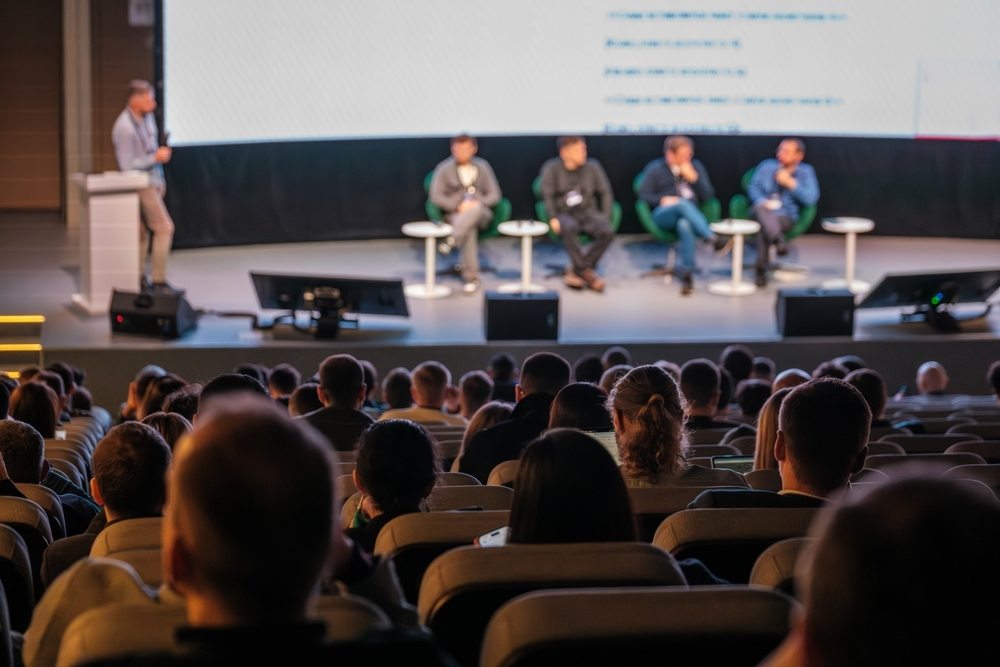
I refuse to age myself by revealing which era of boy bands shaped my youth, but here is a photo of myself at a New Kids on the Block/Backstreet Boys concert as an adult, which honestly tells you everything you need to know anyway.
Final Thought: Be The BTS Of Training
Okay, maybe not literally. Your compliance course probably does not need synchronized choreography. (Though honestly? I'd at least hear the pitch.)
But memorable training does need:
- Personality
- Emotion
- Reinforcement
- Distinctiveness
- Human connection
The brain isn't designed to retain endless generic information. It's designed to remember what feels meaningful.
So the next time you're designing training, ask yourself: "Will learners remember this six months from now?"
Or will it disappear into the same void as:
- Password reset emails
- Corporate mission statements
- And every cybersecurity module with stock photos of hackers in hoodies?
Because if New Kids on the Block, Backstreet Boys, and BTS can live rent-free in our heads for decades…your training can probably do a little better, too.
Image Credits:
- The photo within the body of the article was supplied by the author.