

 ChatGPT
 Perplexity
 Claude
 Grok
Career Development Goals For Work: Why They're Needed
Most employees give vague answers when asked about their career goals, and even after six months, those answers often stay the same. This usually means they haven't taken the time to turn their wishes into real goals. Career development goals help bridge that gap. In this article, we'll explain what these goals are, why they matter, the different types, how to use the SMART framework to set them, and share some examples you can use.
What Are Career Development Goals?
Career development goals are clear targets you set to learn new skills, take on more responsibility, and grow in your job over time. These goals can be short-term, such as completing a certification, or long-term, such as moving into a senior role in the next few years. No matter the timeline, the main idea is to turn a general wish to improve into a specific goal you can work toward.
These goals connect personal ambition with the company's needs. While employees can set their own goals, good managers and strong L&D programs help shape and support them. Often, what employees want to achieve matches up with the skills the organization is looking for.
Why Career Development Goals Matter For Employees And L&D Teams?
Clear goals give employees direction in their daily work. Instead of just finishing tasks, they know they're working toward something bigger. This often leads to higher engagement. Employees who see a future in their job are less likely to look elsewhere and are more motivated to contribute to projects that help them grow.
For L&D teams, knowing employees' individual goals helps them design better training programs. For example, if some want to learn project management and others want to build leadership skills, L&D managers know what to focus on next. Without this input, they have to guess what employees need.
Types Of Career Development Goals
Not all goals are alike, and a good career development plan usually includes several different types.
Skill-Building Goals
These goals are about learning new skills or improving the ones you already have. This could mean getting certified in a tool, learning new software, or working on soft skills like teamwork and public speaking. Skill-building goals are usually easy to measure because you can see when you've passed a test, finished a course, or given a presentation.
Leadership And Advancement Goals
Leadership and advancement goals are about making progress, whether that means managing a team for the first time, leading a bigger project, or aiming for a C-suite position. These goals usually take longer to achieve and depend on factors such as budget, timing, and the organization's needs.
Networking And Visibility Goals
Growth is not just about building skills. It is also about being noticed for your strengths by the right people. Networking and visibility goals help with this. They might include joining cross-functional projects, presenting at meetings, leading town halls, or connecting with senior leaders. These goals are often missed, but they play a big role in promotions.
Work-Life And Personal Growth Goals
Career development is not only about getting a promotion or a raise. For many people, it means having more flexibility, setting clear boundaries, or finding more enjoyment in their work. Goals might include asking for a hybrid work schedule, cutting down on after-hours emails, or deciding which weekend tasks to take on. These goals are just as important as moving up the ladder, especially for those who are already satisfied in their roles.
How To Set SMART Career Development Goals
Setting a goal is usually easy. The real challenge is making sure the goal is clear and specific. When goals are specific, people are more likely to take action. The SMART framework helps by giving structure to the goal-setting process.
Specific, Measurable, Achievable, Relevant, Time-Bound
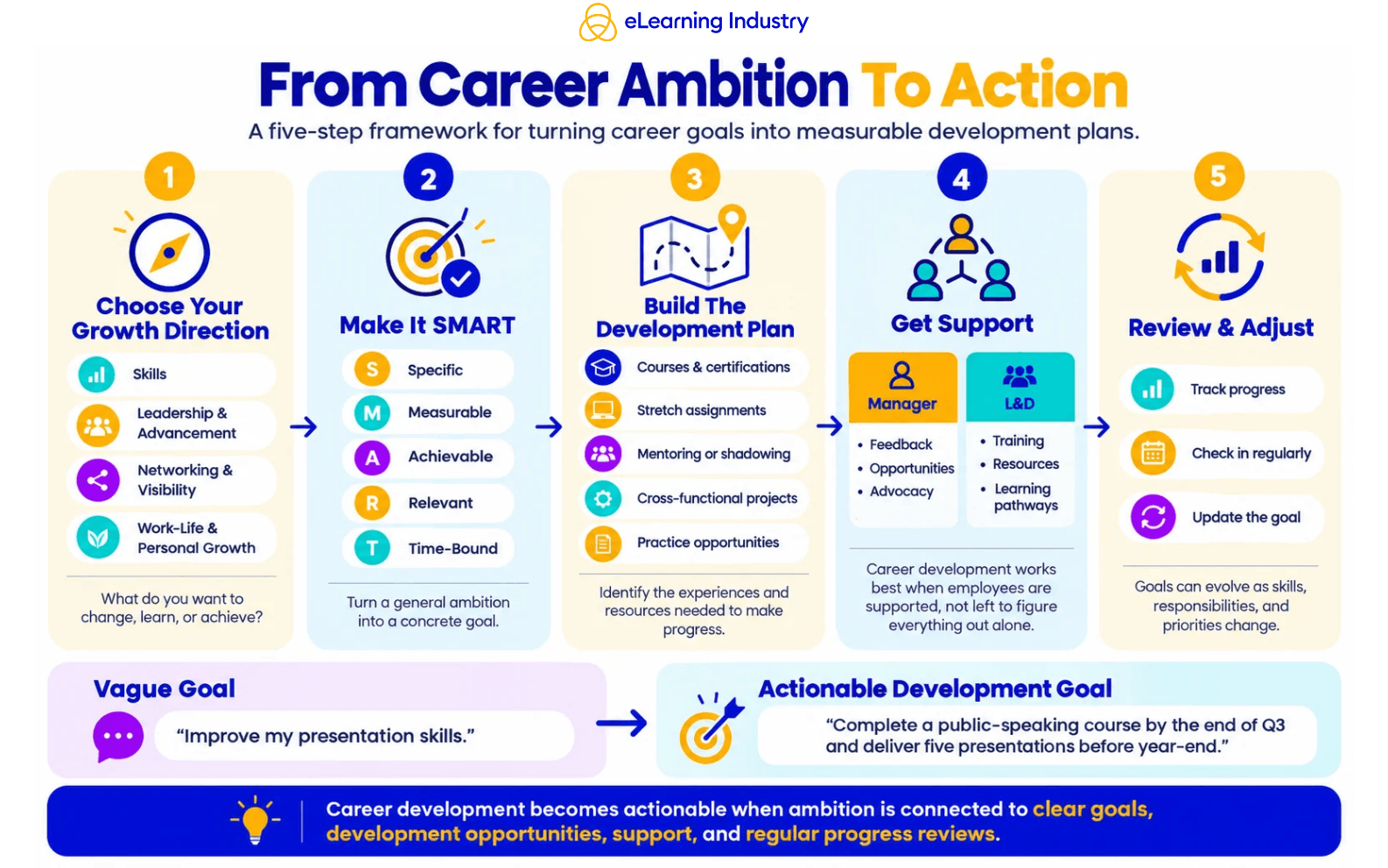
SMART stands for five qualities that make a goal actionable: Specific, Measurable, Achievable, Relevant, and Time-bound.
- Specific: Clearly stating what someone wants to achieve, instead of just saying "get better at leading people."
- Measurable: Checking if the action happened.
- Achievable: The goal is realistic with the time and resources available.
- Relevant: Connecting the goal to what the person or organization truly wants.
- Time-bound: Setting a deadline, since goals without a timeframe often get ignored.
Example Of A SMART Career Development Goal
Instead of just saying "improve my presentation skills," a SMART goal would be: "Finish a public-speaking course by the end of this quarter and give at least five presentations before the year ends." This version is more specific, realistic, measurable, has a clear deadline, and helps increase visibility in the organization.
Career Development Goals Examples And Templates
Looking at real-life examples often makes it easier to use the framework than just reading about it in theory. Here are some common examples:
Short-Term Goal Examples
Good short-term career goals for three to six months might be earning a certification related to your job, shadowing someone on a nearby team to learn their workflow, or taking on a new task that builds your skills and pushes you a bit outside your comfort zone.
Long-Term Goal Examples
When you look a year or more ahead, your goals usually get bigger. For example, you might aim to move into a management role, switch to a new department, or build enough expertise to become the go-to person on your team. These goals take time, so breaking them into smaller, manageable steps can make them feel more achievable.
Manager-Employee Goal-Setting Template
A simple structure works better than a complicated one. Start by looking at the employee's current role and skills. Then set a goal for building new skills and another for advancement or visibility. Identify the resources needed and schedule regular check-ins. Keeping things simple and organized helps everyone stay focused on their goals.
Aligning Career Development Goals With L&D Programs
Workplace development goals need the right support to be effective. L&D teams should regularly review employee goals, identify patterns, and incorporate them into training programs. This gives employees clear direction and helps prevent their goals from being forgotten.
When goals and L&D programs line up, everyone benefits. Employees get the resources they need to reach their goals without having to search on their own. L&D teams also know what to focus on next, whether it's technical skills, leadership, or soft skills. Programs designed this way usually see higher completion rates because employees are working toward goals they care about.
How Managers Can Support Employee Career Development
Most managers want to help, but often stick to general encouragement instead of real support. Instead, they should talk with employees to learn what they truly want, not just where the manager thinks they should go. After that, managers can guide them to helpful resources, such as internal courses, key projects, or colleagues in other departments with the experience they're looking for.
It's also important to have regular check-ins, not just yearly reviews, because progress can shift and goals might change. Managers who support their team's growth and push for the resources they need, like budgets or new opportunities, build more trust than those who just hold meetings and then move on.


