


What Is Course Evaluation?
Course evaluation means carefully measuring how well a learning program achieves its intended goals. If you're wondering what a course evaluation is, it goes beyond collecting opinions at the end of a course. A comprehensive course evaluation definition includes gathering and analyzing feedback, assessment results, learner engagement data, and performance outcomes to determine whether the training is effective.
So, what is a course evaluation designed to measure? Good course evaluations look at several important areas, such as learner satisfaction, knowledge gained, skill development, training effectiveness, and business impact. These measures help Instructional Designers see if a course is valuable for both learners and the organization.
It is important to know the difference between course evaluation and learner assessment. Course evaluation looks at the quality and effectiveness of the training program, while learner assessment measures a person's knowledge, skills, or performance. In short, course evaluations check the program, and assessments check the learners.
Knowing what course evaluations are and how they work is key to building learning experiences based on data. Instead of guessing, organizations can use what they learn from evaluations to improve content, adjust how they deliver training, and make sure learning matches business goals.
Why Course Evaluation Matters For Modern Learning Programs
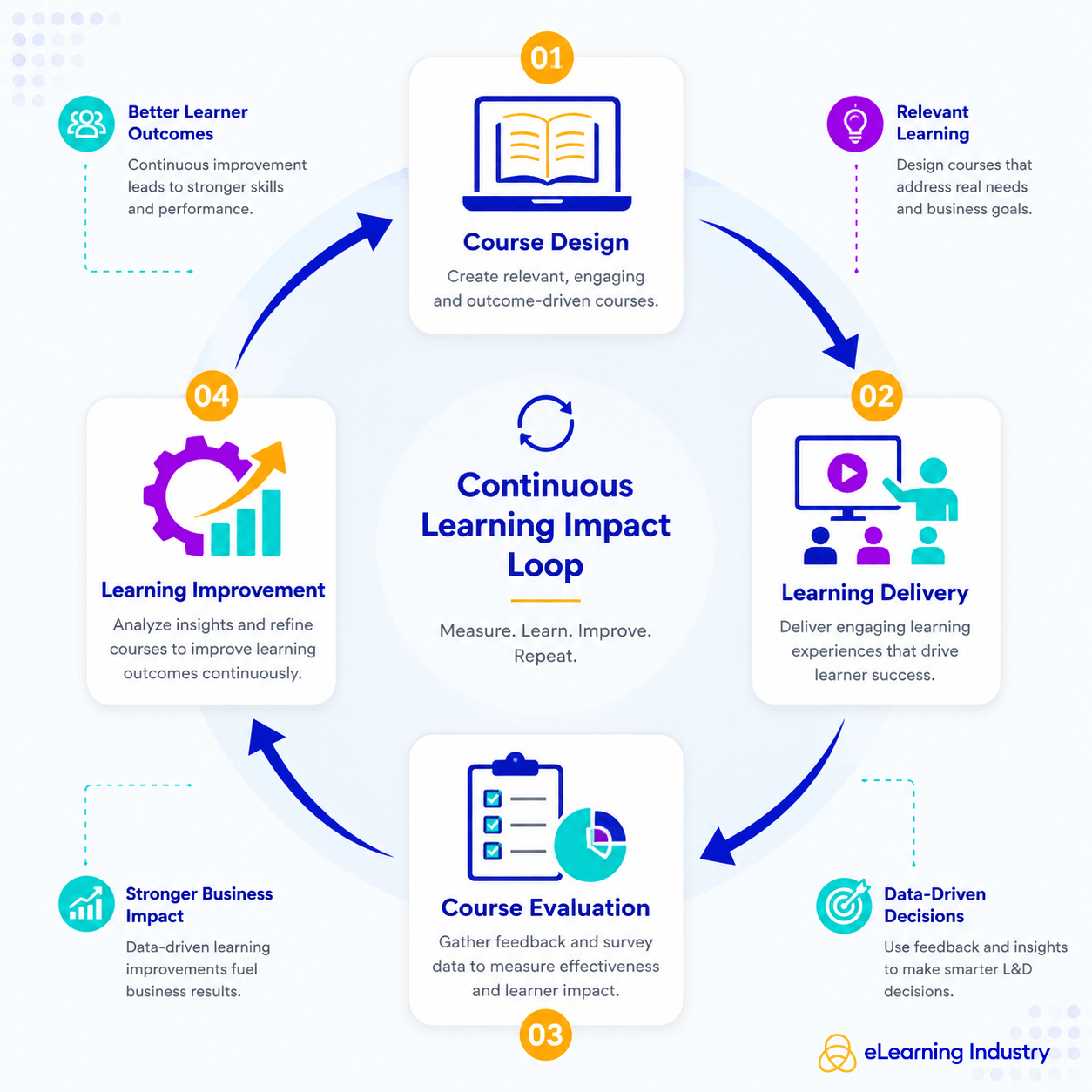
Course evaluation helps organizations see if their learning programs are meeting their goals. A thoughtful evaluation process goes beyond just an end-of-course survey and gives useful feedback that leads to better learning, stronger business results, and ongoing improvement.
For Instructional Designers
Instructional Designers use course evaluation data to see what works well and what could be improved. Feedback from surveys or forms shows if the content is relevant, interesting, and easy for learners to access. This information helps them adjust activities, improve the course structure, and fix any gaps that might affect how well learners do.
For L&D Teams
L&D teams use course and training evaluation questions to see how effective their learning programs are. By looking at feedback, assessment results, and engagement data, they can decide how to update the curriculum and where to invest in future training. Instead of guessing, teams use real evidence from surveys to make their programs better over time.
For Businesses
Course evaluation gives HR leaders and business stakeholders a clear view of how learning affects both employees and the organization. A good survey shows whether employees are gaining the skills and knowledge they need to do their jobs better. This information helps organizations link training efforts to productivity, employee growth, and overall business goals.
For ROI
Course evaluation also helps show the Return On Investment for training. By combining feedback from courses with performance data, organizations can better see how learning leads to real results. In regulated industries, evaluation forms and questions help meet compliance and quality standards by recording how effective training is and pointing out where things can improve.
We don't improve what we don't measure. Course evaluation is how we turn learning from an expense into a strategic investment that drives real business performance.
-Christopher Pappas, CEO and founder of eLearning Industry
The Four Levels Of Course Evaluation
Course evaluation works best when it does more than just gather learner opinions and actually measures if the training leads to real results. The Kirkpatrick Model is a popular way to evaluate learning programs. It breaks evaluation into four levels: Reaction, Learning, Behavior, and Results. These levels help Instructional Designers see not only how learners feel about a course, but also if the learning leads to better job performance and business outcomes.
Level 1: Reaction
The first level looks at learner satisfaction, course feedback, and how valuable learners think the course is. This is usually done with a course evaluation or end-of-course survey. These surveys often ask if the content was relevant, engaging, and useful for the learner's job. While positive feedback suggests a good experience, it does not mean that real learning has happened.
Level 2: Learning
The second level assesses whether learners have gained new knowledge or skills. Organizations often use quizzes, tests, simulations, or hands-on exercises to see what people have learned. These tools help show whether the course met its goals and whether participants can demonstrate the skills they were supposed to learn.
Level 3: Behavior
At this point, the main question is whether employees are using what they learned at work. Measuring changes in behavior often requires time and regular observation. Managers can assess these changes through performance reviews, direct observation, and follow-up surveys to determine whether employees are using new skills and whether the training has made a difference in their daily routines.
Level 4: Results
The last level looks at business results. Depending on what the training was meant to achieve, organizations might track metrics such as productivity, sales, customer satisfaction, compliance, and other key measures. This step shows how training links to company goals and Return On Investment.
- Expert Insight: The strongest course evaluation strategies combine all four levels rather than relying solely on course feedback or learner satisfaction scores. By using multiple evaluation methods, organizations gain a more complete picture of training effectiveness and can make better decisions about future learning investments.
Course Evaluation Form Template
A course evaluation is most useful when it collects good data. A well-designed evaluation form should be clear, organized, and match the course's learning goals. No matter if you are making a template for in-person, online, or blended learning, the main aim is to get feedback that helps you improve.
A good course evaluation form usually has five main sections.
- Learner Information: It can include optional details like job role, department, experience level, or location. This helps you spot trends among different groups of learners.
- Course Content Evaluation: It looks at how relevant and high-quality the material is. Example questions are: "Was the content relevant to your role?" and "Did the course meet its stated objectives?"
- Instructor Evaluation: It checks how well the instructor led the course. You might ask: "Was the instructor knowledgeable?" and "Did the instructor encourage participation?"
- Learning Outcomes: It looks at how the course has affected participants. Typical questions are: "Can you apply what you learned to your work?" and "Did the course improve your knowledge or skills?"
- Open Feedback: It provides a space for comments, suggestions, and improvement recommendations. Many organizations use course evaluation templates and class evaluation forms to standardize data collection while ensuring meaningful course feedback.
Course Evaluation Examples And Sample Questions
Course evaluation works best when it matches the specific goals of a learning program. Looking at real-world examples can help Instructional Designers pick the right questions, metrics, and ways to evaluate.
Compliance Training
Corporate compliance training is a typical example. The main goals of evaluation are to assess whether learners understand the policies, identify any knowledge gaps, and ensure compliance with regulatory standards. Sample questions might be:
- "Do you understand the compliance requirements covered in this course?"
- "How confident are you in applying these policies in your role?"
Common metrics include completion rates, test scores, and learners' confidence levels.
Leadership Development Programs
In these cases, evaluations focus on leadership skills, how well participants communicate, and how they use what they learned at work. Feedback questions might be:
- "How prepared do you feel to lead your team after completing this program?"
- "Which leadership skills have you applied since the training?"
These evaluations often use both learner surveys and manager feedback to see the long-term effects.
Technical Skills Training
Here, the focus is on measuring what learners know and how their behavior changes. Example questions for learners are:
- "Can you successfully perform the task demonstrated in the course?"
- "How frequently have you used these new skills in your work?"
Metrics might include certification results, hands-on assessments, and improvements in job performance.
Other Training Programs
For any training program, course reviews might include comments like:
- "The content was highly relevant and immediately applicable to my job."
- "More hands-on practice would improve the learning experience."
These reviews offer useful insights that complement survey data.
Examples Of Effective Course Feedback
Course evaluations are much more helpful when learners give detailed feedback instead of just rating their satisfaction. Good feedback shows instructional designers what worked, what did not, and how to improve future courses. Looking at feedback examples can also help organizations spot trends and make better decisions about course design and delivery.
Positive Feedback Examples
Effective positive feedback explains why learners found a course useful. For example:
- "The course content was relevant to my daily responsibilities, and I was able to apply several techniques immediately after completing the training."
- "The instructor used real-world examples that made complex concepts easier to understand."
- "The interactive activities kept me engaged throughout the course and helped reinforce key learning points."
These course feedback examples give more detail than just saying "Great course." They point out what made the learning experience better.
Constructive Feedback Examples
Constructive feedback identifies opportunities for improvement while remaining clear and professional. Examples include:
- "The course objectives were clear, but some modules contained too much information and could be divided into shorter lessons."
- "More practical exercises would help learners apply the concepts more confidently."
- "Additional examples related to my industry would make the content more relevant."
These online course feedback examples help Instructional Designers improve course content, boost engagement, and make sure training fits what learners need.
What Good Feedback Looks Like
The most useful course feedback sample responses are:
- Specific: They identify a particular aspect of the course.
- Actionable: They suggest what could be improved.
- Outcome-focused: They explain how the course affected learning or performance.
For instance, rather than saying "The course was confusing," a learner could write, "The navigation was difficult to follow, which made it harder to complete activities efficiently."
Course Evaluation Software: Features To Look For
Course evaluation software makes it easier for organizations to gather, review, and use learner feedback compared to traditional spreadsheets. Spreadsheets can hold data, but they are not ideal for handling lots of responses, spotting trends, or linking feedback to bigger learning goals. As training programs expand, many organizations switch to dedicated tools to simplify and improve course evaluations.
- Survey automation: Good software can send out course evaluation surveys, remind learners to respond, and collect answers automatically. This saves time and usually leads to more people taking part.
- LMS integrations: When evaluation tools connect directly with a Learning Management System, organizations can send out course feedback surveys right after a course ends and keep all learner data in one place. This makes things easier for both learners and administrators.
- Learning analytics: Besides collecting course feedback, organizations need to see completion rates, engagement, assessment results, and learner progress. This information helps Instructional Designers spot trends and make better decisions.
- Reporting dashboards: They turn survey data into clear, useful reports. Dashboards help you review course evaluation questions, compare results across programs, and share findings with stakeholders.
- Benchmarking features: These can also help organizations compare results across departments, courses, or past data. This lets teams see if a class or course evaluation is meeting expectations.
- AI-powered insights: These tools can review open-ended course feedback, find common themes, and point out areas that need attention.
Conclusion
Course evaluation is more than just an administrative task; it is a strategic process. By using surveys, feedback forms, analytics, and performance metrics together, organizations and Instructional Designers get a full picture of how effective their training is. When organizations make course evaluation an ongoing habit, they can improve the learner experience and boost business results. As learning becomes more closely tied to business performance, strong evaluation practices will be key to building training programs that are measurable, flexible, and aligned with long-term goals.