
 ChatGPT
 Perplexity
 Claude
 Grok
Grok
What Is Place-Based Learning?
Place-based learning is changing how organizations, educators, and communities think about learning. It focuses on building knowledge through real-world experiences rather than teaching ideas in isolation. As technology and skill needs change quickly in the workplace, learning methods that connect theory to real situations are becoming more important.
Although place-based learning began in K–12 education, its core principles now shape workplace training, leadership programs, community projects, sustainability efforts, and hands-on learning across many fields. By engaging learners with their local environment, culture, history, and real-world challenges, this approach makes learning more relevant and memorable.
So, what does place-based learning look like in action? Unlike traditional teaching, which often keeps theory and practice separate, place-based learning places learners in real-world situations where they apply what they learn. This could mean studying local ecosystems, working with community groups, or solving problems at work. Because the learning is connected to familiar places and real experiences, people understand and remember more. This approach also helps learners adapt, stay engaged, and see how their learning connects to real results.
If you want to know what place-based learning is, see if it fits your organization, or find new ways to teach, understanding this method can help you create better programs. This guide will give you a clear definition, explain the main ideas, show the benefits, offer real examples, share tips for using it, and explain why place-based learning matters for today's learning and development professionals.
Core Principles Of Place-Based Pedagogy
Learning Through Local Context
Place-based learning is based on the idea that people understand more deeply when they connect what they learn to the places where they live, work, and spend time. This approach values local environments, cultures, histories, and communities as real-life settings for learning. Instead of seeing knowledge as something abstract, it encourages learners to use what they learn in real situations, making lessons more relevant and memorable.
Community Partnerships
Building strong partnerships with local organizations, businesses, nonprofits, and community leaders is key to making place-based education work well. These partnerships help learners see different points of view and make sure learning activities tackle real problems. For organizations, working with the community can also support social responsibility goals and offer hands-on learning experiences.
Inquiry-Based Learning
Rather than just listening to information, learners ask questions, look at evidence, and find solutions to local problems. This way of learning builds critical thinking, problem-solving, and adaptability, which are important skills in today's workplaces.
Interdisciplinary Learning
Place-based learning often brings together different subjects. Solving a local problem might need ideas from environmental science, history, technology, business, or communication. This helps learners think more connectedly and see how knowledge from different areas fits together.
Reflection And Action
Reflection turns experience into real learning. When learners look back on what happened and think about the bigger picture, they understand more and can find ways to make a positive difference in their communities or organizations.
Why Place-Based Learning Works
Place-based learning is effective because it connects knowledge to real-world experiences rather than teaching information in isolation. Studies in educational psychology and adult learning show that people are more likely to engage with, remember, and use new knowledge when it relates to their surroundings and real experiences. This is closely related to experiential learning. Because of this, place-based learning is now a popular method in schools and workplaces, especially for organizations that want to build adaptable, critical thinkers.
Increased Learner Engagement
A major benefit of place-based education is that it increases learner engagement. When learners explore their local communities, environments, or workplaces, they can quickly see why what they are studying matters. This matches the idea of authentic learning, which focuses on solving real problems instead of just doing abstract tasks. When learning feels meaningful, people are more likely to participate and pay attention.
Better Knowledge Retention
Another important advantage is better knowledge retention. Contextual learning theory says that people remember information more easily when it is linked to a real setting or experience. Instead of just memorizing facts, learners make lasting connections by using what they learn in their own communities or workplaces. This hands-on approach leads to a deeper understanding than just listening to lectures.
Building Critical Thinking Skills
Place-based learning also helps build critical thinking skills because learners tackle complex issues that do not have just one right answer. They need to look at evidence, think about different viewpoints, and make decisions based on local situations. This kind of thinking goes beyond just knowing facts and helps learners develop problem-solving skills that are useful in many jobs today.
Practicing Teamwork
Place-based learning often includes working with classmates, local groups, or community organizations, so teamwork is a big part of the experience. Learners get to practice communicating, negotiating, and making decisions together while hearing different points of view.
Boosting Motivation
This approach also helps boost motivation. When learners have control, see the importance of their work, and notice its real impact, they are more likely to take charge of their learning. Knowing that their efforts help solve real problems in their community or workplace gives them a stronger sense of purpose than just doing made-up assignments.
Place-Based Learning Examples
Place-based learning examples show that people learn best when they tackle real challenges in their own communities. In schools, workplaces, or healthcare settings, this approach links what we learn to real-life situations, making knowledge easier to remember and apply.
K–12 Environmental Science
A common example of place-based education is when students study the health of local ecosystems. Rather than just reading textbooks, they collect and test water from nearby rivers or lakes, check for different species, and share their findings with people in the community. This hands-on work helps them learn science and encourages them to care for the environment and their community.
Community History Projects
Community history research is another good example of place-based learning. Students talk to long-time residents, collect old photos and stories, and build digital archives to keep local history alive. These projects help students build research and communication skills and show them how history affects their own communities.
Corporate Onboarding
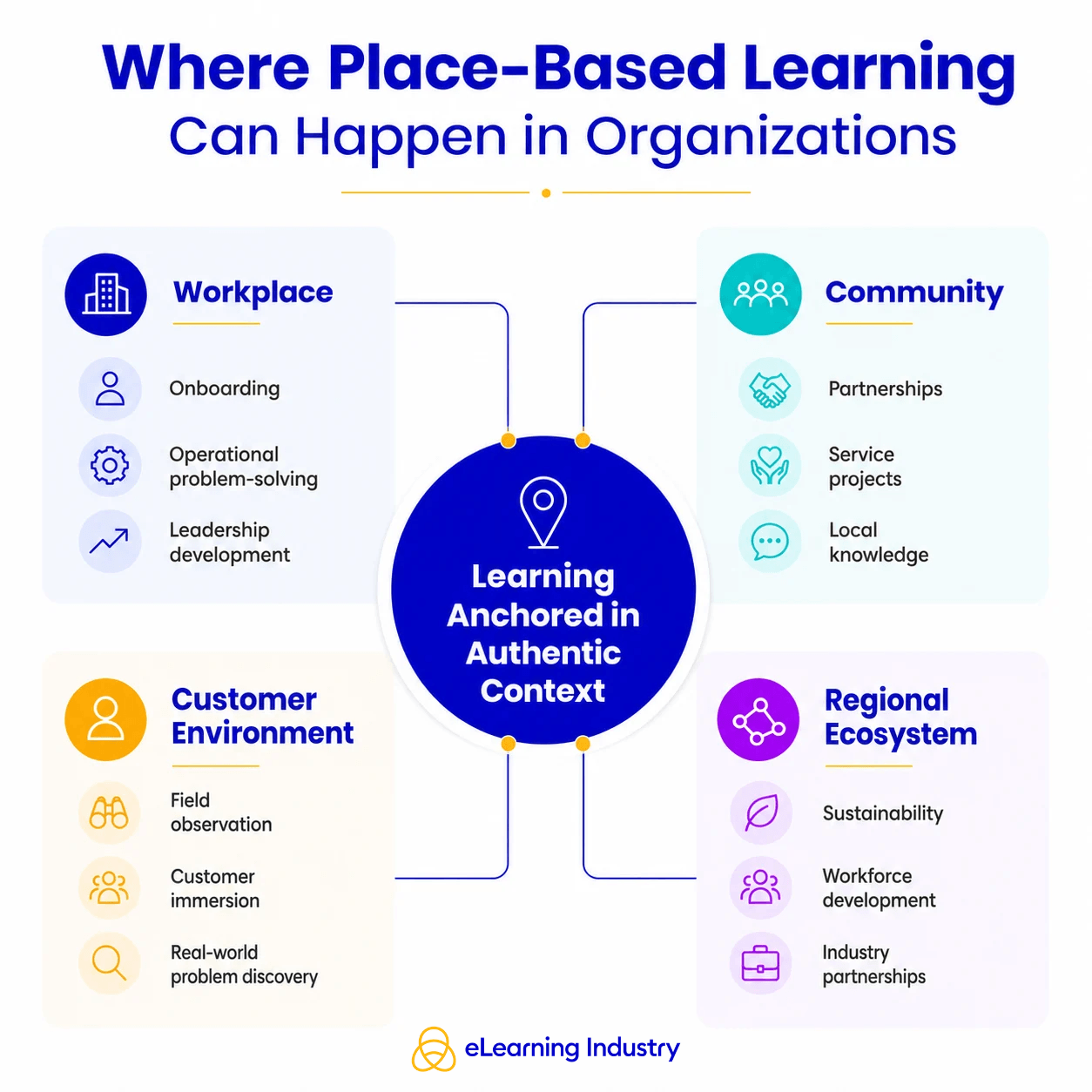
Place-based learning is useful outside of schools, too. For example, during onboarding, companies can help new employees get to know local customers, visit nearby offices, and learn about community partnerships. Seeing the company's culture in action helps new hires understand how business goals fit with local needs, which leads to better engagement and quicker adjustment.
Leadership, Healthcare, And Sustainability
Leaders can also learn more by focusing on real situations in their own areas. Instead of just reading case studies, managers can solve local problems such as staff shortages or supply issues. Healthcare workers can make better choices by looking at local health trends and needs. To support sustainability, organizations can work with communities to restore nature, reduce their environmental impact, or support social projects. In all these cases, place-based learning shows that people learn more when their lessons connect to their daily lives.
Benefits For Organizations And Learning Leaders
Place-based learning goes beyond traditional education and can help organizations create more engaging and relevant learning experiences. Although it started in schools, its ideas fit well with the goals of HR, L&D, and talent development teams who want to boost performance by linking learning to real workplace and community situations.
Higher Employee Engagement
A key benefit is higher employee engagement. People are more willing to learn when they see how it connects to their daily work. When training includes local business issues, market trends, or community projects, it turns abstract ideas into real experiences that boost participation and motivation.
Knowledge Retention
Learning in real environments also helps people remember and use new knowledge. Instead of just focusing on theory, place-based education encourages learners to practice skills in familiar settings, making it easier to remember and apply what they learn at work.
Practical Skill-Building
Another advantage for learning leaders is the opportunity to build skills in real situations. Whether employees are working on leadership, problem-solving, communication, or decision-making, learning in real workplace or community settings helps them develop abilities that support business goals. This hands-on approach is at the heart of place-based learning, which focuses on learning through real-world experiences rather than just absorbing information.
Stronger Leadership
Organizations can also build stronger leaders by creating programs that focus on local business challenges, teamwork across departments, or working with local partners. Leaders who learn by solving real problems are better prepared to handle change, make good decisions, and deal with complex situations.
Innovation
Place-based learning also encourages innovation. When learners look at local opportunities, customer needs, or business challenges, it sparks creative thinking and ongoing improvement. These experiences help connect employees to company values, local communities, and a shared purpose.
Company Reputation
Community partnerships are another smart move for HR and talent teams. Working with schools, nonprofits, or local groups creates real learning experiences, builds a stronger employer reputation, and helps develop future talent. These partnerships also support ESG and sustainability goals by linking employee growth with social responsibility and community impact.
Developing Local Workforce
Finally, place-based education also helps develop the local workforce by giving employees skills that match local economic and industry needs. For L&D professionals, place-based learning is more than just a teaching method. It is a strategy that links learning, business performance, and community value, helping companies build strong teams ready for future challenges.
Best Practices For Implementing Place-Based Learning
1. Start With Authentic Local Challenges
Place-based learning works best when it starts with real issues that learners can see, experience, or affect in their own communities or workplaces. Instead of using made-up scenarios, link learning to real challenges like sustainability projects, workforce needs, customer concerns, or local economic changes. This way, learning is rooted in real situations, making it more relevant and easier to remember.
2. Build Community Partnerships
A key part of place-based education is working with people in the community. Schools might team up with local groups, and businesses can involve customers, nonprofits, or industry groups to make learning more meaningful. These partnerships help learners see different viewpoints, build problem-solving skills, and use what they learn in real situations. This hands-on connection is central to place-based learning.
3. Encourage Learner Ownership
Whether you are using place-based education or corporate training, learners should take an active part in finding problems, asking questions, and coming up with solutions. When participants have more control, they become more curious, think more critically, and take more responsibility. Rather than just giving out information, facilitators help learners explore issues that are important to their community or workplace.
4. Blend Digital And In-Person Experiences
Today, place-based learning often mixes in-person activities with digital tools. Online collaboration platforms, mapping software, mobile apps, and multimedia storytelling can help learning go beyond one place while still keeping it connected to the local area. This mix also works well for teams that are hybrid or spread out.
5. Measure Both Learning And Impact
Effective place-based learning is about more than just checking what students know. Look at business or community results as well as how learners perform. Tracking factors such as engagement, teamwork, project outcomes, and stakeholder feedback provides a fuller view of success and demonstrates the lasting value of place-based teaching.
6. Reflect Continuously
Reflection helps turn experiences into lasting lessons. Ask learners to reflect on what they learned, how their views changed, and how their new insights might guide future choices. Regular reflection strengthens learning and helps place-based experiences support ongoing growth for individuals and organizations.
Conclusion
Place-based learning is more than just a teaching method. It is a way of thinking that makes learning more meaningful by linking knowledge to real-world situations, local communities, and genuine experiences. Although it started in education, its ideas can help organizations build teams that are adaptable, engaged, and skilled. When learning is tied to real challenges, people work together better, think more critically, and solve problems more effectively. As organizations focus more on hands-on learning, adaptability, and community involvement, place-based learning is set to become a key part of modern training.