
 ChatGPT
 Perplexity
 Claude
 Grok
Grok
Teacher Burnout: What It Is, Why It Happens, And What Schools Can Do About It
Teacher burnout goes beyond just feeling tired after a tough week or overwhelmed during a busy semester. While teaching often comes with pressure, burnout happens when stress at work becomes constant, and teachers do not have enough time, resources, freedom, support, or chances to recover.
Teacher burnout is a work-related problem caused by ongoing, unmanaged stress in schools. It often shows up as constant exhaustion, feeling distant or negative about work, and feeling less effective as a teacher. Unlike short-term stress, burnout builds up over time and may need changes in both personal habits and the work environment.
Understanding teacher stress and burnout is important for more than just personal health. Educator burnout can impact how engaged teachers are, the quality of teaching, attendance, school culture, and whether teachers choose to stay in the job. In this article, we will look at recent research and statistics, common signs and stages, what causes burnout for individuals and schools, how it relates to teachers leaving the profession, and practical ways to prevent and recover from burnout.
What Is Teacher Burnout?
Teacher burnout happens when ongoing stress at work is not managed well, leading to both physical and emotional exhaustion. It is different from just feeling tired after a tough week. Burnout develops gradually and can lower a teacher's energy, motivation, connection to their job, and sense of how effective they are.
It is important to know the difference between teacher stress and burnout. Most teachers feel stressed at times, especially when they have a lot of work, changes at school, or students who need extra help. But if this pressure continues without enough time, resources, independence, or support, it can lead to exhaustion and eventually burnout.
Teacher Stress Vs. Teacher Burnout
Teacher Stress |
Teacher Burnout |
| Can be temporary | Usually develops over time |
| Often tied to specific pressures | Associated with chronic workplace stress |
| Teachers may remain motivated | Motivation and efficacy may decline |
| May improve after rest or resolving the stressor | Often requires bigger changes |
| Can precede burnout | Represents a more serious pattern |
It is important to remember that not every stressed teacher is experiencing burnout. Understanding the difference helps educators and school leaders decide if someone needs a quick break or if the work environment needs to be improved.
Teacher Burnout Statistics: What Does The Research Show?
Teacher burnout statistics reveal that job stress is still a major issue for educators in the U.S. According to RAND's 2024 State of the American Teacher survey, 59% of public K–12 teachers often felt job-related stress, which is almost double the rate seen in other working adults. The survey also found that 60% of teachers reported feeling burned out, and nearly one in five showed signs of depression.
Workload is another part of the problem. Recent Gallup research found that K–12 teachers worked about 50 hours each week, but only 37% were happy with their workload. In the same study, 44% said they felt burned out 'always' or 'very often.'
These issues also affect whether teachers stay in their jobs. RAND found that almost one in four teachers wanted to leave, and Gallup's research shows that people with high burnout are 2.6 times more likely to look for a new job.
Teacher Burnout At A Glance
- 59% experienced frequent job-related stress (RAND).
- 60% reported burnout (RAND).
- Nearly 1 in 5 showed symptoms of depression (RAND).
- The average teacher workweek was 50 hours (Gallup).
It's important to note that there isn't one clear teacher burnout rate. Studies measure burnout, stress, depression, well-being, workload, and plans to leave in different ways. So, these numbers should be seen as related signs, not added up into one overall rate.
7 Signs Of Teacher Burnout
Teacher burnout often builds up slowly, so it can be hard to notice until stress and exhaustion start to drain a teacher's energy, motivation, and connection to their work. While everyone's experience is unique, these 7 signs can show when normal stress is turning into a bigger issue.
1. Persistent Physical And Mental Exhaustion
It's normal to feel tired after a busy day at school. But exhaustion from burnout feels different. Teachers may feel worn out both physically and mentally even before the day starts, and rest might not help much.
2. Growing Cynicism Or Emotional Detachment
A common sign of teacher burnout is feeling more distant from students, coworkers, or even teaching itself. Someone who used to feel connected to their job might start to feel detached, negative, or indifferent.
3. Declining Sense Of Professional Effectiveness
Teachers who feel burned out or overwhelmed might start to wonder if their work really matters. Even when they try hard, their achievements can seem less meaningful or harder to notice.
4. Difficulty Concentrating And Making Decisions
When teachers are overloaded for a long time, it can get harder to prioritize tasks, remember things, and make daily decisions. Things that used to feel easy may now take much more effort.
5. Increased Frustration And Irritability
Ongoing teacher frustration is another warning sign. Small setbacks, requests from administrators, classroom problems, or interruptions might cause stronger reactions than before.
6. Reduced Motivation And Engagement
Losing enthusiasm is another possible symptom of burnout. Planning lessons, working with others, and professional development might start to feel more like chores than meaningful activities.
7. Difficulty Recovering Outside Work
One of the clearest signs of burnout is not being able to recharge. Evenings, weekends, and school breaks might not help teachers regain their energy, leaving them feeling tired all the time.
These signs are not meant to be a medical checklist. Each symptom can have different causes. But if these changes keep happening or overlap, it's a sign that teachers and schools should look at workload, support, working conditions, and ways to help teachers recover.
What Causes Teacher Burnout?
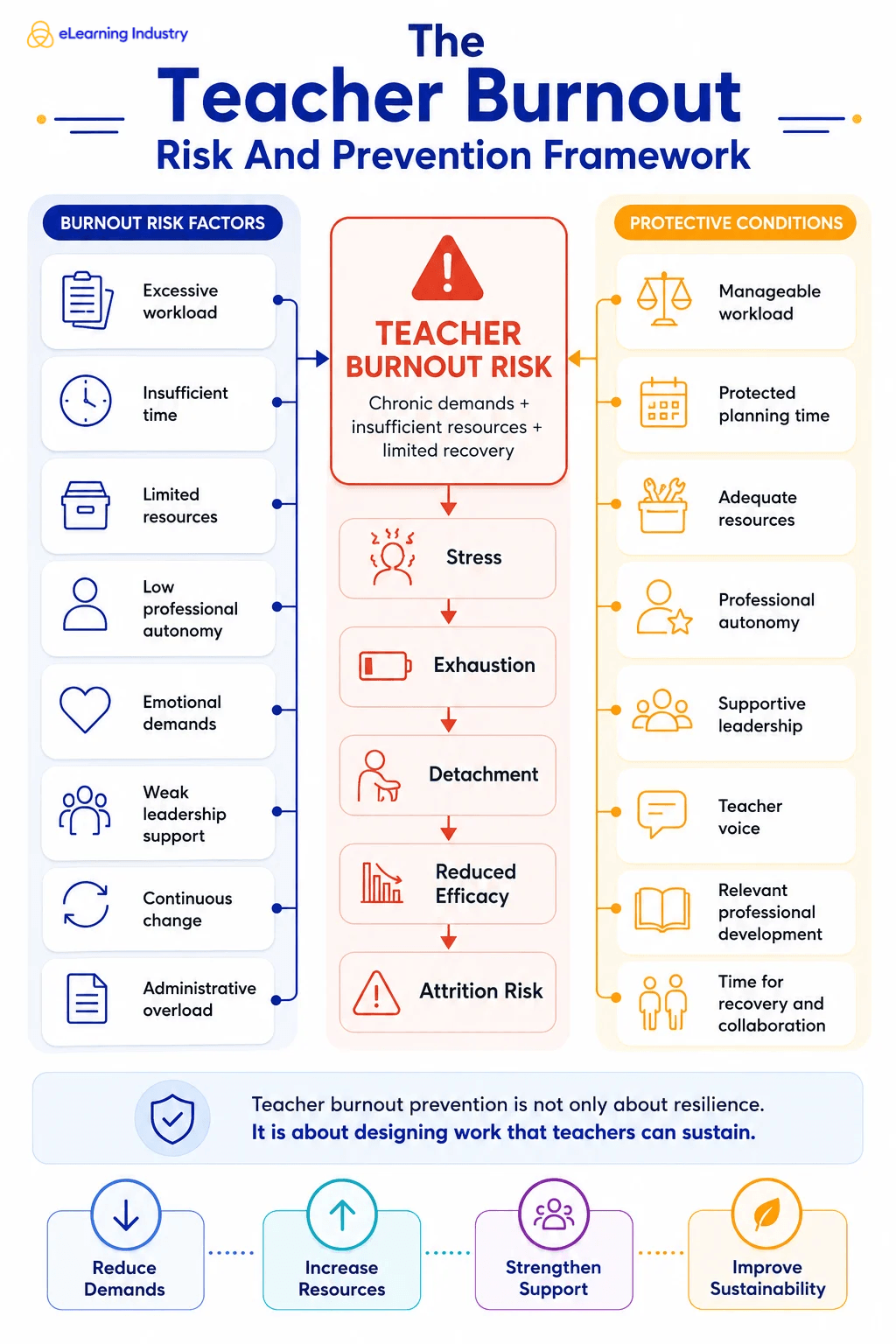
Teacher burnout usually does not result from a single tough day or a lack of stress-management skills. Instead, it often builds up when teachers face ongoing challenges without enough time, resources, independence, or support from their organization. By understanding what causes teacher burnout, we can focus less on individual resilience and more on creating conditions that help teachers thrive.
Workload And Administrative Demands
Teachers do much more than just teach in the classroom. They spend time planning lessons, grading, keeping records, attending meetings, talking with parents, taking part in training, and handling paperwork. As these tasks keep growing, teachers can become overworked and have less time to focus on what matters most for their students.
Insufficient Time And Resources
Expectations are especially hard to meet when teachers do not have enough support. Not enough staff, too little planning time, limited resources, or tight deadlines can leave teachers feeling stressed and always behind. If this goes on for too long, normal stress can turn into exhaustion.
Limited Autonomy
Having control over their work is important for teachers. When teachers cannot decide how to organize their day, teach lessons, or handle classroom needs, they often feel more frustrated, especially when they are still expected to meet high standards.
Student Behavioral And Emotional Demands
Teaching requires a lot of emotional effort. Teachers often help students with behavior, schoolwork, and personal challenges, all while managing their own feelings. The main problem is not the students, but whether teachers have enough support, resources, and help from specialists to meet these needs.
Lack Of Organizational And Leadership Support
School leaders can make things better or worse for teachers. Good communication, recognition, a safe environment, fair expectations, and supportive management all help create a better workplace. Without these, teachers may feel alone or ignored.
Constant Change And Initiative Overload
New curricula, rules, technology, and reporting tasks can add more pressure, especially when new duties are added, but old ones are not taken away.
In the end, teacher burnout often happens because there is an imbalance. When teachers face high demands for a long time but do not have enough resources, the risk of burnout goes up. To prevent burnout, we need to look at both how teachers handle stress and how schools support and organize their work.
First-Year Teacher Burnout: Why Early-Career Educators May Be Vulnerable
Teacher burnout can start early in a career. Moving from teacher training to leading a classroom is often more complex than expected. For first-year teachers, burnout usually comes from facing many challenges at once while still building confidence and routines. For example:
- Creating lessons and materials from scratch often takes up a lot of time after school.
- Classroom management also involves making decisions throughout the day.
- New teachers must learn school routines, meet administrative expectations, and communicate with families.
Without a support network, it is easy for new teachers to feel overwhelmed.
There is often a gap between what teacher training covers and what happens in the classroom each day. Understanding teaching theory is not the same as juggling many tasks, changing lessons on the spot, meeting student needs, and handling paperwork all at once. At first, a teacher may just feel tired, but ongoing stress without enough support can lead to burnout.
Schools can help reduce this risk by offering structured onboarding, mentoring, coaching, peer support, reasonable workload expectations, and time for teachers to collaborate. Supporting new teachers should be a priority for the entire organization, not something new educators have to handle on their own.
How To Prevent Teacher Burnout
Preventing teacher burnout takes more than just asking educators to be more resilient on their own. The best solutions focus on both how teachers manage their energy and how schools shape the work environment.
What Teachers Can Do
To prevent burnout, teachers need to do the following:
- Noticing which pressures keep coming up, rather than just trying to push through.
- Setting clear limits on work hours and availability helps protect time to recover.
- Spotting tasks that take a lot of effort but have little impact can show where changes are needed.
- Focusing on the most important activities.
- Asking colleagues or networks for support
- Speaking up when expectations are too high.
These steps are not just about telling stressed teachers to take better care of themselves. They are meant to protect the time, energy, and skills teachers need to do their jobs well.
What Schools And Leaders Can Do
Schools have a big impact on the factors that lead to burnout. Leaders should:
- Check workloads frequently rather than guessing where the pressure comes from.
- Eliminate unnecessary administrative tasks.
- Ensure teachers have time to plan and collaborate.
- Help principals and managers build their skills.
- Give teachers real control over their work.
- Make teacher burnout part of onboarding, mentoring, and staff planning.
- Set up ways for teachers to give feedback.
- Check if new projects replace old ones or just add more work.
- Focus training on real needs, not just adding another task to teachers' busy schedules.
The Role Of Learning And Technology
Professional development can add to teacher stress and burnout if it does not meet teachers' current needs or takes up too much extra time. Good training should be useful, flexible, easy to access when needed, and linked to real classroom challenges.
Technology should work the same way. When schools bring in new learning platforms, AI tools, or digital systems, the aim should be to make work easier, not add more mental or administrative tasks. In the end, preventing teacher burnout is about building better systems for teachers, not just asking them to handle more than they should.
How To Recover From Teacher Burnout
Recovering from teacher burnout takes more than just a short break and going back to the usual routine. Taking time off might help a tired teacher feel a bit better, but if heavy workloads, lack of resources, or ongoing pressure stay the same, burnout often comes back. That's why recovery and prevention should go hand in hand.
Notice Signs
The first step to recovering from teacher burnout is noticing ongoing warning signs like constant tiredness, feeling distant, irritability, or losing motivation. After that, teachers can figure out which stressors they can change and which are part of the system. Setting personal boundaries can help, but it won't fix problems like not enough staff or too much work.
Step Away From Work
Real recovery also means having time set aside to truly step away from work, not just catching up on leftover tasks. Teachers who feel burned out might find it helpful to talk with school leaders about their workload, priorities, and what support is available, and to look at which responsibilities can be adjusted.
Stay Connected With Colleagues
Staying connected with others at work is important, too. Reaching out to trusted coworkers, mentors, or peer groups can help teachers feel less alone and remind them of their shared goals. If stress or exhaustion keeps going or feels overwhelming, it's also important to get professional support.
In the end, recovering from burnout shouldn't be another challenge for teachers to face alone. Teachers who are worn out need supportive workplaces that help them do their jobs in a healthy, lasting way.
Conclusion
Teacher burnout happens when ongoing pressures at work accumulate, and teachers do not have enough time, resources, autonomy, or support to handle them effectively. Preventing burnout should not fall only on teachers. While personal strategies can help, school leaders also need to look at what shapes teachers' daily work. Tackling issues early can help create healthier, more sustainable workplaces and reduce the likelihood that burnout leads teachers to leave their jobs.