
 ChatGPT
 Perplexity
 Claude
 Grok
Grok
Why The Old Buying Criteria No Longer Work
For years, choosing an authoring tool was a fairly predictable exercise. You compared quizzes, branching, templates, SCORM export, and responsive design and made a decision. That list still matters, but in 2026, it doesn't tell the whole story.
L&D teams are expected to create more content, update it more frequently, support a wider range of audiences, and prove value, often with the same headcount and tighter budgets.
Training Magazine's 2025 Industry Report captures this tension well: the average training spend per learner increased from $774 to $874, while the average training hours per employee dropped from 47 to 40. The same report found that 41% of organizations cited a lack of resources or personnel as their biggest training challenge.
Compliance also carries more weight in the decision now. Security review has always been part of software procurement, but it now shapes the shortlist much earlier. With more AI features, cloud-based authoring, stored media and translations, and stricter accessibility requirements, buyers need to know from the start whether a tool can pass internal approval.
That's why the smarter question is no longer "Which tool has the most features?" but "Which tool can our team realistically use, approve, scale, and afford without creating extra workflow problems later?"
5 Things To Check Before You Choose An Authoring Tool
Whether you're choosing an authoring tool for the first time or replacing one that's become too expensive or no longer fits your eLearning content development needs, these checks will help you choose a solution that will continue to meet your team's needs long term.
1. Don't Pay For Complexity That Will Slow Production Down
A complex authoring tool can cost much more than the price of its license. The real cost shows up in the time your team spends learning the interface, waiting for the "tool expert," and delaying updates because even small edits feel risky.
Many teams evaluate software as if a full-time Instructional Designer will use it every day, then hand it to people who create training only occasionally. So, before you become enamored with a feature set, consider who will actually create and update courses in your company. Will it be Instructional Designers, HR, SMEs, or regional teams—or a mix of all of them?
The takeaway is simple: whatever your training goals are, choose a tool with a low learning curve and a faster time to launch. It's one of the safest ways to protect your team's time, reduce onboarding costs, and avoid losing productivity.
iSpring Suite AI is a good example here. It's an intuitive authoring tool that works directly in PowerPoint, so you can take an existing deck and turn it into a course with quizzes, interactions, narration, and role-plays and publish it to your LMS in a couple of clicks.
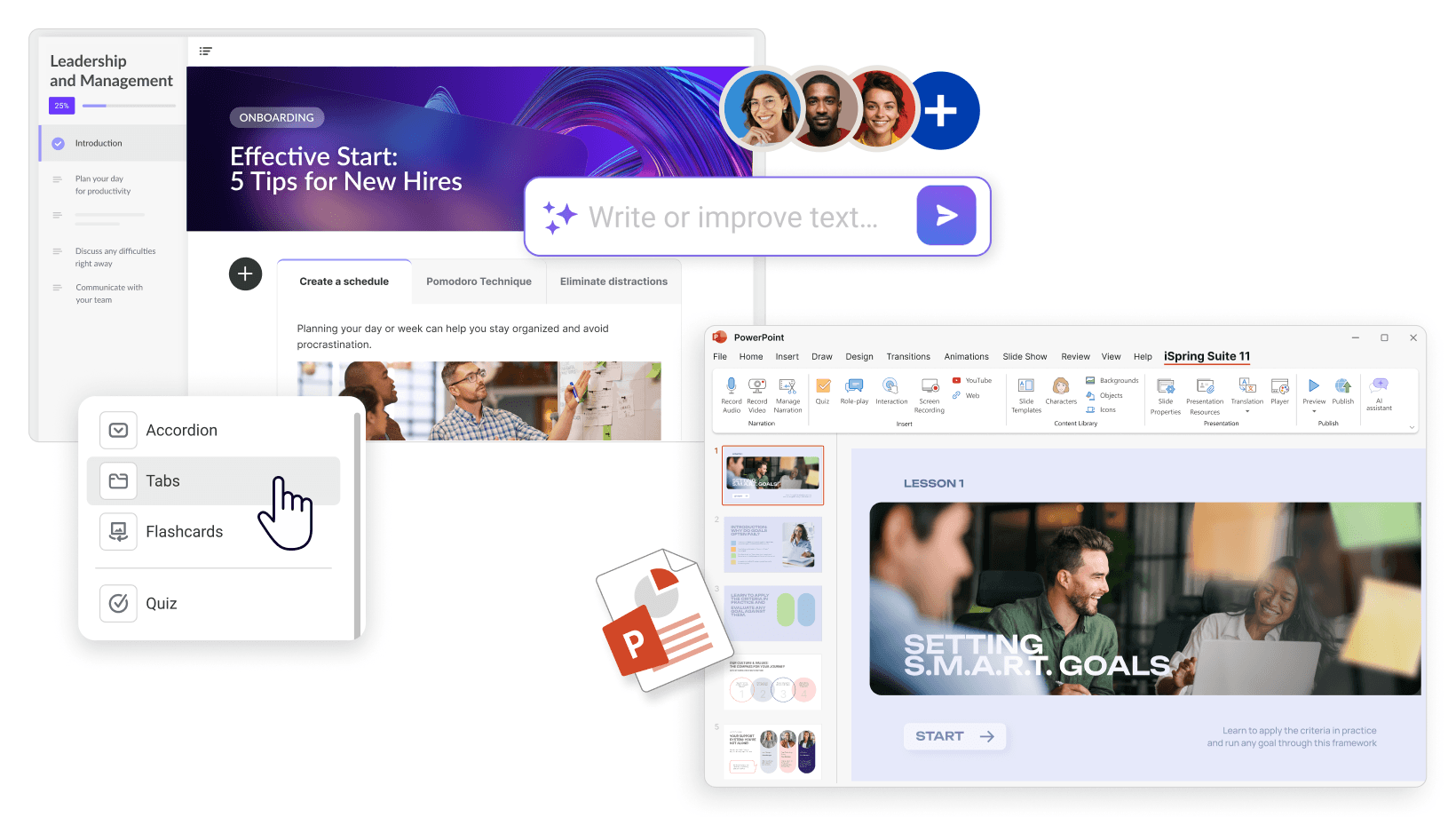
The tool also includes an online course builder for scrollable, page-like courses. This works well for SMEs, HR managers, trainers, and other occasional authors who need to create straightforward courses without using a full-scale authoring tool every day. In simple terms, everything in iSpring Suite AI is designed to reduce course production time:
iSpring Suite allows us to quickly convert internal training content into professional eLearning modules without requiring advanced design or development skills.
– Tanja H., HR Officer
2. Make Sure The Tool Can Pass Internal Approval
Security and compliance questions can remove tools from your shortlist before your team even gets to test the fun parts. So, it's worth verifying the formal requirements early, especially if you work in government, healthcare, finance, education, or a large enterprise. Start with the basics:
- Can your organization use a cloud-based authoring tool, or do you need desktop authoring? Here, mixed tools like iSpring Suite provide teams with more room to choose the workflow that fits their approval requirements.
- Which accessibility standards do you need to meet? Clarify whether your organization follows WCAG, Section 508, or internal accessibility rules, then check whether the tool helps design accessible eLearning.
- Where will the course files, media, voiceovers, translations, AI prompts, and review comments be stored? Who can access them? Can access be managed by role?
- Can reviewers open content through external links?
- Does your IT team need SSO, data processing documents, specific hosting locations, or security questionnaires from the vendor?
Practical tip: Ask your IT, procurement, or compliance team for their approval checklist before you book demos. Then send the same checklist to each vendor. You'll save time, avoid late-stage surprises, and quickly see which tools are realistic options for your organization.
3. Choose A Tool That Supports Different Training Scenarios
Different training goals require different course formats. Compliance refresher, product update, software tutorial, sales conversation practice… A slide deck with a quiz at the end won't work equally well for all of that. So, look for a tool that lets you choose the right format for the job:
- Slide-based courses with narration and a final test for compliance training
- Scrollable courses for a quick product update or internal guide
- Role-play simulations for sales, customer service, or manager training
- Screencasts for software training
- Visual interactions for a process, timeline, FAQ, or product catalog
- Quizzes with testing rules, feedback, and scoring for knowledge checks or certification
iSpring Suite AI covers these scenarios in a single tool, so you don't have to rebuild your workflow every time the training goal changes.
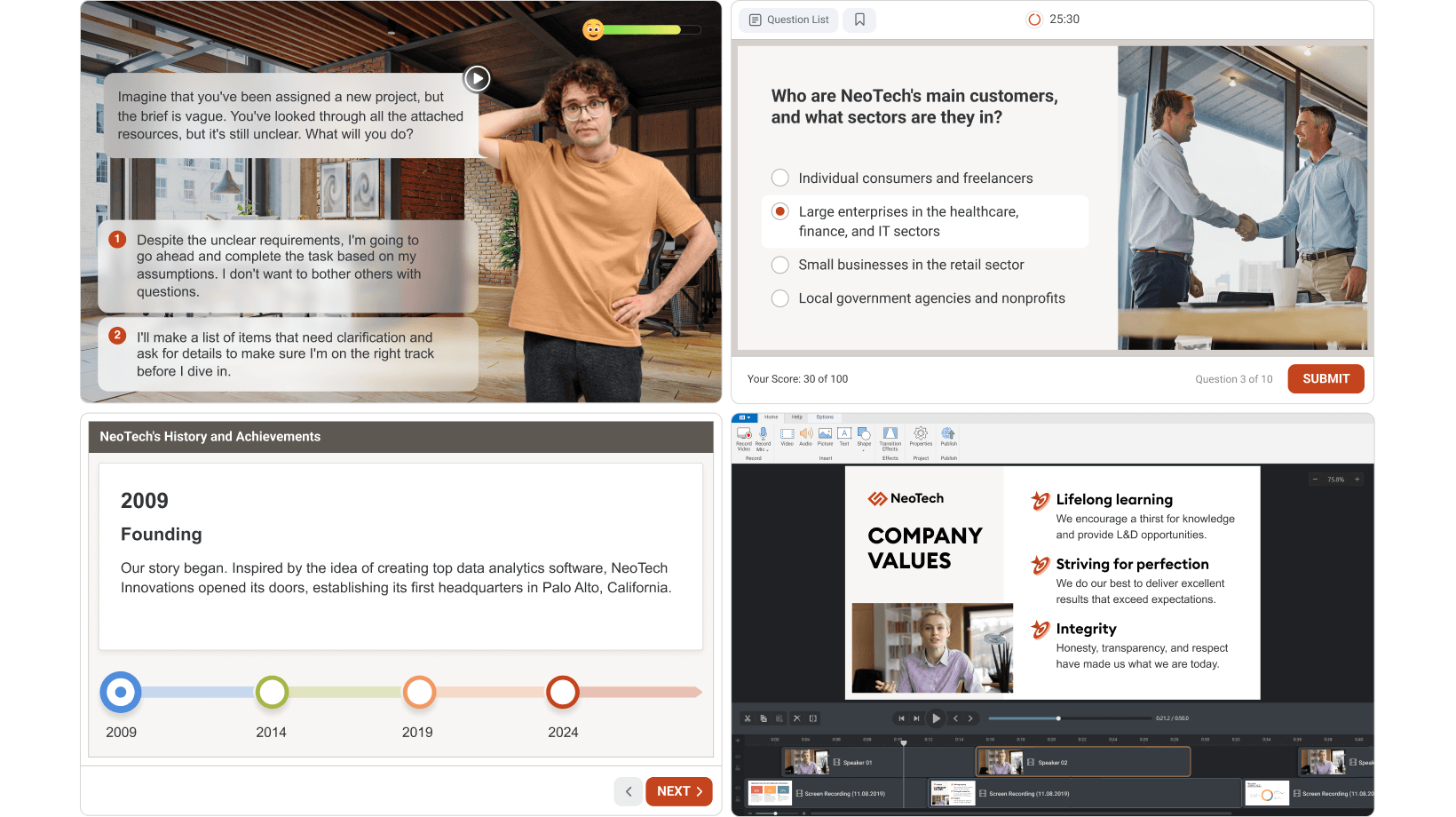
The variety of interactive content types available within a single authoring tool is also impressive. From branching scenarios and dialogue simulations to quizzes and screencasts, iSpring Suite gives content developers everything they need under one roof, which dramatically accelerates development timelines.
– Victoria Q., Director of Training and Development
You can match the format to the task and spend more time improving the learning experience itself. In the long run, this is much more cost-effective because the formats, assets, and production tools you need are included in a single subscription instead of being spread across several separate tools.
4. Don't Buy AI Hype; Check The Authoring Workflow
AI is everywhere in authoring tools now, so the label itself doesn't tell you much. What matters is where it removes actual production work.
Look at your usual bottlenecks. Do you spend too much time turning source documents into a course structure? Writing first-draft slides? Creating quiz questions? Finding visuals? Recording voiceovers? Translating the same course for different audiences? Those are the places where AI can actually help.
For example, the recently updated iSpring AI can generate a structured course draft from your materials, including slides, texts, interactions, and quizzes. You just upload source docs and/or audio, define the topic, audience, learning goals, tone, and language, then review the result before exporting it to SCORM or xAPI.
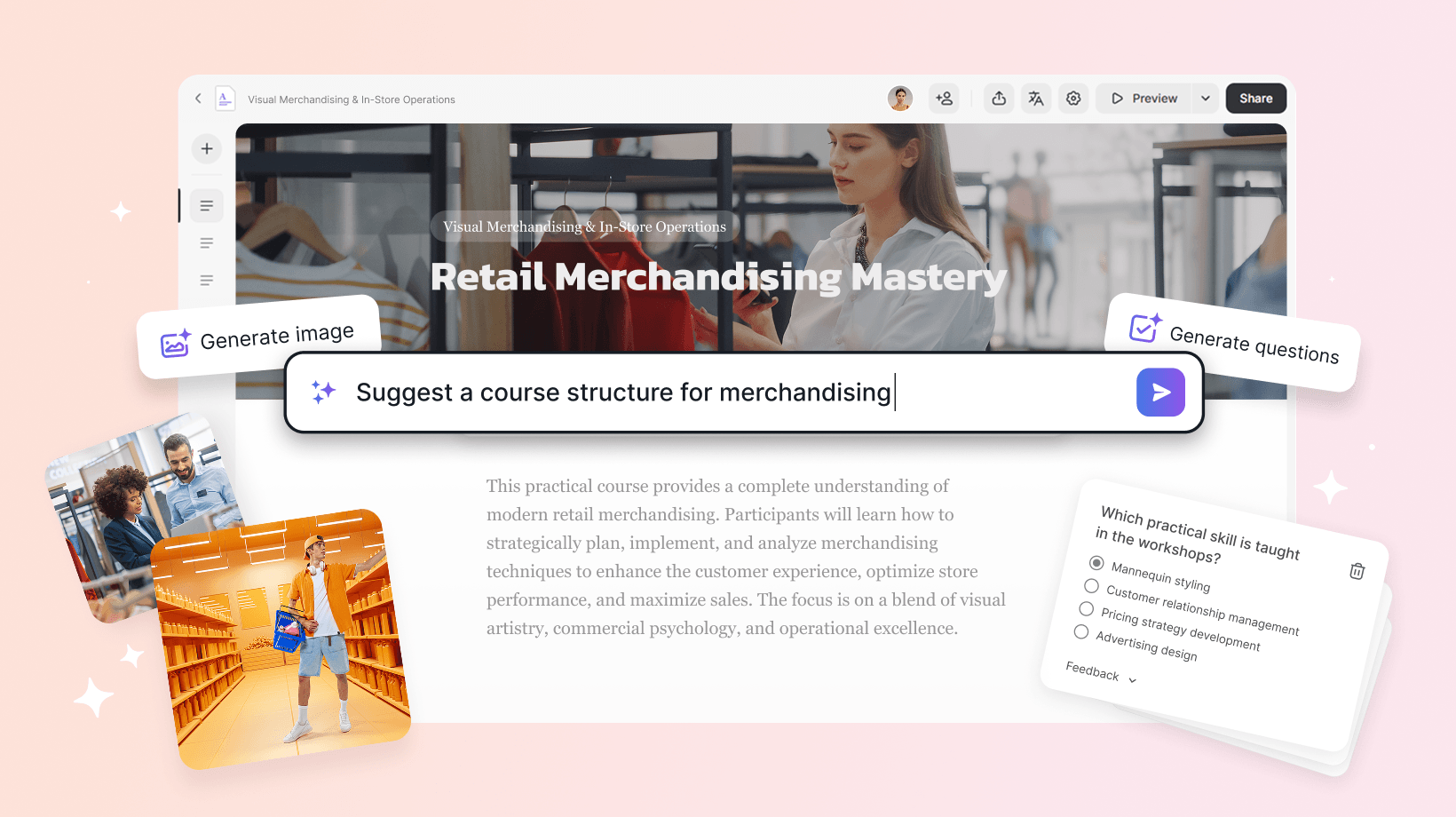
The value is not that AI "creates the course for you." It gives you a solid first draft, so you can spend more time improving examples, practice, accuracy, and the learner experience.
It also helps with the smaller production tasks that usually pile up: generating quiz questions, polishing wording, creating course visuals, adding AI voiceovers, and localizing content into 70+ languages.
So, when you compare tools, ask a simple question: Will this AI reduce manual work in my actual course projects, or does it only look impressive in a demo?
5. Look At Pricing Flexibility And Vendor Support
A good authoring tool should fit your budget, as well as your workflow. You might start with one Instructional Designer, then add reviewers, SMEs, regional authors, translators, backup admins, or a second department that wants to use the same tool. That's where pricing can change quickly.
Before you commit, ask how the vendor handles different customer types: individual developers, nonprofits, government organizations, small teams, and larger rollouts. Also, check whether they offer volume discounts and what happens when you need to add more users later.
iSpring Suite AI is strong in this area because the vendor offers flexible pricing options for individuals, nonprofits, government organizations, and teams, including volume discounts. That matters when you're trying to build a sustainable authoring setup and not just buy the cheapest first seat.
Support deserves the same scrutiny. The difficult moments in course production usually come up around publishing, SCORM settings, LMS tracking, accessibility, localization, or last-minute launch issues. 24/7 human support can save many hours of internal troubleshooting:
Customer Support has ALWAYS been quick, courteous and spot on. They are very patient, even if I have had to have them help me with a problem that they provided help in the past.
– Roland N., Training Manager
Final Words
Don't let big names or impressive feature lists decide for you. Prioritize what your team actually needs. A long list of advanced options won't help much if your team rarely uses them or needs too much time to get comfortable with them.
If you're still weighing your options, it can help to talk through your instructional design needs with an eLearning expert. Book a free consultation with an iSpring expert to discuss your project and see whether iSpring Suite AI fits the way you work. Or explore the tool on your own with a 14-day free trial.
Good luck with your course projects!