



What Makes A Podcast A Thought Leadership Podcast?
A thought leadership podcast is not created simply by publishing conversations with experts. It earns that status by consistently offering a defensible perspective, interpreting important developments, and helping professionals make better decisions. For L&D leaders, HR and talent executives, Instructional Designers, learning technology specialists, founders, and workplace-learning experts, podcasting can do more than just reach an audience. It can show how an expert identifies problems, questions assumptions, uses evidence, and turns industry changes into practical actions.
But what is a thought leadership podcast? It is an audio or video series led by experts, using original ideas, evidence, and careful analysis to help professionals understand important topics. A real thought leadership podcast stands out from company podcasts, interview series, or promotional shows because it adds real insight. The host has clear expertise, based on experience, research, or analysis. Each episode supports a consistent point of view, rather than following random trends. The show explains why changes are important, points out what leaders might miss, and helps listeners think about priorities, risks, and opportunities.
Why Podcasts Are Well-Suited To Authority Building
Thought leadership podcasts work well in complex fields because they show both what an expert thinks and how they got there. While articles usually share polished conclusions, podcasts let listeners hear experts talk through their reasoning, weigh trade-offs, compare ideas, consider exceptions, and adjust their views after trying things out.
Podcasts Make Expert Reasoning Visible
In L&D and HR, credibility often depends on the situation. A good thought leadership podcast lets experts explain why a certain approach worked in one company, what didn't work, and what lessons others can use.
Long-Form Conversation Supports Nuance
There are rarely one-size-fits-all answers in learning and people decisions. Long-form audio or video gives experts time to talk about things like company maturity, workforce needs, technology limits, and business goals, instead of just listing generic steps.
A Recurring Format Creates Familiarity And Trust
When a podcast runs over time, listeners can see if the host is consistent, uses evidence, welcomes challenges, and can tell what really matters from what is just a passing trend.
Podcasts Reach Stakeholders Early
Thought leadership podcasts can reach professionals while they are still looking for answers. Edelman and LinkedIn point out that this kind of content reaches both top decision-makers and less obvious influencers inside companies. Still, real authority comes from strong ideas, not just having a podcast.
How Podcasts Help You Build Authority In eLearning And L&D
A thought leadership podcast lets L&D professionals show their expertise, judgment, and perspective over time. Unlike short-form content, podcasts give you room to explore complex questions, test ideas, and explain what industry changes mean in real situations.
You Can Shape The Industry's Key Questions
Building authority often starts with setting the agenda. The most respected voices don't just follow trends, but spot important questions before they become common conference topics. For example, is skills-based learning actually building real organizational skills? Which AI tools truly help with Instructional Design? When does personalization add too much complexity? What should L&D leaders track besides course completion?
By asking these questions clearly, your podcast can help other professionals decide what matters most as new priorities emerge.
You Can Show How Patterns Emerge
Experienced professionals build authority by connecting dots that others might see separately. With a podcast, you can examine recurring challenges, organizational constraints, barriers to behavior change, technology trends, and leadership expectations across different situations. Spotting these patterns shows listeners your insights come from long-term experience, not just one trend.
You Can Bring Together Trusted Experts
Inviting the right guests can put you at the center of a valuable professional network. Researchers, learning leaders, Instructional Designers, and tech experts can share evidence and question assumptions. Still, their credibility should support your own analysis, framing, and insights, not replace them.
You Can Turn Hidden Expertise Into Searchable Knowledge
A lot of valuable L&D knowledge isn't written down anywhere. By sharing case studies, interviews, debates, debriefs, scenario talks, and research insights, you can turn real experience into searchable content. Adding transcripts, summaries, and key points to each episode also helps your podcast show up in searches and AI tools.
You Can Shape Conversations In Your Organization
A helpful episode can reach far beyond your first listeners. It might be shared inside your company, quoted in strategy meetings, added to presentations, or used to question old assumptions. This is where thought leadership podcasts really make a difference, not just by getting listeners, but by helping people make better decisions.
Authority is not built by having a microphone; it is earned by consistently asking better questions, applying evidence, and turning expertise into insights that help leaders make better decisions.
-Christopher Pappas, CEO and founder of eLearning Industry
8 Tips On How To Create A Thought Leadership Podcast
Here's a simple guide for L&D, HR, and business leaders who want expert advice on building a successful podcast.
1. Start With An Authority Thesis, Not A Show Format
When starting a thought leadership podcast, focus first on a clear authority thesis. This is the main idea, problem, or professional viewpoint you want listeners to connect with your name, rather than details like episode length or guest lists.
Why is the thesis important? It sets the direction for your podcast. Without it, even a well-made show can feel scattered. With a clear thesis, each episode builds a consistent perspective and adds to your expertise.
2. Define Your Authority Territory
Begin by figuring out the area where you and your team have real expertise. Consider what you know best, what others often get wrong, and where you can help leaders make better decisions. Think about where you have unique evidence, experience, or insights. What industry beliefs can you question? Where can you offer more than just a summary of what others say?
For instance, "the future of corporate learning" is too broad to stand out. Instead, a thesis like "L&D earns strategic influence when it measures changes in capability and performance, not just the amount of learning activity" gives your show a clear focus. It shows listeners your viewpoint, what evidence you'll discuss, and what decisions your content will help with.
3. Identify Your Audience's Recurring Decisions
A good thought leadership podcast should focus on real decisions, not just general topics. L&D and HR leaders want help making important choices, not just more commentary.
These decisions might involve picking learning technology, using generative AI, showing learning impact, building internal skills, updating onboarding, or choosing whether to build or buy content. Focusing episodes on these common decisions makes your podcast more practical and more likely to shape real workplace discussions.
4. Set Editorial Boundaries
Your podcast's authority also comes from what you avoid. Don't let it become just vendor pitches, a parade of guests, a general trends show, or a reaction to every new tech announcement. Setting clear boundaries keeps your podcast credible and helps listeners know what to expect every time.
5. Choose A Format That Reveals Expertise
Choose a format that supports your authoritative thesis.
- Expert interviews are great for sharing different views, but the host needs to add context and connect ideas, or the show may feel generic.
- Solo analysis is useful for explaining research, discussing strategy, or sharing a unique viewpoint. It does require careful preparation and solid evidence.
- Case reviews from practitioners can show what happened, why, and what others can learn. However, they can sometimes turn into just polished success stories.
- Structured debates work well for hot topics like AI automation or learning measurement, as long as the disagreements are real.
For most professional listeners, a mix works best: include an expert interview, an analytical recap, and a research or case review. This approach adds outside credibility and helps the host develop a clear voice.
6. Build An Editorial System That Produces Original Insight
A strong podcast needs regular themes or pillars. For L&D, these could be learning strategy, AI and tech, measuring business impact, workforce readiness, Instructional Design, and leadership or culture. Remember, though, that good questions are as important as good topics. Instead of asking "Tell us about your journey," use questions that bring out real evidence:
- What did your organization initially misdiagnose?
- Which assumption changed after implementation?
- What evidence contradicted your original plan?
- What did the initiative fail to improve?
- Under what conditions would the approach not work?
- What should another leader verify before adopting it?
Each episode should end with a summary. What did we learn? What's still unclear? What should leaders change? Which lessons apply everywhere, and which depend on the situation? This kind of summary is what makes a conversation into real thought leadership.
7. Make The Podcast Discoverable In Search And AI Engines
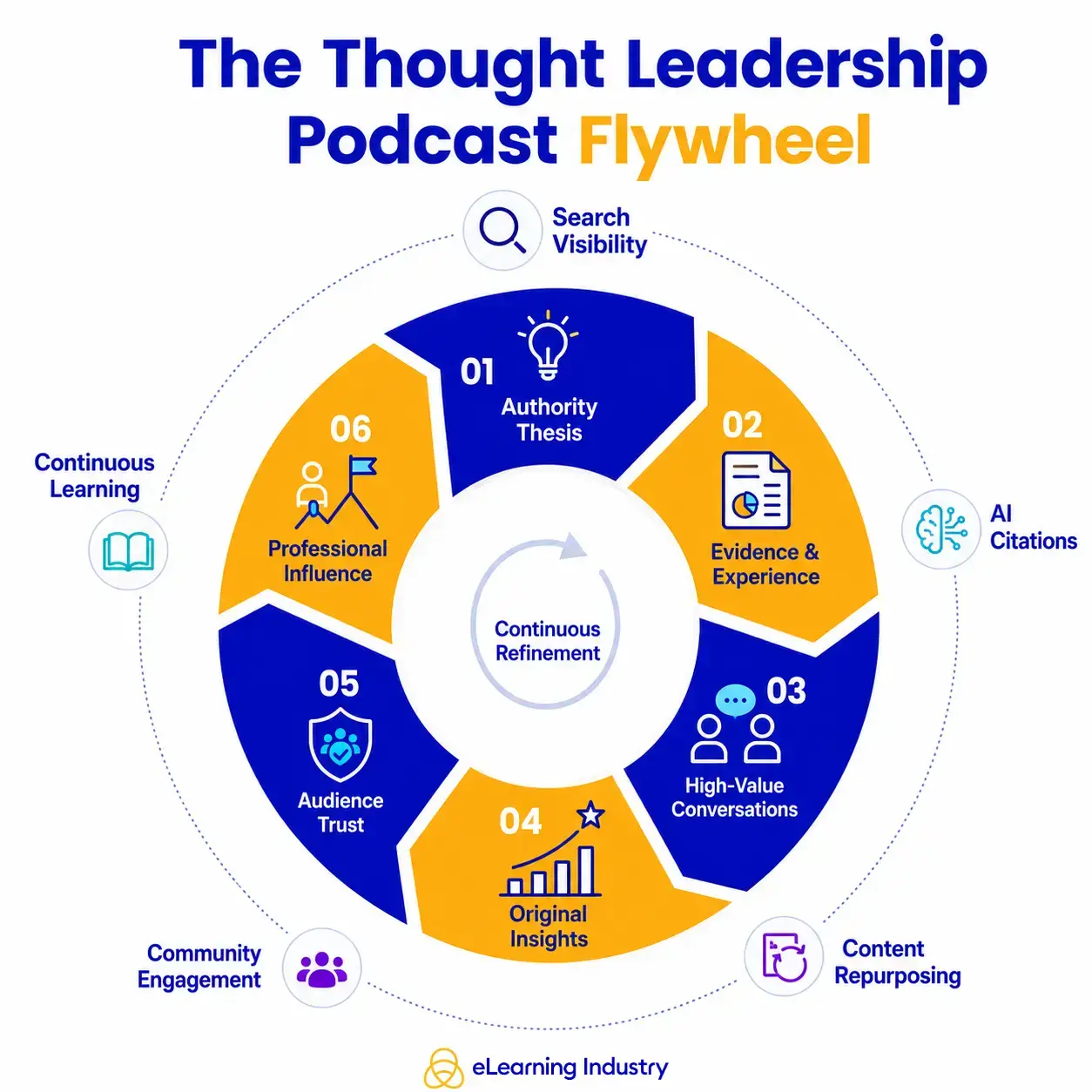
Your podcast's authority grows when people can find, understand, and share your ideas outside the audio.
- Create a detailed web page for each episode with a clear title, summary, main points, speaker info, introduction, transcript, sources, frameworks, conclusions, and helpful links.
- Focus on professional questions in your titles, not just guest names. For example, "A Conversation With Jane Smith" isn't helpful for search, but "How To Measure Whether Leadership Training Changes Manager Behavior" tells people exactly what the episode covers.
- Write short, clear answer sections that explain what a thought leadership podcast is, how it builds authority, what makes it credible, and how L&D leaders can measure impact. These parts help with SEO and make it easier for AI tools to find and use your content.
- Turn your main insights into articles, research summaries, decision guides, executive briefings, short videos, charts, newsletters, or conference prompts. The goal isn't to copy the transcript, but to adapt your ideas for different professional uses.
8. Measure Authority, Not Just Audience Size
Downloads and views show activity, but not real influence. Better signs include how many listeners finish episodes, come back, subscribe to your newsletter, read transcripts, search for your brand, cite your work, link to you, or share your content.
More meaningful signs of authority are things like being invited to speak, asked to collaborate on research, mentioned in industry talks, shared internally, asked for strategic advice, or having your frameworks recognized.
Decision-impact indicators go even further. They show if your episodes help plan new projects, educate stakeholders, bring in good leads, help close deals, or create chances linked to your main thesis.
Remember: a smaller group of senior learning leaders can be much more valuable than a bigger audience that isn't relevant to your goals.
Conclusion
A thought leadership podcast is more than just an audio project. It gives experts a place to share their knowledge, test ideas in conversation, and record practical insights that might otherwise go unnoticed. For L&D and HR professionals, the real benefit is helping leaders make sense of change. The best podcasts don't just claim authority, but build it by asking good questions, using evidence, being open about what they don't know, spotting trends, and sharing insights that help people make better decisions. Before you pick equipment, guests, or platforms, decide what kind of authority you want your podcast to build.