

 ChatGPT
 Perplexity
 Claude
 Grok
Grok
Change Management Versus Employee Software Onboarding
Picture this: Maya, an L&D lead at a mid-sized financial services firm, ran what looked like a textbook software rollout. Town halls were held. Leadership sent videos explaining the why. A dedicated change champion network was activated across every department.
Pulse surveys showed strong readiness sentiment across the board. Training completion hit above 90% by launch day—a figure consistent with what Gartner identifies as a typical enterprise rollout completion benchmark. By month three, the picture looked different. Helpdesk ticket volume had spiked significantly on basic system tasks—not unusual given that McKinsey research found 70% of digital transformation initiatives fail to achieve their goals. Feature adoption had plateaued well below intended levels. Two business units had quietly rebuilt their old spreadsheet processes alongside the new system.
By month three, the helpdesk was fielding 200 tickets a week on basic system tasks. Feature adoption had plateaued at 31% of intended functionality. Two business units had quietly rebuilt their old spreadsheet processes alongside the new system. Maya had solved the wrong problem—extremely well.
Enterprise software rollouts fail in two distinct ways that are rarely distinguished from each other—and almost never addressed separately.
The first is a willingness failure: employees understand the new system well enough to use it, but resist doing so consistently, because the organizational change wasn't managed in a way that helped them understand why it was happening, what it meant for their role, or how leadership planned to support them through it. The resistance isn't about capability. It's about trust, context, and organizational narrative.
The second is a capability failure: employees are genuinely willing to adopt—they have no significant resistance to the change—but cannot perform their actual job tasks in the new system correctly and confidently, because the support they received never built genuine workflow fluency under the conditions that real work imposes.
Most organizations treat these as a single problem—"People aren't using the system the way they're supposed to"—and apply a single intervention: more training. But willingness failures and capability failures have different root causes, different symptoms, and different solutions. Conflating them and responding to both with training is one of the primary structural reasons software adoption continues to underperform despite significant organizational investment in both change programs and learning initiatives.
What Change Management Is Actually Designed To Do
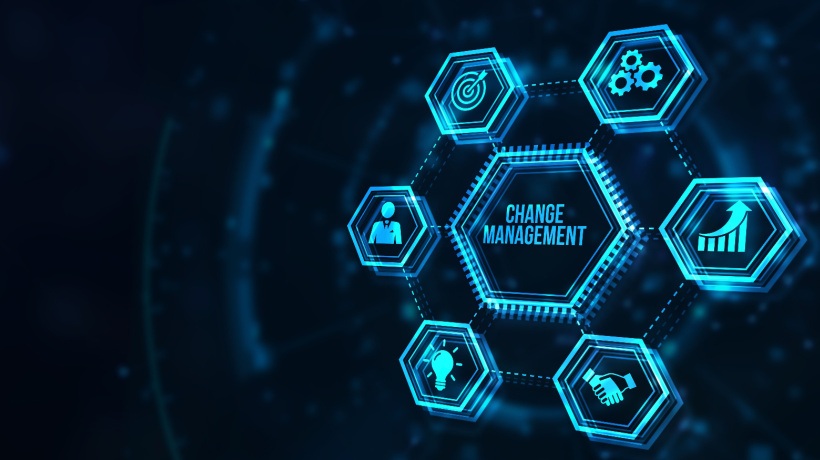
Change management in a software rollout context is about the psychological and organizational dimensions of adoption—helping people understand why the change is happening at this moment, what it means for their specific role and team, how the decision was made, and what support is available to them during a transition that may be genuinely difficult, regardless of how well the technology works.
How change management software improves digital adoption is fundamentally about building organizational willingness—a workforce that approaches the new system with openness rather than resistance, because they have been communicated to transparently, involved in the process at the right moments, and given the emotional and organizational context they need to make sense of a change they didn't choose.
The evidence for why this matters is unambiguous: Prosci's research consistently shows that organizations with excellent change management are six times more likely to meet their project objectives than those with poor change management. Willingness is not a soft outcome—it is a measurable predictor of whether a rollout delivers its intended return.
What change management cannot do—what it was never designed to do—is build capability. A workforce that has been through excellent change management is a workforce that is ready to adopt the system. Readiness to adopt and ability to adopt are genuinely different conditions. An employee who fully understands why the new system is being implemented, who feels positive about the organizational rationale for the change, and who trusts their leadership still needs specific, practical, workflow-anchored support to build the fluency required to perform their actual job tasks effectively in the new environment.
What Employee Onboarding Is Actually Designed To Do
Employee software onboarding is about capability—building the practical fluency that allows an employee to complete their real job tasks in the new system, correctly, confidently, and with decreasing dependence on external support over time. It addresses the "can" dimension of adoption: not whether someone will use the system, but whether they are able to use it in the specific ways that produce the intended business outcome.
Employee software onboarding that trains teams on new tools faster is most effective when it is organized around the employee's workflow reality rather than the system's feature architecture. Comprehensive onboarding covers everything the software can do. Effective onboarding covers everything this particular employee needs to do in this particular system to perform their role—in the sequence they will actually encounter those tasks, at the depth they need to perform them reliably under real work conditions.
The stakes of getting this wrong are higher than most organizations acknowledge. Gartner research shows that employees forget up to 70% of new information within a week if it is not immediately applied in a relevant context. Pre-launch training organized around system features rather than employee workflows is almost guaranteed to fall into exactly this gap—covering material that won't be applied until weeks later, by which point the retention that onboarding was supposed to produce has largely dissipated.
The gap between comprehensive and effective onboarding is where most software rollouts lose the late majority of their user population. When onboarding is organized around the system's feature set—which is the natural way to organize it from a technical perspective—it serves the employees who are already motivated to explore and extrapolate from general coverage to specific tasks. It fails the employees who need direct, task-specific guidance and don't have the motivation or the confidence to bridge the gap themselves.
Why Conflating Them Produces False Positive Metrics
The most consequential outcome of treating change management and onboarding as the same intervention is the measurement distortion it creates. When the two are conflated into a single adoption program, success metrics tend to reflect the easier dimension to measure—completion rates, training satisfaction scores, communication open rates, pulse survey sentiment—rather than the actual outcome that matters: are employees using the system correctly, consistently, and in a way that produces the intended business value?
This is exactly why adoption metrics consistently show green when adoption is actually failing in organizations that don't distinguish between these two problems. A change management program that produced strong sentiment scores and a training program that produced strong completion rates can both declare themselves successful, while a significant portion of the user population is quietly struggling with basic workflow execution, developing informal workarounds, and using a fraction of the system's intended functionality on a daily basis.
The metrics looked good because they measured willingness—the output of change management—and exposure—the output of training. Neither metric measures capability, which is the output that determines whether the software investment delivers its intended return. Measuring the wrong things confirms success while the actual problem continues unaddressed.
The Specific Failure Modes Of Underinvesting In Either
The practical consequence of conflating these two distinct problems is systematic underinvestment in whichever dimension receives less organizational attention—and both failure modes are common.
A strong training program without effective change management produces a workforce that can technically execute tasks in the new system but is resistant to doing so consistently in their actual work. These employees completed training, performed adequately in practice scenarios, and returned to their desks looking for opportunities to continue using the familiar process that was supposedly being replaced. The capability exists. The willingness to apply it consistently doesn't, because the organizational narrative around why this change was worth the disruption was never convincingly established.
There is a timing difference between these two failure modes that experienced L&D practitioners learn to read. Capability failures tend to surface early—in the first two to four weeks post go-live, when helpdesk ticket volume spikes and employees begin asking basic how-to questions that training was supposed to answer. Willingness failures tend to surface later—typically at weeks six to eight, when the initial compliance-driven usage that go-live momentum produces begins to fade, and employees start selectively reverting to familiar processes. If your adoption metrics look strong in week two and begin deteriorating by week eight, you are almost certainly looking at a willingness problem, not a capability problem—and no amount of additional training will fix it.
A strong change management program without effective onboarding produces the opposite failure: a workforce that is genuinely willing to engage with the new system but repeatedly frustrated by their inability to do so confidently. These employees approach the system positively, encounter confusion they don't know how to resolve, struggle through tasks that should be routine, and gradually disengage—having concluded that the system is more difficult than it's worth, regardless of how supportive the organizational communication around it was.
What digital adoption actually means in its complete definition is not login frequency or feature activation—it is effective, confident, productive use of the system in a way that delivers the intended business outcome. That definition requires both willingness and capability, and neither dimension substitutes for the other.
What The Infrastructure Needs To Look Like
Addressing both problems effectively requires infrastructure designed to serve each dimension—deployed at the right moments in the adoption journey rather than front-loaded into a single pre-launch intervention.
Change management interventions are most impactful before and immediately during the transition: executive communication, stakeholder engagement at every level of the organization, manager enablement so that line managers can support their teams through the change rather than just experiencing it alongside them, and organizational alignment that connects the software implementation to a broader strategic narrative employees can understand and believe in.
Capability support needs to extend well beyond the transition period—into the weeks and months after go-live when the late majority is encountering the system under real work conditions for the first time, when edge cases surface that pre-launch training never covered, and when employees who seemed comfortable during onboarding begin to reveal the gaps that real work pressure exposes. A digital adoption platform provides the infrastructure for this extended capability support—in-application guidance that meets employees precisely where the capability gap lives, inside the tool, at the moment of need, without requiring them to exit their workflow to access it.
The DAP vs LMS question is ultimately a question about which format serves the capability dimension of adoption most effectively at what stage of the adoption journey. But that question can only be answered meaningfully once an organization has clearly separated the capability problem from the willingness problem—and committed to building the specific infrastructure that each one genuinely requires, rather than treating more training as the universal answer to both.
The urgency of getting this distinction right is only going to increase. Enterprise software update cycles are accelerating—major platforms now release significant functionality changes quarterly rather than annually, and each update creates a new mini-adoption curve for every affected user segment. Organizations that have not separated their change management and capability support infrastructure will find themselves in a compounding cycle: each update triggers a new adoption gap, which gets addressed with more training, which serves the early adopters who didn't need it and misses the late majority who do.
By 2027, the organizations with sustainable adoption infrastructure will be those that have stopped treating adoption as an event and started treating it as an ongoing operational discipline—with the willingness and capability dimensions managed separately, continuously, and with the right infrastructure for each.