


 ChatGPT
 Perplexity
 Claude
 Grok
Grok
Pausing Between AI Assistance And Human Ownership: Why AI-Assisted Work Feels Different
When used as a tool, AI can accelerate work in ways that would be difficult for a single person to accomplish alone. Compared to writing, designing, or developing ideas entirely on one's own, AI can make the drafting process feel faster, smoother, and less mentally taxing. Many AI users recognize the sense of excitement that accompanies receiving a polished response almost instantly. That emotional reaction can make it tempting to move directly from generation to submission or publication without fully engaging in review and verification.
It is at this point in an interaction with AI that users must recognize an important distinction: AI produces outputs; humans take responsibility for the work they choose to use. AI changes where the work happens, not whether work is required. This principle applies regardless of how users interact with AI, whether through text, images, or voice. Voice interactions can deepen reflection and communication, but they still require learners to remain actively responsible for their thinking.
Where AI Fits Into The L&D Design Process
Instructional Design is rarely a one-and-done process. Whether using ADDIE, backward design, SAM, or another framework, L&D professionals continually refine learning experiences as they gather feedback and improve their designs. This process is intended to strengthen the learning experience. AI can support this work at every stage, but designers must ensure it remains a tool rather than the driver of course development. AI can assist with tasks such as generating learning objectives, organizing resources, and refining instructional materials, allowing L&D professionals to devote more attention to higher-level design decisions [1]. As multimodal AI capabilities continue to develop, Instructional Designers can also use images such as whiteboards, storyboards, workplace photographs, and other visual artifacts to strengthen Instructional Design workflows. AI can also support the creation of meaningful learning experiences that extend well beyond traditional quizzes and assessments, encouraging learners to engage in dialogue, reflection, and practice-based activities rather than passive content consumption [2]. Likewise, AI can facilitate questioning, dialogue, and personalized support during learning without replacing the educator [3].
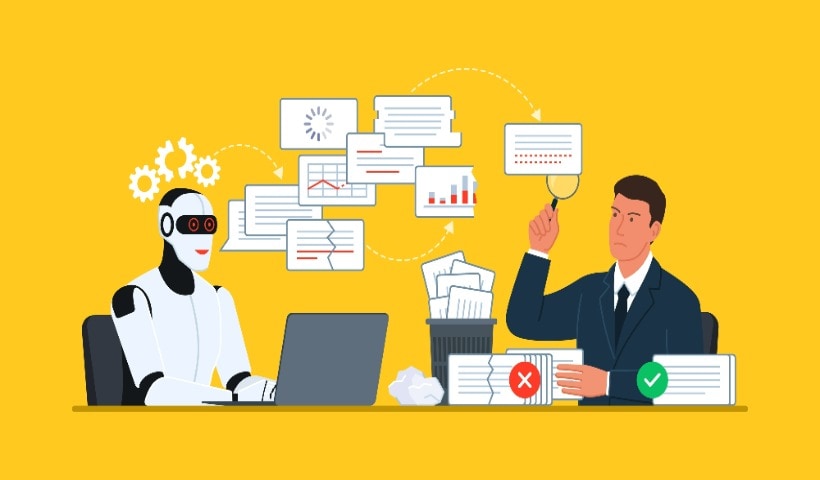
AI-assisted work typically begins with a prompt followed by an immediate generation. If users stop there, they risk treating a first draft as a finished product. While the speed of AI can create a sense of momentum and accomplishment, responsible AI use requires continuing beyond generation through review, revision, and ultimately ownership. Although AI can accelerate initial development, it does not reduce the human responsibility required to produce quality work.
The Momentum Of AI Can Be Misleading
The speed with which AI produces content can create the impression that the difficult work has already been completed. In reality, the first output is often where the most important human work begins.
Mistakes may occur not because people are careless, but because the speed and polish of AI-generated content make it tempting to move forward before fully evaluating it. Critical users deliberately resist that momentum by taking the time to review, question, and revise AI outputs rather than treating generation as completion.
As the work begins to feel finished, another important moment emerges: the opportunity to pause before taking ownership. Stepping away briefly or simply slowing down can create space to return with fresh eyes and consider whether the work is truly ready to move forward.
Review Comes Before Ownership
Review and ownership are closely related, but they are not the same. Review asks: Is this accurate, and does it communicate what I intend? Ownership asks: Am I willing to be responsible for this?
Review requires users to evaluate AI outputs critically by verifying sources, identifying potential bias, considering alternative perspectives, and refining the work until it meets its intended purpose. Whether AI is being used for professional work or independent learning, it should structure thinking rather than replace it [4]. One practical way to strengthen review is to consistently question AI outputs. Asking questions, including how the model reached its conclusions, what sources informed its response, what counterarguments exist, what assumptions it made, and what information may be missing, helps users maintain agency throughout the review process [5]. Review often remains iterative, with humans continuing to work alongside AI to improve the quality of the final product.
Ownership represents a decision, not simply another editing step. It is the point at which the human accepts responsibility for using the output in a real-world context. Ownership goes beyond verification. It requires users to consider the intended audience, the potential consequences of publishing or sharing the work, and whether they are prepared to stand behind it if it is questioned. Ownership also includes being transparent about AI assistance when appropriate or required. Transparency not only reflects ethical AI use, but also demonstrates integrity by aligning actions with stated expectations.
Review strengthens quality. Ownership demonstrates accountability.
Ownership Means Accepting Accountability
When AI makes an error, it is easy to say, "AI got it wrong." Yet another question remains: if the output contained an obvious error, why wasn't it caught?
AI may hallucinate, generate biased information, or include inaccurate or inappropriate content. However, the decision to rely on that output remains a human one. AI cannot accept responsibility for published work, workplace decisions, or instructional materials. Accountability remains with the people who choose to use its outputs.
This is not about assigning blame. It is about recognizing accountability. Accepting that responsibility encourages AI users to pause, review, revise, and iterate before moving forward. The goal is to ensure that humans remain accountable for the decisions they make while using AI.
The Pause Before Ownership
Maintaining human agency requires asking deliberate questions before relying on AI-generated content. For example:
- Would I publish this under my own name?
- Can I explain every major claim?
- Have I verified important information?
- Would I be comfortable disclosing my AI use if required?
- If someone challenged this work tomorrow, could I defend it?
These questions provide a starting point. Depending on the context, additional considerations may be necessary before a user is prepared to take ownership of the output.
Human Ownership Is The Final Step
The speed of AI can create a genuine sense of excitement and accomplishment. After reviewing and revising an output, it can be tempting to feel that the work is finished and move immediately toward submission, publication, or use. This is precisely when awareness of our own emotional response matters. Before moving forward, users should pause, check in with themselves, and give the work one final consideration: Am I willing to take ownership of this?
That final pause creates space to consider whether the work is accurate and complete, whether it communicates what we intend, and whether we are prepared to stand behind it, disclose AI assistance when appropriate, and accept responsibility for how it is used. AI can support the process, but it cannot assume that responsibility on our behalf. The prompt is not the finish line. Neither is the output. Human ownership is.
References:
[1] 5 Actionable Ways To Use AI In Professional Development Design
[2] Beyond Quizzes: 10 Practice-Based Learning Activities Powered By LLMs
[3] 10 Human-Centered Ways To Use LLMs In Live Tutoring
[4] 5 Ways Adult Learners Can Use AI To Study Smarter, Without Compromising Integrity
[5] 5 Questions We Must Teach All AI Users, From Students To Professionals