

 ChatGPT
 Perplexity
 Claude
 Grok
Why Leadership Training For Managers Is A Business Capability, Not Just A Course
Leadership training for managers is important because being good at your own job is no longer enough. Managers need to provide direction, coach their teams, handle conflicts, make sound decisions, and help their teams succeed. So, training for managers should do more than just teach management theory. It should help build real leadership skills that managers can use every day. Leadership training equips managers with the interpersonal, strategic, and people skills they need to lead teams and deliver results on company goals. This guide examines what good leadership and management training should include, how training needs vary across management levels, and what organizations should consider when choosing a training program.
What Is Leadership Training For Managers?
Leadership training for managers helps them build the skills they need to lead teams, make good decisions, set clear expectations, and boost team performance. The best programs combine people-focused leadership skills with practical management tools, enabling managers to translate company goals into concrete actions and results.
Leadership Training Vs. Management Training
Leadership and management are related, but they focus on different skills. Management training usually covers the day-to-day tasks needed to keep teams and projects running smoothly. This means planning, setting priorities, managing workflows, assigning resources, tracking progress, and making sure work gets done well.
In contrast, leadership training builds the people skills and big-picture thinking managers need to help their teams handle challenges and change. Key topics include communication, influence, coaching, delegation, making decisions, handling conflict, leading teams, and guiding change.
Organizations should not see this as an either-or choice. Managers need both sets of skills to do their jobs well. That's why the best training programs combine leadership development with hands-on management training.
Why Leadership Training Matters At Every Management Level
Leadership training needs to change as managers take on more responsibility, since the skills they need vary at each stage. Instead of giving everyone the same training, good programs help leaders handle the decisions, relationships, and challenges they face at their level.
New Managers
For new managers, the main change is learning to get results through others instead of doing everything themselves. Training should focus on practical skills like delegation, giving feedback, setting expectations, holding one-on-one meetings, and managing former peers. It should also help new managers build confidence so they do not slip back into doing the work themselves.
Mid-Level Managers
As managers take on more responsibility, they start leading other managers and working across different departments. Training for mid-level managers should help them influence across teams, carry out strategy, lead change, and juggle competing priorities. At this point, training is less about overseeing tasks and more about bringing teams together to reach common goals.
Senior And Executive Leaders
Senior leaders face a new challenge as they move from managing teams to shaping the whole organization. Their development should focus on strategic judgment, leading the business, building culture, planning for succession, aligning the organization, and driving change. Executive leadership courses should cover these bigger responsibilities.
8 Skills Effective Leadership Training Programs Should Develop
Effective leadership training for managers should build practical skills they can use in daily situations, like handling tough conversations or leading change. While each manager's needs may differ, most strong training programs cover these 8 key areas.
1. Communication And Active Listening
Managers should clearly share expectations, priorities, and decisions, and also listen to what employees have to say. Good communication is especially important during tough conversations and when working with other teams, since misunderstandings can quickly hurt performance.
2. Coaching And Feedback
Good managers don't just fix problems for their team. They ask questions, give helpful feedback, and help employees build the skills and judgment they need to handle future challenges on their own.
3. Delegation And Accountability
Delegating is more than just handing out tasks. Managers need to set clear goals, let employees work independently, and hold them accountable without micromanaging. This helps employees take more ownership of their work.
4. Emotional Intelligence
To lead well, managers need self-awareness, empathy, emotional control, and good relationship skills. These qualities help them see how their actions affect others and respond thoughtfully, even when things get stressful.
5. Decision-Making And Problem-Solving
Managers often have to make decisions without having all the facts. Leadership training should help them think critically, solve problems, and weigh short-term needs against long-term results.
6. Conflict Management
Disagreements aren't always bad. Managers need to tell the difference between helpful debates and harmful conflicts, spot the real issues, and step in before problems hurt trust or performance.
7. Team Management
Good team management training teaches managers how to clarify roles, set priorities, encourage teamwork, and handle performance problems. In the end, managers should create an environment where everyone can work well together toward common goals.
8. Change Leadership
Finally, leadership training should get managers ready to guide their teams through change. This means explaining the reasons for change, helping people deal with uncertainty, keeping everyone on the same page, and turning new priorities into action.
Leadership Training Formats: Which Approach Fits Which Need?
There are many ways to provide leadership training for managers, and the best option depends on the skills you want to develop, who the managers are, and how the training will be used at work. For instance, online courses can help share knowledge with teams in different locations, while coaching or workshops work better for skills that need practice and feedback. Instead of always choosing the same approach, organizations should pick the training method that fits their specific needs.
Training Format |
Best Suited For |
Strength |
Limitation |
Instructor-led workshops |
Practice and discussion | High interaction | Difficult to scale |
Online leadership courses |
Distributed workforces | Flexible and scalable | Requires learner engagement |
Cohort programs |
Manager development | Peer learning and accountability | Higher time commitment |
Coaching |
Individual development | Highly personalized | Higher cost per learner |
Leadership certificates |
Structured professional development | Clear curriculum and credential | Quality varies by provider |
Blended programs |
Organization-wide development | Combines scale with application | Requires stronger program design |
When Online Leadership Courses Work Best
Online leadership courses are especially helpful when organizations need flexible and scalable training for people in different places or with varying schedules. Self-paced courses let managers learn when it suits them, and live virtual sessions can add group discussions, coaching, and practice together. Still, even the best online courses need extra support if organizations want real changes in behavior. That's why online programs work best when they include on-the-job assignments, support from managers, or follow-up practice.
When Leadership Workshops Add More Value
Leadership workshops are most useful when managers need hands-on practice, not just theory. These workshops often use role-play, simulations, group discussions, and feedback to help managers get ready for tough conversations, coaching, resolving conflicts, or making decisions. They also give participants a chance to try out new ideas and see how others handle similar situations.
When Certificates Make Sense
Leadership certificate programs have a different role. An online or business leadership certificate offers a clear curriculum and proof of professional growth. Still, having a credential does not always mean someone is a better leader. When looking at these programs, organizations should consider three things: learning new information, earning a recognized certificate, and actually changing how leaders behave. For real development, the last one is the most important.
What Should A Leadership Training Program For Managers Include?
Good leadership training for managers should do more than just cover theory. It needs to help managers build the skills and behaviors they need to succeed. When choosing a training program, organizations should look at four things: how relevant it is, how well it can be applied, how learning is reinforced, and whether results can be measured.
Role-Relevant Learning
First, training should match what managers actually do and the challenges they face. A good program might cover topics like coaching, delegation, performance conversations, decision-making, handling conflict, or leading change. The focus should depend on the manager's level and the organization's needs, not just a one-size-fits-all approach.
Practice And Application
It's one thing to know what good leadership looks like, but it's another to actually show it at work. That's why strong leadership training gives managers chances to practice, using things like simulations, scenarios, role-plays, real assignments, coaching, reflection, and talking with peers. These activities help managers try out new skills in real situations.
Reinforcement Beyond The Course
A single workshop can share new ideas, but real change takes ongoing practice. Organizations can help managers keep learning by offering support, coaching, peer groups, practice activities, reminders, and, when it fits, training software that encourages continued growth.
Measurement
Finally, it's important to decide what success looks like before training starts. Instead of just tracking who finishes the course, organizations can look at changes in manager behavior, employee engagement, effectiveness, retention, internal moves, team results, and readiness for promotion. This way, leadership development is tied to the results the organization cares about.
How To Choose The Right Leadership Training For Managers
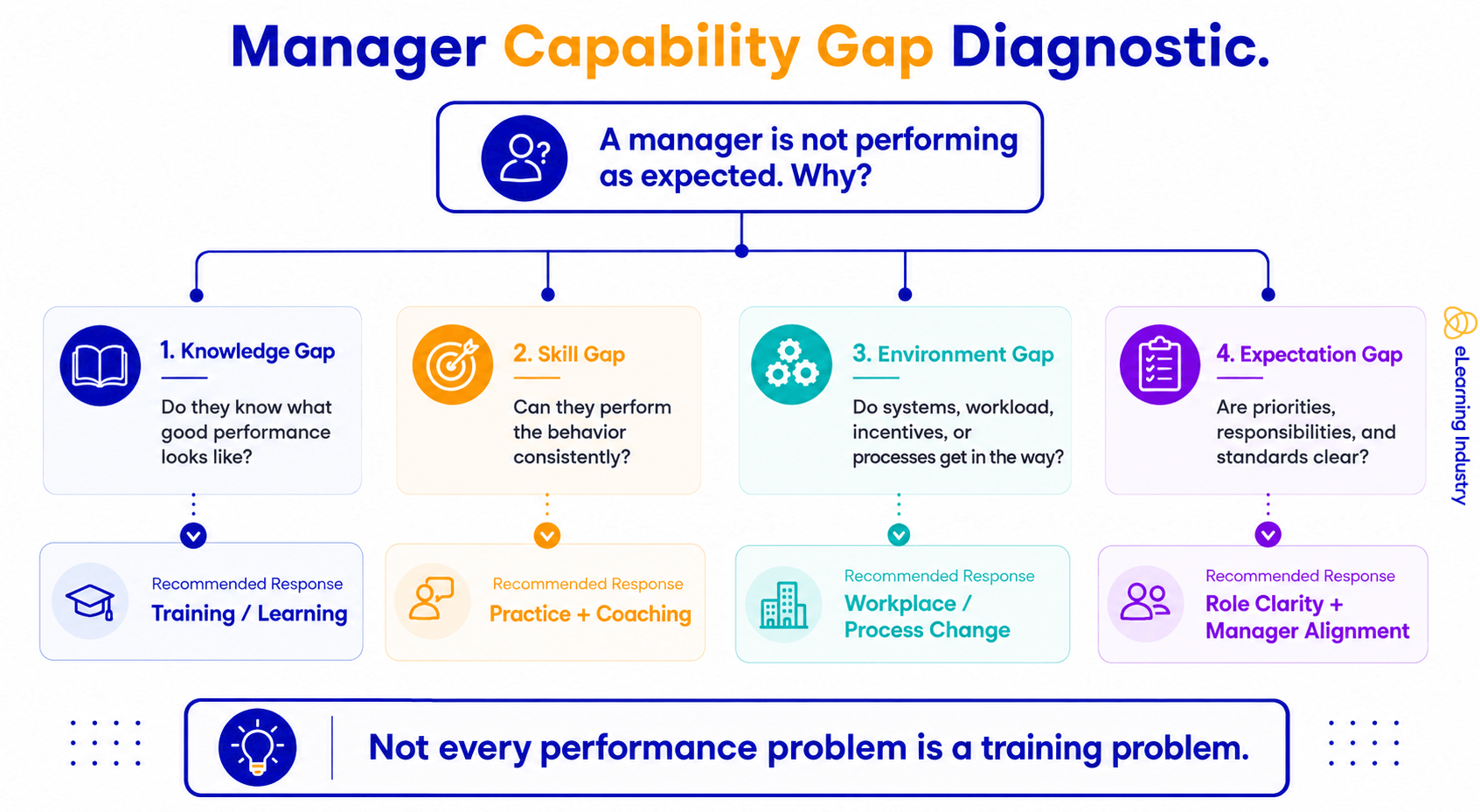
To choose the right leadership training for managers, begin by understanding the performance problem you want to address, rather than just looking at course catalogs. A strategic approach links manager development to your business needs, required skills, real workplace use, and measurable results.
1. Start With The Business And Performance Gap
Before you ask, "Which course should we buy?", figure out what needs to change. What do managers need to do differently? Which business results are being affected? What skills or behaviors are missing? Who needs development? For example, if you have high employee turnover, the real issue might be gaps in coaching, feedback, or team management, not just a general need for more leadership training.
2. Match Training To Manager Level
Effective leadership and management training should match the manager's level of responsibility. New managers might need help with delegation, giving feedback, and handling performance conversations. Mid-level managers often need to build cross-functional leadership and change management skills. Senior leaders may need to focus on strategy, aligning the organization, and making decisions for the whole company. One training program probably won't work equally well for everyone.
3. Evaluate Learning Design, Not Just Content
A strong manager development program does more than just cover the right topics. It should give managers chances to practice skills, get feedback, solve real problems, and use what they learn on the job. Spaced learning and regular follow-up also help turn knowledge into real behavior change.
4. Decide Between Standardized And Custom Training
Ready-made leadership programs are useful when managers need common skills like communication or delegation. Custom programs are better when training needs to match your organization's strategy, culture, way of working, or unique challenges.
5. Determine How Success Will Be Measured
Decide what success looks like before you start. Use clear indicators like changes in behavior, manager effectiveness, engagement, retention, or team performance.rmance.
A useful decision framework is:
Need → Audience → Capability → Format → Application → Measurement
Conclusion
Leadership training for managers should lead to real changes in how they work, not just what they know. The most effective programs are not always the ones with the most content, the fanciest certificates, or the longest courses. Instead, organizations should focus on training that targets actual skill gaps and matches the daily challenges managers face. Managers also need chances to try out new skills, get feedback, and use what they learn on the job. When training is supported over time and linked to company goals, leadership development becomes more than just education. It turns into a practical way to build stronger teams and improve business results.


