
 ChatGPT
 Perplexity
 Claude
 Grok
Grok
Why "Personalized Learning" Became A Weak Term In Corporate L&D
Ask ten L&D teams what personalized learning means, and you'll likely get ten different answers. Over time, it has turned into a convenient umbrella term.
For some, personalization still means fully custom content built for each learner. For others, it points to AI-driven recommendations. Both ideas sound appealing, but neither scales particularly well.
Highly customized content is expensive to create and hard to deliver. Algorithmic recommendations, in turn, are difficult to validate and align with shifting business priorities.
More importantly, neither approach holds up well in real-world conditions, such as audits, reorganizations, role changes, and regional expansion. As a result, personalization often stays at the level of intent rather than that of execution.
So, what does personalization look like when you're responsible for thousands of learners, multiple regions, and actual business KPIs?
A More Practical Definition: Personalization As The Learning Logic
At scale, the challenge with personalization means answering a set of questions and making the logic behind those answers consistent across the organization:
- Who should take this training?
- When does this knowledge become relevant?
- Does this information belong in a course, on a checklist, or in a quick reference?
- And does it show up while people are learning or while they're working?
Corporate learning is embedded in roles, workflows, performance expectations, compliance requirements, and ongoing organizational change. Treated as learning logic, personalization becomes easier to govern, scale, and explain to stakeholders outside of L&D.
How Personalization Actually Works In Modern LMSs
In large organizations, learning simply doesn't exist outside a Learning Management System. And when personalization becomes a basic requirement, modern LMSs are obliged to support it across the entire learning cycle as a natural part of how learning is designed and delivered.
Let's use iSpring LMS as an example and look at how this kind of personalization is built into learning platforms.
1. Employee Entry And Role Alignment
The new employee entry stage is where learning logic first has to prove itself. Personalization reflects how the role is actually entered: what comes first, what can wait, and what signals readiness to move forward. If this logic isn't clear, onboarding quickly turns into either overload or gaps, and often both.
In iSpring LMS, you can create learning paths that combine courses, assessments, and supporting resources into role-based programs that reflect how people actually enter a role, not how content is stored.
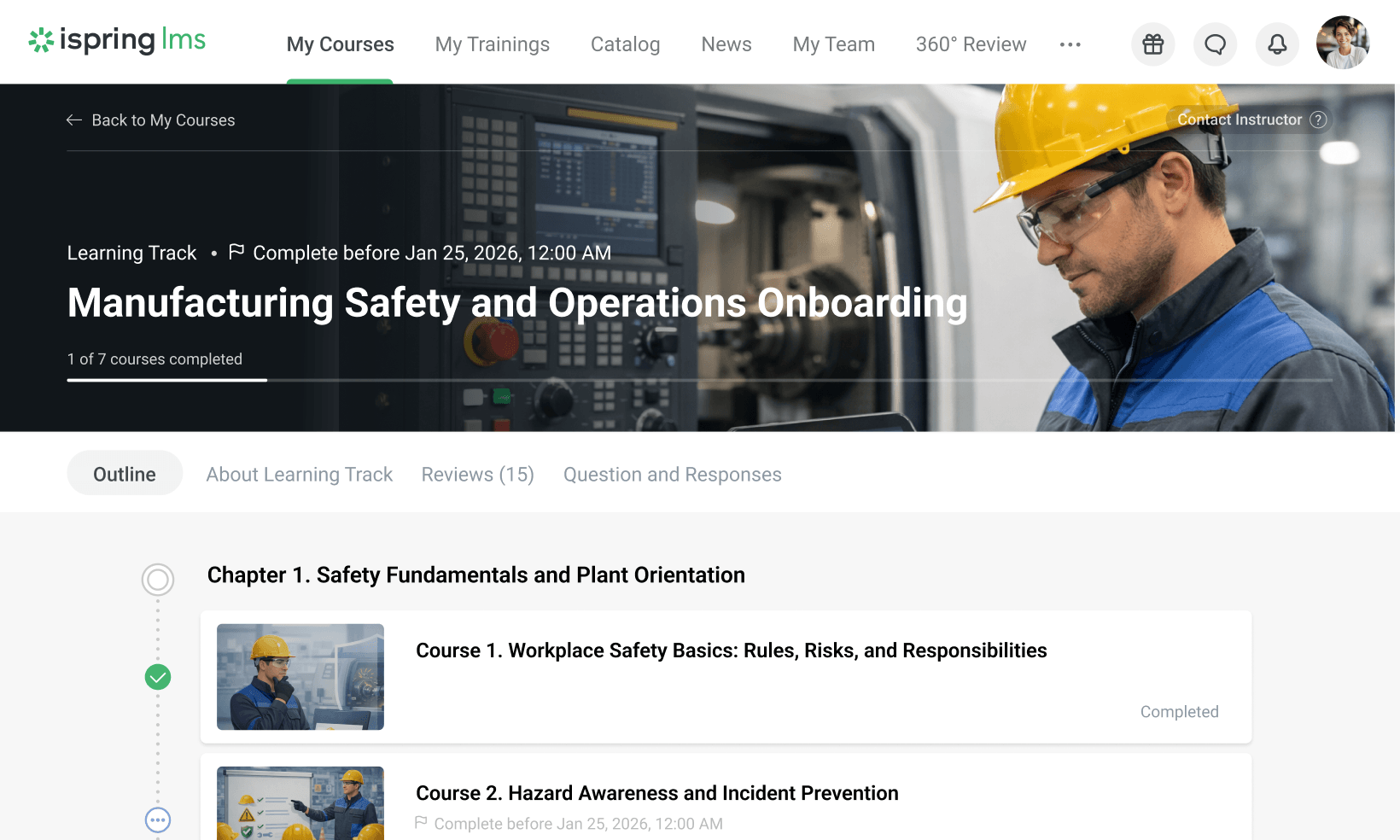
In practice, this kind of role alignment shortens ramp-up time because onboarding becomes more coherent:
- A defined order reduces guesswork for new hires and removes early decision fatigue. Learners don't need to figure out the priorities; the system already reflects that logic.
- Chapter-based tracks make progress visible and measurable, which is critical during onboarding when managers and L&D need a clear signal of progression.
- When roles evolve, onboarding logic can be adjusted at the track level without reworking individual courses or rebuilding programs from scratch.
Thanks to training optimization, the time needed for new employee onboarding has been reduced by one to two months. — Bobby Powers, Director of Learning and Development at Jitasa
2. Ongoing Development And Skill Growth
When it comes to upskilling, personalization often drifts into open catalogs and "learn whatever you like." In mature L&D teams, development is personalized through intentional structure, not unlimited choice.
In iSpring LMS, individual development plans connect learning to role expectations, skill gaps, and performance signals. Instead of offering more content, they help define what growth looks like for a specific employee and how learning supports it over time.
A typical development plan incorporates:
- Clear, action-based checklists that translate role expectations into concrete skill-building tasks.
- Assigned mentors or supervisors who guide progress and provide feedback along the way.
- Milestones and deadlines that keep development focused and on track.
Of course, development works best when it's informed by real feedback. This is where 360-degree reviews add another layer of personalization.
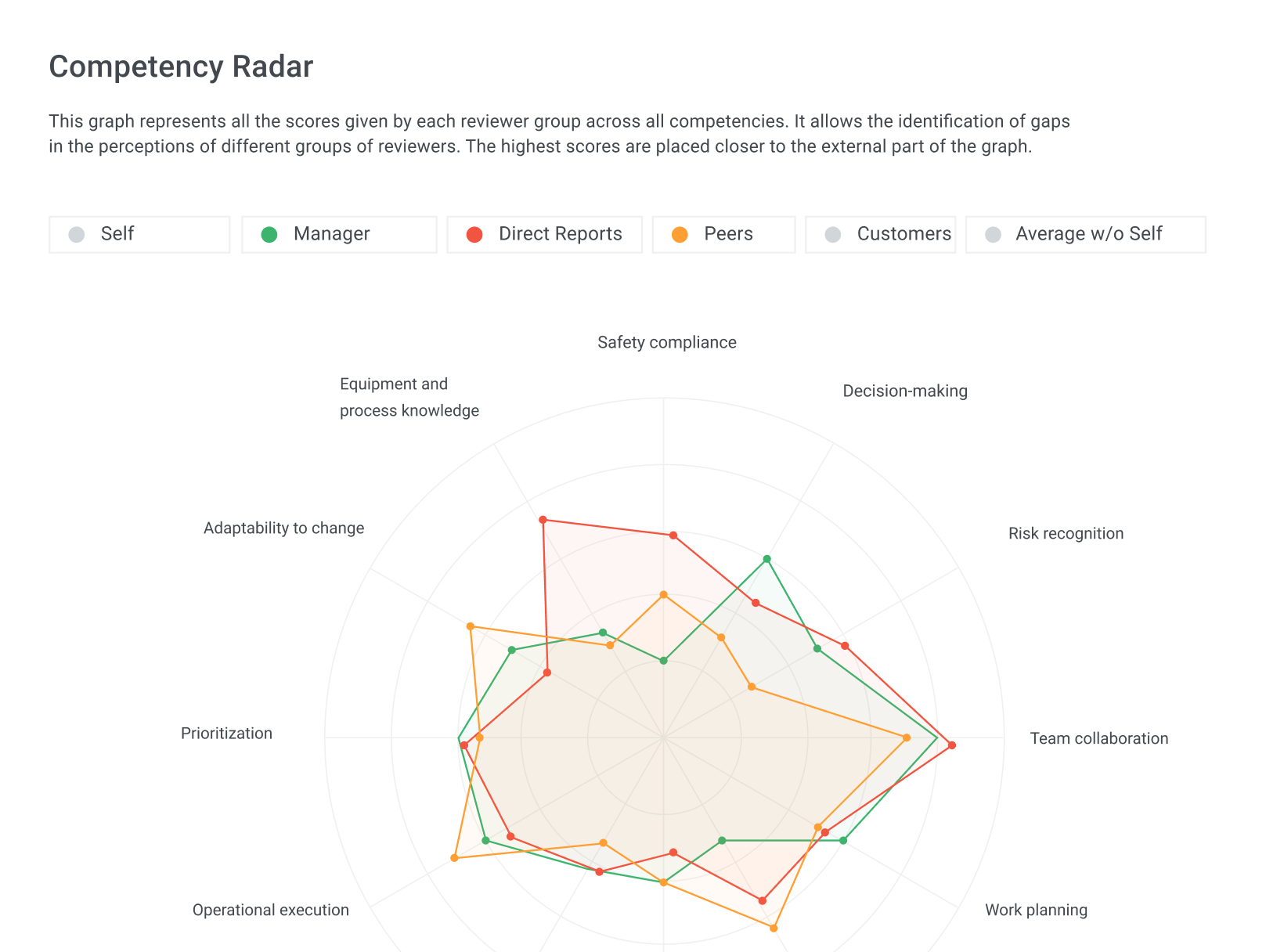
By collecting input from managers, peers, and direct reports, L&D or managers gain a clearer view of strengths, blind spots, and role fit. Development plans become grounded in actual behavior, making it easier to adjust as expectations change, and more credible for both employees and the business.
3. Daily Performance, In-The-Flow Support
In day-to-day operations, when learning is part of everyday tasks and ongoing decision-making, personalization is driven by context and timing. What matters is whether knowledge is easy to reach on the floor, on the move, or right before an action is taken.
In iSpring LMS, this logic is supported through mobile access and a centralized knowledge base. Employees use the intuitive mobile app to reach materials wherever work happens, including offline, with progress synced once they're back online.
Employees can take training anytime and from any device. It's extremely convenient for our field teams because they travel so much! They can download courses and continue their training anywhere, even on a plane with a poor Wi-Fi connection. — Josephine Poelma, Executive Director of L&D at Oticon
The knowledge base acts as a shared source of operational guidance: instructions, FAQs, and internal documentation maintained by Subject Matter Experts and managers.
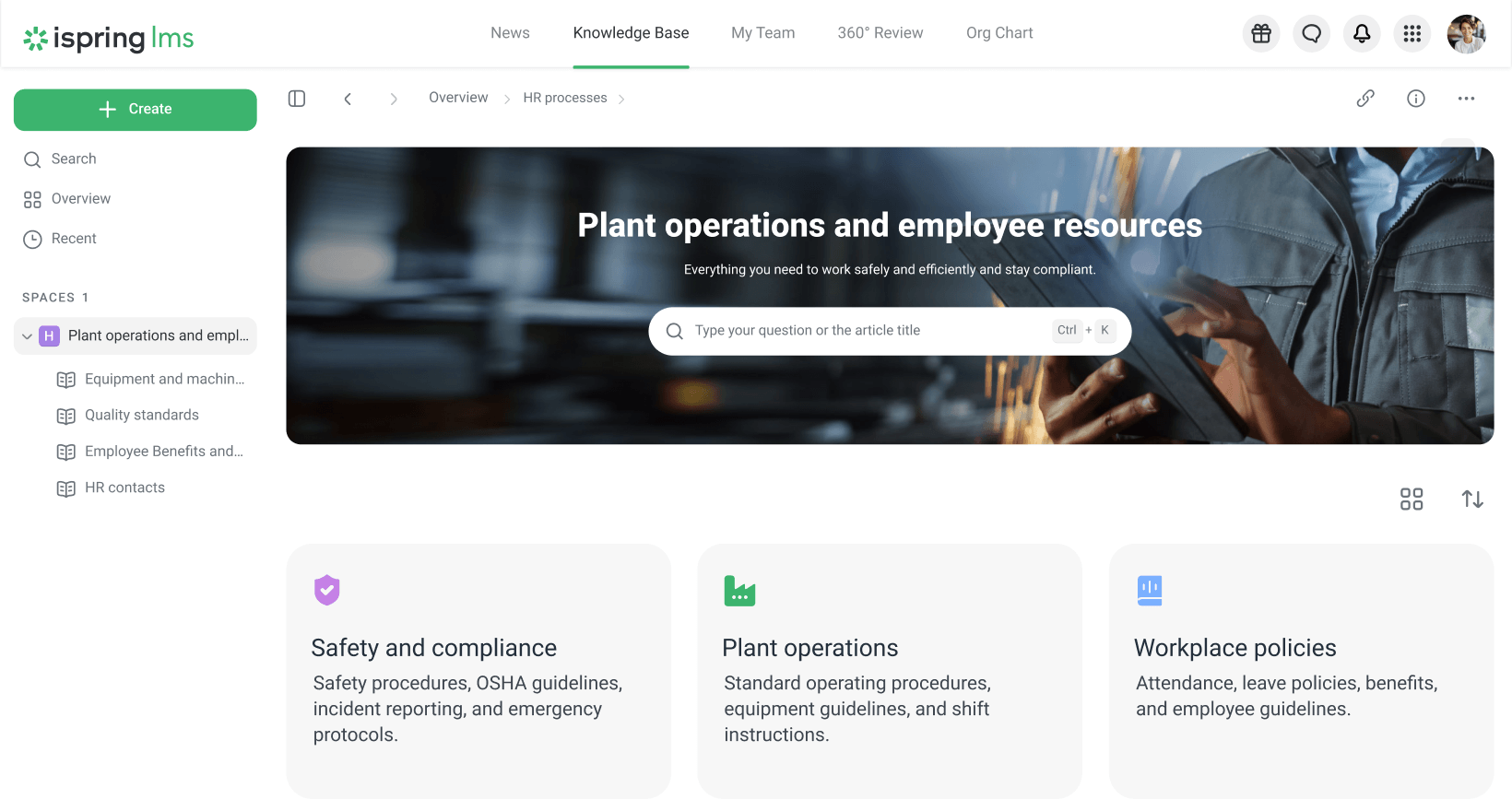
Content is structured intentionally, organized into spaces and folders, with access limited by role. This keeps information relevant and reduces noise, especially for frontline and operational teams. Usage data also makes it easier to understand which resources are actually supporting work and which need to be revisited.
Here, personalization is almost invisible. Its impact shows up in fewer errors, faster responses, and more confident actions, without asking employees to pause their workflow for separate training.
4. Global Scale And Multilingual Learning
When training spans regions, personalization starts to surface in very practical details. Language is one of them, but not the only one.
Time zones, local schedules, and regional working rhythms shape how learning is experienced day to day. When deadlines, notifications, or session times don't align with the local reality, even well-designed training creates friction. In iSpring LMS, this is addressed through multiple layers of customization.
Courses can be localized into different languages, while the user interface adapts to regional and language preferences, including regional variants, such as Castilian Spanish and Latin Spanish.
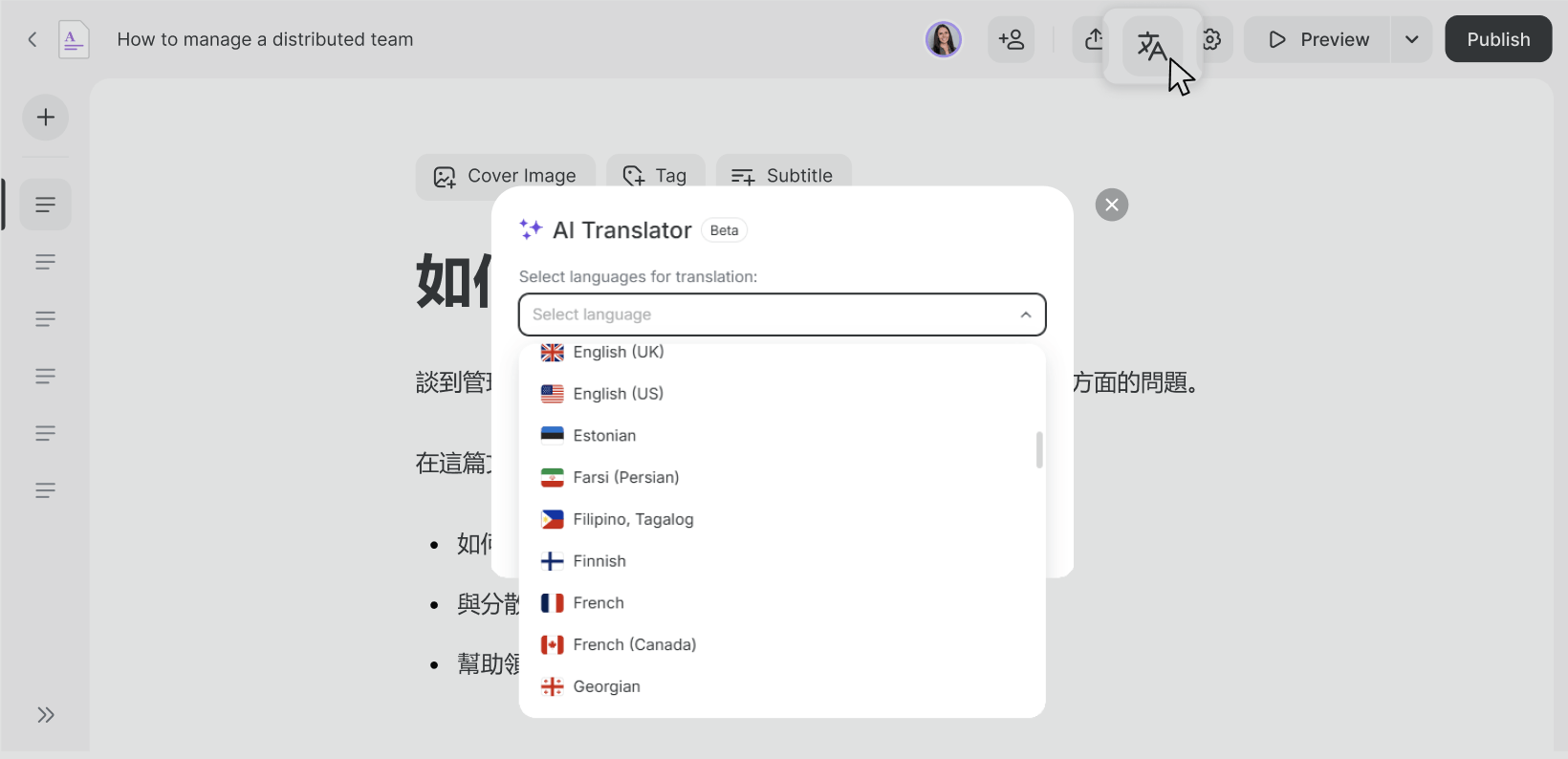
Learners also see deadlines and schedules in their own time zone, which removes confusion and coordination overhead. This is where a truly customizable LMS becomes essential.
With iSpring, we've revamped induction and compliance training to be cost-effective and burden-free. We could potentially save thousands of dollars in costs associated with downtime. — Jesse L. Dukes, Training and Safety Manager at Castle
White labeling supports the same goal. A consistent visual and linguistic environment helps global teams experience learning as part of a single system, even when content, language, and timing differ locally.
In Closing
Looking ahead, personalization in L&D is likely to become less visible and more substantive.
As learning systems mature, fewer teams will talk about personalization as a separate initiative. Instead, it will show up in how reliably learning adapts to role changes, how quickly global teams can be onboarded, and how much less manual effort is required to keep programs relevant.
If you want to see how personalization is already built into day-to-day learning, rather than promised as a roadmap item, book a free demo of iSpring LMS. During a brief meeting, you'll assess your learning logic through a systems lens and discover how to scale personalization without adding operational overhead.