



The Business Value Of A Connected Learning Ecosystem
In 2024, U.S. training expenditures decreased by 3.7% to $98 billion. [1] At the same time, spending on outside products and services increased by 23%, reaching $12.4 billion. While overall budgets fluctuate, a growing share of investment flows into external vendors, technologies, content providers, and service ecosystems that support learning operations.
That means a significant portion of investment is embedded in the infrastructure that delivers, manages, integrates, and governs learning at scale. So before optimizing programs, it's worth examining where operational complexity quietly absorbs resources.
Overlapping Features Across Platforms
Overlapping functionality is one of the quiet cost drivers in corporate L&D. Learning tools are often added step by step: an LMS, then a separate onboarding platform, a sales enablement tool, or a microlearning app.
Each tool solves a real problem. Over time, they start doing similar things, storing similar data, and generating reports in multiple places. Automation workflows overlap, licenses multiply, and teams pay for features they barely use because another platform already covers the core need.
Fragile Data Flows And Manual Administration
When learning systems operate across multiple tools, data rarely flows cleanly. User records sync between platforms, completion data requires manual exporting, and reports are compiled from separate dashboards. What looks manageable at first gradually turns into ongoing manual work.
This is not a niche issue. According to the 2024 BambooHR State of HR Report, 33% of HR professionals deal with time-consuming redundancies because data and documents live in multiple systems, and another 30% still rely on spreadsheets to track employee data. [2] L&D often follows the same pattern when integrations are partial or unstable.
When onboarding runs in one platform, development in another, and compliance in a third, transitions require human coordination. Enrollments must be adjusted, permissions updated, reports consolidated.
For the business, the cost is not only technical complexity but lost capacity. Specialists hired to build capability spend increasing time maintaining connections between systems. As scale grows, operational effort grows with it—and strategic impact weakens.
Managing Multiple Learning Vendors
Each vendor operates within its own boundaries: its own roadmap, release cycle, contract terms, renewal dates, and service-level agreements. Collectively, they create a fragmented responsibility model.
When something breaks between systems, accountability becomes unclear. Is it an integration issue, an LMS limitation, or a data sync problem in the HRIS? Resolution often requires coordination across providers, which slows decision-making and increases organizational friction.
This complexity extends to financial management. Even at a broader organizational level, 40% of companies still track software renewals manually. [3] In a multi-vendor learning environment, different contract cycles and negotiation timelines compound that challenge.
Over time, leadership attention shifts from learning outcomes to vendor coordination, and budget conversations become about contract alignment rather than capability development. This accumulated governance overhead is part of the infrastructure tax, the ongoing cost of maintaining a fragmented learning environment.
What A Comprehensive Learning Ecosystem Means In Practice
If operational fragmentation is quietly increasing the cost of learning, it is not surprising that organizations are rethinking how many vendors they actually need.
According to BCG, 63% of respondents, regardless of whether they favor suite-based or best-of-breed strategies, expect to simplify their technology stacks through vendor consolidation in the coming years. [4]
Learning ecosystems are not exempt from this trend. To see what that looks like in practice, this section examines how an integrated ecosystem can function using iSpring LMS as an example.
A Central Platform For Delivering And Managing Learning
A comprehensive learning ecosystem begins with a single operational core. Without it, automation remains local and reporting stays fragmented, even if each tool performs well on its own.
iSpring LMS serves as that core. You can mirror your company structure once: teams, roles, departments, and manage all training from there. Onboarding, role-based upskilling, compliance certifications, and performance reviews follow the same rules and are tracked in one place. Leadership can see a clear picture without switching between dashboards.
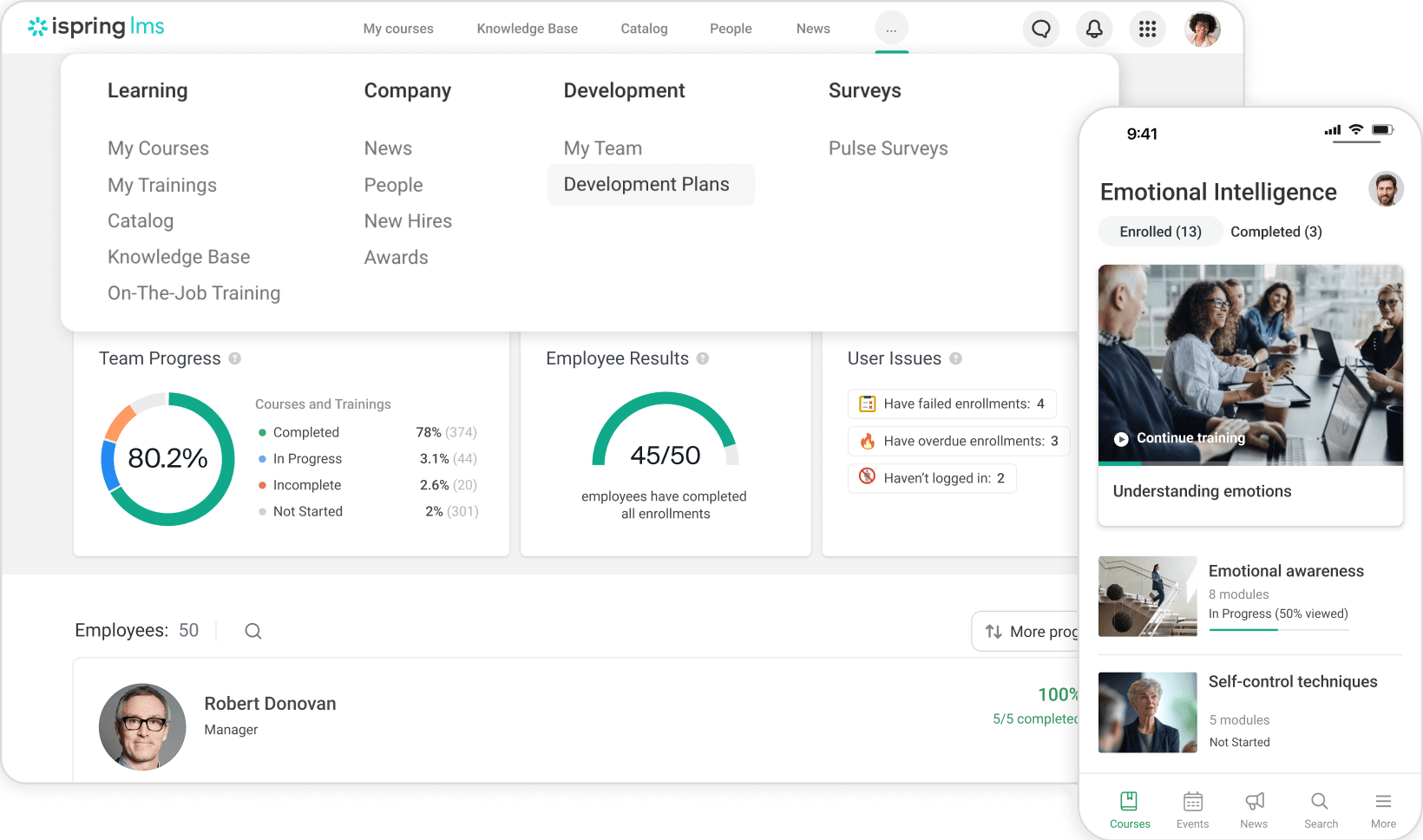
Automated training is part of that setup. Once you define enrollment rules and completion requirements, the system handles assignments, reminders, and renewals on its own. The platform does not require constant administrative supervision—it operates according to the logic you set.
We could potentially save thousands of dollars in costs associated with downtime thanks to iSpring. – Jesse L. Dukes, Training and Safety Manager
When connected to your HRIS, CRM, and analytics tools, the platform stays aligned with real organizational data. There is no need to duplicate user updates or reconcile mismatched records. Learning reflects workforce changes in real time, keeping reporting accurate and processes predictable.
Fast Course Production
The learning ecosystem isn't only about delivery and governance—it also defines how quickly new courses can be created and updated.
With iSpring LMS, content creation lives in the same environment where training is delivered. The built-in course creation tool lets teams assemble scrollable courses directly in the platform. For most corporate needs (onboarding, policy updates, product training), this format is efficient and quick to implement. SMEs can build and update courses without waiting for production support.
When deeper interactivity is required, iSpring Suite, which is included in the ecosystem, expands those capabilities. Built on PowerPoint, it enables branching scenarios, simulations, and assessments without a steep learning curve. Publishing to the LMS is seamless, so updates go live without extra steps.
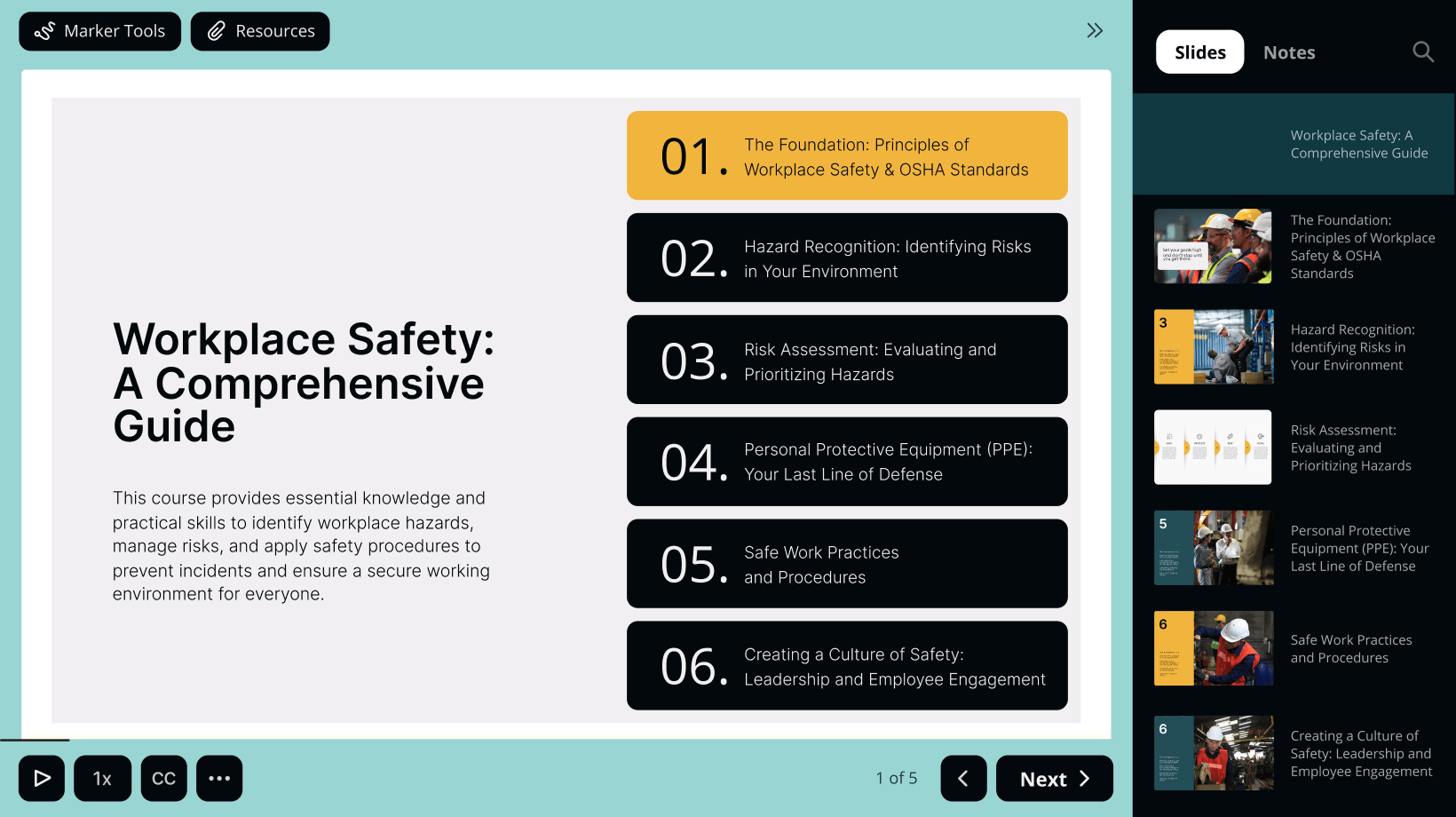
The result is simple: faster production cycles, fewer external dependencies, and full control over quality and timelines.
A Connected Content Ecosystem
In most organizations, a large share of training requests are recurring: communication skills, leadership basics, compliance updates, workplace standards. Producing everything internally is rarely the most efficient approach.
With iSpring LMS, external content libraries such as Udemy, LinkedIn Learning, Go1, and iSpring Academy can connect directly to the platform. LMS integrations with content libraries allow you to build learning paths that combine internal courses with third-party programs while keeping enrollment rules and tracking consistent.
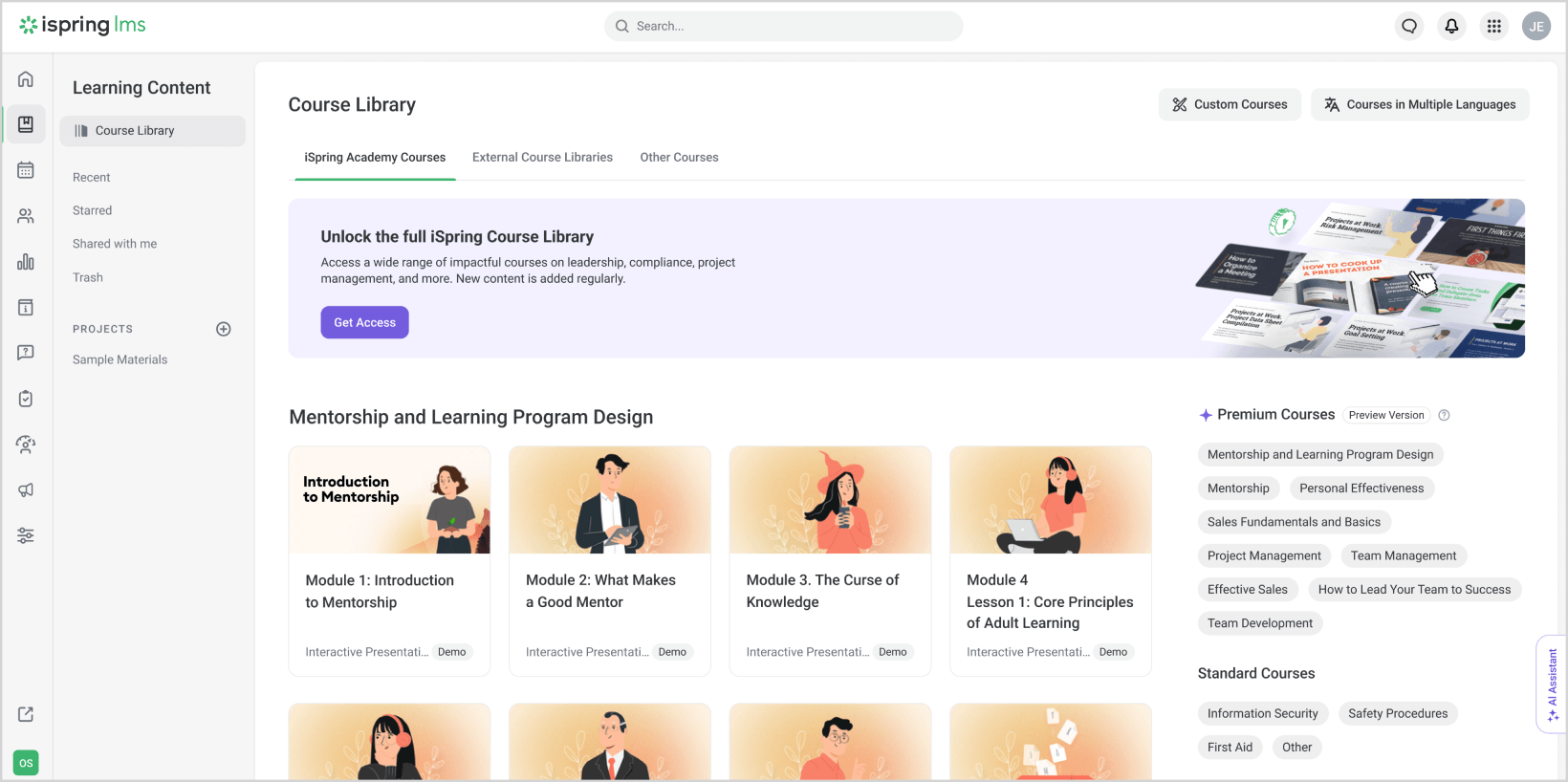
Progress across all content types is recorded in one place. Managers see a unified view of completion and skill development, regardless of whether the course was created in-house or sourced externally.
For needs that go beyond ready-made content, custom course development can also be handled within the same vendor ecosystem. This ensures that highly specific programs (product training, technical certification, proprietary processes) are designed to meet your standards and deployed seamlessly in the LMS.
Strategic Vendor Support
During an LMS evaluation, support often appears secondary to features and pricing. But once the system is live, support determines how quickly issues are resolved, how confidently teams work in the platform, and how stable learning operations remain as the organization evolves.
With iSpring, support extends beyond ticket handling. Technical specialists are available around the clock across time zones, which matters when learning programs run globally and downtime affects employees.
Customer Success Managers provide another layer of support. During launch, scaling, or migration, they help structure the rollout, anticipate risks, and align the platform with your internal workflows. Instead of reacting to friction after it appears, the system is adjusted proactively.
Beyond immediate support, iSpring maintains an active knowledge ecosystem: industry research, practical guides, webinars, and certification programs. This strengthens internal L&D capability over time, so the organization becomes more confident and less reliant on external consultants.
For the business, this translates into fewer disruptions, faster stabilization after change, and a learning system that remains predictable as the organization grows.
In Closing
On paper, building a learning stack from "best-in-class" tools may appear efficient. In reality, the hidden costs that rarely show up in the initial budget accumulate over time.
In 2026, the advantage belongs to organizations that invest in resilient learning infrastructure. If you are reassessing your learning stack, look for platforms that support the entire lifecycle, from course creation to governance and ongoing partnership. This allows your L&D team to focus less on system coordination and more on building capability and delivering measurable business impact.
References:
[1] 2024 Training Industry Report
[2] BambooHR State of HR Report 2024
[4] Seven Questions for a Smarter Applications Strategy