


Podcasts For Learning: Why They Have Become A Valuable Resource
Podcasts for learning have become a valuable tool as more professionals look for flexible ways to build new skills. With workplaces changing, learning is no longer limited to formal courses or scheduled training. Many people now choose on-demand content that fits their busy lives and helps them learn while they work.
Podcasts are more than just entertainment; they are a strong way to share knowledge. For Instructional Designers, podcasts can help reinforce learning, encourage reflection, and extend training outside the classroom. Whether the goal is using podcasts to learn skills, stay current on industry trends, or explore expert perspectives, educational podcasts can complement structured learning experiences without adding unnecessary complexity.
Their popularity lies in their flexibility. Professionals can listen while commuting, exercising, or during other free moments, making podcasts a useful way to learn at any time. They also give listeners direct access to researchers, industry leaders, and experienced professionals who share practical advice and real-world stories.
Podcasts help people learn by offering accessible, flexible content from experts that fits into daily routines and supports ongoing skill development. This guide will show how Instructional Designers can use podcasts in training programs to boost both personal and professional growth.
Learning often happens outside the classroom. When people find the information they need right when they need it, they learn best. Podcasts help with this by making it easy for professionals to keep up, stay curious, and adapt as the workplace changes.
– Christopher Pappas, CEO and Founder of eLearning Industry
What Makes Podcasts Effective For Learning?
Podcasts for learning are effective because they match the way professionals build knowledge over time. Instead of relying on single events, podcasts offer steady exposure to new ideas, expert opinions, and real-world examples. Unlike static resources, they fit easily into a continuous learning routine, helping listeners stay up to date and build the habit of learning outside of formal training.
Supporting Continuous Learning
For Instructional Designers and other L&D professionals, lifelong learning is a must. As technology, workplace needs, and learning methods change, staying up to date with industry trends is important. Regularly listening to educational podcasts helps professionals learn about new topics, find creative approaches, and get fresh ideas without waiting for formal courses or conferences. Using podcasts to learn skills is a practical way to keep growing and stay flexible in a fast-changing field.
Encouraging Reflective Learning
Audio gives listeners a chance to reflect more deeply. Without visuals, people can focus on the ideas and connect new information to what they already know. This helps with critical thinking and understanding, instead of just taking in content passively. For example, pausing an episode to think about how an expert's advice fits a current project turns listening into an active way to learn.
Reinforcing Existing Training
Podcasts work best when they support, rather than replace, structured learning. In blended or flipped learning, they can introduce topics before a workshop, continue discussions after a course, or review key ideas over time. This ongoing support helps people remember what they learn and encourages them to use new concepts in different work situations.
Making Expert Knowledge More Accessible
One of the greatest strengths of podcasts for learning is direct access to experienced professionals, researchers, executives, and thought leaders. Hearing how experts handle challenges, make choices, and share what they have learned gives practical context that adds to academic research and formal training. These real conversations introduce professionals to different viewpoints and help them make better decisions in their own learning and development work.
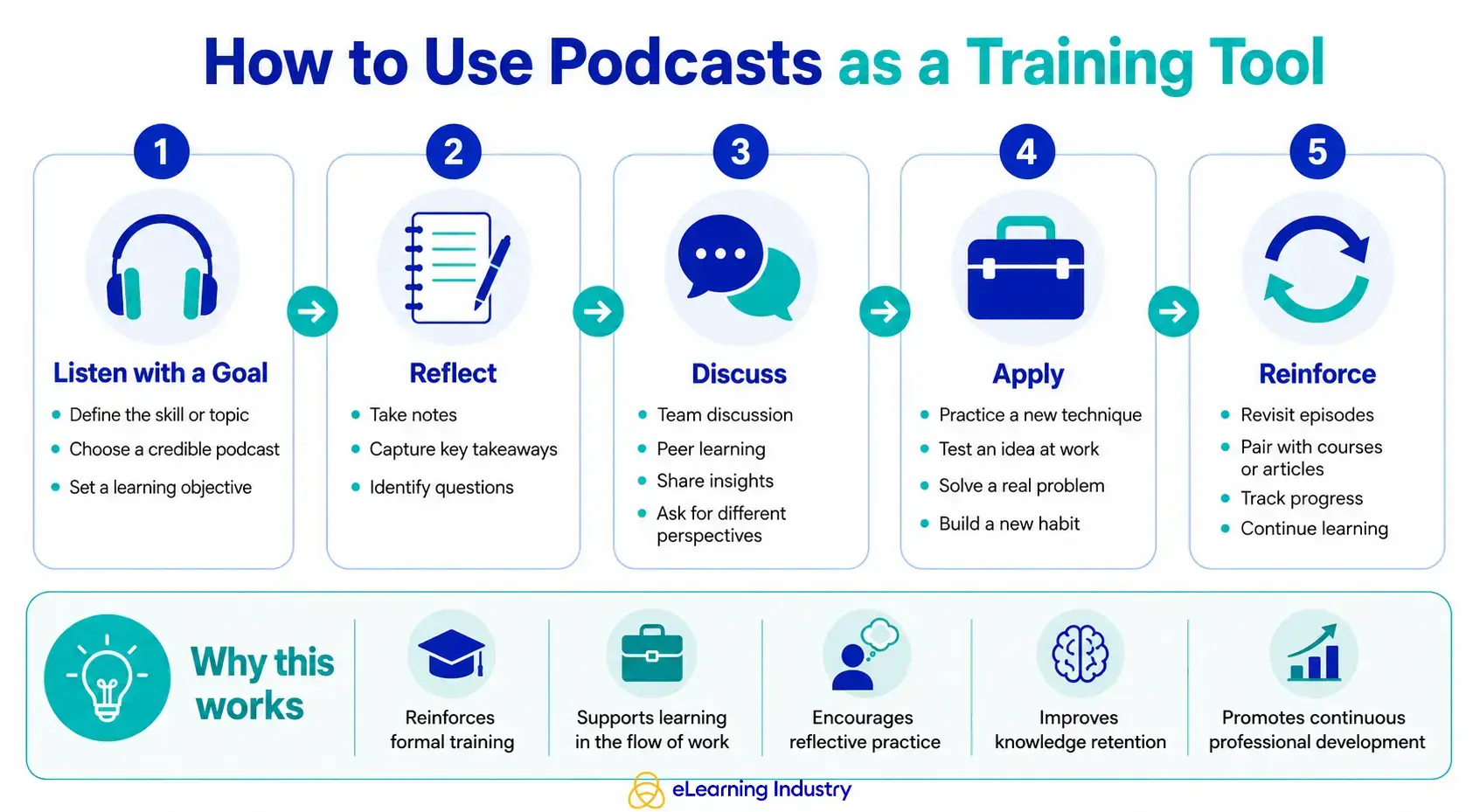
How Instructional Designers Can Use Podcasts As A Training Tool
Instructional Designers can use podcasts for learning at every stage of the learning journey, not just as extra resources but as intentional learning tools. When podcasts are part of a well-planned learning experience, they help learners gain knowledge, reflect, and remember key ideas. Instead of replacing formal training, podcasts can build on it, giving people more flexible ways to develop their skills beyond the classroom.
Before Formal Training
Podcasts can help learners get ready for a course by giving background on a topic and introducing basic ideas. A short episode with an industry expert or a real-world business example can spark interest and give everyone a common starting point before they dive into the main content. This helps Instructional Designers connect to what learners already know and make formal learning more relevant from the start.
During Training
Podcasts can add to traditional training by encouraging deeper discussion and critical thinking. For example, learners might listen to a case study and talk about the choices made, reflect on expert interviews, or discuss real-life scenarios in groups. These activities turn listening into active learning and let participants hear different viewpoints, making the learning experience richer.
After Training
Podcasts are useful even after a course ends. The right episodes can help people remember important lessons and keep learning over time. As part of ongoing learning, podcasts encourage learners to review ideas in new situations, which helps them apply what they've learned and turn new skills into lasting habits through regular practice and reflection.
For Leadership Development
Podcasts are also helpful for leadership development. Listening to experienced executives, coaches, and industry experts gives learners new ideas about decision making, communication, managing change, and coaching. By linking theory to real workplace stories, instructional designers can use these insights to make leadership programs stronger and support ongoing growth for both current and future leaders.
Best Practices For Using Podcasts For Learning
Podcasts for learning are most effective when you listen with a clear purpose, not just as background noise. Before you start an episode, whether it's about Instructional Design, leadership, or new workplace technologies, think about what you want to get out of it. Are you looking to learn about a new trend, build on a skill you already have, or find ideas to solve a problem at work? Setting a goal helps you focus on what matters and makes it easier to use what you learn.
Reflect On What You Hear
It's just as important to reflect on what you hear. Since podcasts usually don't have activities or quizzes, you need to find your own ways to remember and use what you've learned. Try taking notes, writing a quick summary, or keeping a journal about what stood out to you. AI tools can help you pull out the main ideas or organize your notes, especially for longer episodes. Still, these tools should support your own thinking, not take its place, because reflecting for yourself is key to turning new knowledge into real skills.
See Podcasts As Part Of Your Learning
Podcasts offer expert advice and real-world stories, but you'll get more out of them if you combine them with other resources. Reading articles or books can give you more background, and online courses or webinars let you practice new ideas in a structured way. Talking with colleagues or joining professional groups can also help you see different perspectives and learn how to apply what you've heard. Mixing these approaches turns information into real skills.
Choose Your Podcasts Wisely
Not every educational podcast is equally helpful, so it's important to choose carefully. Focus on shows led by experienced professionals, researchers, or industry experts. Look for podcasts that mention solid research, share real case studies, and release new episodes regularly. This usually means they're committed to sharing up-to-date, useful information. Checking your sources is especially important in fast-changing fields like workplace learning, AI, and talent development, where advice can quickly become outdated.
Make It A Habit
Try to make listening to podcasts a regular habit, not just something you do once in a while. You can fit them into your day by listening during your commute or while you exercise. Making podcasts part of your routine helps you keep learning without taking up extra time. Over time, this steady flow of new ideas supports your growth, helps you keep improving, and keeps you up to date in a changing field.
Common Limitations Of Learning Podcasts
Podcasts for learning can be a helpful part of your professional development, especially when you recognize and address their limits. Like other learning tools, they work best when combined with other ways to build knowledge and skills.
Passive Listening
It's easy to play episodes while commuting or working out without really taking in the information. This flexibility is a benefit, but you'll remember more if you engage with the content. Try taking notes, summarizing main points, or talking about what you learned with colleagues to make your listening more meaningful.
No Hands-On Practice
Podcasts can explain ideas, share expert opinions, and spark new thinking, but they rarely let you try out what you've learned. To help with this, Instructional Designers can add reflection questions, real-world scenarios, or practical exercises to go along with podcast episodes. This helps reinforce learning and encourages you to use new knowledge.
Possible Misinformation
Content quality is also important. Since it's easy to publish a podcast, sometimes episodes include outdated advice or even misinformation. It's best to choose podcasts from well-known experts, industry professionals, or trusted organizations, and to double-check important claims with reliable research and sources.
Low Production Quality
Production quality can also vary a lot. Bad audio, messy discussions, or irregular release schedules can make it harder to stay engaged and learn. Choosing well-made educational podcasts with clear goals and good production helps you stay focused and get the most out of your time.
Lack Of Assessments
Podcasts also don't include built-in assessments, so it's hard to know how much you've learned or improved. In the workplace, podcasts should support, not replace, more structured learning. Adding quizzes, journals, group discussions, or follow-up activities can help you check your understanding and use new knowledge on the job.
Choosing The Right Podcasts For Your Learning Goals
Not all podcasts for learning deliver the same value, so it's important to first decide what you want to get out of them. If you're looking to build skills for your job or want to keep up with new trends in Learning and Development, picking podcasts with a clear goal in mind will help you use your listening time well.
Relevance
Whether you want to get better at Instructional Design, build leadership skills, or keep up with new ideas in workplace learning, choose content that supports what you want to achieve. This way, what you learn is more likely to help you grow over time.
Credibility
Who is sharing the information? Look for podcasts with hosts and guests who have real experience in L&D, education, business, or similar areas. Shows that include practitioners, researchers, or industry leaders usually offer more useful insights than those based only on personal stories.
Evidence
Good educational podcasts mention research, proven methods, real case studies, or best practices instead of just sharing personal advice. This matters especially for instructional designers who need solid information to guide their work.
Practicality
The best professional development podcasts don't just talk about ideas; they give you things you can try right away. Whether it's a new way to run a session, an evaluation tool, or a method to engage learners, practical advice makes audio learning more useful.
Consistency
Podcasts that update often are more likely to talk about new trends and give you chances to keep learning. Sticking with reliable creators can help you build a habit of professional growth and stay up to date in your field.
Conclusion
Podcasts for learning are most effective when they are used as part of a larger learning plan, not just on their own. For Instructional Designers, podcasts offer a practical way to reinforce formal training, bring in different expert viewpoints, and support ongoing learning outside the classroom. When learners reflect, discuss, and apply what they hear, podcasts can help them remember information and build new skills. As organizations focus more on agility and lifelong learning, formats like podcasts will become even more important for creating flexible learning experiences that fit into busy work schedules.