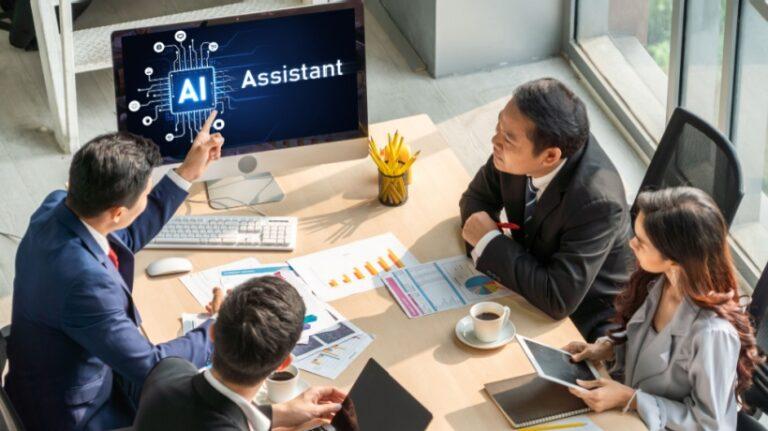



How Can You Make The Most Of AI For Employee Engagement?
Are you unable to achieve desirable results from your employee engagement surveys? Chances are that you haven't integrated Artificial Intelligence (AI). AI in employee engagement is like a superhero that will save you from spending thousands of dollars on employee engagement.
Employee engagement is one of the most essential aspects that defines a successful organization. Every business that excels in its respective industry has happy employees. This is because happy employees are more productive, perform better, and deliver higher customer satisfaction.
AI in employee engagement is the secret to keeping your employees happy. It simplifies data analysis and provides predictive insights through a personalized survey, thereby enhancing the participation rate. Higher participation means richer results, which, in turn, leads to better policy implementation. If you are unaware of how AI revolutionizes employee engagement, this article is here to help by delving into the integration of AI as an HR tool for employee engagement surveys and its impact on employee satisfaction.
What You'll Find In This Guide...
- Understanding AI And Employee Engagement
- The Role Of AI In Employee Engagement
- Traditional Vs. New-Age Employee Engagement Practices
- Benefits Of Incorporating AI In Employee Engagement Strategies
- Factors To Consider Before Investing In An AI Engagement Solution
- AI Technologies And Their Applications In The Workplace
Understanding AI And Employee Engagement
Before we discuss the role of AI in employee engagement, let's define what the term means. Employee engagement is the emotional and psychological commitment that employees have toward their organization.
It is important because it showcases the common sentiments of employees toward your organization, their job satisfaction levels, and their overall opinion about working in your company. This information helps improve employee retention and fosters a work culture that is inclusive and positive. Employee engagement also streamlines administrative tasks and enhances the core functions of your organization.
AI for employee engagement is all about automating the tasks required to enhance employee productivity. AI-powered tools specifically designed for employee engagement can help simplify complex tasks. They can be utilized by HR professionals and upper management members to simplify communication, solve problems, analyze various employee engagement trends, examine employee performance data, and more. The possibilities with AI are endless, and you can make use of this technology to streamline many tasks. In fact, AI-powered tools can also play a major role in decision-making and predictive analytics.
The Role Of AI In Employee Engagement
In a technologically advanced world, AI and employee engagement go hand in hand. But how can you use AI to enhance employee engagement? The section below will answer this question:
Enables Sentiment Analysis
Understanding your employees' common sentiments is your superpower. However, manually going through every open-ended question can be tedious and time-consuming. With the help of AI, you can simplify the process. Features such as natural language processing allow AI to gauge human sentiments and understand how your employees are feeling. This also helps stakeholders make decisions with more agility and precision regarding the well-being of their employees.
Offers Richer Data
Adaptability is one of AI's core capabilities. AI tools can adapt their questions based on the responses offered by the participant. They analyze the responses to determine which questions will yield accurate results and present them to employees. This leads to higher employee participation and generates richer data, making employee engagement surveys more effective.
Facilitates Easy Benchmarking
AI makes benchmarking survey results easier. With these tools, you can compare your employee survey results with industry standards and also reflect upon your improvement since the last time you conducted an employee survey. Benchmarking is crucial because it helps you determine how much your organization's employee engagement levels have improved and how you are performing compared to competitors. This information enables you to focus your efforts in the right direction.
Provides Personalized Feedback
Each employee in your organization will have a different working experience. That's why you need a personalized analysis for various departments, teams, and employee demographics. A personalized analysis will provide you with personalized feedback that will help you, managers, and other stakeholders take more targeted action aimed at specific groups of employees. Through personalized feedback, stakeholders can better support employees and enhance their satisfaction.
Increases Employee Participation
AI personalizes employee engagement surveys, but another advantage of this feature is higher participation. We all love things that are specifically made for us. Similarly, your employees also love it when you offer them a personalized survey that addresses their problems in their respective roles and departments. This leads to higher participation and gives you a clearer picture of the issues they are facing.
Detects Bias
Humans can be prone to unconscious bias, but a machine is always fair in its evaluation and results. So, when you use AI for employee engagement, you know that the results are free from any kind of bias. When the foundation of your employee engagement strategy (the results) is fair and unbiased, the policies that you implement will also be fair. This creates an inclusive workplace environment that leads to a healthier and happier work culture.
Enables Predictive Analysis
One of the most significant indicators of disengaged employees is a high turnover rate, which is the percentage of employees who voluntarily leave the organization within a period of time. A high employee turnover rate is a big issue for any organization. It creates unnecessary delays, and organizational resources are continuously directed toward recruiting new employees. With the integration of AI into employee engagement, you can predict employee turnover risks and identify dips in engagement. All this employee data helps mitigate problems before they become significant.
Traditional Vs. New-Age Employee Engagement Practices
Employee engagement trends change frequently. Every few years, a new generation of employees joins the workforce. They have different expectations and goals from their jobs. Therefore, managers and leaders must stay on top of these changes.
Traditionally, employee engagement was all about rigorous training sessions, rewards in the form of cash, plaques, and verbal recognition. But today's generation of employees wants something more than that. They want their ideas to be heard, dynamic opportunities, and a platform where they can keep learning to grow. Organizations have made significant adjustments to their operations to meet these requirements. For instance, the introduction of machine learning, employee engagement programs, and AI and Virtual Reality (VR) in employee training programs has made learning and working more fun and engaging.
AI must also be utilized in employee engagement practices if organizations want to create an environment where both newer and older employees enjoy working. AI enables you to utilize advanced algorithms and analytics to track employee performance. This will help you identify issues such as why certain employees are disengaged and why there is a sudden dip in productivity. Moreover, AI integrated with sentiment analysis and natural language processing determines employees' future engagement levels, behavior patterns, and more.
Benefits Of Incorporating AI In Employee Engagement Strategies
AI can help you understand employee sentiment and analyze how you can convert disengaged employees into committed ones. Here are some of the ways AI helps enhance employee engagement:
Better Decision Making
With AI's help, you can make better decisions for your employees and the organization. The technology helps you gain deeper insights into your workplace environment, your employees' experiences, and their overall sentiments. This information enables you to make more informed, data-driven, and impactful decisions.
Offers Actionable Employee Feedback
AI-powered tools can capture richer and more accurate employee feedback. With the help of these tools, stakeholders can easily segment employees, analyze reports, and prepare an action plan that will genuinely keep the workforce happy. Most AI tools use generative AI that can accurately understand human emotions. This gives you a better picture of what employees think and feel about your company and what you can do to enhance their overall experience.
Builds Trust Among Employees
If you implement AI correctly, you can gain the trust of your employees. This technology enhances their overall engagement, which in turn leads to greater trust. AI can help your organization foster transparency, communicate with employees the right way, and explain the organization's operations. When you keep your employees in the loop, you make them feel they are essential to the organization, leading to increased employee engagement.
Makes Analytics More Efficient
You may be facing problems with poor employee engagement for several reasons. But without precise data, it is difficult to make effective decisions. Initiatives taken to enhance employee engagement are often expensive. Hence, you want to ensure that the money that you are putting in is directed to the right place. With AI, you can access detailed employee engagement insights, which makes getting a clear picture of the overall scenario easy. Moreover, stakeholders don't have to waste hours deciphering the results. The data can be extracted easily, decoded, and analyzed within seconds, saving a lot of time and reducing administrative burdens.
Helps Offer Better Employee Experience
AI can help management provide a better employee experience. It helps stakeholders understand the employees' pain points and address them with appropriate responses. This enhances the employee experience, leading to better retention rates.
Factors To Consider Before Investing In An AI Engagement Solution
AI offers tremendous benefits for employee engagement. But before investing in a solution, you must determine whether it is worthwhile for your organization. Let us look at the factors that a good AI employee engagement solution should have:
Data Security
Your organization's data security is crucial for maintaining confidentiality and integrity. Employee engagement surveys are conducted to understand what your employees are thinking. This means that these platforms will store a lot of personal information about your employees and your organization. If a third party gets a hold of this information, your organization's and employees' data integrity may be at risk. That's why you must choose an AI engagement solution that offers built-in data security measures. Data security also ensures that your employees are more honest with their answers, leading to better results.
Flexibility
The employee engagement platform you are choosing must offer flexibility. This way, when your organization expands in the future, you will be able to accommodate more users. When evaluating flexibility, also consider the total cost of the platform as the number of users increases. This will help you understand whether the tool will be helpful in the future.
Features
Another aspect to consider is the features offered by the tool. Some tools provide a standalone AI employee engagement platform, while others offer a range of features, including an entire HR suite that makes routine tasks easier for HR professionals. A standalone tool is the right choice if you already have an HR suite but need help with your employee engagement initiative. But if you don't have an HR suite and are currently looking for one, a tool with employee engagement features is a great idea.
Mobile Accessibility
Having an employee engagement tool that is easily accessible through mobile phones is an added benefit. This helps your employees access employee engagement surveys on the go, leading to increased participation. Moreover, it also allows workers on field duties or constantly on their feet to stay connected with the organization.
AI Technologies And Their Applications In The Workplace
There are several ways in which you can integrate AI into your workplace. The goal is invariably to streamline operations and make the work environment more welcoming for your employees. This enhances their job satisfaction and engagement. The following are a few ways you can use AI in the workplace.
Using AI For Onboarding
Onboarding is an essential aspect of the recruitment process and a crucial factor in enhancing employee engagement. With the help of AI, HR professionals can streamline employee engagement. AI can collect feedback on how newly hired employees feel about their onboarding experience. This information can be used to make future onboarding smoother and faster.
AI also enables you to automate the onboarding process. It can offer a one-stop solution in the form of a chatbot and virtual assistants that will answer the questions, resolve queries, and address any other doubts that the new employees may have.
Using AI To Track Employee Progress
It is imperative to keep track of your employees' overall progress in terms of how they are performing in their roles and how engaged they are in other activities. This helps you understand whether your employees are facing any challenges related to their work or if they are dissatisfied with the current work environment.
Keeping track of employee engagement manually may lead to several discrepancies. However, a machine will always give you the truth. In addition to identifying progress, it also assists employees in finding ways to enhance their performance.
- These tools take into account employee progress and help them find training programs, resources, and skill-building classes that they may take to enhance their performance. In addition to giving them suggestions, the tools also provide feedback on how they are performing.
- It helps HR professionals keep a closer eye on employee behavior and understand their pain points.
- These tools can help employees feel recognized through rewards and recognition, which enhances overall employee productivity.
Using AI In Learning And Development
AI can also improve how you deliver training programs to your employees, thus enhancing their engagement. Today's employees don't want boring lectures and passive learning. They want training sessions that are fun, interesting, and contribute to their growth.
This is the reason why it has become essential for organizations to introduce AI into their Learning and Development (L&D) programs. With the help of AI, organizations can deliver personalized training programs that recognize the needs of their employees. It can also track how employees interact with the learning modules and whether they need more support to meet their goals. It offers real-time progress reports to the employer as well as the employees to identify patterns and growth in their learning journey.
Using AI In Employee Recognition
It is always good when employers recognize and reward their employees' hard work. Employees who their organization appreciates transform into engaged employees. However, rewards and recognition require a lot of time and effort. Fortunately, AI can simplify the entire process, providing each employee with the rewards and recognition based on their performance. The tool helps managers understand how to motivate their workforce with rewards.
While monetary benefits and compensation are essential, AI can help stakeholders offer their employees a better work-life balance and other benefits, such as flexible timing, paid time off, and other interesting perks. Moreover, the tool also enables management to offer more personalized incentives. One thing that employers need to understand is that employee incentives must be in line with changing job responsibilities and the inflation rate. This will help employees feel genuinely valued.
Using AI In Communication And Collaboration Tools
AI must be used by organizations for effective communication and collaboration. It can be used to build a sense of community among the employees and enhance collaboration with easy and clear communication. AI can help automate meeting scheduling, saving time and ensuring that information is sent to all employees. The technology can also summarize long meetings and help find documents and chats quickly. Overall, this makes the work environment more collaborative and communication among employees easier.
Conclusion
AI is the secret to enhancing employee engagement. With it, you can create an environment that engages employees by offering real-time feedback, sentiment analysis, personalized surveys, predictive analysis, and more. AI empowers employers to create a workplace environment where their employees will love to work.
AI-powered employee surveys help organizations understand the problems that their employees are facing and even find solutions. The technology creates a fair and unbiased atmosphere where every employee feels valued, and their interests are upheld. Through this advancement, organizations can easily tackle serious threats such as high employee turnover rates, dips in employee engagement, and a decrease in productivity.